

Managing Hot Tub Calcium Hardness: How to Test, Adjust, and Prevent Water Hardness Issues
Calcium hardness is the amount of dissolved calcium (and a bit of magnesium) in your hot tub water, reported in parts per million (ppm). It affects how long your equipment lasts and how clear your water stays. Get it too high and you’ll see scale on heaters and jets; get it too low and fittings can corrode. This guide explains how calcium hardness works with pH, total alkalinity, and temperature, then shows simple testing methods, target ranges for different hot tub types, step-by-step fixes for high and low hardness, and routine prevention tips. We also compare test strips, titration kits, and digital meters, and cover dilution, water softeners, and chemical removers so you can pick the best approach. Read on for clear comparison tables, practical checklists, and a maintenance schedule to keep your spa’s minerals in balance and your equipment protected.
What Is Calcium Hardness and Why Is It Important for Your Hot Tub?
Calcium hardness measures dissolved calcium (and some magnesium) in ppm and tells you whether minerals will stay dissolved or form hard calcium carbonate deposits. When calcium ions combine with carbonate at certain pH and temperatures, scale can form on heaters and inside plumbing, which lowers efficiency and can clog jets. Keeping calcium hardness in the right range protects metal parts, helps your sanitizer work properly, and keeps water clear. That’s why you must balance calcium hardness together with pH and total alkalinity for long-term spa health—fixing one without the others can leave you back where you started.
What Does Calcium Hardness Mean in Hot Tub Water Chemistry?
Think of calcium hardness as the pool of divalent mineral ions—mainly Ca²⁺ and Mg²⁺—that drive scaling and corrosion. You usually measure it with titration kits or test strips and read the result in ppm. At healthy levels, calcium helps prevent aggressive water that can etch metal, but when pH and alkalinity are high the carbonate balance shifts and the risk of precipitating calcium carbonate (scale) rises. Measuring hardness is also a key input for saturation indices like the Langelier Saturation Index (LSI), which predict whether water will scale or corrode. Accurate tests point you to the right next move: dilute, add increaser, or use an inhibitor.
Total hardness — the combined calcium and magnesium in water — is a key factor in predicting scale formation and its effects on plumbing and heat systems.
Understanding Total Hardness: Calcium, Magnesium, and Scale Formation
Total hardness comes from divalent cations, mainly calcium and magnesium, and is often expressed as an equivalent amount of calcium carbonate. By equivalence, 1 mg/L of calcium equals 2.5 mg/L as CaCO3, and 1 mg/L of magnesium equals 4.12 mg/L as CaCO3. In humid regions hardness and alkalinity can be similar; in arid regions hardness often exceeds alkalinity. While alkalinity tends to be more important biologically, hardness matters for water use and equipment. When water with appreciable alkalinity contains high calcium and magnesium, heating or rising pH can trigger scale formation. That leads to clogged pipes, scaling in boilers and heat exchangers, and deposits on heat transfer surfaces. The Langelier Saturation Index is commonly used to assess scale potential. Divalent ions also reduce soap efficiency, increasing soap use in domestic and commercial laundry. Traditional softening removes calcium as calcium carbonate and magnesium as magnesium hydroxide using the lime-soda ash process; another common method is cation exchange through media such as zeolite.
Total Hardness, 2019
How Does Calcium Hardness Affect Hot Tub Equipment and Water Quality?
High calcium hardness shows up as white crusts on shells, film at the waterline, clogged jets, and slower heaters—scale literally insulates the heater so it works harder and wears sooner. Low calcium hardness makes water aggressive, which can etch metal fittings and leave pitted surfaces from corrosion. Cloudy or gritty water, higher sanitizer consumption, and foaming often point to a hardness issue combined with pH or alkalinity imbalance. That’s why you should check all related parameters when diagnosing problems: treating hardness alone without fixing pH or alkalinity can be only a temporary fix. Regular monitoring and correction protect your equipment and keep the water pleasant to use.
What Are the Ideal Calcium Hardness Levels for Different Hot Tub Types?
Recommended calcium hardness depends on tub construction, system type, and how often you use it. The goal is a balance: enough mineral to prevent corrosion but low enough to avoid quick scale buildup. Standard acrylic shells usually have a midrange target that suits most municipal waters. Saltwater systems and commercial spas need different targets because salt chemistry and heavy use change scaling and replacement behavior. Your source water and use of salt chlorine generators also matter—adjust targets slightly based on what you observe and your manufacturer’s guidance. The table below gives practical starting points.
Use these ranges as starting points—test regularly and tweak targets if you see scale or corrosion signs.
What Is the Recommended Calcium Hardness Range for Standard Hot Tubs?
For most residential hot tubs, 150–250 ppm is a practical target. That range gives enough dissolved mineral to guard metal parts while keeping scale risk moderate under normal pH and alkalinity. If your readings are consistently above this band, consider partial dilution or other reduction steps to protect heaters and surfaces. If levels fall below the lower bound, slowly raise hardness rather than leaving water aggressive. Always monitor pH and total alkalinity alongside hardness so the whole balance stays stable.
How Do Calcium Hardness Levels Differ for Saltwater Hot Tubs?
Saltwater setups usually aim a bit lower—about 125–200 ppm—because electrolysis around the salt cell creates local scaling spots on the cell and electrodes. Slightly lower mineral content helps slow that buildup while still protecting metal parts. In salt systems it’s especially important to use scale inhibitors, keep up with cell maintenance, and test often: calcium precipitation can impair cell performance quickly, so adjust hardness gradually and watch the cell condition.
How Can You Test Calcium Hardness in Your Hot Tub Water?
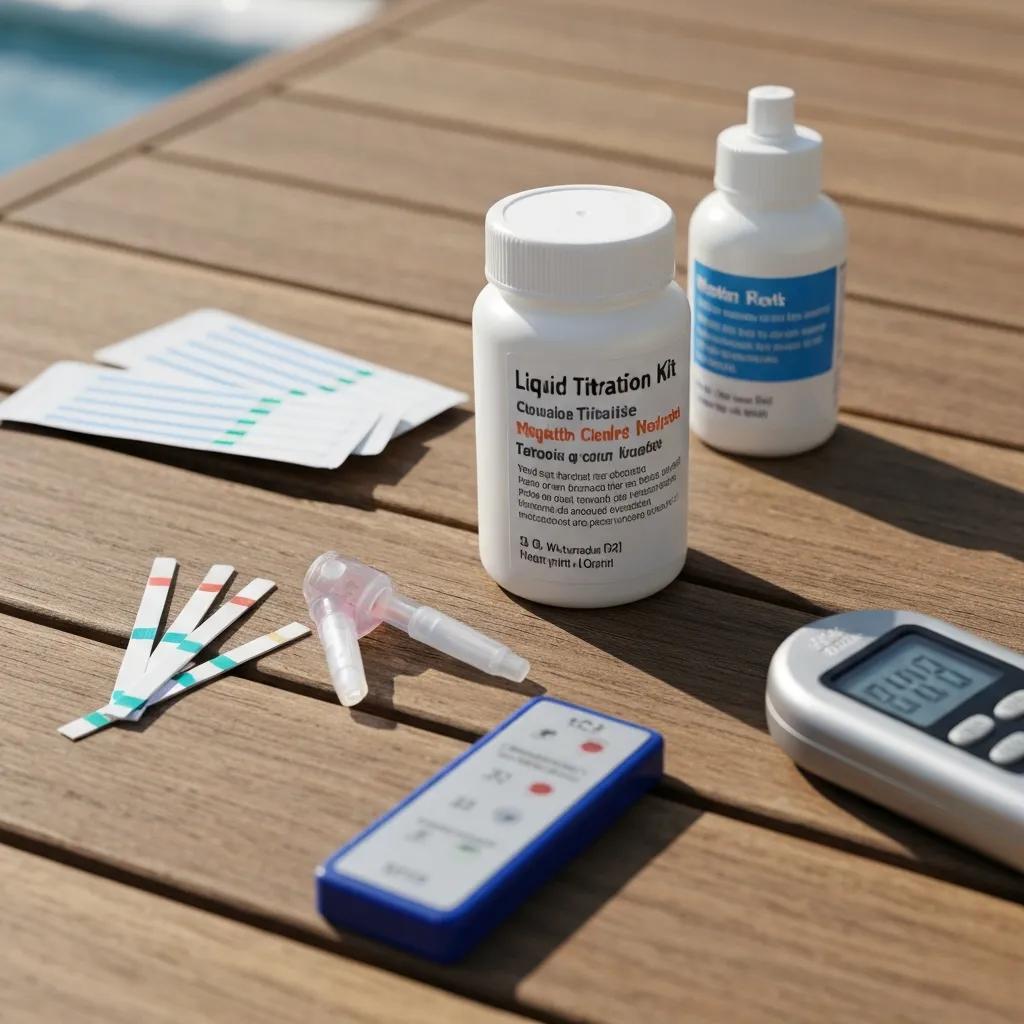
Testing hardness is straightforward: use test strips, a liquid titration kit, or a digital meter. Choice depends on how precise you need readings, your budget, and how often you test. Strips are quick and cheap for routine checks; titration kits are more accurate for troubleshooting and precise dosing; digital meters give fast, repeatable numbers for trend tracking. For any method: grab a fresh sample away from jets, follow the test instructions, record the ppm, and check pH and alkalinity to decide if action is needed. Good testing is the foundation for sensible corrections like dilution, adding increaser, or starting a hardness-reduction plan.
What Are the Best Methods to Test Hot Tub Calcium Hardness?
There are three practical approaches: test strips for fast checks, liquid titration kits for accurate ppm measurements, and portable digital meters for consistent readings over time. Strips are low-cost and easy but vary in sensitivity—good for weekly monitoring. Titration kits take a few more steps but give reliable values for dosing and diagnosing issues. Digital meters are quick and precise but cost more and need calibration. The table below compares these methods so you can match one to your routine.
Pick strips for routine checks and a titration kit or meter when you’re making corrective treatments or tracking trends more closely.
How Often Should You Test Calcium Hardness for Optimal Water Balance?
As a baseline, test weekly for typical home use, at every refill or partial drain, and after events that change chemistry—heavy bather load, topping off with hard water, or big sanitizer shocks. Test more often (twice weekly or daily) for salt systems, when you spot scale, or during troubleshooting. Keep a simple log of readings and any fixes so you can spot trends and see if your source water varies over time. Regular testing plus pH and alkalinity checks keeps you ahead of problems and avoids costly, reactive repairs.
For help picking a kit and interpreting results, One Hot Tub’s testing guides walk you through when to rely on strips and when to step up to titration, and they show how to log results for trend analysis. Those resources are especially useful for saltwater and high-use spas that need tighter monitoring.
Advanced lab methods can measure calcium, magnesium, and alkalinity precisely, giving a clearer picture of water balance for accurate treatment decisions.
Spectrophotometric Determination of Calcium, Magnesium, and Alkalinity in Water Samples
This method uses a single sequential injection manifold to determine calcium, magnesium, and alkalinity spectrophotometrically. Calcium and magnesium are measured via their reactions with cresolphtalein complexone; interference is minimized by using 8-hydroxyquinoline for calcium and EGTA for magnesium. Alkalinity is determined using acetic acid with a Bromcresol Green color change. Working ranges achieved were 0.5–5 mg dm-3 for Ca, 0.5–10 mg dm-3 for Mg, and 10–100 mg HCO3– dm-3 for alkalinity. Results for water samples matched reference methods and certified values.
A sequential injection system for the spectrophotometric determination of calcium, magnesium and alkalinity in water samples, 2004
How Do You Lower High Calcium Hardness in Your Hot Tub?
If hardness is too high, common options are partial dilution with low-hardness water, using a portable water softener at fill, or a chemical calcium remover that precipitates minerals for filtration. A partial drain and refill is simple and cheap but changes pH and alkalinity and requires retesting. Portable softeners treat incoming hose water so top-offs don’t add hardness, but they need regeneration and equipment. Chemical removers can lower dissolved calcium without draining, but they precipitate solids that must be removed by filtration. Scale inhibitors and pre-filters help prevent new scale but won’t lower dissolved hardness. Choose based on cost, time, and whether you can filter out precipitated solids.
- Dilution (Partial Drain/Refill): Effective and inexpensive but changes pH and alkalinity and requires retesting and rebalancing.
- Portable Water Softener at Fill: Prevents adding hardness with refill water; requires salt or resin regeneration and upfront equipment.
- Chemical Calcium Removers: Can lower dissolved calcium without draining but needs filtration to remove precipitated solids and careful dosing.
Weigh these options by effectiveness, convenience, and the extra adjustments they demand to pick the safest approach for your setup.
What Are Effective Methods to Reduce Hot Tub Calcium Levels?
Partial dilution replaces a portion of spa water with lower-mineral water and is usually the quickest fix—plan on 25–50% replacement depending on how far your reading is from target. Portable water softeners use ion exchange on fill water so you don’t add hardness during top-offs—handy where municipal water is consistently hard. Chemical calcium removers bind or precipitate dissolved calcium so the solids can be trapped by the filter; these often require several treatments and vigorous filtration to avoid re-suspension. Pick the method that fits your time, budget, and willingness to follow through with filtration and rebalancing.
How Do Scale Inhibitors and Pre-Filters Help Prevent Calcium Scale Buildup?
Scale inhibitors work by sequestering hardness ions or by dispersing the sites where crystals start, lowering the chance of hard deposits forming. They prevent scale but don’t remove dissolved minerals already in the water. Hose pre-filters reduce particulate and some dissolved minerals at the fill point, cutting the mineral load you add during refills. Using both together—an effective pre-filter at fill plus a scale inhibitor—reduces scaling in heaters and jets and cuts cleaning time. Still, you’ll need routine monitoring and periodic physical cleaning to handle any stubborn deposits. Combined with good filtration practices, these tools help keep scale under control without constant chemical fixes.
How Do You Raise Low Calcium Hardness in Your Hot Tub?
If calcium hardness is too low, add calcium chloride or a commercial hardness increaser in controlled doses to raise ppm and protect metal parts. The process is simple: correct total alkalinity and pH first, then dissolve the required amount of increaser in a bucket of water and add it slowly to circulating water. Let the pump run to mix, wait for solids to dissolve, then retest and adjust again if needed. Because adding calcium can nudge pH and alkalinity, retest those parameters after dosing. Small, measured doses avoid overshooting and reduce the chance of creating scale-friendly conditions.
How to Use Calcium Hardness Increasers Safely and Effectively?
Start by calculating your spa’s gallons and use the manufacturer’s dosing chart to estimate how much calcium chloride will raise ppm. Pre-dissolve granular increaser in a bucket to avoid localized clouding or shell stress, then add the solution slowly with the circulation running. Run the pump for 30–60 minutes, retest hardness, and repeat in small steps if needed. Keep pH and total alkalinity balanced before you add calcium to avoid unexpected precipitation. Track doses and outcomes so you build a reliable dosing history for your spa.
What Are the Signs of Low Calcium Hardness and Corrosion Risks?
Low hardness often shows as foamy water, rapid sanitizer drop, chalky or pitted metal surfaces, and sometimes a metallic taste or smell—signs that the water is aggressive and may etch heaters and fittings. Look for flaking metal, roughened fittings, discoloration around jets, or increased leaks and loose connectors over time. If you see these, lower total alkalinity if needed, then slowly raise calcium hardness into the recommended range. Avoid big, sudden doses that could trigger scale: measured correction preserves equipment and prevents expensive repairs.
How Can You Prevent Calcium Scale and Corrosion for Long-Term Hot Tub Care?

Preventing scale and corrosion means a proactive plan: test regularly, keep pH and total alkalinity balanced, manage temperature, maintain filtration, and use inhibitors and pre-filters when appropriate. Set a routine to check calcium hardness, pH, and alkalinity on a schedule, clean or replace filters as recommended, and dose a scale inhibitor when filling from hard source water. Watch LSI trends and treat before conditions move into scaling or corrosive territory. Regular preventative care reduces chemical shocks, lowers mechanical strain, and avoids big remediation jobs later on.
Use this simple maintenance checklist and add it to your regular spa care routine.
- Weekly: Test calcium hardness, pH, and total alkalinity; skim and remove visible debris.
- Monthly: Deep-clean and inspect filters; check sanitizer residuals and circulation equipment.
- At each refill: Use a hose pre-filter if fill water is hard and dose a recommended scale inhibitor.
Following this checklist keeps minor issues from becoming costly equipment problems. The section below explains how temperature affects scaling and how to manage it.
What Are Best Practices for Maintaining Balanced Hot Tub Water Chemistry?
Follow a reliable order of operations: test and correct total alkalinity first, then set pH, and finally adjust calcium hardness. Keep a log of tests and treatments to spot trends and source-water variability; occasional LSI checks help determine whether the system leans toward scaling or corrosion. Use daily filtration and circulation to capture precipitated solids and schedule routine deep cleans for filters so they keep working. Small, steady chemical changes and preventive steps like pre-filters and inhibitors form a dependable program that avoids both scale and corrosion.
How Does Water Temperature Influence Calcium Hardness and Scale Formation?
Higher temperatures increase the chance calcium carbonate will fall out of solution—hot tubs run warmer than pools, so they’re naturally more prone to scale. Manage temperature by reducing setpoints during long idle periods and avoid prolonged high-heat cycles when you can. Heat up gradually and monitor chemistry, because sudden temperature shifts can move the carbonate balance and trigger precipitation. Combined with inhibitors and good filtration, sensible temperature choices help minimize scale while keeping the tub comfortable.
If you want practical preventive tools, One Hot Tub’s maintenance hub has checklists, refill templates, and step-by-step articles that show how to combine testing, filter care, and inhibitor use to protect both equipment and water quality.
- Consistent Testing: Check hardness, pH, and alkalinity regularly to catch trends early.
- Preventive Tools: Use pre-filters and scale inhibitors when filling to limit added minerals.
- Temperature Management: Lower idle temperatures and heat gradually to reduce precipitation risk.
These practical steps keep water chemistry balanced, extend equipment life, and preserve water clarity without adding extra weekly work.
Frequently Asked Questions
What are the consequences of neglecting calcium hardness in hot tubs?
Ignoring calcium hardness can lead to scale buildup on heaters and plumbing that reduces performance and may cause equipment failure. Low hardness can create aggressive water that corrodes metal fittings and pitted surfaces, increases sanitizer use, and can make water cloudy or smelly. Regular checks and basic maintenance prevent these costly problems.
How can I tell if my hot tub water is too hard or too soft?
Hard water signs: white scale deposits, cloudy water, and lower heater efficiency. Soft water signs: foamy surfaces, sanitizer dropping quickly, and etched metal fixtures. Use strips or a titration kit to confirm hardness and act accordingly.
Can I use regular water softeners for my hot tub?
Traditional home water softeners can reduce hardness but often replace calcium with sodium, which can affect spa chemistry and sanitizer performance. A better option is a portable softener made for filling spas, or use a pre-filter at the hose. Always check your hot tub manufacturer’s recommendations before using softened water.
What role does pH play in managing calcium hardness?
pH affects how readily calcium carbonate forms. High pH increases scaling risk; low pH makes water more aggressive. Aim for pH between 7.2 and 7.8 while you manage hardness. Regularly testing and adjusting pH along with alkalinity and hardness keeps conditions stable.
How do temperature fluctuations affect calcium hardness?
Higher temperatures make calcium carbonate less soluble, so hot tubs that run hot are more likely to form scale. Avoid sudden temperature spikes—heat gradually and keep idle temperatures lower when not using the tub to reduce scaling risk.
What are the best practices for maintaining calcium hardness levels?
Test regularly, keep a log of results, and make small adjustments instead of big jumps. Target the ideal hardness range for your tub type, and monitor pH and total alkalinity at the same time. Use pre-filters and scale inhibitors during refills to limit added minerals. Consistency prevents imbalances and extends equipment life.
Are there any natural methods to manage calcium hardness?
There aren’t truly “natural” fixes that will significantly change hardness. Practical, low-chemical strategies include using a hose pre-filter when filling and following good maintenance: clean filters, dose preventive scale inhibitors, and dilute with low-hardness water when needed. For major adjustments, dilution or chemical treatments are usually required.
Conclusion
Keeping calcium hardness in the right range protects your hot tub equipment and keeps water clear and comfortable. Regular testing, measured adjustments, and simple prevention steps—pre-filters, inhibitors, and sensible temperature control—go a long way toward avoiding scale and corrosion. Follow a steady maintenance routine and use the resources in our guides to make confident, effective decisions for your spa.
