
What’s in this guide
- What You'll Need Before You Start
- Step 1 — Shred and Salt the Cabbage
- Step 2 — Mix Your Cabbage Bread Batter
- Step 3 — Cook Your Cabbage Bread
- Step 4 — Make the 2-Ingredient Viral Version
- Low-Carb, Keto, and Banting Variations
- Flavor Variations — Cheesy, Egg, and More
- How to Shape and Serve Your Cabbage Bread
- International Styles — Okonomiyaki and Runzas
- Troubleshooting Cabbage Bread Problems
- More Cabbage Recipes to Try
- Frequently Asked Questions
- Conclusion
“Recently saw a short saying you can make ‘bread’ from egg, shaved cabbage and some salt and pepper and fry in a pan. Has anyone tried? Is it any good?”
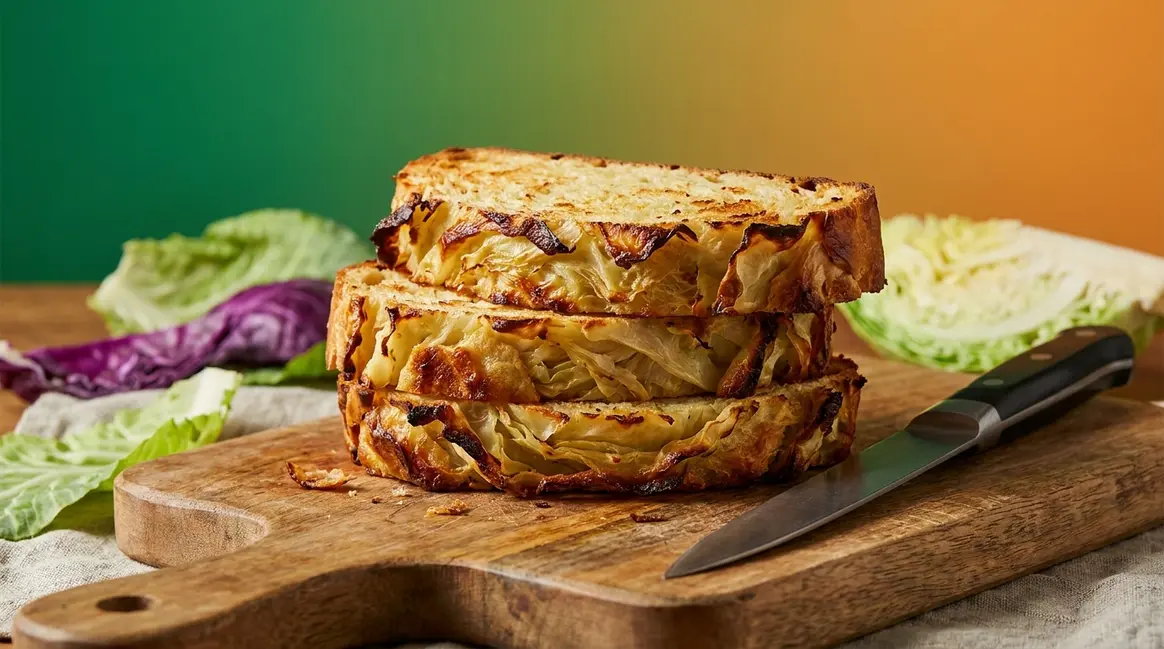
That question is exactly what brought most people here — and the honest answer is: yes, it actually works. A cabbage bread recipe takes nothing more than shredded cabbage, an egg, and a pinch of salt to produce a warm, golden slice that holds a burger, cradles a sandwich filling, or disappears straight off the pan.
This guide walks you through every stage, from shredding to serving, with photos at each step. Whether you want the quick two-ingredient viral version, a keto-friendly almond flour swap, or a full baked loaf, the same core idea — The Cabbage Swap Method — applies throughout: shredded cabbage, bound with egg, stands in for traditional dough in any shape you need.
What You’ll Need Before You Start
Estimated Time: 20 minutes
Before you touch a single leaf of cabbage, take two minutes to read through this section. Knowing what you’re making — and gathering everything first — is what separates a smooth first attempt from a frustrating one.
What Is Cabbage Bread?
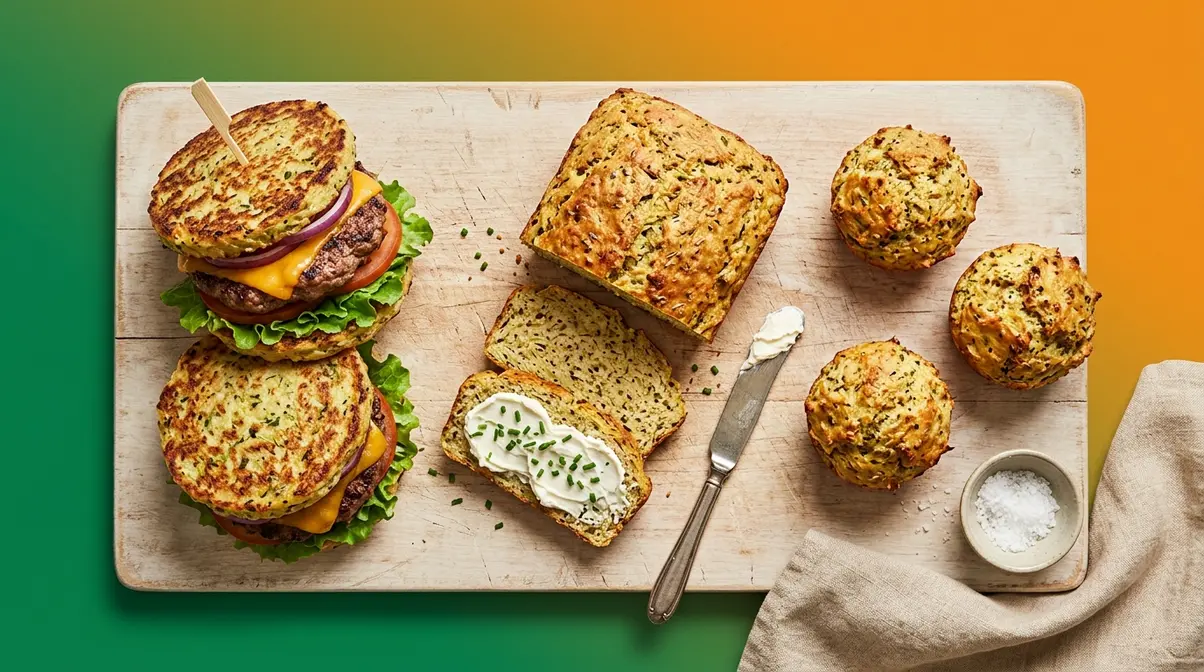
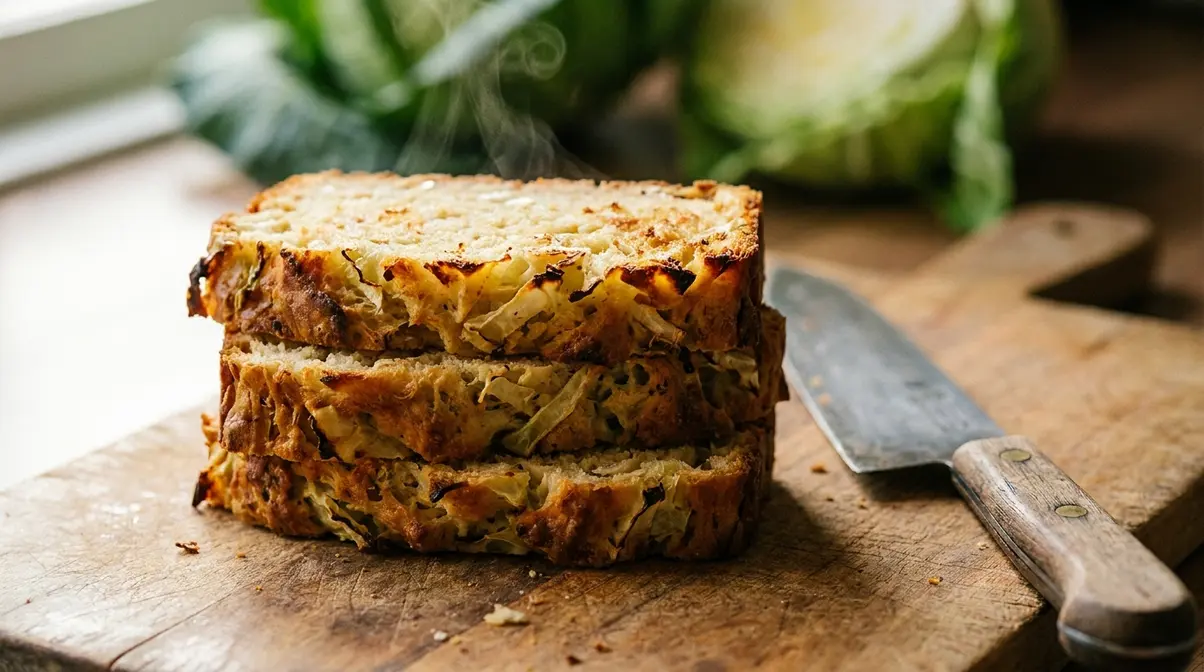
Cabbage bread is a low-carb bread substitute made by binding finely shredded cabbage with egg (and sometimes a small amount of flour) and then pan-frying or baking the mixture into flat slices, rolls, or a loaf. It is not a traditional yeasted bread — there is no gluten structure, no rise, and no kneading. Think of it instead as a dense, savory patty or flatbread that happens to hold together well enough to carry your toppings.
The concept went viral on TikTok in 2026 under tags like “Viral KETO Cabbage bread” and “2 ingredient cabbage,” with millions of views on short clips showing the pan-fry method. Home cooks across Reddit and TikTok consistently report that the texture is closest to a dense corn tortilla or a thick hash brown — sturdy enough to use as sandwich bread, satisfying enough to eat on its own.
Cabbage Bread Ingredients
The core recipe uses just four ingredients. Optional additions are noted for each variation later in the guide.
| Ingredient | Amount | Why It’s Here |
|---|---|---|
| Green or white cabbage, finely shredded | 2 cups (approx. 200 g) | The base — provides bulk and structure |
| Large egg | 1–2 | The binder — holds everything together |
| All-purpose flour (or almond flour for keto) | 2 tbsp | Extra structure; omit for 2-ingredient version |
| Salt | ½ tsp | Draws out water from the cabbage |
| Black pepper | ¼ tsp | Flavor |
| Olive oil or butter | 1 tbsp | For pan-frying |
Ingredient note: Green cabbage works best for beginners because it has a mild flavor and finely shreds with a standard knife. Red cabbage works too but turns the bread an unusual purple-grey color when cooked — still tasty, just unexpected.
Equipment Checklist
Gather these before you start so nothing interrupts the process:
- Large mixing bowl — for salting and mixing the cabbage
- Sharp chef’s knife or box grater — for shredding (a food processor with a shredding disc also works)
- Clean kitchen towel or cheesecloth — for squeezing out water (this step is non-negotiable)
- Non-stick skillet or frying pan, 10–12 inches — a non-stick surface prevents sticking without using excessive oil
- Spatula — flat and wide, for flipping without breaking the slice
- Measuring spoons — for salt and flour
- Optional: 8×4-inch loaf pan — for the oven-baked version
Step 1 — Shred and Salt the Cabbage
This is the most important step in the entire recipe. Get it right and the rest follows naturally.
How to Shred Cabbage the Right Way
Remove the outer leaves of your cabbage and cut it in half through the core. Place one half flat-side down on your cutting board. Slice across the cabbage as thinly as you can — you are aiming for strips no wider than 2–3 mm (about the thickness of a coin). Thinner shreds mean a more cohesive, bread-like result; thick chunks will not bind properly and will fall apart in the pan.
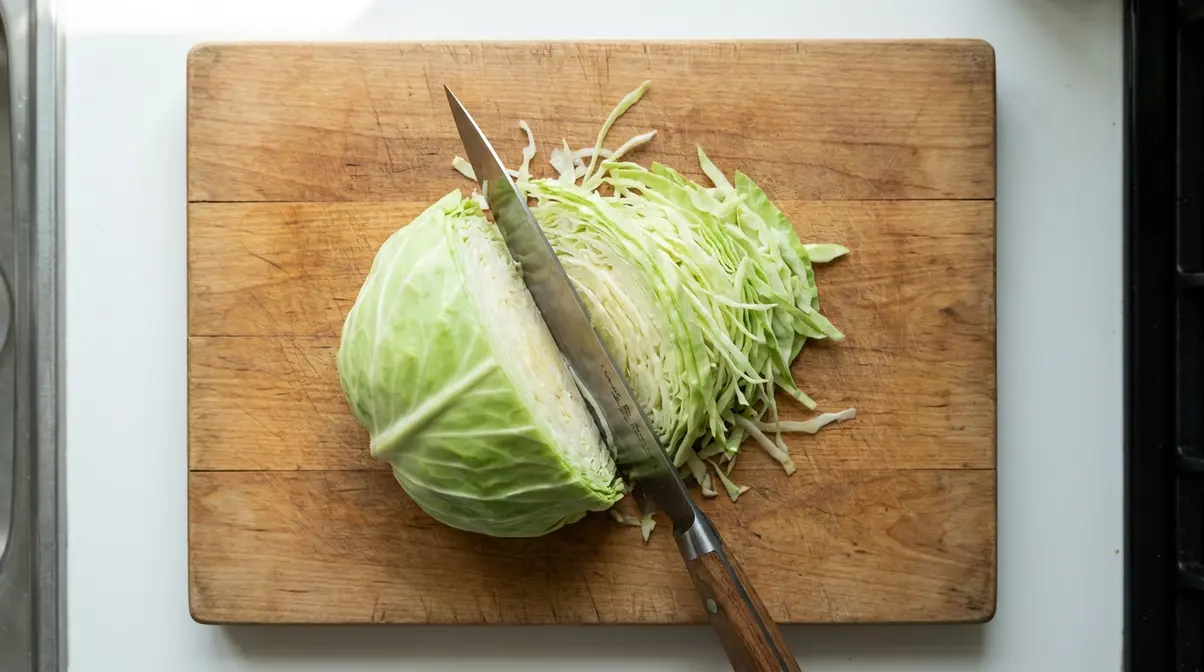
Once shredded, measure out approximately 2 cups (loosely packed). This is your working amount for one batch of 2–3 slices.
Quick tip: A box grater’s largest holes produce fine, even shreds in about 90 seconds and require no knife skills at all — ideal if you are new to this.
Why Salting and Squeezing Matters
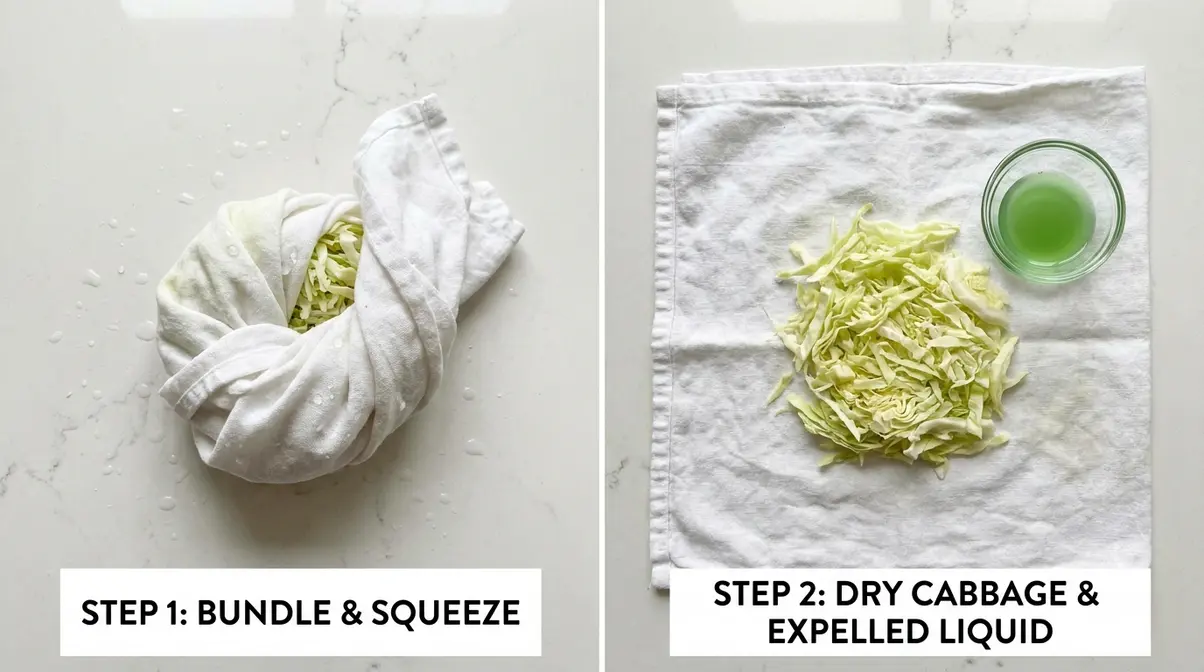
Place your shredded cabbage in the mixing bowl and sprinkle ½ teaspoon of salt over it. Toss briefly, then let it sit for 10 minutes. You will see small beads of water forming on the cabbage — that is exactly what you want.
After 10 minutes, transfer the cabbage to your clean kitchen towel, gather the corners, and twist firmly over the sink. Keep squeezing until no more liquid drips out. You may be surprised how much water comes out — sometimes up to ¼ cup from 2 cups of cabbage.
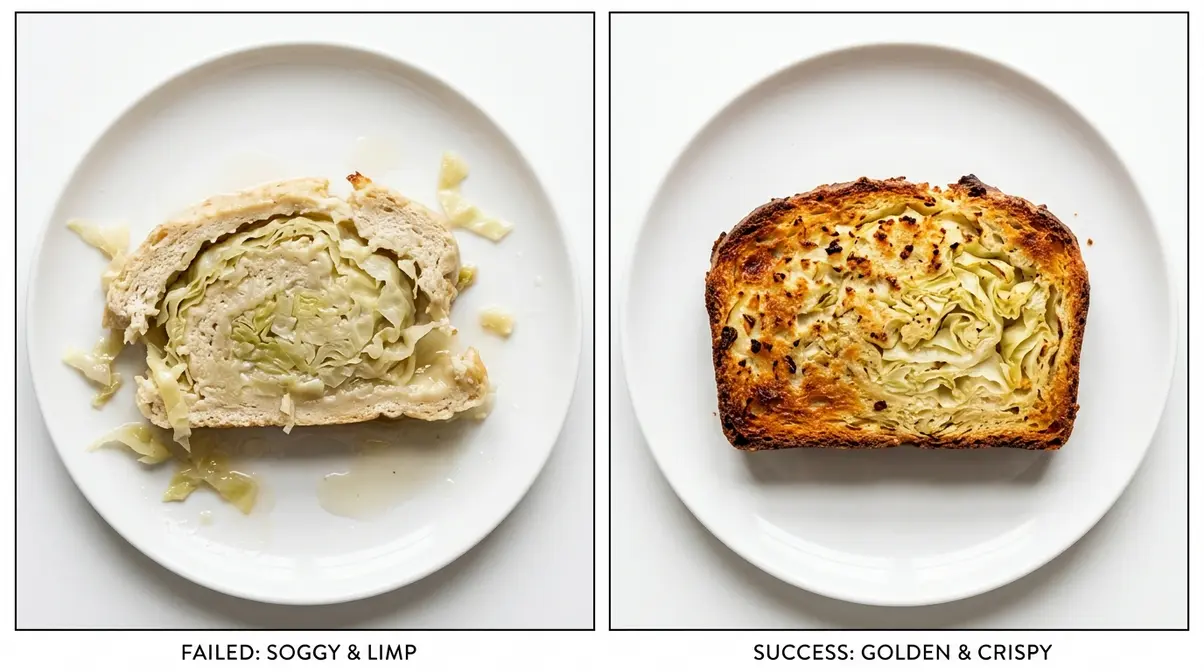
Why this step matters: Cabbage is approximately 92% water by weight (USDA FoodData Central, 2026). If you skip the squeeze, all that water releases into your pan during cooking, steaming the bread instead of frying it — which gives you a limp, soggy result rather than a firm, golden slice. Home cooks across Reddit and TikTok consistently report that salting and squeezing is the single most important step for avoiding soggy bread.
Step 2 — Mix Your Cabbage Bread Batter
With the cabbage dry and ready, the mixing step takes under two minutes.
The Binding Ingredients — Egg and Flour
Crack one large egg into the bowl with your squeezed cabbage. Add 2 tablespoons of all-purpose flour and a pinch of black pepper. Mix everything together with a fork until the egg coats every strand of cabbage and the mixture clumps when you press it together.
Why eggs are essential: The egg provides the protein network that acts as a binder — similar to how egg holds a meatball together. Without it, the cabbage shreds have no “glue” and will scatter in the pan. This is also why eggs appear in traditional cabbage roll recipes: they bind the filling and keep it from crumbling during cooking.
According to the USDA FoodData Central, one large egg adds only 0.4 g of carbohydrates, making it a near-zero-carb binder — ideal for keto and low-carb diets.
Why put eggs in cabbage rolls?
Eggs act as a binder in cabbage-based recipes. When heated, egg proteins coagulate and form a network that locks the other ingredients together. Without egg, shredded cabbage or loose fillings simply fall apart during cooking. In traditional stuffed cabbage rolls, egg in the filling prevents the meat mixture from crumbling when the rolls are simmered. In cabbage bread, the egg is the single most important structural ingredient — it is what turns a pile of shredded vegetables into a slice that holds together.
Checking Batter Consistency
After mixing, the batter should look like thick, chunky pancake batter — not runny, not dry. When you scoop a palmful and press it, it should hold its shape for 2–3 seconds before slowly relaxing. If it falls apart immediately, add a second egg. If it looks wet and loose, add another tablespoon of flour.
Step 3 — Cook Your Cabbage Bread
You have two reliable methods: pan-frying (fast, crispy, best for slices) and oven-baking (hands-off, best for a loaf). Choose based on your time and what you plan to use the bread for.
Pan-Frying Method (Quick and Easy)
- Heat your non-stick skillet over medium heat (not high — you want a slow, even cook). Add 1 tablespoon of olive oil or butter and let it warm for 30 seconds.
- Scoop roughly ½ cup of batter per slice into the pan. Use the back of a spoon to press it flat to about 1 cm (½ inch) thickness. Thinner than this and it will be too fragile; thicker and the center will stay raw.
- Cook for 4–5 minutes without moving it. The edges will turn opaque and slightly golden — that is your cue to flip.
- Flip carefully with a wide spatula and cook for another 3–4 minutes on the second side.
- Remove to a plate lined with a paper towel to absorb any excess oil.
Expected outcome: A firm, golden-brown slice that holds its shape when picked up. The inside should be cooked through with no raw egg smell.
Oven-Baked Loaf Method
For a sliceable loaf that holds together more firmly — great for sandwiches — use this method.
- Preheat your oven to 190°C / 375°F.
- Grease an 8×4-inch loaf pan with butter or cooking spray.
- Double the base recipe (4 cups cabbage, 2 eggs, 4 tbsp flour). Add ½ teaspoon baking powder for a slightly lighter texture.
- Press the mixture firmly into the loaf pan, smoothing the top with a wet spatula.
- Bake for 30–35 minutes until the top is golden and a toothpick inserted in the center comes out clean.
- Let it cool in the pan for 10 minutes before turning it out. Slicing too early causes it to crumble.
Checkpoint: How to Tell When It’s Done
| Signal | Pan-Fried Slices | Baked Loaf |
|---|---|---|
| Color | Deep golden-brown on both sides | Golden-brown top, pale sides |
| Texture | Firm when pressed with spatula | Toothpick comes out clean |
| Smell | Nutty, slightly caramelized | Savory, egg-free smell |
| Time | 8–10 min total | 30–35 min at 190°C |
If the center still feels wet and soft after these times, reduce the heat slightly and cook for 2–3 more minutes. A common mistake is cooking on too-high heat, which browns the outside quickly while leaving the inside underdone.
Step 4 — Make the 2-Ingredient Viral Version
This is the version most people see on TikTok first — and it really is as simple as it looks.
What You Need (Just Cabbage and Egg)
- 2 cups finely shredded cabbage (squeezed dry)
- 2 large eggs
- Salt and pepper to taste
- 1 tsp oil for the pan
No flour. No other ingredients. This is the “2 ingredient cabbage” version that went viral, and the reduced ingredient list makes it even more keto-friendly: the finished slice contains roughly 3–4 g of net carbs per serving, compared to 15–20 g in a standard slice of white bread.
The Viral TikTok Method: Step-by-Step
- Shred and salt your cabbage as described in Step 1 — do not skip the squeeze even for this version.
- Mix squeezed cabbage with 2 eggs (using 2 eggs instead of 1 compensates for the missing flour).
- Season generously with salt and pepper.
- Heat a lightly oiled pan over medium-low heat.
- Spoon the mixture in and press flat to about 1 cm thick.
- Cook 5–6 minutes per side — slightly longer than the flour version, because the egg needs more time to set without flour’s help.
- Slide onto a plate and use immediately — this version is best eaten fresh, as it softens faster than the flour-added version.
Low-Carb, Keto, and Banting Variations
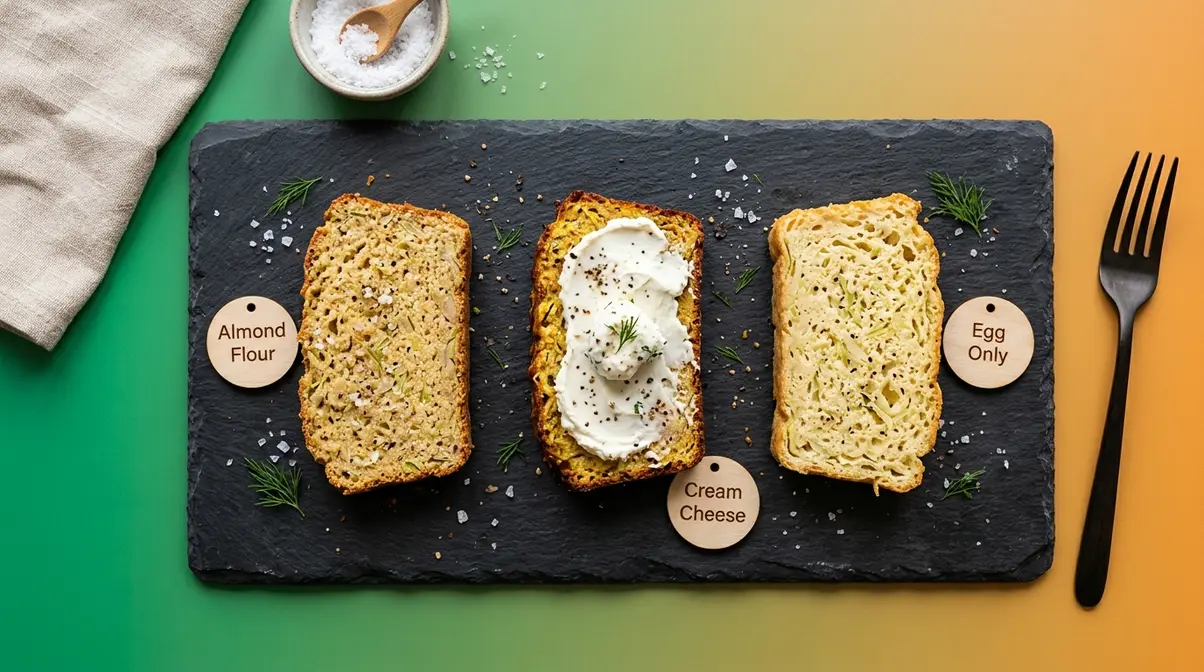
The Cabbage Swap Method adapts naturally to several popular low-carb eating styles. Here is how to adjust the base recipe for each.
Keto Cabbage Bread (Almond Flour Swap)
Replace the 2 tablespoons of all-purpose flour with 2 tablespoons of almond flour (also called ground almonds). Everything else stays the same. Almond flour adds healthy fats and protein while keeping the carb count low — a single tablespoon of almond flour contains approximately 1.5 g net carbs, compared to 6 g in all-purpose flour.
For an even richer keto slice, add 2 tablespoons of shredded mozzarella to the batter. The melted cheese adds fat and helps the slice hold together with a slightly gooier interior. This is a popular approach in keto communities and is referenced in discussions on forums like BigOven’s community recipe boards.
Research suggests that low-carbohydrate diets can support weight management and metabolic health goals (NCBI, 2026) — making this keto version a practical everyday tool, not just a novelty.
Banting-Friendly Cabbage Bread
Banting (a South African low-carb eating plan similar to keto, popularized by Professor Tim Noakes) follows stricter guidelines: no grains, no legumes, and full-fat dairy encouraged. For a Banting-compliant version:
- Use no flour at all (grain-free)
- Add 1 tablespoon of cream cheese to the batter for binding
- Use butter rather than vegetable oil for frying
- Season with herbs (parsley, chives) rather than processed seasonings
The resulting slice is richer and slightly denser than the standard version, but fully compliant with Banting green-list guidelines.
Nutrition: Why Cabbage Works
According to the USDA FoodData Central, raw green cabbage contains only 5.8 grams of carbohydrates per 100 grams — making it one of the lowest-carb vegetables available. By contrast, 100 grams of standard white bread contains approximately 49 grams of carbohydrates. The cabbage swap reduces the carb load of a two-slice serving from roughly 25–30 g to just 4–6 g net carbs.
| Version | Net Carbs (per slice, approx.) | Protein | Fat |
|---|---|---|---|
| Standard (all-purpose flour) | 8–10 g | 5 g | 4 g |
| 2-Ingredient (egg only) | 3–4 g | 4 g | 3 g |
| Keto (almond flour) | 4–5 g | 6 g | 7 g |
| Banting (cream cheese) | 3–4 g | 5 g | 8 g |
Figures are approximate and based on USDA FoodData Central data (2026). Actual values vary with portion size.
Flavor Variations — Cheesy, Egg, and More
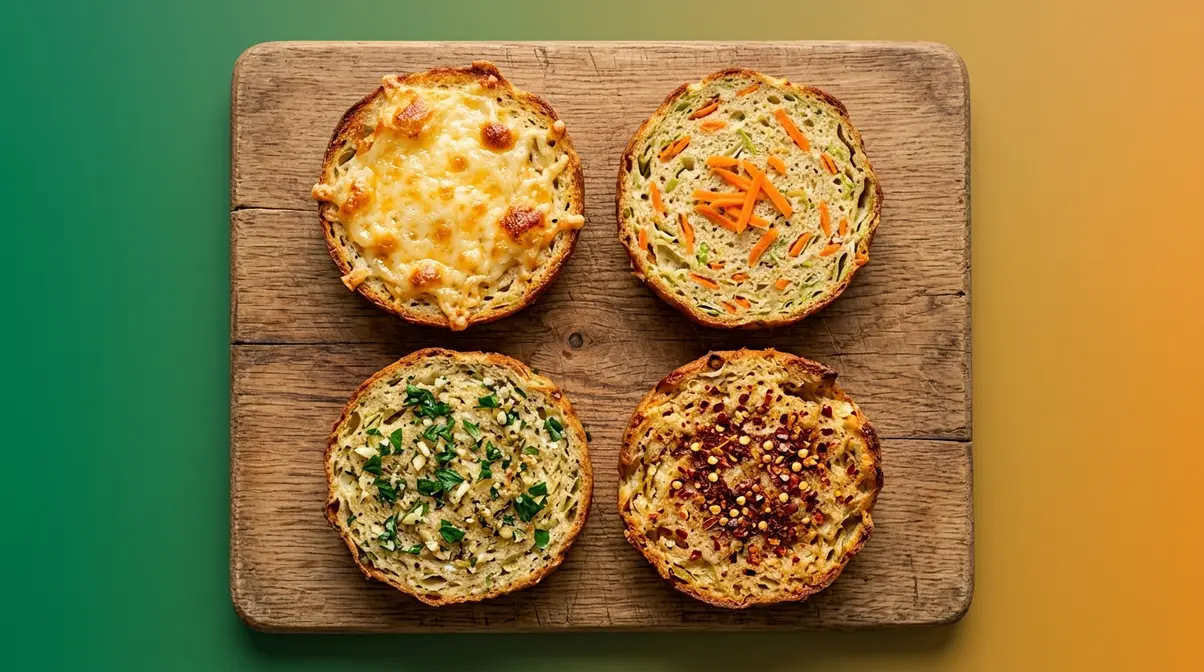
Once you have the base method down, the flavor additions are where things get interesting.
Cheesy Cabbage Bread
Add 3 tablespoons of grated cheddar or mozzarella to the batter before cooking. The cheese melts into the cabbage during frying, creating a golden, slightly crispy crust on the outside and a gooey, savory interior. This is the most popular variation among first-time makers — the familiar cheese flavor makes the cabbage taste far less “healthy” and far more like comfort food.
For a sharper flavor, use aged cheddar. For a stretchier melt, mozzarella works best. You can also mix ½ tablespoon of grated Parmesan into the batter for a nutty, salty depth.
Cabbage and Egg Bread
This variation leans into the egg flavor rather than hiding it — useful if you are making this for breakfast. Add an extra egg yolk (not the white) to the standard batter. The yolk enriches the flavor and gives the finished slice a deeper golden color. Top with a fried egg and a pinch of chili flakes for a complete, protein-rich breakfast plate that needs no other bread at all.
The reason eggs appear in so many cabbage-based recipes — from traditional cabbage rolls to this modern bread substitute — is structural: egg proteins coagulate when heated, forming a network that locks the ingredients together. Without egg, shredded cabbage simply falls apart. Taste of Home’s stuffed cabbage guide illustrates this principle well in the context of traditional rolls.
Carrot, Herbs, and Other Add-Ins
The batter accepts additions easily. These combinations work particularly well:
- Carrot and cabbage bread: Add ½ cup of finely grated carrot to the batter. Carrot adds natural sweetness, a slight orange color, and extra beta-carotene. This variation is popular with kids who are skeptical of plain cabbage.
- Herb version: Add 1 tablespoon of chopped fresh parsley and ½ teaspoon of garlic powder. This pairs well with soups and stews as a side bread.
- Spiced version: Add ½ teaspoon of cumin and a pinch of chili flakes for a version that works as a taco shell substitute.
- Onion version: Add 2 tablespoons of finely diced spring onion (scallion) for a mild, savory bite.
How to Shape and Serve Your Cabbage Bread
The same batter produces completely different results depending on how you shape and cook it.
Cabbage Bread Rolls
To make rolls, portion the batter into balls roughly the size of a golf ball (about 3 tablespoons each). Place them in a lightly greased muffin tin and bake at 190°C / 375°F for 20–22 minutes. They will puff slightly and firm up as they cool. These hold together better than pan-fried rounds, making them ideal for dipping into soups or using as dinner rolls alongside roasted meats.
Cabbage Bread Sandwich Slices
For a proper sandwich, you need slices that are firm enough to hold fillings without falling apart. Use the baked loaf method (Step 3) and let the loaf cool completely — at least 30 minutes — before slicing with a sharp serrated knife. Cut slices about 1.5 cm (⅝ inch) thick; thinner than this and they will crumble.
Best fillings for cabbage bread sandwiches: Cream cheese and cucumber, tuna mayo, egg salad, or sliced avocado with salt. Avoid very wet fillings (like a dripping tomato sauce) as they will soften the bread quickly.
Cabbage Burger Buns
This is the showstopper use case. Make two pan-fried rounds per burger, pressing each one slightly thicker (about 1.5 cm) so they have enough structural integrity to hold a patty. Let them rest on a paper towel for 2 minutes after frying — this firms them up considerably.
Assembly tip: Toast the inner face of each bun in a dry pan for 60 seconds before assembling. This creates a slight crust that prevents the burger juices from soaking through. The result is sturdy enough to hold a standard beef or chicken patty, plus lettuce and sauce.
International Styles — Okonomiyaki and Runzas
Cabbage-based breads are not new — cultures around the world have been using cabbage as a bread element for centuries. Two of the most celebrated versions are worth knowing about.
Japanese Okonomiyaki
Okonomiyaki is a Japanese savory pancake whose name translates roughly to “cook what you like.” The base is shredded cabbage bound with egg, flour, and dashi stock — making it structurally almost identical to the Cabbage Swap Method, just with a few extra Japanese pantry ingredients.
Traditional toppings include Japanese mayonnaise, okonomiyaki sauce (similar to Worcestershire), bonito flakes (dried tuna shavings), and aonori (dried seaweed flakes). The dish originated in the Osaka region and is now one of Japan’s most recognized street foods.
- To make a simplified version at home, add to your base batter:
- 1 tablespoon of soy sauce
- ½ teaspoon of sesame oil
- 1 tablespoon of flour (for a thicker pancake)
- 2 tablespoons of thinly sliced spring onion
Cook as per the pan-frying method and top with any combination of the traditional garnishes. For a deeper dive into the authentic recipe and regional variations, Giallo Zafferano’s cabbage bread and rolls guide offers useful technique context.
German Runzas (Bierocks)
Runzas (also called Bierocks) are yeasted bread rolls filled with a mixture of cabbage, ground beef, and onion — a tradition brought to the American Midwest by Volga German immigrants in the 19th century. They answer the question “Where did cabbage bread come from?” with a different, older answer than TikTok provides.
Unlike the pan-fried Cabbage Swap Method, runzas use conventional bread dough as the outer shell and cabbage as the filling — essentially the reverse of our approach. But they demonstrate that the cabbage-and-bread combination has deep cultural roots across Europe and North America, not just in modern low-carb communities. The runza is the official state sandwich of Nebraska, where it remains a beloved regional staple.
Where did cabbage bread come from?
Cabbage bread has roots in multiple food cultures, not a single origin. German Runzas (Bierocks) — yeasted rolls filled with cabbage and beef — were brought to the American Midwest by Volga German immigrants in the 19th century. Japanese okonomiyaki, a savory cabbage pancake bound with egg and flour, dates back centuries in the Osaka region. The modern viral version — a simple pan-fried cabbage-and-egg slice — emerged on TikTok and Instagram around 2026 as part of the broader low-carb and keto trend.
Troubleshooting Cabbage Bread Problems
Even experienced cooks run into issues with this recipe. Here are the three most common problems and exactly how to fix them.
What is the secret to good cabbage bread?
The secret is squeezing out every drop of water before cooking. Cabbage is approximately 92% water (USDA FoodData Central, 2026) — and that water, if left in, will steam the bread rather than allow it to fry into a firm slice. Salt the shredded cabbage, let it sit for 10 minutes, then squeeze it firmly in a kitchen towel until no more liquid drips out. Home cooks who skip this step consistently report soggy, falling-apart results. Those who squeeze thoroughly almost always get a firm, golden slice on their first try.
Why Is My Cabbage Bread Soggy?
The cause is almost always insufficient squeezing. Cabbage releases a surprising amount of water during cooking — if that water is still in the cabbage when it hits the pan, it steams the bread from the inside rather than allowing it to fry and firm up.
- Fix:
- Go back to Step 1 and squeeze harder. Wrap the cabbage tightly in a clean towel and twist for a full 60 seconds, not just a quick squeeze.
- If you have already cooked a soggy batch, place the slices on a baking sheet and bake at 180°C for 8–10 minutes — the dry oven heat will evaporate the remaining moisture and firm them up.
- Next time, add 1 extra tablespoon of flour to absorb residual moisture.
In low-light or humid kitchen conditions, even well-squeezed cabbage can release extra moisture during cooking. Cooking over medium (not high) heat gives the water time to evaporate before the egg sets — reducing sogginess significantly.
Why Won’t the Bread Hold Together?
If your slices fall apart when you try to flip them, the batter needs more binder.
- Fix:
- Add a second egg. One egg is sufficient for most batches, but larger cabbages with more volume need more binding protein.
- Add 1 tablespoon of flour (or almond flour for keto). Flour absorbs moisture and helps the mixture cohere.
- Make sure your shreds are fine, not chunky. Thick strips of cabbage do not interlock the way fine shreds do — fine shreds create a matted, woven structure that holds together under the spatula.
- Do not flip too early. The slice needs 4–5 full minutes on the first side to develop a crust that holds it together. Flipping at 2–3 minutes is the most common beginner mistake.
Storage and Reheating Tips
Cabbage bread is best eaten fresh, but it stores and reheats well if handled correctly.
- Storage:
- Let slices cool completely before storing (warm slices create steam in the container, making them soggy).
- Store in an airtight container in the refrigerator for up to 3 days.
- Layer slices with parchment paper to prevent sticking.
- For longer storage, freeze individual slices between sheets of parchment for up to 1 month.
- Reheating:
- Best method: Reheat in a dry non-stick pan over medium heat for 2–3 minutes per side. This restores the crispy exterior.
- Acceptable method: Oven at 180°C for 8–10 minutes on a rack (not a flat tray — air circulation prevents sogginess).
- Avoid: Microwaving makes the bread soft and rubbery. Use it only if you are in a hurry and plan to top the slice with something anyway.
More Cabbage Recipes to Try
Once you have mastered the Cabbage Swap Method, these related recipes use the same foundational techniques and take very little additional learning:
- Cabbage stir-fry with egg — the same shred-and-fry approach, served loose rather than pressed into a slice. Ready in 8 minutes.
- Stuffed cabbage rolls — whole cabbage leaves blanched and wrapped around a meat-and-rice filling. A traditional Eastern European dish that uses the same salting principle to soften the leaves.
- Cabbage soup with egg drop — a warming, near-zero-carb soup that uses finely shredded cabbage as the primary bulk ingredient.
- Cabbage hash browns — essentially the same batter as the 2-ingredient version, pressed into smaller, thicker patties and cooked until very crispy. A perfect breakfast side.
Frequently Asked Questions
What is cabbage bread?
Cabbage bread is a low-carb bread substitute made by binding finely shredded cabbage with egg and (optionally) a small amount of flour, then pan-frying or baking the mixture into flat slices, rolls, or a loaf. It contains no yeast, no gluten structure, and no traditional dough. A standard slice contains approximately 3–10 g of net carbs depending on the version — compared to 15–25 g in a slice of conventional bread (USDA FoodData Central, 2026). It is best described as a dense, savory flatbread that holds toppings and fillings well.
Making 2-Ingredient Cabbage Bread?
2-ingredient cabbage bread uses only shredded cabbage and egg. Shred 2 cups of green cabbage finely, toss with ½ teaspoon of salt, and let it sit for 10 minutes. Squeeze out all liquid using a clean towel. Mix with 2 beaten eggs and season with salt and pepper. Press into a lightly oiled pan over medium-low heat and cook 5–6 minutes per side until golden and firm. The result is a Keto-friendly slice with roughly 3–4 g net carbs (USDA FoodData Central) — and no other ingredients required.
How do you make lazy man’s cabbage?
“Lazy man’s cabbage” is an informal term for the quickest, most minimal version of pan-fried cabbage bread — essentially the 2-ingredient viral method. Shred cabbage roughly (no need for perfect thin strips), salt and squeeze, mix with 1–2 eggs, and fry flat in a pan. No flour, no measuring, no oven. It takes about 15 minutes start to finish and uses ingredients most people already have. The texture is more rustic than the standard recipe, but it works well as a quick snack or a base for eggs and cheese.
Boiling Cabbage for Cabbage Rolls?
For traditional stuffed cabbage rolls, boil whole cabbage leaves for 2–3 minutes per leaf in salted water until they are pliable enough to roll without tearing. A quicker method: place the whole head of cabbage (core removed) in boiling water for 5–8 minutes, then peel off the softened outer leaves as they loosen. Note: This boiling step applies to traditional stuffed rolls, not to cabbage bread. For the pan-fried or baked bread recipes in this guide, you do not boil the cabbage at all — raw, shredded cabbage goes straight into the batter.
What is poor man’s cabbage?
“Poor man’s cabbage” is an informal term for simple, budget-friendly cabbage dishes — sometimes referring to plain boiled or fried cabbage seasoned with salt and butter, and sometimes to the 2-ingredient cabbage bread itself. Cabbage has historically been one of the cheapest vegetables available year-round, making it a staple in working-class cuisines across Europe and North America. A full head of green cabbage typically costs under $2 and yields enough batter for 6–8 slices of cabbage bread — making this one of the most cost-effective bread substitutes available.
Conclusion
For anyone exploring low-carb eating or simply looking for a creative way to use up a head of cabbage, this cabbage bread recipe delivers a genuinely useful result — not just a novelty. A single head of green cabbage contains only 5.8 g of carbohydrates per 100 g (USDA FoodData Central, 2026), and the pan-fried slice method turns that into a bread substitute in under 20 minutes. The key is the approach this guide calls The Cabbage Swap Method: shred fine, salt and squeeze thoroughly, bind with egg, and shape to your needs — whether that is a flat slice, a baked loaf, or a burger bun.
Every variation in this guide — the 2-ingredient viral version, the keto almond flour swap, the cheesy skillet slice, the okonomiyaki — follows the same underlying principle. Once you understand that egg is the binder and water removal is the key variable, the entire recipe becomes predictable and repeatable. That is what makes The Cabbage Swap Method a transferable skill rather than a one-off trick.
Start with the basic pan-fried version this week. Make two slices, let them cool for two minutes, and try them with cream cheese and cucumber. If they hold together and taste good to you, try the cheesy variation next. Most first-time makers are surprised enough by the result that they make a second batch the same day — which is the best sign that a recipe actually works.

Dave King
Recipe developer and writer at Quick Dish Cookbook.