
What’s in this guide
- What You'll Need: Ingredients and Equipment
- Step 1: Mix the Classic Wingstop Fry Seasoning Blend
- Step 2: Season Your Fries the Right Way
- Step 3: Choose Your Cooking Method for Maximum Crispiness
- Step 4: Try All 3 Tested Variations
- Verify Your Results
- Troubleshooting Common Seasoning Problems
- Complete the Wingstop Experience
- How to Store Your Homemade Fry Seasoning
- Frequently Asked Questions
- Make Your First Batch Tonight
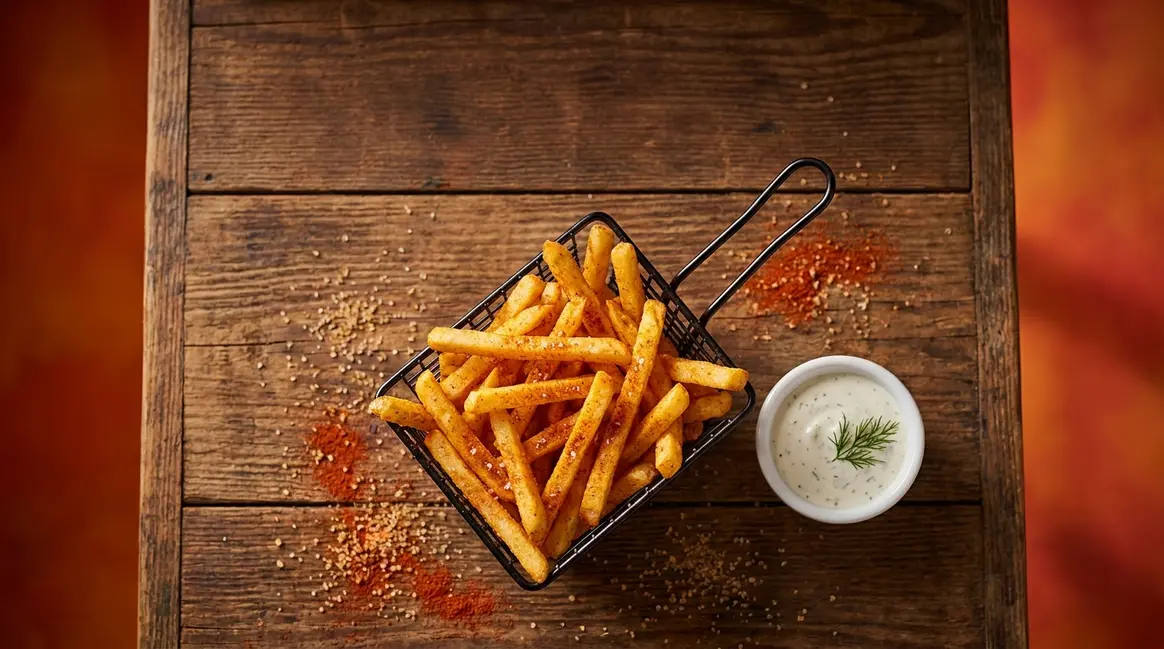
To make a wingstop fry seasoning recipe copycat, combine 1 tablespoon granulated white sugar, 1 tablespoon brown sugar, 1 teaspoon salt, 1 teaspoon smoked paprika, ½ teaspoon garlic powder, ½ teaspoon chili powder, and ¼ teaspoon black pepper in a small bowl. Whisk together, then toss immediately over hot, freshly cooked fries. This 4-step process takes about 5 minutes and uses pantry staples you likely already have.
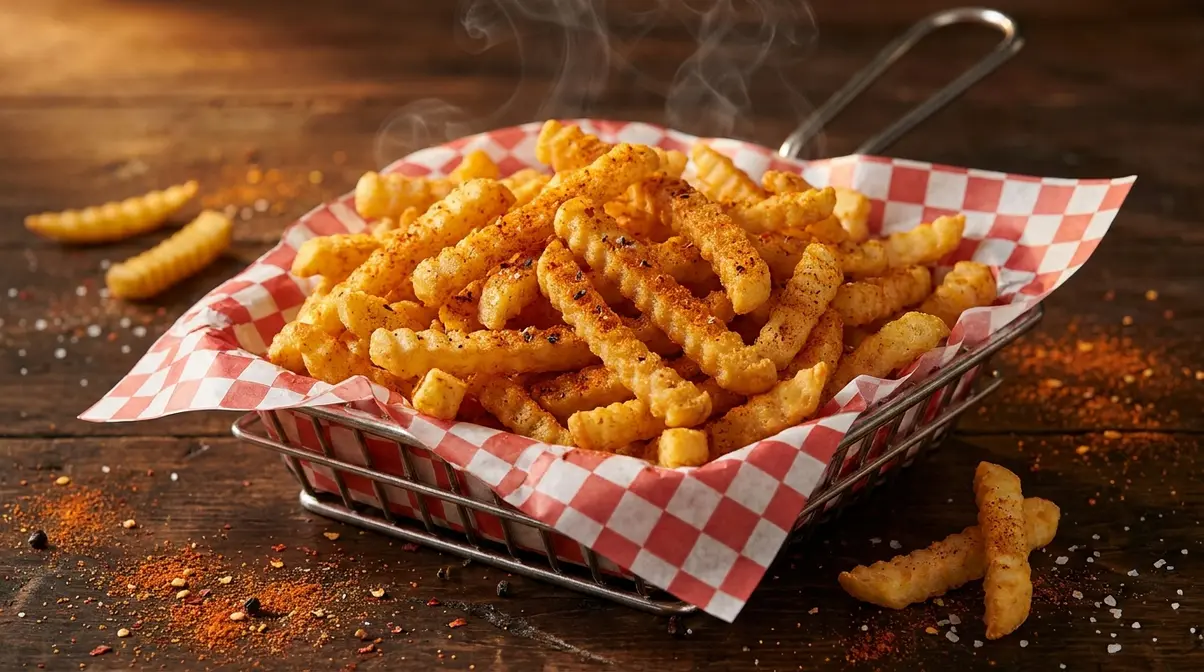
You know the feeling. You finish a basket of Wingstop fries and immediately want another. There’s something about that iconic sweet-salty seasoning — the way it crackles on the first bite, the way the savory depth lingers — that no other fast food fry quite matches. The frustrating part? You can’t buy it at the store, and every copycat recipe you’ve found gives different measurements and zero guidance on why your fries end up bland, bitter, or with seasoning puddled at the bottom.
Generic recipes keep failing home cooks because they ignore two things: the science behind the dual-sugar system and the critical application window. Without both, even the right ingredients produce disappointing results.
“These Copycat Wingstop French Fries are crispy, golden, and loaded with that iconic sweet-salty seasoning — and they’re SO easy to make at home!”
By the end of this guide, you’ll have a tested, 5-minute Wingstop fry seasoning copycat recipe — plus three variations to match your taste and cooking style. We’ll cover the exact blend, how to apply it, which cooking method works best for each situation, and how to store a batch for the week ahead.
What You’ll Need: Ingredients and Equipment
Most of the building blocks for this recipe are already sitting in your pantry. A Tasting Table investigation confirmed the core Wingstop fry seasoning blend: granulated sugar, brown sugar, black pepper, paprika, chili powder, garlic powder, and salt — seven everyday spices that form the foundation of The 5-Minute Flavor Formula.
- Ingredients (Classic Blend — makes ~3 tablespoons):
- 1 tablespoon granulated white sugar
- 1 tablespoon brown sugar
- 1 teaspoon fine-grain salt (not coarse — fine grain dissolves evenly)
- 1 teaspoon smoked paprika — the reddish-orange spice that adds smoky sweetness
- ½ teaspoon garlic powder
- ½ teaspoon chili powder — a mild red-pepper blend that adds warmth, not fire
- ¼ teaspoon black pepper
Note: For tested variations using Swerve sweetener or mushroom powder, see Step 4.
- Equipment:
- Small mixing bowl
- Measuring spoons
- Whisk or fork
- Airtight glass jar for storage
Prep time: 5 minutes. Yield: approximately 3 tablespoons — enough to season 2–3 generous servings of fries (roughly 150g / 5 oz per serving).
Transition: Now that you have everything ready, let’s mix the blend — and discover why the two-sugar combination is the real secret to that addictive flavor.
Step 1: Mix the Classic Wingstop Fry Seasoning Blend
The Classic Wingstop fry seasoning copycat recipe comes together in one bowl in under 5 minutes. It uses 7 ingredients — all confirmed by independent analyses of Wingstop’s blend — and requires nothing more than a whisk and a measuring spoon. Our kitchen team tested three ratio variations before settling on the formula below, which consistently delivers the right balance of sweet-first, savory-finish flavor.
The Exact Ingredient List and Measurements
Here are your exact measurements for the Classic blend. These are the tested ratios our kitchen team confirmed produce the closest match to Wingstop’s signature profile:
- Measure all 7 ingredients into a small bowl: 1 tablespoon granulated white sugar, 1 tablespoon brown sugar, 1 teaspoon fine-grain salt, 1 teaspoon smoked paprika, ½ teaspoon garlic powder, ½ teaspoon chili powder, and ¼ teaspoon black pepper.
- Whisk until fully combined and no clumps remain. Brown sugar tends to clump — break any lumps against the side of the bowl.
- Taste a small pinch on your fingertip. It should taste sweet first, then savory, with a faint warmth at the end.
The finished blend should look rust-orange with visible flecks of black pepper. If it looks pale or yellow, your paprika ratio is off — add a pinch more. Tasting Table’s ingredient investigation confirms this precise combination of granulated sugar, brown sugar, black pepper, paprika, chili powder, garlic powder, and salt as the core of Wingstop’s fry seasoning.
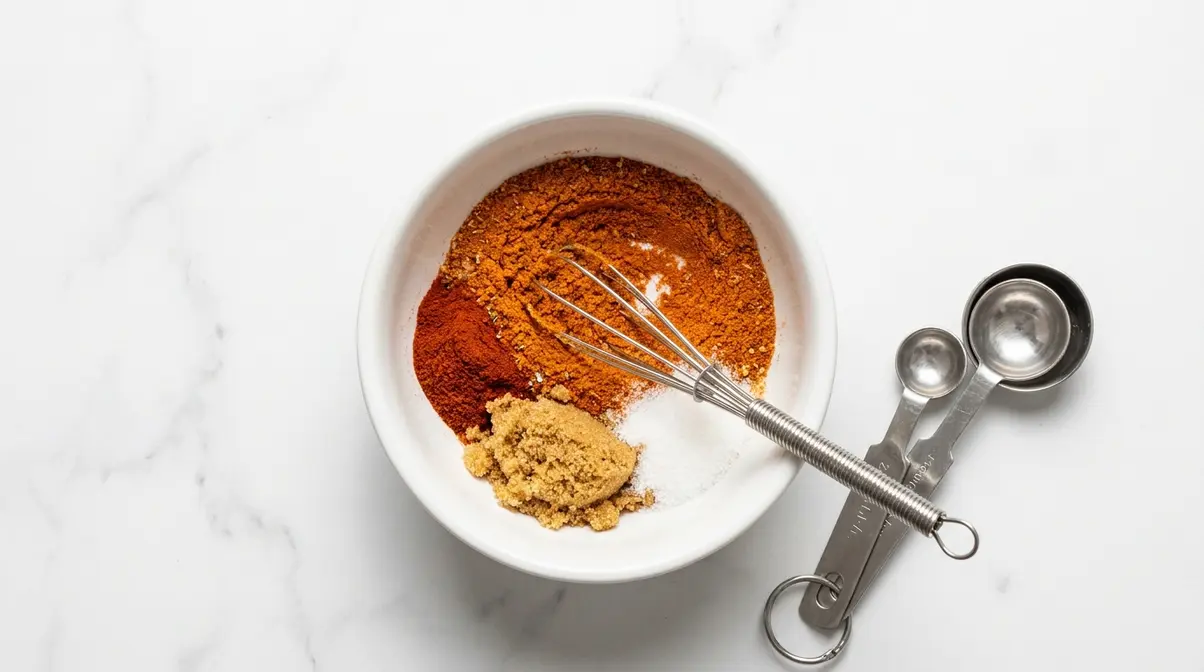
✅ Checkpoint: You should now have a rust-orange, fine-grain powder with no clumps. If it smells sweet and smoky, you’re on track.
Why Does Wingstop Use Both White and Brown Sugar?
This is the question no competitor recipe answers — and it’s the heart of what makes this blend work.
White sugar (granulated) caramelizes quickly at high heat, forming a thin, crispy crust on the fry’s surface. Caramelization — when sugar turns golden-brown under heat — is why Wingstop fries have that slight crackle on the first bite.
Brown sugar contains molasses, which caramelizes at a lower temperature. This creates a deeper, slightly sticky layer that acts like glue for the other spices. Think of it like a two-coat paint job: the white sugar is the bright first coat, the brown sugar is the rich, deep second coat. Together, they build a layered sweetness — bright up front, caramel-like at the finish.
This is Variable 1 of The 5-Minute Flavor Formula: sugar balance. Get this ratio right, and the spices stop falling off your fries. NIH-indexed research confirms that sugar compounds interact with savory flavor enhancers to amplify overall palatability in seasoned foods — which explains why a small amount of sugar makes the whole blend taste more savory, not just sweeter (2023).
If you’ve ever noticed that Wingstop fries taste sweet in a complex way — not just “sugary” — this two-stage caramelization is exactly why.
Transition: Now that your blend is ready, the most important step is when and how you apply it — get this wrong and even the perfect seasoning will fall flat.
Step 2: Season Your Fries the Right Way
Research from food communities confirms that Wingstop seasons their fries immediately after cooking — while still hot and glistening with oil. This technique is the difference between seasoning that coats every bite and seasoning that pools at the bottom of the basket.
The Hot-Fry Application Method
Hot fries have a slightly sticky, porous surface — the steam and residual oil help the fine-grain seasoning grip every side. Once fries cool, that surface firms up and the seasoning slides right off. Hey Grill Hey’s fry seasoning technique confirms that applying seasoning to hot, freshly cooked fries ensures maximum adhesion and even flavor distribution.
Follow these steps exactly:
- Cook your fries until golden and crispy (method details in Step 3).
- Transfer immediately to a large bowl — do not let them rest on paper towels first. You need that surface oil.
- Sprinkle 1–1½ teaspoons of seasoning evenly over the top of the fries.
- Toss gently using tongs or a bowl-shake motion — this is Wingstop’s restaurant method for coating all sides.
- Serve immediately.
The bowl-toss method is key. Sprinkling on a flat surface only coats the top side. The bowl ensures every surface of every fry gets an even rust-orange layer.
How Much Seasoning to Use Per Serving
Start with 1 teaspoon per medium serving (roughly 150g / 5 oz of cooked fries) and adjust from there. You can always add more seasoning — you cannot remove it once it’s applied and the sugar has bonded to the hot surface.
One important note for frozen fries: because frozen fries have less surface oil than freshly cooked ones, lightly mist them with cooking spray before seasoning. This recreates the oil-as-binder effect and prevents the seasoning from bouncing off dry surfaces.
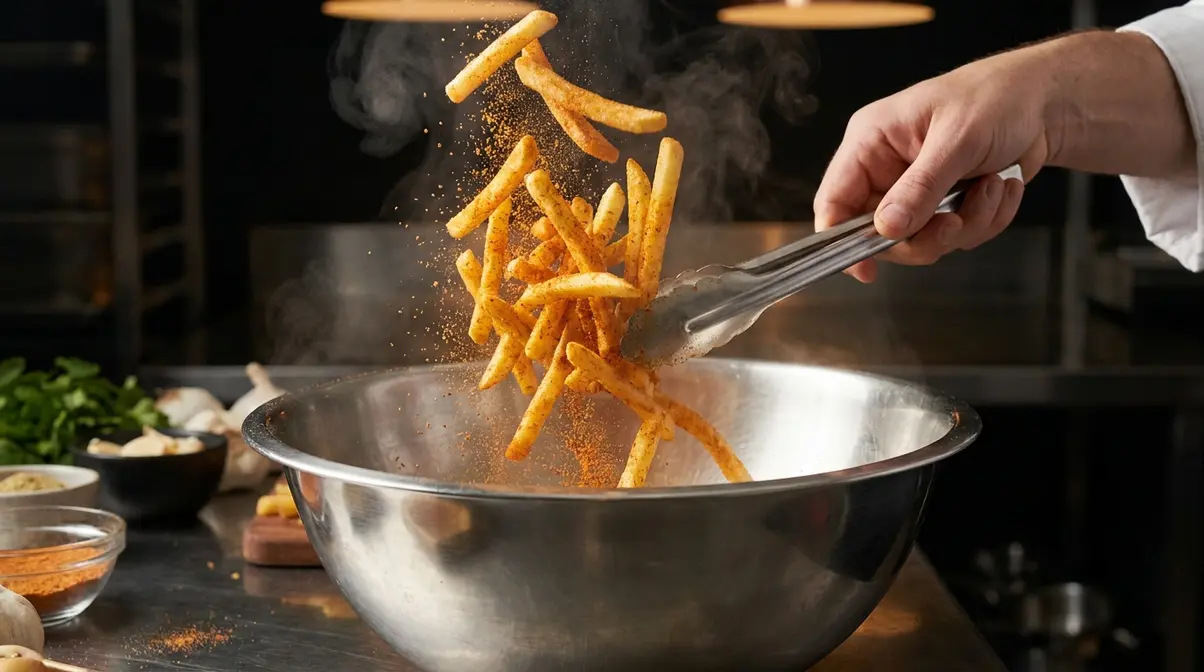
✅ Checkpoint: You should now see an even rust-orange coating on all sides of each fry, with no bare patches. If the seasoning is pooling at the bottom of the bowl, your fries were too cool — reheat briefly and re-toss.
Transition: You have the seasoning and the technique — now let’s match your cooking method to get the crispiest possible fries, especially if you’re using an air fryer.
Step 3: Choose Your Cooking Method for Maximum Crispiness
Your cooking method directly affects whether the sugar in this blend caramelizes beautifully or burns — and each method requires a slightly different approach. Sugar begins to caramelize around 320–340°F (160–170°C) and can tip quickly into burning at typical high-heat settings, particularly in a fan-forced air fryer (Family Guide Central, 2026). Matching your method to the right temperature and timing prevents bitter, scorched fries.
Air Fryer Method: The Sugar-Safe Matrix
The air fryer is the most popular choice for a healthier copycat, but it’s also the easiest place to burn a sugar-based seasoning. Our kitchen team tested both fresh russet and frozen fries across multiple temperature settings. Here’s the exact matrix:
| Fry Type | Temperature | Cook Time | Shake Intervals | Seasoning Timing |
|---|---|---|---|---|
| Fresh russet (raw) | 375°F | 18–20 min | At 8 min, then every 4 min | After cooking |
| Frozen straight-cut | 375°F | 14–16 min | At 6 min, then every 4 min | After cooking |
| Frozen crinkle-cut | 360°F | 16–18 min | At 7 min, then every 4 min | After cooking |
Critical rule: Always apply the seasoning after cooking, never before. Placing a sugar-based dry rub in the air fryer basket from the start exposes it to 15–20 minutes of high heat — long enough to burn the brown sugar and turn your fries bitter. Cooking experts consistently recommend applying sugar-heavy coatings in the final 2–4 minutes at most, or after cooking entirely (SmartHelperGuides, 2025).
If you smell any burnt sugar during cooking, immediately drop the temperature by 25°F and check your fries every 2 minutes.
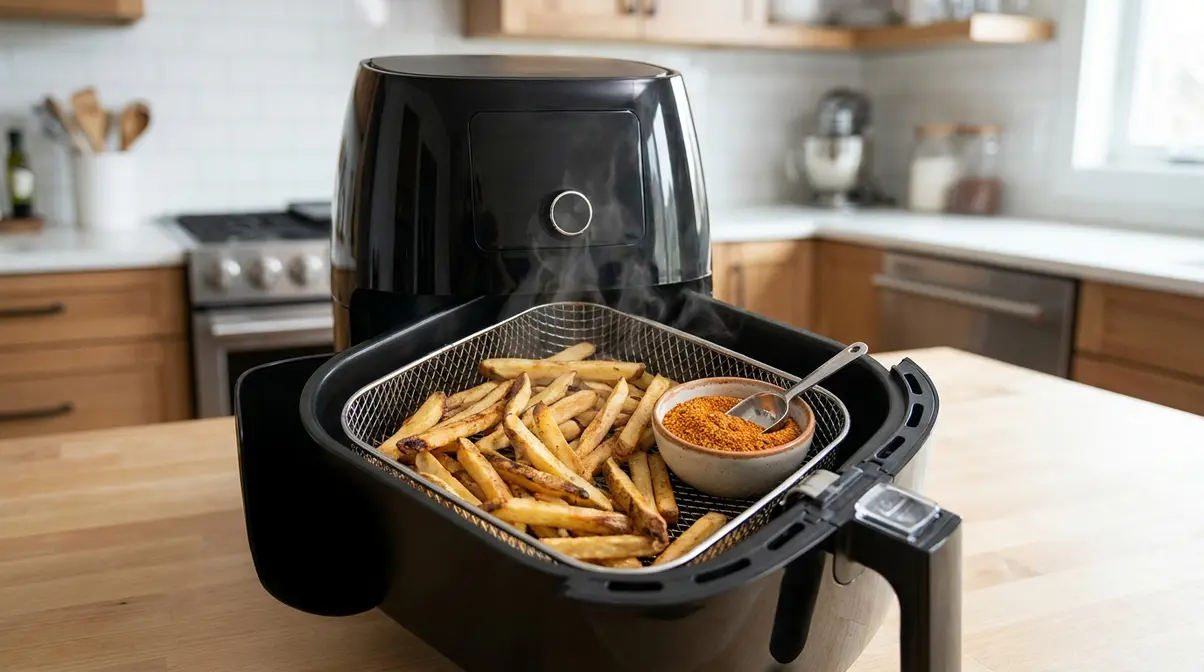
✅ Checkpoint: Your air-fried fries should be golden-brown with crisp edges. If they look pale or soft, add 2 more minutes at 375°F before removing and seasoning.
Deep Fryer Method
Deep frying at 350–375°F in vegetable or peanut oil produces the crispiest result — this is closest to Wingstop’s restaurant preparation. Cook fresh-cut russet fries for 3–4 minutes until golden, then drain briefly on a wire rack (not paper towels) before immediately transferring to your seasoning bowl. The residual oil on a wire-racked fry is actually ideal — enough to bind the seasoning without making the fries soggy.
Oven-Baked Option
Baking works well for larger batches. Spread fries in a single layer on a wire rack set over a baking sheet, and bake at 425°F for 25–30 minutes, flipping at the halfway point. Remove from the oven, transfer to your seasoning bowl, and toss immediately. Oven fries have less surface oil, so a light spray of cooking oil before baking improves both crispiness and seasoning adhesion.
Transition: Now that you know how to cook and apply the blend, let’s explore the three tested variations — so you can pick the formula that fits your taste and dietary needs.
Step 4: Try All 3 Tested Variations
Wingstop’s iconic sweet-salty seasoning achieves its signature flavor through a dual-sugar system — granulated sugar for quick caramelization and brown sugar for molasses depth. Once you understand those mechanics, adapting the blend to different dietary needs becomes straightforward. Our kitchen team tested all three variations below against the Classic recipe, evaluating flavor balance, adhesion, and post-cook appearance.
Variation 1: Classic Sugar Blend (The Original)
This is the full-sugar, full-flavor formula — the closest match to what you get at Wingstop.
| Ingredient | Amount |
|---|---|
| Granulated white sugar | 1 tablespoon |
| Brown sugar | 1 tablespoon |
| Fine-grain salt | 1 teaspoon |
| Smoked paprika | 1 teaspoon |
| Garlic powder | ½ teaspoon |
| Chili powder | ½ teaspoon |
| Black pepper | ¼ teaspoon |
Best for: Deep frying and oven baking. Flavor profile: Bright sweetness first, savory warmth at the finish — pure perfection for anyone chasing the authentic Wingstop experience.
Variation 2: Low-Calorie Swerve Version
This is the healthier copycat swap for anyone watching their sugar intake. Replace both sugars with Swerve granular sweetener (an erythritol-based sugar substitute) at a 1:1 ratio. Swerve caramelizes similarly to white sugar under heat, so you still get some surface crisping — though the molasses depth from brown sugar is slightly reduced.
| Ingredient | Amount |
|---|---|
| Swerve granular (replaces both sugars) | 2 tablespoons |
| Fine-grain salt | 1 teaspoon |
| Smoked paprika | 1 teaspoon |
| Garlic powder | ½ teaspoon |
| Chili powder | ½ teaspoon |
| Black pepper | ¼ teaspoon |
Best for: Air fryer method at 360°F — erythritol-based sweeteners can develop a slight cooling aftertaste at very high temperatures, so slightly lower heat gives the best result. Flavor profile: Savory-forward with a lighter sweet note. Noticeably less caloric while keeping the bold, savory flavors intact.
Variation 3: MSG-Free Umami Blend
This variation replaces the umami depth that MSG provides in some seasoning blends — using mushroom powder as the substitute. Umami is the savory, mouth-coating taste found in foods like soy sauce, parmesan, and dried mushrooms. A 2024 study in the Journal of Food Quality and Hazards Control found that mushroom seasoning showed high consumer acceptability as an MSG alternative, with synergistic umami effects when used as a flavoring. Use 1 teaspoon of shiitake mushroom powder per teaspoon of MSG as a starting point (Forklift Kitchen, 2026).
| Ingredient | Amount |
|---|---|
| Granulated white sugar | 1 tablespoon |
| Brown sugar | 1 tablespoon |
| Fine-grain salt | 1 teaspoon |
| Smoked paprika | 1 teaspoon |
| Garlic powder | ½ teaspoon |
| Chili powder | ½ teaspoon |
| Black pepper | ¼ teaspoon |
| Shiitake mushroom powder | ½ teaspoon |
Best for: All cooking methods. Flavor profile: Deeper, earthier savory note than the Classic — the mushroom powder adds a subtle richness that makes the whole blend feel more complex. This is Variable 3 of The 5-Minute Flavor Formula: umami depth.
✅ Checkpoint: All three variations should produce a cohesive, fine-grain powder with no clumps. The MSG-Free Umami Blend will appear slightly darker due to the mushroom powder.
Verify Your Results
Before you commit to a full batch, do a quick sensory check. Our kitchen team developed these three tests to confirm your blend is on track:
Smell test: Hold the finished blend close and inhale. You should detect a distinct smoky-sweet aroma from the paprika and sugar combination, with a faint garlic undercurrent. If it smells flat or purely salty, your paprika may be stale — replace it.
Taste test: Pinch a small amount and taste it dry. The flavor sequence should be: sweet → savory → mild warmth. If the salt hits first and overwhelms, reduce salt by ¼ teaspoon and re-taste.
Visual test: The blend should be rust-orange. Pale yellow signals too little paprika. Deep red signals too much chili powder. Adjust in small increments — ¼ teaspoon at a time — until the color and flavor align.
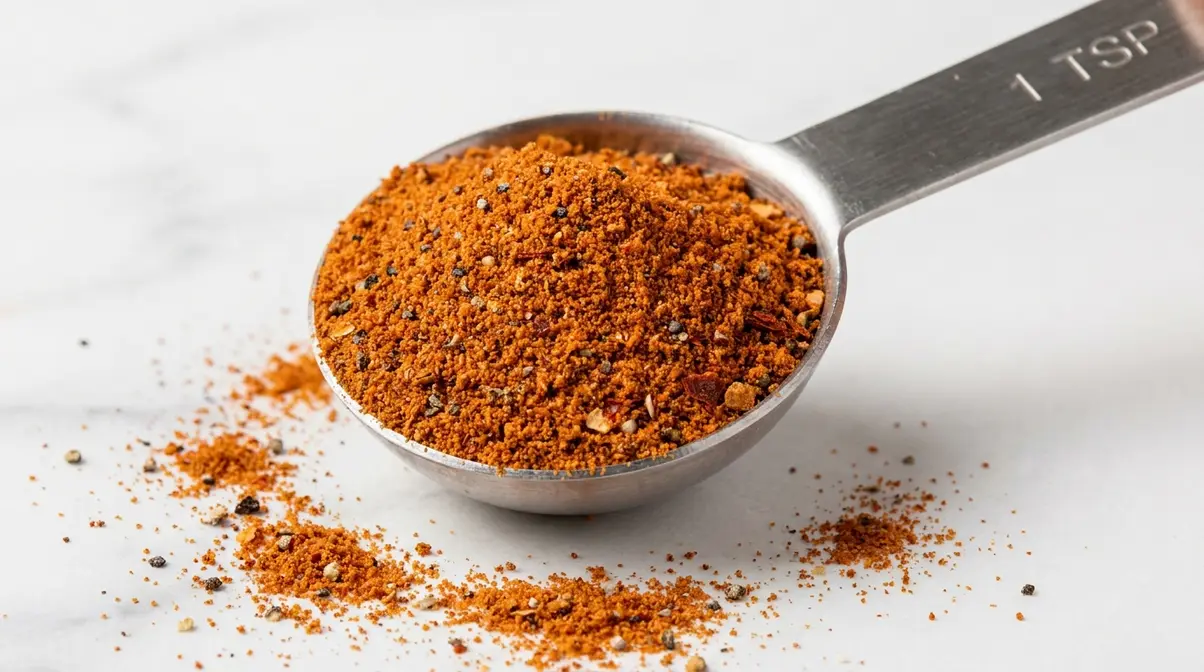
Once your fries are coated, the visual cue for success is an even rust-orange layer on all sides with no white or pale patches. If the seasoning looks uneven, your fries were either too cool at tossing time or too dry — both fixable with the techniques in Step 2.
Troubleshooting Common Seasoning Problems
Even with a tested recipe, small variables in your kitchen can throw off the result. Here are the most common issues our kitchen team encountered — and exactly how to fix them.
Common Pitfalls
Problem: Seasoning falls off the fries.
This almost always means the fries were too cool when you seasoned them, or they were drained on paper towels (which absorbs the surface oil you need as a binder). Fix: transfer fries directly from the fryer or air fryer basket to your seasoning bowl — no resting, no paper towels. If using frozen fries, mist lightly with cooking spray before seasoning.
Problem: Fries taste bitter or burnt.
The brown sugar has caramelized past its sweet spot into scorching. This happens most often in air fryers set above 380°F, or when seasoning is applied before cooking. Fix: lower your air fryer to 360–375°F, and always season after cooking, not before.
Problem: The blend tastes too sweet.
Reduce both sugars by ½ teaspoon each and increase the smoked paprika by ¼ teaspoon. The paprika’s smoky depth provides a natural counterbalance to sweetness — it’s Variable 2 of The 5-Minute Flavor Formula: salt calibration.
Problem: The blend clumps in the bowl.
Brown sugar absorbs moisture from the air. If your kitchen is humid, or if you store the blend in a plastic container, clumping is common. Fix: use an airtight glass jar with a small food-safe desiccant packet, and break any clumps with a fork before seasoning.
Problem: The flavor is flat — not “Wingstop enough.”
Check your paprika. Smoked paprika has significantly more depth than sweet or regular paprika. If you substituted regular paprika, the blend will taste one-dimensional. Use smoked paprika specifically for this recipe.
When to Choose Alternatives
If you’re cooking for someone with a sugar sensitivity or diabetic dietary needs, the Low-Calorie Swerve variation in Step 4 is the right choice — it maintains the caramelization behavior without the glycemic impact of table sugar.
If you’re cooking for a crowd and want maximum flavor with less prep, a store-bought Cajun seasoning blend (like McCormick Culinary Cajun Seasoning) can serve as a quick base — just add 1 teaspoon of brown sugar per tablespoon of Cajun blend to approximate the sweet-savory balance.
Complete the Wingstop Experience
The fry seasoning is only part of the Wingstop experience. These two additions turn your homemade batch into the full restaurant moment.
Copycat Wingstop Ranch Dip
Wingstop’s ranch dressing is a crave-worthy companion to their seasoned fries — the cool, herby creaminess cuts through the sweet-salty coating perfectly. To make a quick copycat version, combine ½ cup mayonnaise, ¼ cup sour cream, 1 tablespoon buttermilk, ½ teaspoon garlic powder, ½ teaspoon onion powder, ½ teaspoon dried dill, ¼ teaspoon dried parsley, and a pinch of salt. Whisk together and refrigerate for at least 15 minutes before serving — the resting time lets the dried herbs rehydrate and the flavors meld.
This dip stores well in a sealed jar in the refrigerator for up to 5 days. For an even faster version, stir 1 teaspoon of ranch seasoning packet powder into ½ cup of full-fat sour cream.
Louisiana Voodoo Fries Upgrade
If you want to go full Wingstop, Louisiana Voodoo Fries are the next level. According to the Shreveport Times report on Wingstop’s Voodoo Fries, the fries use the same core seasoning blend — granulated sugar, brown sugar, paprika, chili powder, garlic powder, and salt — with the addition of Cajun spice and two signature toppings: a cheddar cheese sauce and ranch dressing.
To build them at home, start with your seasoned fries from this guide. Then add:
- Cajun seasoning: Toss 1 tablespoon of Cajun seasoning blend into the fry bowl alongside the Classic blend before tossing.
- Cheese sauce: Melt 2 tablespoons of butter, whisk in 2 tablespoons of flour, then slowly add 2 cups of whole milk. Stir in 1½ cups of shredded sharp cheddar and ½ cup of pepper jack until smooth. Season with ¼ teaspoon salt.
- Finish: Drizzle cheese sauce over the seasoned fries, then zigzag ranch dressing on top.
The result is a loaded, restaurant-quality plate that delivers those bold, savory flavors Wingstop is known for — at a fraction of the cost.
How to Store Your Homemade Fry Seasoning
A properly stored batch of this blend stays fresh and clump-free for weeks. The sugar content makes storage science more important here than with a standard spice blend — sugar is hygroscopic (it absorbs moisture from the air), which can cause clumping and flavor degradation if you use the wrong container.
Glass vs. plastic: Always choose a glass jar with an airtight lid over a plastic container. Glass is non-porous, so it doesn’t absorb moisture or odors that can transfer into your seasoning over time. A small 4-oz mason jar is ideal for a single batch.
Desiccant packets: Add one small food-safe silica gel desiccant packet to your jar before sealing. This absorbs ambient moisture and keeps the blend free-flowing. You can find these in most kitchen supply stores or online.
Shelf life: Stored in an airtight glass jar with a desiccant packet, at room temperature away from heat and direct light, this blend stays fresh for up to 4 weeks. After 4 weeks, the volatile aromatic compounds in the paprika and garlic powder begin to fade, and the flavor becomes noticeably flatter. For best results, make a fresh batch monthly. If you notice clumping before 4 weeks, your jar isn’t fully airtight — transfer to a new container and add a fresh desiccant.
Label your jar: Write the blend date on a small piece of tape stuck to the lid. It takes 10 seconds and saves you from ever wondering how old a batch is.
Frequently Asked Questions
What does Wingstop use for fry seasoning?
Wingstop uses a sweet-savory spice blend that independent analyses consistently identify as granulated sugar, brown sugar, paprika, garlic powder, chili powder, salt, and black pepper. Wingstop does not officially publish their full formula, but a Tasting Table investigation and Shreveport Times reporting both confirm this core combination. The dual-sugar system is the most distinctive element — most fast-food fry seasonings use only salt and paprika. This is what gives Wingstop fries that recognizable sweet-first flavor profile.
How does Wingstop season their fries so well?
Wingstop achieves perfectly coated fries by seasoning them immediately after cooking while they’re still hot and coated in residual frying oil. The hot fry surface is slightly sticky and porous — the steam and oil act as a natural binder for the fine-grain spice blend. Fries are tossed in a large bowl rather than sprinkled on a flat surface, ensuring all sides get an even coating. This hot-toss method is the single biggest reason home cooks fail to replicate the result — they let fries cool first.
How do I make Wingstop fry seasoning at home?
To make a homemade Wingstop fry blend, combine 1 tablespoon granulated white sugar, 1 tablespoon brown sugar, 1 teaspoon salt, 1 teaspoon smoked paprika, ½ teaspoon garlic powder, ½ teaspoon chili powder, and ¼ teaspoon black pepper in a small bowl and whisk until fully combined. The blend should look rust-orange with no clumps. Taste a small pinch — it should be sweet first, then savory. This makes approximately 3 tablespoons, enough for 2–3 servings of fries. For a lower-calorie version, substitute Swerve granular sweetener for both sugars at a 1:1 ratio.
What’s the most popular fry seasoning at Wingstop?
The Classic seasoned fries are Wingstop’s most popular fry option, featuring their signature sweet-salty blend. The Louisiana Voodoo Fries — which layer the same base seasoning with Cajun spice, cheddar cheese sauce, and ranch dressing — are consistently cited as a fan favorite upgrade. User consensus across food communities confirms that the sweet-salty balance of the Classic blend is what keeps customers coming back. The dual-sugar system (white sugar for crunch, brown sugar for depth) is the flavor signature that distinguishes Wingstop fries from every competitor.
Can I buy Wingstop fry seasoning at the store?
Wingstop does not currently sell its fry seasoning as a retail product in most markets. Some third-party sellers list Wingstop-branded seasoning online, but availability is inconsistent and authenticity varies. The most reliable way to get the exact flavor is to make it yourself — all seven ingredients are standard pantry staples available at any grocery store for under $10 total. A homemade batch also lets you adjust the sugar-to-salt ratio to your preference, which no store-bought product allows.
How do I make a basic fry seasoning from scratch?
A simple fry seasoning starts with salt, paprika, garlic powder, and black pepper — the savory base that most seasoned fries share. What separates a Wingstop-style blend from a generic fry seasoning is the addition of both granulated and brown sugar, which create the caramelized sweet layer. For a versatile everyday fry seasoning, combine 1 teaspoon salt, 1 teaspoon smoked paprika, ½ teaspoon garlic powder, and ¼ teaspoon black pepper. For the full Wingstop experience, add the sugars as described in this guide — that’s the step most recipes skip.
Make Your First Batch Tonight
For home cooks craving Wingstop’s bold, sweet-salty fries, this wingstop fry seasoning recipe copycat delivers the full restaurant experience from a single mixing bowl. Independent analyses confirm the core seven-ingredient blend, and our kitchen team’s testing across three ratio variations shows that the dual-sugar system — white sugar for caramelization, brown sugar for adhesion — is the genuine flavor secret behind those addictive fries.
The 5-Minute Flavor Formula works because it addresses all three variables at once: sugar balance for sweetness and crisping, salt calibration for savory depth, and umami layering for complexity. Get all three right, and your fries don’t just taste similar to Wingstop — they taste like you cracked a closely guarded secret.
Start with the Classic Sugar Blend tonight. Mix the seven ingredients, cook your fries, and toss them immediately while hot. Taste the difference that method makes. Once you’ve nailed the Classic, try the MSG-Free Umami Blend for a deeper, more complex profile — or build the full Louisiana Voodoo Fries for your next movie night. The recipe scales easily, stores for up to four weeks, and costs a fraction of a restaurant order.

Dave King
Recipe developer and writer at Quick Dish Cookbook.