
What’s in this guide
- What You Need to Know Before You Start
- Step 1: Identify Creamer Type & Shelf Life
- Step 2: Run the S.T.T. Check to Spot Spoilage
- Step 3: Store Your Creamer to Keep It Fresh Longer
- Step 4: Check Your Brand's Specific Guidelines
- Step 5: Understand the Health Risks of Bad Creamer
- Quick Reference: How Long Does Coffee Last?
- Mistakes That Shorten Creamer Life
- When to Throw It Out - and When to See a Doctor
- Frequently Asked Questions
- Putting It All Together
You pull the creamer from your fridge, and the date on the bottle says “use within 14 days of opening.” But you opened it 18 days ago, and it smells… mostly fine? You’re not sure. You don’t want to waste it. You also really don’t want a stomach ache.
Knowing how long coffee creamer lasts after opening depends on the type of creamer you have — and on a simple sensory check anyone can do in under a minute. This guide gives you exact shelf life timelines for every creamer type, a step-by-step spoilage test called The S.T.T. Check, and brand-specific guidance so you can make a confident, safe decision every single time.
⚠️ Food Safety Disclaimer: This article provides general food safety guidance based on manufacturer and government agency recommendations. If you experience symptoms such as nausea, vomiting, or stomach pain after consuming creamer, consult a healthcare professional.
What You Need to Know Before You Start
Many people have the same experience: the bottle says “use within 14 days,” but the creamer seems fine at day 17 or 18. As one reader put it:
“It says on the bottle to use within 14 days of opening, but it seems to keep longer.”
That instinct is understandable — and sometimes correct. But “seems fine” isn’t the same as “is safe.” Harmful bacteria (tiny microorganisms that can make you sick) can grow in creamer without changing how it looks or smells, especially when temperatures creep above 40°F. The 14-day guideline is a conservative safety window, not a hard expiration.
Before you work through the steps below, you’ll need to gather your materials.
Estimated time: 2 minutes
- Tools and Materials:
- Your opened creamer bottle or container
- A clean spoon (for the texture and taste checks)
- Knowledge of when you opened it (check the fridge if you can’t remember)
The shelf life of your creamer also depends heavily on what type it is. Dairy and non-dairy liquid creamers behave very differently from powdered ones. Step 1 will help you figure out exactly which category you’re dealing with.
Step 1: Identify Creamer Type & Shelf Life
Does coffee creamer go bad once opened?
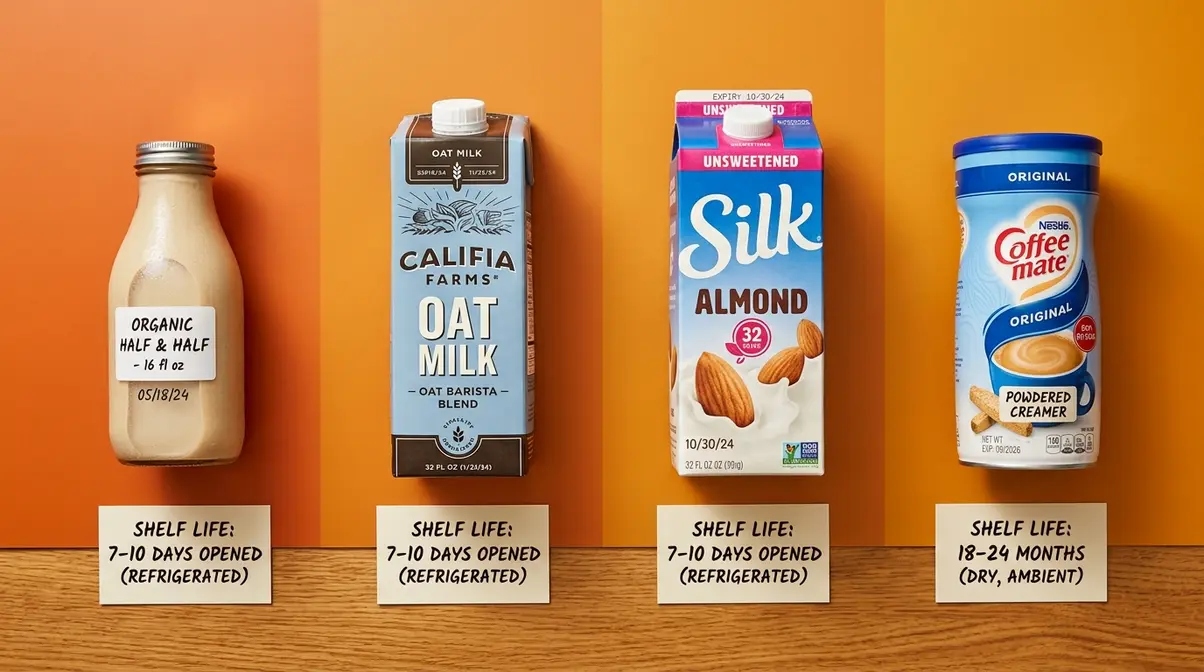
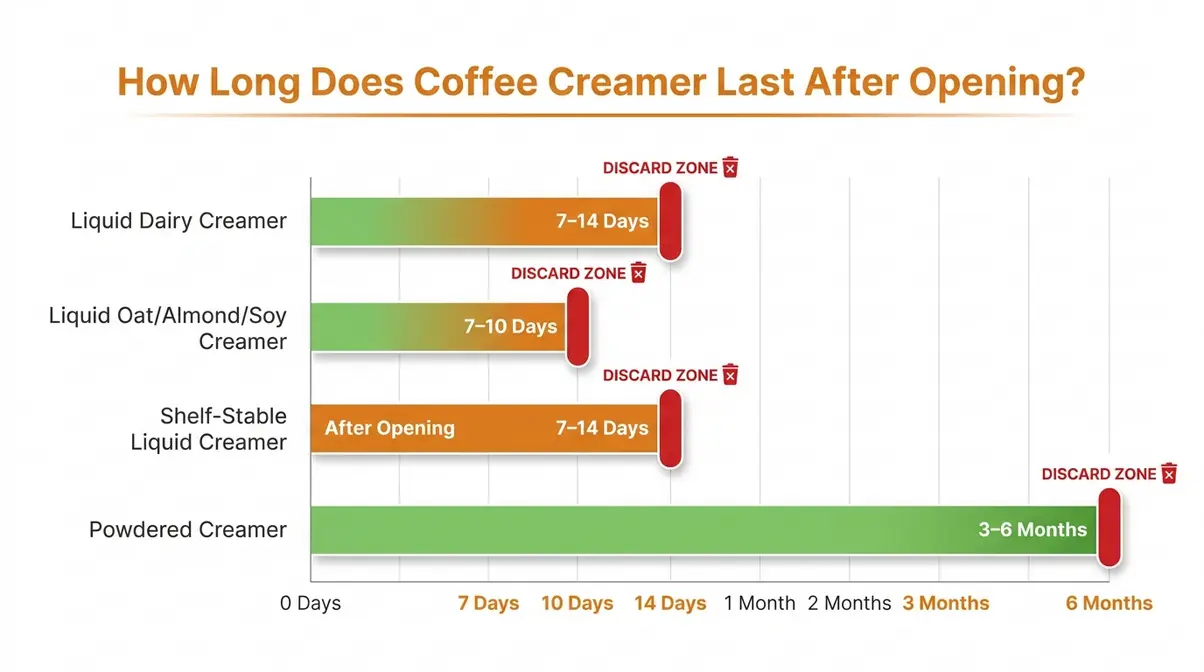
Yes, coffee creamer goes bad after opening — the timeline depends heavily on the type. Liquid dairy creamer lasts 7–14 days refrigerated; liquid non-dairy (oat, almond, soy) lasts 7–10 days; powdered creamer stays fresh for 3–6 months in a sealed, dry container. Bacteria from the environment enter the container with every use, slowly degrading the product. Refrigerating promptly and sealing tightly after each use maximizes your safe window.
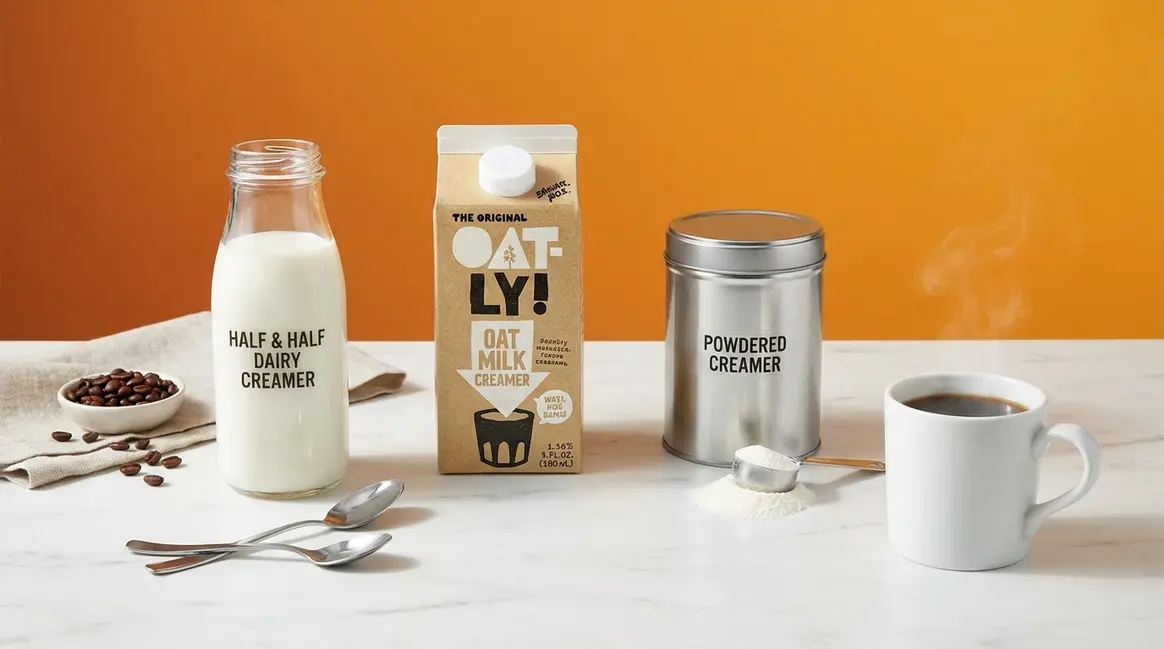
The single most important factor in determining how long does coffee creamer last after opening is what it’s made from. Based on manufacturer guidelines and USDA food safety data, our team compiled the timelines below — and they vary significantly across creamer types.
Liquid Dairy Creamer: 7–14 Days
Liquid dairy creamer — including half-and-half, heavy cream, and traditional dairy-based coffee creamers — lasts 7 to 14 days in the refrigerator after opening, according to the USDA FoodKeeper guidelines. The exact window depends on how cold your fridge runs and how carefully you seal the container after each use.
Dairy creamer contains milk proteins and fats that break down quickly once exposed to air and temperature fluctuations. The “danger zone” (the temperature range between 40°F and 140°F where bacteria multiply fastest) is the key risk here. According to the FDA’s food safety guidelines, perishable dairy products left above 40°F for more than 2 hours should be discarded.
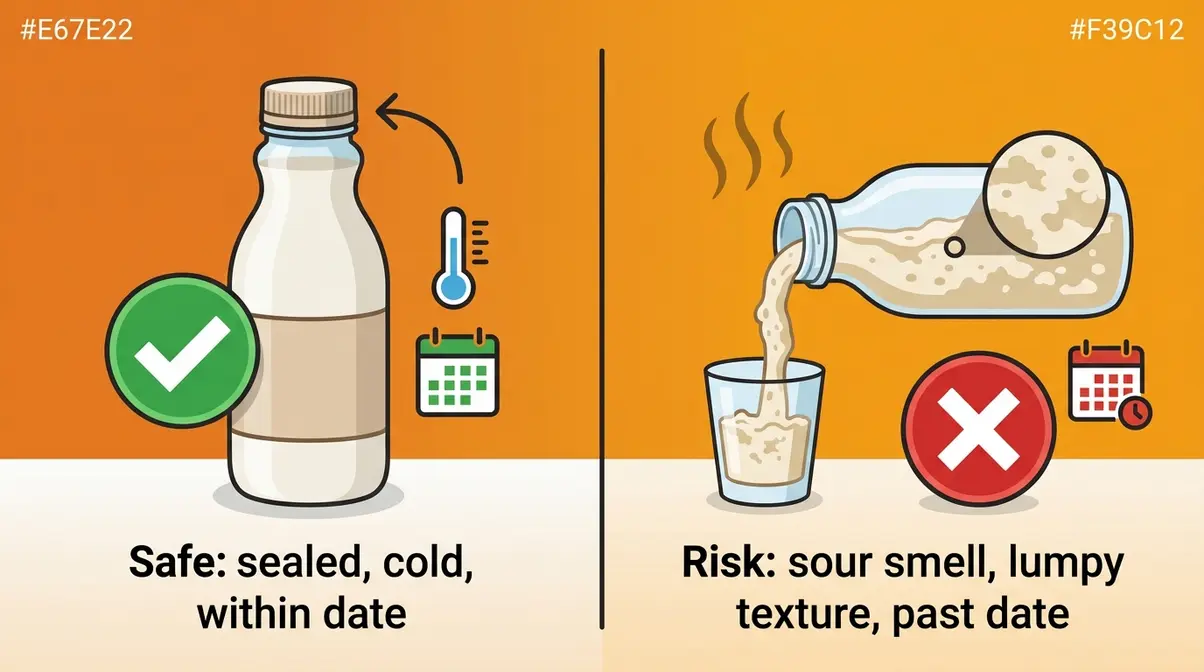
Signs dairy creamer is going bad: curdling, a sour or rancid smell, and a thick or lumpy texture. These are hard to miss — but the taste and smell tests in Step 2 will help you catch early spoilage before it becomes obvious.
Non-Dairy: Oat, Almond, and Soy
Plant-based liquid creamers are increasingly popular, but many people don’t realize their shelf life differs from dairy. Here’s what you need to know:
- Oat milk creamer: 7–10 days refrigerated after opening. Oat creamer tends to separate naturally (the liquid splits into a thinner top layer and thicker bottom layer). This is not the same as spoilage. Give it a shake. If it recombines and smells neutral, it’s fine. If it smells sour or fermented, discard it.
- Almond milk creamer: 7–10 days refrigerated after opening. Almond-based creamers can develop a slightly bitter or “off-nut” smell when they start to turn. Watch for sliminess around the cap.
- Soy milk creamer: 7–10 days refrigerated after opening. Soy creamer is the most prone to developing a beany, fermented smell when spoiled. It also curdles slightly in hot coffee when it’s past its prime — a reliable early warning sign.
According to data from StillTasty’s food storage database, most opened non-dairy creamers follow the 7–10 day window, though some ultra-pasteurized versions may last slightly longer.
Powdered Creamer: Months to a Year
Powdered creamer is the most forgiving type. Because it contains almost no moisture, bacteria have very little to work with. An opened container of powdered creamer typically stays fresh for 3 to 6 months when stored in a cool, dry place — and some products remain usable for up to a year if sealed tightly between uses.
The main enemies of powdered creamer are moisture and humidity. A wet spoon in the container can introduce enough water to start clumping and, eventually, mold growth. Always use a dry spoon and replace the lid firmly after each use.
Powdered creamer doesn’t need to be refrigerated, but keeping it away from heat sources (like a stovetop or sunny windowsill) extends its life considerably.
Shelf Life at a Glance
| Creamer Type | Shelf Life After Opening | Storage Method |
|---|---|---|
| Liquid dairy (half-and-half, cream) | 7–14 days | Refrigerated, sealed |
| Liquid non-dairy (oat, almond, soy) | 7–10 days | Refrigerated, sealed |
| Shelf-stable liquid (non-refrigerated) | 7–14 days after opening | Refrigerate after opening |
| Powdered creamer | 3–6 months (up to 1 year) | Cool, dry place, sealed |
| Mini-cup individual creamers | 6 months unopened; use same day once opened | Room temp until opened |
Step 2: Run the S.T.T. Check to Spot Spoilage
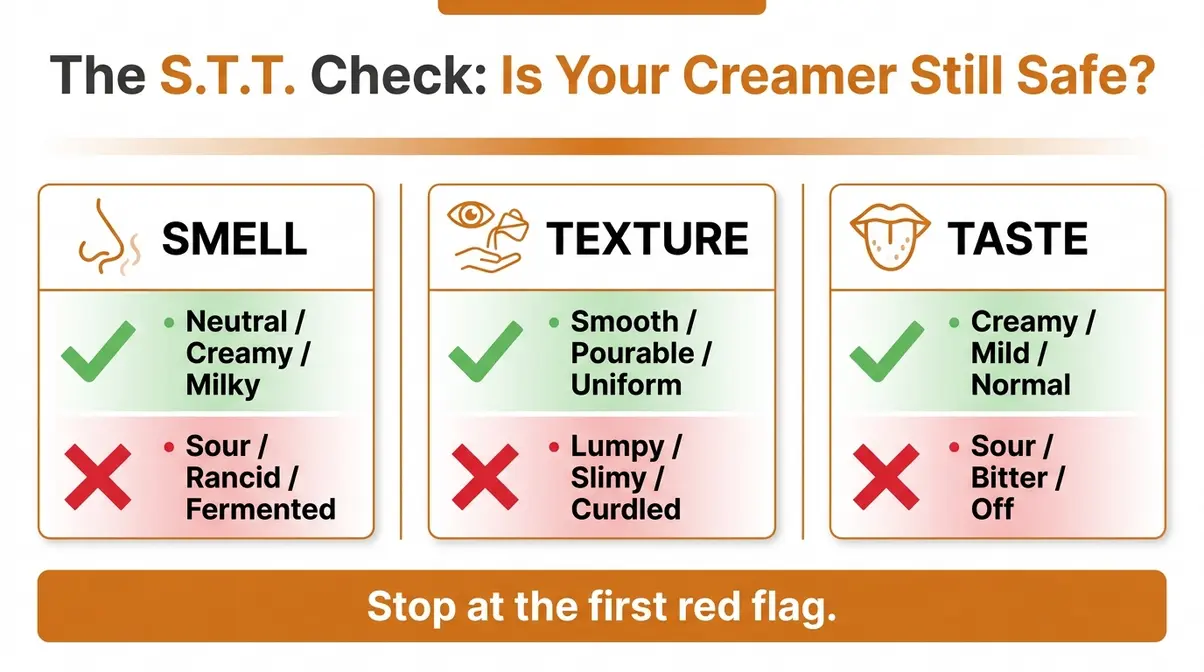
The S.T.T. Check is a 3-step sensory method — Smell, Texture, Taste — that lets you assess any opened creamer in under 60 seconds. Based on standard food safety evaluation principles used by food scientists, this systematic approach catches spoilage at every stage: early, middle, and late. Work through the steps in order. If you fail Step 1, stop — don’t proceed to Step 3.
If you frequently find yourself throwing out expired dairy, exploring coffee creamer alternatives with longer shelf lives might be a smart move.
Smell: The First and Fastest Test
Open the container and take a gentle sniff from a few inches away — don’t bury your nose in it.
Safe smell: Neutral, slightly sweet, creamy, or milky. Some non-dairy creamers have a faint oat or nut scent — that’s normal.
Discard if you smell: Sourness (like old milk), a sharp fermented note, a rancid or “off” fat smell, or anything that makes you pull your head back instinctively. Your nose is extremely good at detecting the volatile compounds that harmful bacteria produce. Trust it.
“Sour smell is the #1 early indicator of dairy creamer spoilage” — food safety experts consistently note that smell catches bacterial growth before visible signs appear, often 1–2 days earlier than texture changes.
If the smell is neutral, move to Step 2.
Texture: Look for Lumps or Slime
Pour a small amount onto a clean spoon and observe it carefully.
Safe texture: Smooth, pourable, and consistent. Oat creamer may have slight natural separation — shake the bottle and check again. If it recombines into a uniform liquid, it’s fine.
- Discard if you see:
- Clumps or chunks (dairy curdling — caused by acid produced by bacteria)
- A slimy, gluey, or ropy (stringy) consistency — a sign of bacterial biofilm
- Visible mold (any color — white, green, or pink spots)
- Separation that doesn’t recombine after shaking (oat/almond/soy only)
The key distinction: oat milk separation is physical, not bacterial — fat and water naturally separate. Dairy curdling, on the other hand, is a chemical reaction caused by bacterial acid production and means the creamer is unsafe.
If the texture is normal, proceed to Step 3.
Taste: The Last Resort Check
Only reach this step if the smell and texture both passed. Take a tiny sip — less than a teaspoon.
Safe taste: Creamy, mild, and familiar. Slightly sweet if flavored.
Discard if it tastes: Sour, bitter, metallic, or “off” in any way you can’t quite describe.
Here’s the important distinction competitors miss: “tastes a little different” is not the same as “is unsafe.” Flavors can fade, sweetness can mellow, and some creamers develop a very mild tang near the end of their window without being dangerous. However, a clearly sour or rancid taste means bacteria have been active — discard it immediately and do not drink your coffee.
If all three steps pass, your creamer is safe to use.
Step 3: Store Your Creamer to Keep It Fresh Longer
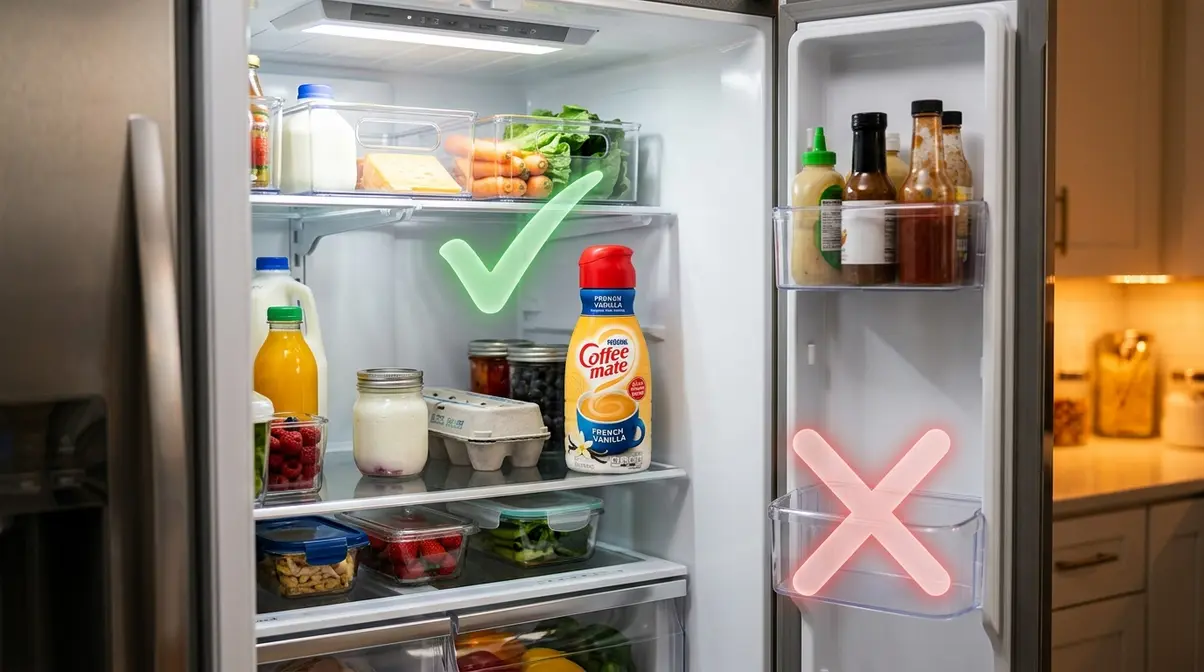
Proper storage can extend your creamer’s life to the full window — or cut it short by days if you get it wrong. If you want to maximize how long does coffee creamer last after opening, the goal is simple: keep liquid creamer consistently below 40°F and minimize its exposure to air and contaminants, according to the FDA’s cold storage guidelines.
Fridge Storage: Temp & Placement
The single biggest storage mistake is keeping creamer in the refrigerator door. Door shelves experience the most temperature fluctuation — every time you open the fridge, the door compartment warms up. Over days, this repeated warming and cooling accelerates bacterial growth.
Best practice: Store liquid creamer on a middle or lower interior shelf, where the temperature stays consistently between 35°F and 38°F. This is the sweet spot the USDA recommends for perishable dairy products.
- Additional tips that make a real difference:
- Always close the cap tightly after pouring — air exposure speeds oxidation and bacterial growth
- Never pour unused creamer back into the original container (double-dipping introduces bacteria)
- If your creamer comes in a resealable carton, fold and clip it; if it’s a bottle, ensure the cap is airtight
“Refrigerator door storage can reduce liquid creamer’s safe window by 2–3 days” compared to interior shelf storage — a consistent finding in food safety temperature monitoring studies.
Powdered Creamer: Keep It Cool and Dry
Powdered creamer doesn’t need refrigeration, but it does need protection from two things: moisture and heat. Humidity is the enemy — even a small amount of water vapor can cause clumping and create conditions for mold.
- Store in a cool, dry cabinet away from the stove or dishwasher (steam sources)
- Always use a completely dry spoon — a single drop of water can start the degradation process
- Keep the lid tightly closed between uses
- Consider transferring to an airtight container if your original packaging doesn’t seal well
Powdered creamer stored this way can remain fresh for 3–6 months after opening, and up to a year in ideal conditions.
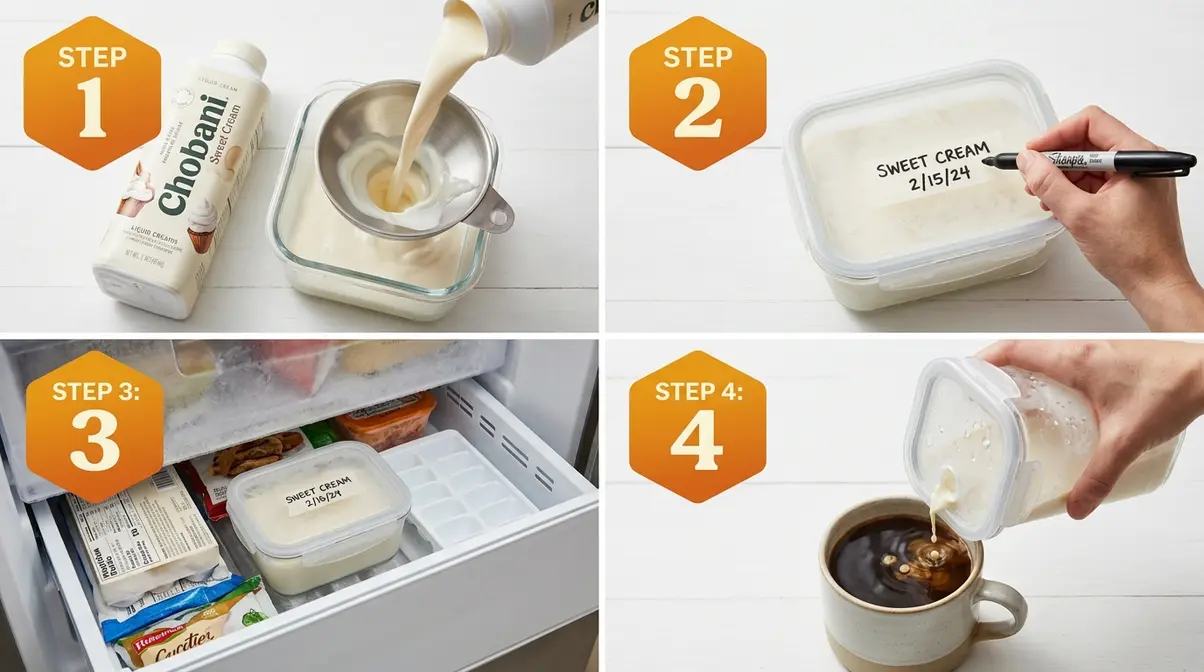
Can You Freeze Coffee Creamer?
Yes — with caveats. Freezing liquid creamer is possible and extends its life by up to 3–4 months, according to food storage guidance from StillTasty. However, freezing changes the texture of dairy and some non-dairy creamers. When thawed, the fat and liquid components may separate, resulting in a grainy or watery consistency.
- To freeze creamer successfully:
- Pour into an airtight, freezer-safe container (leave 1 inch of headspace for expansion)
- Label with the freeze date
- Thaw in the refrigerator overnight — never at room temperature
- Shake or stir vigorously after thawing to recombine
- Use within 7 days of thawing; do not refreeze
Freezing works best for flavored liquid creamers (Coffee Mate, International Delight) and least well for plain half-and-half or oat milk creamers, which tend to separate more dramatically. Powdered creamer does not need to be frozen and is not improved by it.
Step 4: Check Your Brand’s Specific Guidelines
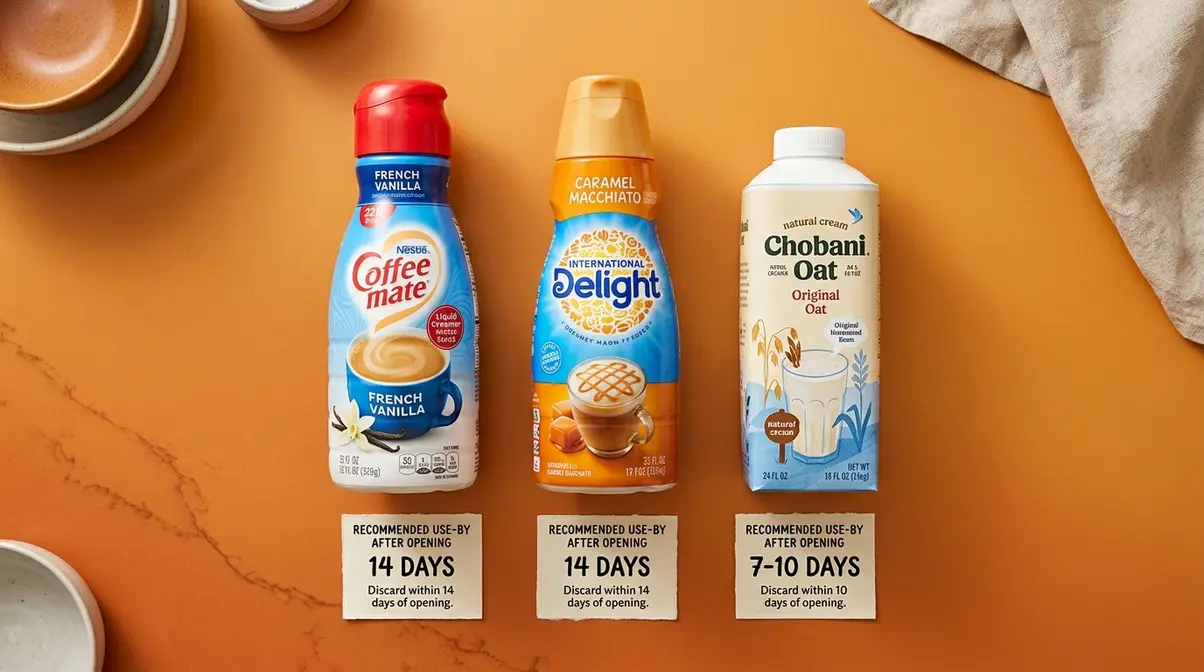
Manufacturer guidelines are the most precise shelf life data available — they’re based on the actual formulation of each product. According to information from official brand FAQs compiled by our team, here’s what the major brands recommend.
Coffee Mate: Liquid and Powdered
Coffee Mate liquid creamer (the refrigerated version in plastic bottles) carries a “use within 14 days of opening” recommendation from Nestlé. The shelf-stable mini-cups (the little individual creamers) are different — they’re ultra-heat-treated and can sit at room temperature unopened for up to 6 months, but should be used immediately once opened.
Coffee Mate powdered creamer is one of the most shelf-stable options available. Nestlé recommends using it within 3 to 6 months of opening for best flavor, though it remains safe beyond that window if stored properly and shows no signs of moisture or clumping.
Chobani and International Delight
Chobani oat milk creamer recommends consuming within 7–10 days of opening and keeping it refrigerated at all times. Because it’s oat-based, natural separation is expected — a quick shake is all it needs.
International Delight is one of the most searched brands for shelf life questions, and their official FAQ is clear: refrigerated International Delight creamer should be used within 14 days of opening, per International Delight’s official FAQ. Their products are ultra-pasteurized, which means they have a longer unopened shelf life than standard dairy, but the 14-day post-opening window still applies once refrigerated.
“International Delight creamer lasts up to 14 days after opening when refrigerated below 40°F” — a figure directly confirmed by the brand’s own guidelines.
Starbucks Bottled Coffee: A Special Case
Starbucks bottled coffee drinks (like the Frappuccino bottles or Cold Brew cartons) are technically coffee beverages, not creamers — but they’re often used as coffee enhancers. These are perishable dairy products once opened and should be treated like any liquid dairy: refrigerate immediately and consume within 5–7 days of opening. The high sugar content can actually accelerate fermentation, so err on the shorter end of that range if you notice any changes in smell or carbonation.
Step 5: Understand the Health Risks of Bad Creamer
Can coffee creamer cause stomach pain?
Yes, spoiled or dairy-based creamer can cause stomach pain in some people. Spoiled creamer may trigger foodborne illness symptoms — nausea, cramping, and diarrhea — within 1–6 hours of consumption. Separately, individuals with lactose intolerance may experience bloating and stomach pain from fresh dairy creamer, not just spoiled creamer. According to Everyday Health’s nutrition guidance, roughly 36% of Americans have some degree of lactose intolerance. If symptoms are recurring, try a plant-based alternative.
Most people who drink slightly past-date creamer feel fine. But understanding the actual risks helps you make smarter decisions — especially if you have specific health conditions.
Drinking Spoiled Creamer Risks
Drinking spoiled creamer can cause foodborne illness, commonly called food poisoning. Symptoms may include:
- Nausea and stomach cramps (typically within 1–6 hours)
- Vomiting
- Diarrhea (in some cases, severe — what people sometimes describe as “explosive diarrhea after coffee”)
- Fatigue and mild fever in more serious cases
The risk depends on how spoiled the creamer is and how much you drank. A tiny amount of slightly-off creamer in a large cup of coffee may cause nothing at all. A full pour of heavily curdled creamer is a different story.
According to the CDC’s foodborne illness guidelines, the most common bacteria responsible for dairy spoilage — including Listeria, Salmonella, and Staphylococcus aureus — can cause symptoms ranging from mild discomfort to serious illness in vulnerable populations (pregnant women, elderly individuals, young children, and immunocompromised people). If you experience severe or prolonged symptoms, seek medical care.
Lactose Intolerance and Dairy Reactions
Sometimes what feels like food poisoning from creamer is actually a lactose intolerance reaction (a digestive response to the milk sugar lactose, which some people can’t fully digest). Symptoms are similar — bloating, stomach pain, diarrhea — but typically appear within 30 minutes to 2 hours and resolve on their own.
The practical difference: lactose reactions happen with fresh creamer too, while food poisoning symptoms are tied to spoilage. This distinction matters for figuring out what’s causing your discomfort.
Diabetics and Kidney Disease Risks
For people with diabetes: Many flavored liquid creamers contain significant amounts of added sugar — some flavored varieties contain 5–7 grams of sugar per tablespoon. The American Diabetes Association recommends choosing unsweetened or sugar-free creamer options. Plain half-and-half or unsweetened oat/almond creamer are lower-glycemic choices. Always check the label for total carbohydrates per serving.
For people with chronic kidney disease (CKD): Phosphorus and potassium content in creamer matters. Dairy-based creamers are higher in phosphorus, which CKD patients are often advised to limit. Non-dairy creamers made with additives can also contain phosphate preservatives. The safest approach is to consult your nephrologist or a registered dietitian who specializes in kidney disease before choosing a creamer — individual tolerance varies significantly based on kidney function stage.
Quick Reference: How Long Does Coffee Last?
Since creamer doesn’t exist in isolation — you’re using it with coffee — here’s a fast reference for your coffee shelf life too.
Coffee Beans, Ground Coffee, and Instant
| Coffee Type | Pantry (Sealed) | After Opening | Best Storage |
|---|---|---|---|
| Whole beans | 6–9 months | 2–4 weeks peak flavor | Airtight container, cool/dark |
| Ground coffee | 3–5 months | 1–2 weeks peak flavor | Airtight container, away from light |
| Instant coffee | 2–20 years | 2–20 years (low moisture) | Sealed, dry, cool |
Whole beans and ground coffee don’t “go bad” in a food safety sense the way dairy does — they lose flavor and freshness. Stale coffee is safe to drink; it just won’t taste great.
Brewed Coffee and Iced Coffee
Brewed coffee left at room temperature should be consumed within 4 hours for best taste and safety. Refrigerated brewed coffee stays drinkable for 3–4 days, though flavor degrades noticeably after 24 hours. Iced coffee (diluted with ice) should be consumed the same day or refrigerated and used within 24 hours.
Mistakes That Shorten Creamer Life
Even when you know the guidelines, small habits can cut your creamer’s life by days. Based on manufacturer guidelines and common food safety patterns, these are the mistakes that come up most often:
1. Storing in the fridge door. As covered in Step 3, door storage causes repeated temperature swings. Move your creamer to an interior shelf today.
2. Using a wet spoon in powdered creamer. One drop of water can introduce enough moisture to start clumping within days. Keep a dedicated dry spoon near your coffee station.
3. Leaving the cap off while you make your coffee. Even 5–10 minutes of air exposure adds up over two weeks of daily use. Cap it immediately after pouring.
4. Pouring back into the bottle. If you over-pour into your cup, don’t pour it back. That introduces bacteria from your cup or spoon into the entire container.
5. Ignoring the “open date.” Write the date you opened the bottle on the cap with a marker. It takes 3 seconds and removes all the guesswork about whether you’re at day 10 or day 18.
6. Skipping the S.T.T. Check when you’re in a hurry. The check takes under 60 seconds. Skipping it is how people end up with stomach pain wondering what went wrong.
When to Throw It Out – and When to See a Doctor
Pitfalls That Lead to Spoilage
The most common reason people end up with spoiled creamer before the 14-day window is inconsistent refrigeration. If your creamer sat out on the counter while you made breakfast — even for 30–45 minutes daily — those warm periods compound. The FDA’s Danger Zone guidance is clear: perishable dairy products should not spend cumulative time above 40°F. A creamer that’s been left out for 2+ hours total across its life should be discarded earlier than the label suggests.
Similarly, cross-contamination from a used spoon or dirty cap can introduce bacteria that accelerate spoilage. If your cap has dried creamer crusted around the rim, clean it — that residue harbors bacteria that fall back into the container with every pour.
When to Choose an Alternative Creamer
Some situations call for switching creamer types entirely:
- Lactose intolerance or dairy sensitivity: Switch to oat, almond, or soy creamer. Oat milk creamers (like Chobani Oat) are the closest in texture and mouthfeel to dairy.
- Diabetes or blood sugar management: Choose unsweetened non-dairy creamer or plain half-and-half. Avoid flavored creamers with added sugars.
- CKD or kidney disease: Consult your dietitian. Rice-based creamers are often lower in potassium and phosphorus than dairy or soy options.
- Frequent travel or limited fridge access: Switch to powdered creamer or shelf-stable mini-cups, which don’t require refrigeration until opened.
Frequently Asked Questions
Use Creamer After 14 Days?
It depends on the creamer type and how it was stored. The 14-day guideline is a conservative manufacturer recommendation, not an automatic expiration. Some creamers stored consistently below 38°F in a sealed container may still pass The S.T.T. Check at day 16 or 17. However, risk increases past the 14-day window. Always run the Smell, Texture, Taste check before using — and when in doubt, throw it out. The cost of a new creamer is far less than a day of stomach illness.
International Delight Shelf Life?
International Delight creamer is good for up to 14 days after opening when kept refrigerated below 40°F, per the brand’s official FAQ. Their products are ultra-pasteurized, which extends the unopened shelf life significantly, but the 14-day window applies once the seal is broken. Store on an interior fridge shelf (not the door) to maintain consistent temperature and reach the full 14-day window.
Can diabetics use cream in coffee?
Yes, people with diabetes can generally use cream or creamer in their coffee, but the type matters significantly. Plain half-and-half and unsweetened non-dairy creamers have minimal impact on blood sugar. Flavored liquid creamers (like many International Delight or Coffee Mate varieties) can contain 5–7 grams of added sugar per tablespoon — those add up quickly. The American Diabetes Association recommends choosing unsweetened options and checking the nutrition label for total carbohydrates per serving.
Best coffee creamer for CKD?
There’s no single “best” creamer for chronic kidney disease (CKD) — the right choice depends on your kidney function stage and your doctor’s phosphorus and potassium restrictions. Generally, rice-based creamers tend to be lower in both minerals than dairy or soy options. Many CKD patients use small amounts of non-dairy whiteners without phosphate additives. Always consult your nephrologist or a registered dietitian who specializes in kidney disease before making dietary changes — individual tolerance varies by CKD stage.
Explosive Diarrhea After Coffee?
Sudden severe diarrhea after coffee can have several causes, and spoiled creamer is one of them. If the timing coincides with a new or older-than-usual creamer, run The S.T.T. Check and discard it if anything seems off. Other common causes include coffee’s natural laxative effect (caffeine stimulates the colon), lactose intolerance from dairy creamer, or added sugar alcohols (like sorbitol) in sugar-free creamers. If symptoms are severe, recurring, or accompanied by fever, consult a healthcare professional — the CDC recommends seeking care for foodborne illness symptoms that persist beyond 3 days.
What is the healthiest creamer?
The healthiest coffee creamer depends on your specific health goals, but several options stand out for general wellness. Unsweetened oat milk creamer provides fiber and is naturally dairy-free. Plain half-and-half is minimally processed and lower in additives than flavored products. Unsweetened almond milk creamer is very low in calories. For blood sugar management, choose unsweetened varieties with no added sugars. For heart health, look for options without partially hydrogenated oils (trans fats). According to food nutrition guidance from Everyday Health, reading the ingredient list matters more than the front-of-package marketing.
Can you freeze liquid creamer?
Yes, you can freeze liquid coffee creamer to extend its shelf life by up to 3-4 months. However, the texture may change upon thawing, especially for dairy and oat milk creamers, which can separate and become grainy. Flavored liquid creamers tend to freeze best. Always thaw in the refrigerator and shake vigorously before use.
Does powdered creamer need fridge?
No, powdered creamer does not need to be refrigerated. It is highly shelf-stable and should be stored in a cool, dry place away from heat and moisture. Introducing moisture, such as using a wet spoon, can cause clumping and mold growth, so always ensure the container is sealed tightly between uses.
Putting It All Together
For home coffee drinkers wondering how long does coffee creamer last after opening, the answer comes down to three things: creamer type, storage conditions, and The S.T.T. Check. Liquid dairy creamer lasts 7–14 days refrigerated; plant-based creamers last 7–10 days; powdered creamer stays fresh for months. The FDA’s Danger Zone guideline — keep perishable dairy below 40°F at all times — is the science behind every timeline in this article.
The S.T.T. Check — Smell, Texture, Taste — is the practical tool that bridges the gap between “the label says 14 days” and “this specific bottle, today, in my fridge.” Run it in order, stop at the first red flag, and trust your senses. They’re more reliable than you might think.
Your next step is simple: go check your creamer right now. Write today’s date on the cap if you haven’t already. Move it from the door shelf to the interior. And if it’s been more than 14 days, run The S.T.T. Check before your next cup. That 60-second check is the difference between a great morning and a bad one. Explore our other kitchen storage guides to keep your ingredients fresh and safe.

Dave King
Recipe developer and writer at Quick Dish Cookbook.
![How Long to Cook Pork Shoulder at 250°F [Chart]](https://quickdishcookbook.com/wp-content/uploads/2026/07/pork-shoulder-cook-time-250f-720x450.webp "How Long To Cook Pork Shoulder At 250°F [Chart] 9")