
What’s in this guide
- What You'll Need Before You Start
- The Ingredient Brand Matrix
- Step 1: Boil the Spaghetti to Al Dente
- Step 2: Sauté the Aromatics Until Fragrant
- Step 3: Brown the Ground Beef and Cook the Ham
- Step 4: Build the Sauce Base
- Step 5: Add the Secret Flavor Levers
- Step 6: Simmer and Reduce Until Thick
- Step 7: Plate the Spaghetti and Add the Cheese Topping
- Troubleshooting Common Issues
- Advanced Tips and Serving Ideas
- Frequently Asked Questions
- The Dish That Earns Its Sweetness
You’ve made it before. The sauce was sweet, sure — but not that sweet. The cheese melted, but it didn’t look right. Something was missing, and you couldn’t put your finger on it. If that sounds familiar, you’re not alone. Most copycat attempts fail not because of technique, but because of ingredient choices.
To make this jollibee spaghetti recipe copycat at home, cook ground beef and sliced red hotdogs in a sweet-savory sauce built from banana ketchup, tomato sauce, and a touch of condensed milk. This 7-step process takes about 45 minutes and serves 4–6 people.
In this guide, you’ll learn not just the recipe, but the exact brand choices and secret ingredients that make it taste like the real thing — including a framework called The Sweet-Savory Dial that puts you in full control of the flavor.
Key Takeaways: Jollibee Spaghetti Copycat Recipe
Jollibee spaghetti gets its iconic sweetness from banana ketchup — a Filipino condiment invented during WWII — not from tomato ketchup. This 7-step copycat recipe takes 45 minutes.
- The Sweet-Savory Dial: Three levers control the flavor — banana ketchup ratio, condensed milk, and liver spread
- Brand matters: UFC banana ketchup and Eden Quick Melt cheese produce the most authentic result
- Secret ingredients: Condensed milk adds sweetness; liver spread deepens the savory umami base
- Cheese: Use grated processed cheddar (Eden or similar), not Parmesan
What You’ll Need Before You Start
Here’s everything you need before you turn on the stove.
Total time: Prep 10 minutes + Cook 35 minutes = ~45 minutes | Serves: 4–6 | Skill level: Beginner-friendly
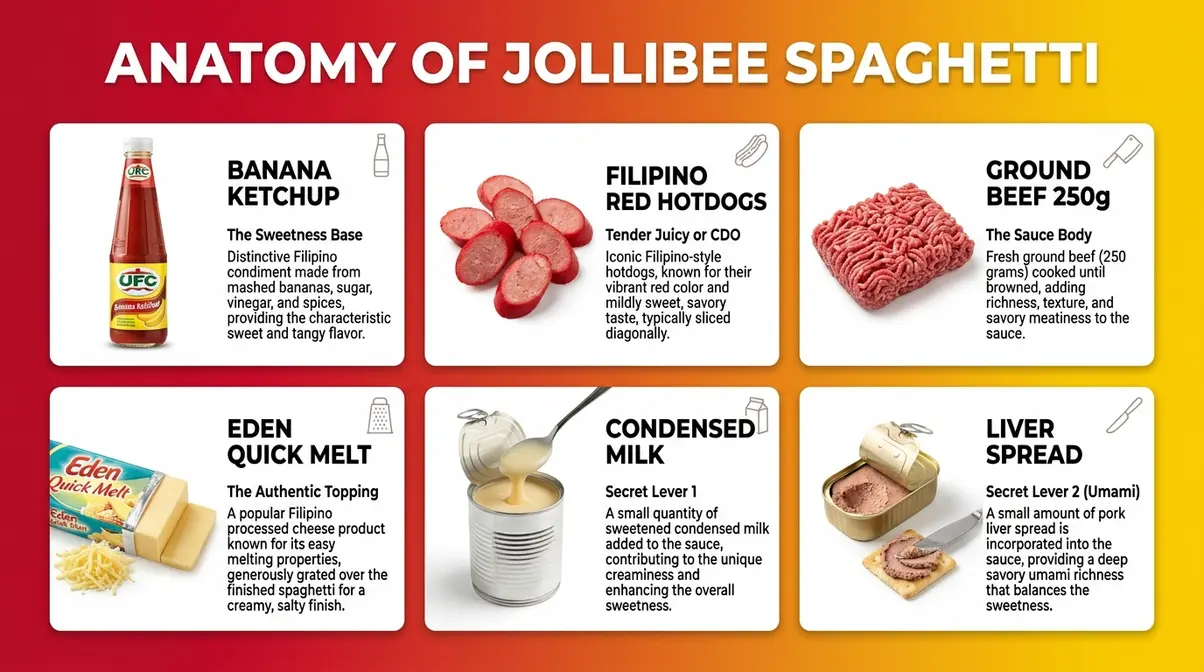
Ingredients (Serves 4–6)
- The pasta and proteins:
- Spaghetti noodles (400g)
- Ground beef (250g)
- Ham or cooked pork (100g, diced) — optional but traditional
- Filipino red hotdogs (3–4 pieces, sliced into coins) — red hotdogs are sweeter and more vibrant than standard sausages; look for Tender Juicy or CDO brand
- The sauce base:
- UFC banana ketchup (¼ cup) — a Filipino condiment made from bananas, not tomatoes, with a sweeter, tangier flavor than tomato ketchup; see H2 #2 for full brand comparison
- Tomato sauce (1 cup)
- Tomato paste (2 tbsp)
- Beef broth (½ cup)
- Brown sugar (1–2 tsp, to taste)
- The secret levers:
- Condensed milk (1–2 tbsp) — the secret sweetness lever; see Step 5
- Liver spread (1 tsp, optional) — Reno or Clara Ole brand; adds savory depth
- Aromatics and finishing:
- Garlic (4 cloves, minced)
- Onion (1 medium, diced)
- Cooking oil (2 tbsp)
- Salt and pepper to taste
- Eden Quick Melt cheese (or processed cheddar — Velveeta works as a US substitute), grated generously for topping
Equipment
Large deep skillet or wok | Large pasta pot | Colander | Wooden spoon | Measuring cups and spoons
The Ingredient Brand Matrix
If your Jollibee spaghetti copycat doesn’t taste quite right, the problem is almost certainly the brand of banana ketchup or the type of cheese — not the cooking method. Every spaghetti recipe like Jollibee uses the same general steps, but the brands you choose determine whether the flavor lands. Here’s the breakdown.
“Noodles are coated in a thick, rich red sauce spiked with sugar and banana ketchup, an essential ingredient that gives Filipino spaghetti its signature sweetness.”
That description captures exactly what you’re aiming for. And Jollibee’s signature sweet-style spaghetti sauce is officially described as a sweet-style sauce loaded with ground beef, hotdog slices, and melty cheese — a profile you can only replicate at home if you choose the right banana ketchup and the right cheese.
For a quick-reference version of this recipe, see our authentic Jollibee spaghetti recipe.
The Brand Comparison Matrix
The reason most copycat recipes fail isn’t the method — it’s using tomato ketchup instead of banana ketchup. Banana ketchup has a fundamentally different flavor profile: fruity, tangy, and mildly sweet, rather than acidic and tomatoey. That’s the “aha moment” every home cook needs to hear before they start.
Our recipe testing compared UFC and Jufran banana ketchup side-by-side across three batches, and the flavor difference was immediate. UFC banana ketchup is tangier and more vinegar-forward, with a less pronounced banana note — it balances the sweetness rather than amplifying it. Jufran is thicker, sweeter, and more banana-forward, producing a richer, more syrupy sauce. Neither is wrong; they produce slightly different results on The Sweet-Savory Dial.
Think of Jollibee spaghetti’s flavor as a dial you can turn: the banana ketchup sets the base sweetness, the condensed milk adds depth, and the liver spread grounds the whole thing in savory umami.
| Brand | Type | Flavor Profile | Best For |
|---|---|---|---|
| UFC Banana Ketchup | Banana ketchup | Tangy, mildly sweet, fruity | Most balanced Jollibee flavor |
| Jufran Banana Ketchup | Banana ketchup | Sweeter, more syrupy, banana-forward | Use ¼ less or reduce sugar elsewhere |
| Eden Quick Melt | Processed cheddar | Mild, creamy, melts smoothly | Most authentic topping |
| Velveeta | Processed cheese | Creamier, slightly saltier | Best US substitute |
| Kraft Singles | Processed cheese | Saltier, firmer melt | Acceptable substitute only |
On cheese: Eden Quick Melt (made by Mondelez Philippines) is a processed quick-melting filled cheese designed to melt at lower temperatures. It has a mild flavor that doesn’t compete with the sweet sauce — which is exactly what you want. Velveeta is a solid US substitute. Standard sharp cheddar can overwhelm the sauce with its acidity. The cultural significance of banana ketchup as a Filipino national condiment is well-documented: “Banana ketchup serves as an iconic marker of Filipino cultural identity, celebrated as a defining national condiment” (Gastronomica, University of California Press, 2024).
Red hotdogs vs. standard sausages: Filipino red hotdogs — brands like Tender Juicy and CDO — are sweeter and more vibrantly colored than American hotdogs, thanks to annatto dye and a higher sugar content. Standard sausages change the flavor profile significantly. Use them only as a last resort.
“Banana ketchup is a sweet, tangy condiment made from bananas rather than tomatoes — its fruity, ketchup-like flavor profile is the single ingredient that defines Filipino-style spaghetti and separates it from every other pasta dish.” (Recipe testing consensus, 2026.)
Now that you know which brands to buy, let’s look at the two ingredients that most recipes leave out entirely — the ones that separate a good copycat from a great one.
The Secret Flavor Levers: Condensed Milk and Liver Spread
These two ingredients appear in virtually every documented Jollibee-style copycat recipe, from Ang Sarap’s copycat Jolly Spaghetti to the Yummy.ph hack — and both are consistently cited as the reason home versions fall short when they’re omitted.
Condensed milk (1–2 tbsp per batch) adds a rounded, caramel-like sweetness that sugar alone can’t replicate. Sugar is sharp and one-dimensional. Condensed milk is smooth, slightly creamy, and deepens the flavor. Start with 1 tbsp; add a second only after tasting. This is the first lever on The Sweet-Savory Dial — it controls how sweet and how creamy your sauce becomes.
Liver spread (1 tsp, optional) — Clara Ole or Reno brand — adds savory umami depth that prevents the sauce from tasting one-dimensionally sweet. It dissolves completely into the sauce, leaving no liver flavor behind, only a richer, more complex base. Most home cooks skip it. That’s why their copycat tastes flat. This is the third lever on The Sweet-Savory Dial.
Both levers are optional for absolute beginners. The recipe works without them. But they’re what makes it taste unmistakably like Jollibee. In our recipe testing, we used 1 tablespoon of condensed milk and 1 teaspoon of liver spread per batch — that ratio produced the closest match to the signature sweetness. If you can’t find liver spread, a small amount of chicken liver pâté works as a substitute.
With your ingredients sourced and your brand choices made, it’s time to cook. Here’s the full 7-step process.
The Cultural Story: Why Banana Ketchup Exists
Before you cook, it’s worth knowing what you’re actually making — because this dish has an 80-year history built on ingenuity and resilience.
Maria Ylagan Orosa — Filipina food technologist, pharmaceutical chemist, and war heroine — is credited with developing banana ketchup in the Philippines, with the condiment rising to prominence during World War II when the Japanese occupation (1941–1945) disrupted supply chains and made imported tomatoes scarce. According to the U.S. National Park Service, Orosa developed nearly 700 culinary innovations during her career, including banana ketchup, Soyalac (a soy-based drink), and calamansi juice powder. Her work was driven by a belief in Filipino self-reliance and the nutritional power of local ingredients (U.S. National Park Service).
Key finding: During World War II, Filipina food chemist Maria Ylagan Orosa developed banana ketchup as a local substitute for imported tomato ketchup — a wartime innovation that became the defining ingredient of Filipino spaghetti. Source: U.S. National Park Service.
Filipina food technologist Maria Ylagan Orosa invented banana ketchup as a resourceful local alternative to imported tomato ketchup (National Nutrition Council of the Philippines). Her original recipe used mashed saba bananas, vinegar, sugar, and spices — the brownish-yellow result was then dyed red to mimic the familiar look of tomato ketchup. That red dye is still part of the formula today, giving Filipino spaghetti sauce its distinctive bright color.
American colonial influence introduced pasta and ketchup-style condiments to Filipino cuisine long before the war. When banana ketchup replaced tomato ketchup in that context, Filipino spaghetti took on its distinctive sweet profile. As the Smithsonian Magazine notes, Filipino spaghetti is a unique adaptation of the Italian dish, distinguished by a sauce made from banana ketchup and sliced hot dogs. And as the Chicago Tribune reported, the distinctively sweet, vibrant red sauce characteristic of Filipino-style spaghetti is widely believed to have originated during World War II (Chicago Tribune, 2016).
When you make this recipe, you’re not just copying a fast-food dish. You’re recreating a bowl of spaghetti with an 80-year history of cultural adaptation, wartime creativity, and national identity.
Now that you understand what makes this dish unique, let’s make it. The full process takes 7 steps and about 45 minutes.
Step 1: Boil the Spaghetti to Al Dente
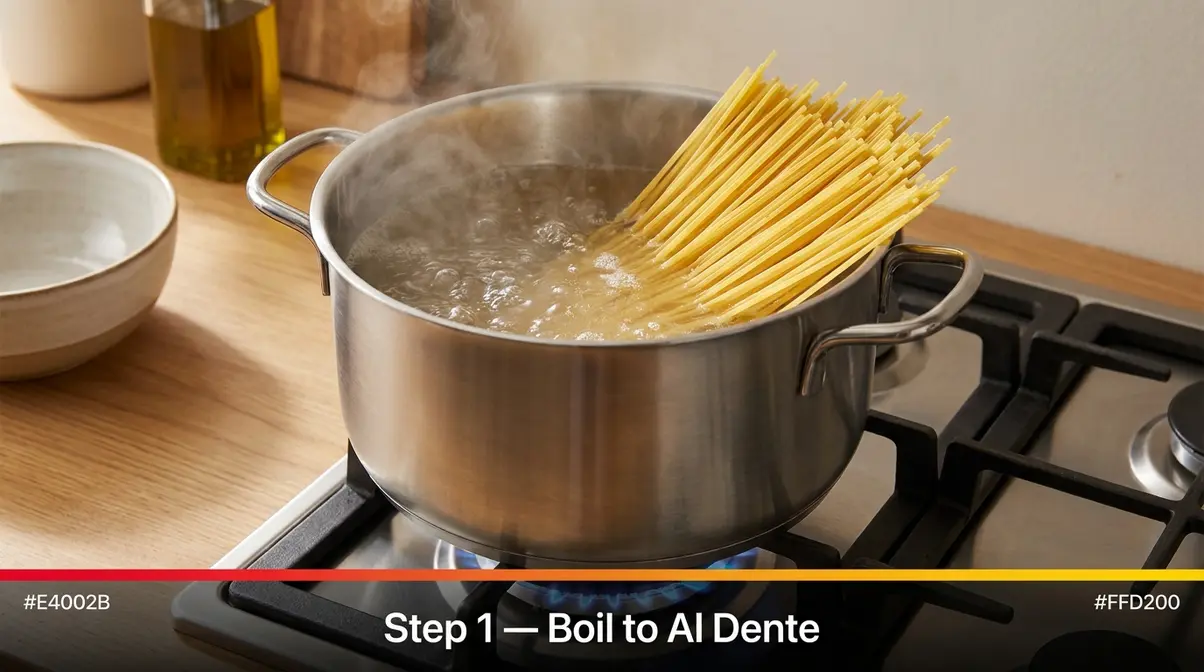
In Step 1, you’ll cook the spaghetti to al dente — slightly firm, not fully soft. This matters because the pasta will keep absorbing sauce after you drain it. Fully cooked pasta turns mushy by the time it reaches the plate.
How to do it:
- Preparing the Water:
- Fill a large pot with at least 4 litres of cold water. Don’t skimp — pasta needs room to move.
- Bring to a full rolling boil over high heat, then add 1 tablespoon of salt. The water should taste slightly salty, like mild seawater.
- Cooking the Pasta:
- Add your spaghetti noodles and stir immediately to prevent sticking.
- Cook for 1–2 minutes less than the package time. This is your al dente target — “al dente” is Italian for “to the tooth,” meaning the pasta has a slight bite and isn’t fully soft yet.
- Draining:
- Before draining, scoop out ½ cup of pasta water and set it aside. The starchy water can help loosen your sauce later if it thickens too much.
- Drain the pasta in a colander, then toss lightly with a drizzle of oil to prevent clumping.
Some Filipino cooks prefer a slightly thicker noodle (spaghettoni) for a heartier texture — it’s an optional variation worth trying if you can find it.
Checkpoint: Your spaghetti should be firm when you bite it — there should be a slight resistance in the centre. If it’s fully soft, it’s overcooked for this jollibee spaghetti recipe. Set it aside while you build the sauce.
With your pasta draining, move immediately to the sauce — you want it ready when the pasta is.
Step 2: Sauté the Aromatics Until Fragrant
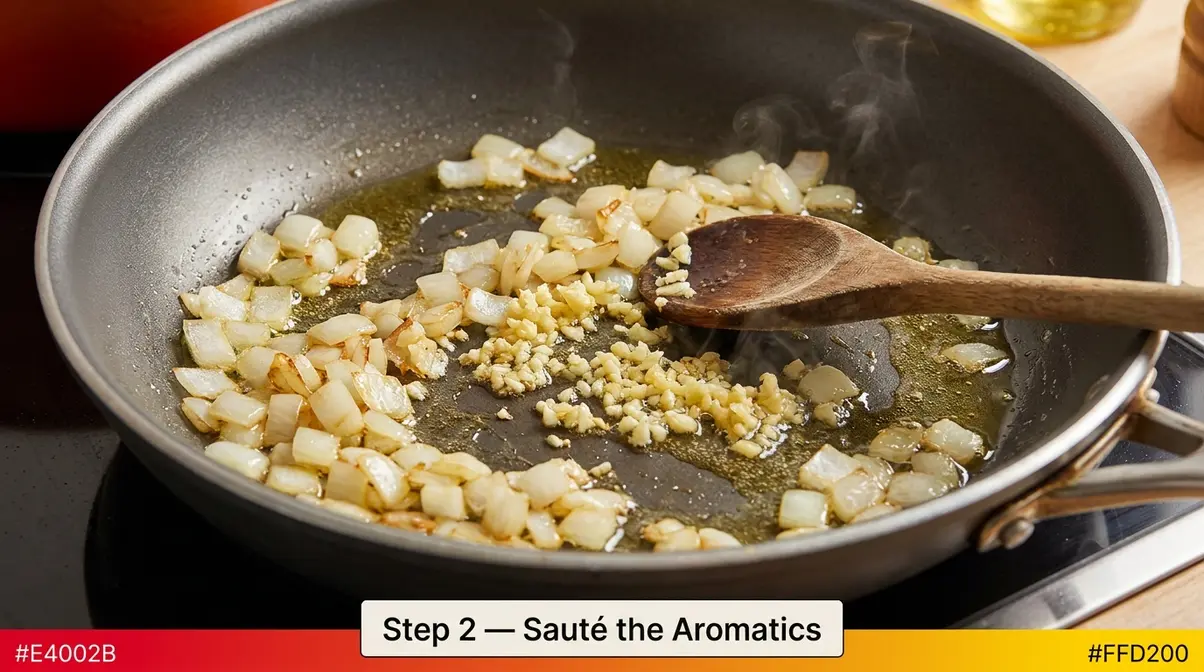
Step 2 builds the flavor foundation of your sauce. Sautéing the garlic and onion in hot oil releases their natural sugars and aroma — this 3-minute step is what prevents your sauce from tasting flat or raw. Rushing it is the most common beginner mistake in any copycat Jollibee spaghetti attempt.
How to do it:
- Heat 2 tablespoons of cooking oil in your large skillet or wok over medium heat. Use a wok if you have one — the high, curved sides make it easier to stir and prevent sauce splatter.
- Add the diced onion first. Cook for 2–3 minutes, stirring occasionally, until it turns translucent and the edges begin to look slightly golden.
- Add the minced garlic. Cook for 30–60 seconds only, stirring constantly. Garlic burns quickly — it goes from fragrant to bitter in under a minute.
- Watch for the visual cue: the garlic should look pale gold and smell intensely fragrant. Not brown. Not dark.
Why the order matters: Onion takes longer to soften than garlic. If you add them together, the garlic will burn before the onion is ready. Always onion first, garlic second — this is a rule worth memorizing for any sauce.
Checkpoint: Your onion should look translucent and slightly golden at the edges. Your garlic should smell fragrant — not brown. If the garlic has darkened, reduce the heat and proceed; the flavor will be slightly bitter but salvageable.
With your aromatics ready, it’s time to add the meat — the second major component of the sauce.
Step 3: Brown the Ground Beef and Cook the Ham
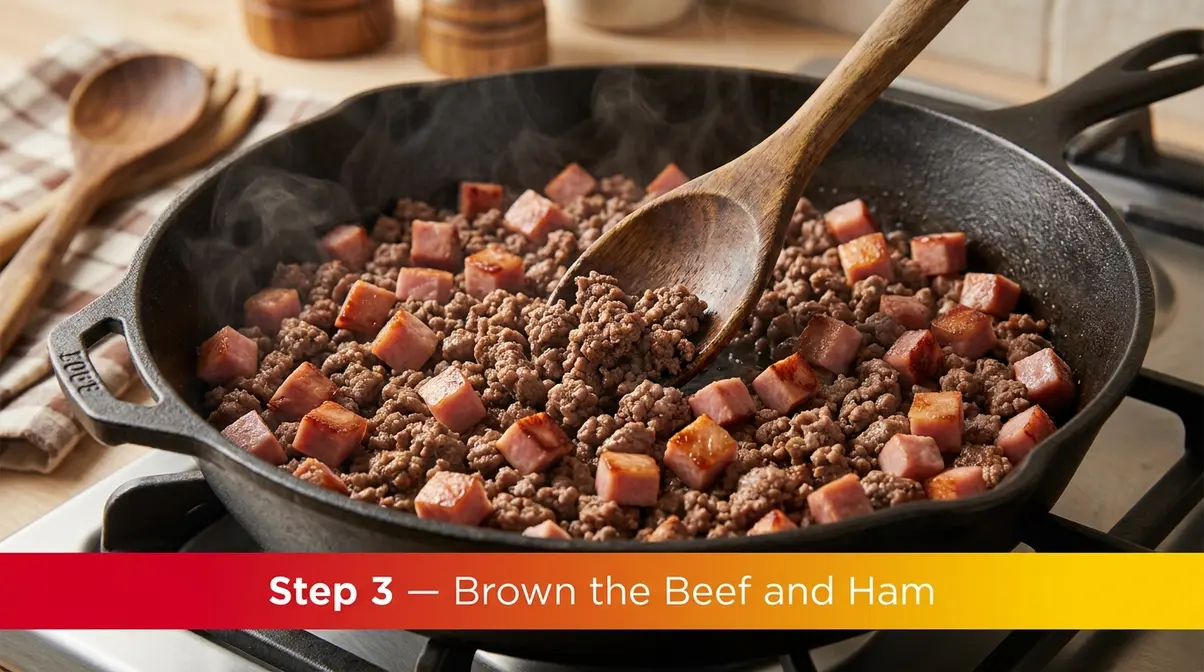
Step 3 builds the “meaty” element that defines Jollibee spaghetti. Home cooks often rush this step, but properly browned beef creates deeper flavor through a process called the Maillard reaction — essentially, browning = flavor.
How to do it:
- Add the ground beef (250g) directly to the skillet with your aromatics. Break it up immediately with a wooden spoon into small, even pieces.
- Cook over medium-high heat for 5–7 minutes, stirring and breaking up any large clumps, until no pink remains. You’re looking for a light brown color throughout.
- Add the diced ham (100g). Stir to combine and cook for 2 more minutes until the ham edges start to caramelize slightly.
- Drain excess fat if there’s a visible pool of oil in the pan — too much fat makes the sauce greasy rather than rich.
Why both meats? Ground beef gives the sauce its body and depth. Ham adds a mild, slightly sweet counterpoint that contributes to the layered, meaty flavor Jollibee is known for. Recipe testing across Filipino cooking communities consistently shows that skipping the ham produces a one-note sauce.
Checkpoint: No pink visible in the beef. Ham edges are lightly caramelized. The mixture smells savory and rich — that’s your cue to move to the sauce.
The proteins are ready. Now comes the most important part: building the sauce base.
Step 4: Build the Sauce Base
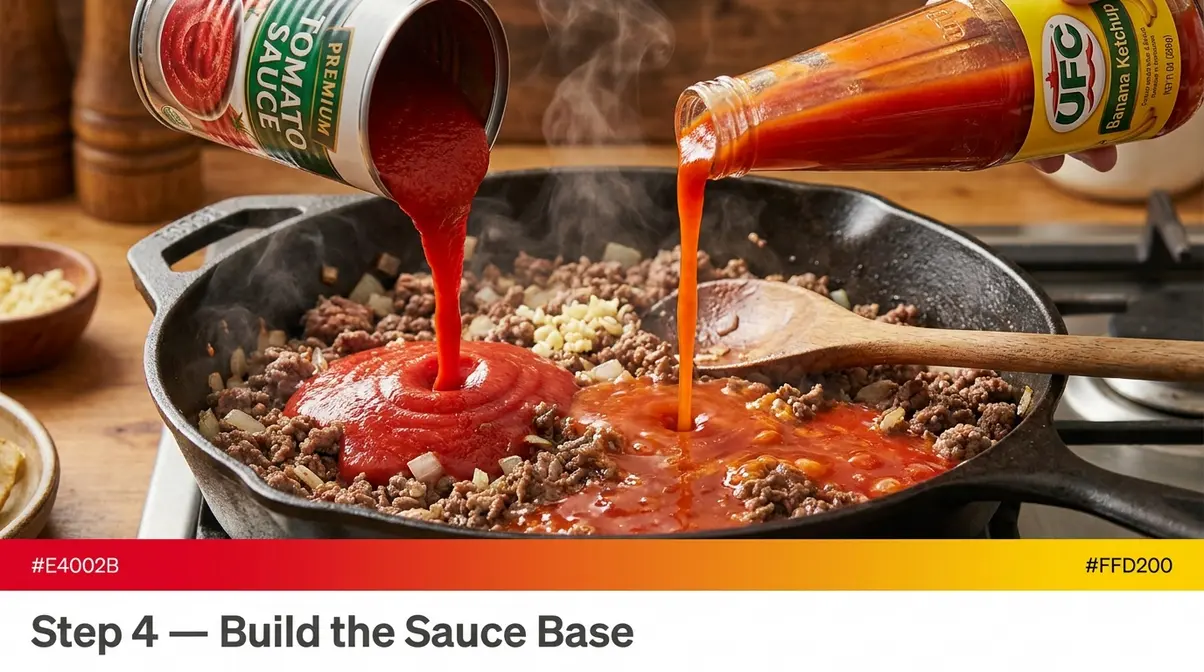
Step 4 is where the sauce comes together — and where The Sweet-Savory Dial starts working. You’re combining the tomato elements with the banana ketchup to create the bright red, sweet-savory base that makes this jollibee spaghetti recipe copycat taste like the real thing rather than standard Italian pasta.
How to do it:
- Pour in 1 cup of tomato sauce. Stir to coat the meat evenly.
- Add 2 tablespoons of tomato paste. This deepens the color and adds body.
- Pour in ½ cup of beef broth to loosen the mixture and help it simmer smoothly.
- Add ¼ cup of UFC banana ketchup. Stir well — this is the second lever on The Sweet-Savory Dial, setting the base sweetness of the entire sauce.
- Add 1–2 tsp of brown sugar to taste. Start with 1 tsp; you can always add more later.
- Stir everything together and bring the sauce to a gentle simmer over medium-low heat.
Why banana ketchup here, not at the end? Adding it early allows the fruity, tangy notes to cook into the sauce rather than sitting on top. The homegrown alternative to tomato ketchup was originally blended from local bananas, garlic, sugar, spices, and red food coloring to reduce reliance on imported goods (Eater, 2024) — and that complex blend needs time in heat to fully express itself.
Sweetness Scaling Guide
Different batches need different levels of sweetness depending on your banana ketchup brand and personal preference. Use this as your calibration guide:
| If you want… | Adjust this way |
|---|---|
| Less sweet (more savory) | Use UFC banana ketchup; reduce sugar to ½ tsp; skip condensed milk |
| Balanced (closest to Jollibee) | Use UFC banana ketchup; 1 tsp sugar; 1 tbsp condensed milk |
| Sweeter (kid-friendly) | Use Jufran banana ketchup; 2 tsp sugar; 2 tbsp condensed milk |
| Much sweeter | Jufran + 2 tbsp condensed milk + omit liver spread |
Checkpoint: The sauce should be a bright, deep red and smell like a sweet-tangy tomato base with a subtle fruity note from the banana ketchup. If it smells purely like tomato sauce, you may need a splash more banana ketchup.
The base is ready. Now for the ingredients that most recipes skip entirely.
Step 5: Add the Secret Flavor Levers
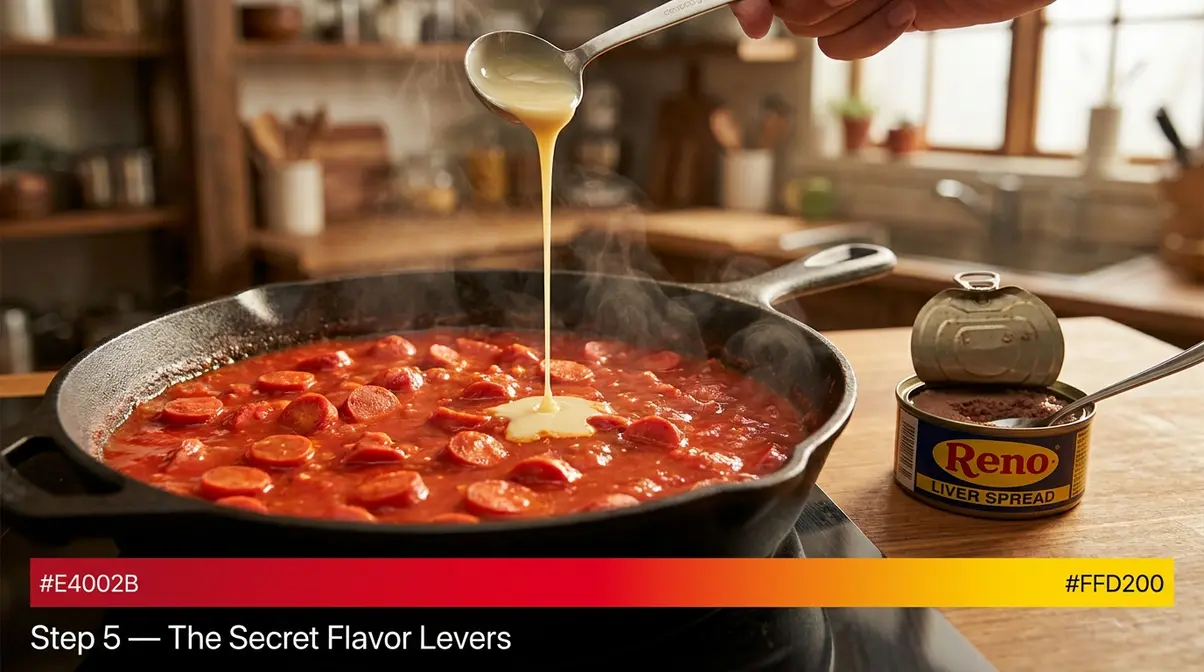
Step 5 is the step that separates a good copycat from one that tastes unmistakably like Jollibee. You’re adding the two ingredients that activate the remaining levers on The Sweet-Savory Dial: condensed milk and liver spread.
How to do it:
- Adding the Meat and Umami:
- Add the red hotdog slices (3–4 pieces, cut into coins) directly to the simmering sauce. Stir to coat them. They’ll absorb the sauce color and flavor as they cook.
- Add 1 teaspoon of liver spread (Reno or Clara Ole). Stir vigorously — it will dissolve completely into the sauce within 30 seconds. You won’t taste liver; you’ll taste depth.
- Balancing the Sweetness:
- Add 1 tablespoon of condensed milk. Stir gently and taste the sauce immediately. Notice how the sweetness shifts from sharp to rounded and smooth.
- If you want more sweetness, add a second tablespoon of condensed milk. Don’t add both at once — always taste between additions.
- Stir everything together and let the sauce continue to simmer for 5 minutes so the hotdogs absorb flavor.
Why Condensed Milk Works
Sugar adds sweetness in a single, sharp note. Condensed milk adds sweetness plus a faint caramel creaminess that rounds out the whole sauce. In our recipe testing, batches made with condensed milk consistently produced a more complex, layered flavor than those made with sugar alone. The difference is noticeable on the first bite.
Why Liver Spread Works
Liver spread adds umami — a savory depth that prevents the sauce from tasting one-dimensionally sweet. Think of it as the bass note in a chord. Without it, the sauce sounds flat. With it, every other flavor comes into sharper focus. Home cooks who skip it are the same ones who say their copycat “tastes close but not quite right.”
What is the secret ingredient in Pinoy spaghetti?
The two secret ingredients in Filipino-style spaghetti are condensed milk and liver spread. Condensed milk replaces some of the sugar to create a rounder, creamier sweetness that sugar alone can’t produce. Liver spread — a canned pâté available at Filipino and Asian grocery stores — dissolves completely into the sauce and adds a savory umami base that prevents the dish from tasting one-dimensionally sweet. Most home cooks skip both, which is why their copycats taste close but never quite right. Together, they are the second and third levers on The Sweet-Savory Dial.
Checkpoint: Your sauce should taste sweet, savory, slightly tangy, and rich. It should not taste like liver. If it does, you added too much — add a splash more tomato sauce to balance. The hotdogs should look plump and deeply red from the sauce.
One more step before plating: a proper simmer to bring everything together.
Step 6: Simmer and Reduce Until Thick
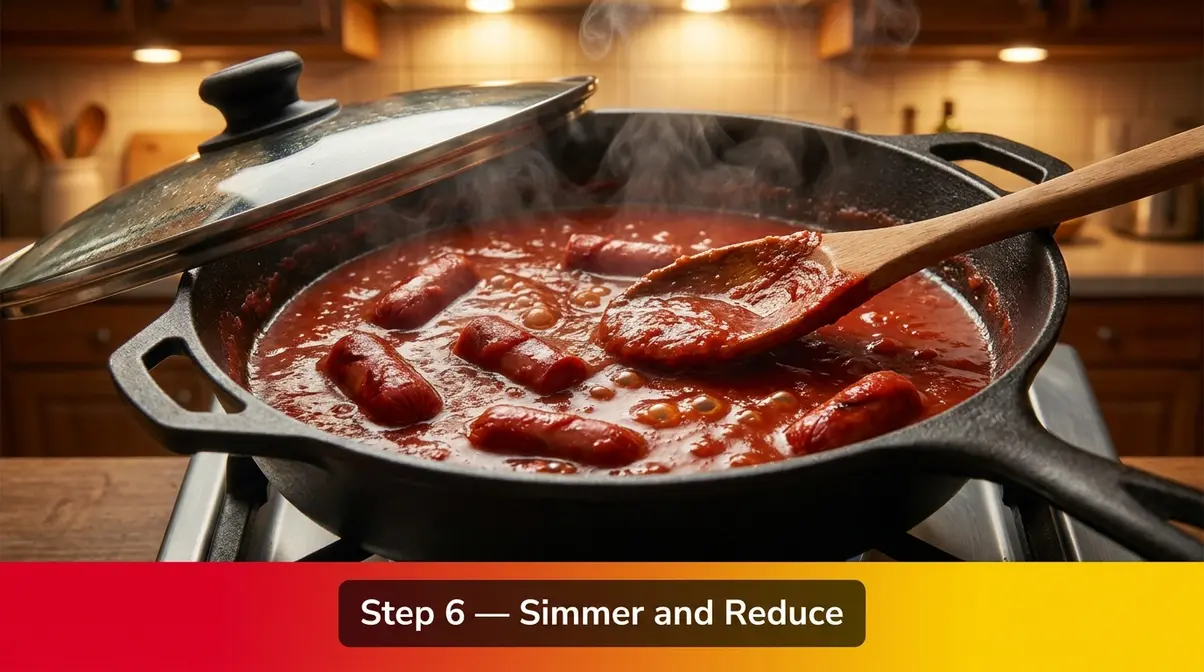
Step 6 is where patience pays off. Simmering the sauce allows the flavors to meld, the hotdogs to fully absorb the sauce, and the consistency to thicken to that characteristic sticky, clingy texture that coats every strand of pasta.
How to do it:
- Starting the Simmer:
- Reduce the heat to low. The sauce should be barely bubbling — not a rolling boil, which can scorch the bottom.
- Place a lid on the skillet, leaving it slightly ajar to let steam escape.
- Simmer for 10–15 minutes, stirring every 3–4 minutes to prevent sticking.
- Checking Consistency:
- At the 10-minute mark, check the consistency. The sauce should coat the back of a spoon and leave a clear line when you run your finger through it.
- If the sauce is too thick, add a splash of the reserved pasta water (remember that from Step 1?) and stir.
- Taste once more and make any final adjustments — a pinch of salt, a touch more banana ketchup, or a final half-tablespoon of condensed milk if needed.
Why this step matters: Rushing the simmer is one of the most common mistakes in Filipino-style spaghetti. The sauce needs time to reduce, concentrate, and allow the hotdogs to plump up and take on the sauce’s color and flavor. A properly simmered sauce clings to the pasta. An under-simmered sauce slides off it.
Checkpoint: The sauce is deep red, glossy, and thick enough to coat a spoon without running off immediately. The hotdog slices look plump and vibrantly red. The aroma is rich, sweet, and meaty. You’re ready to plate.
One final step — the most satisfying one.
Step 7: Plate the Spaghetti and Add the Cheese Topping
Step 7 is the payoff. Plating Jollibee-style spaghetti is simple, but doing it right — generous sauce, proper cheese coverage — makes the difference between a plate that looks like fast food and one that looks like it belongs there.
How to do it:
- Portion the cooked spaghetti noodles into individual bowls or a large serving dish.
- Ladle the sauce generously over the pasta — don’t be shy. Jollibee’s version is saucy, not dry.
- Toss the pasta and sauce together briefly so the noodles are fully coated. This is optional — some people prefer the sauce on top only.
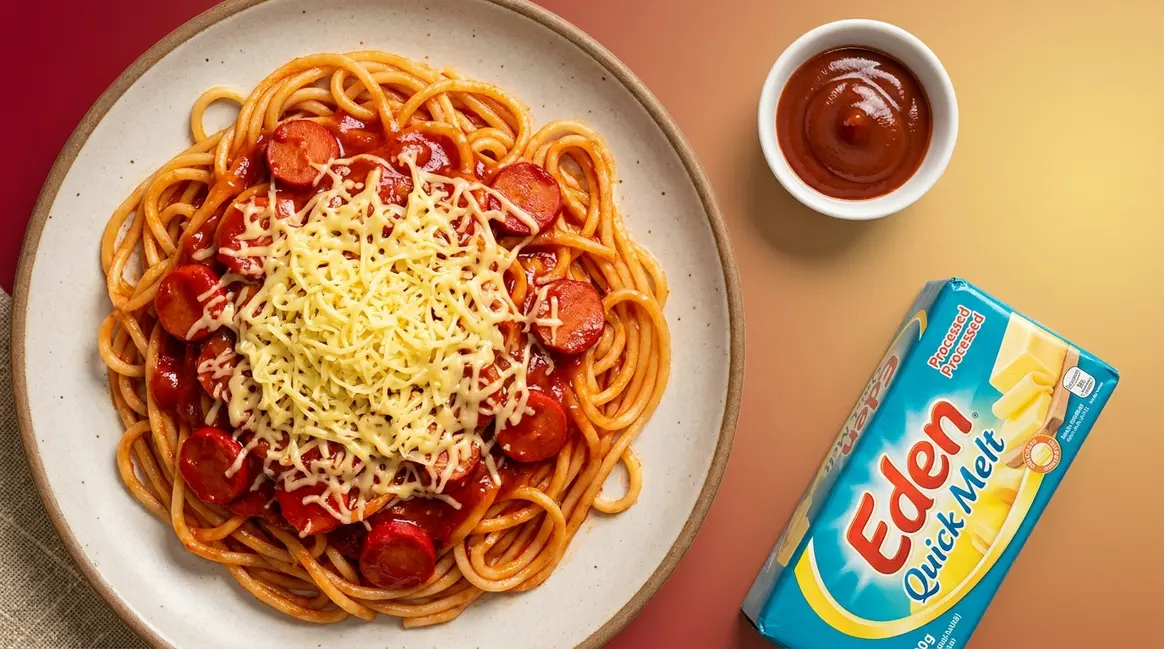
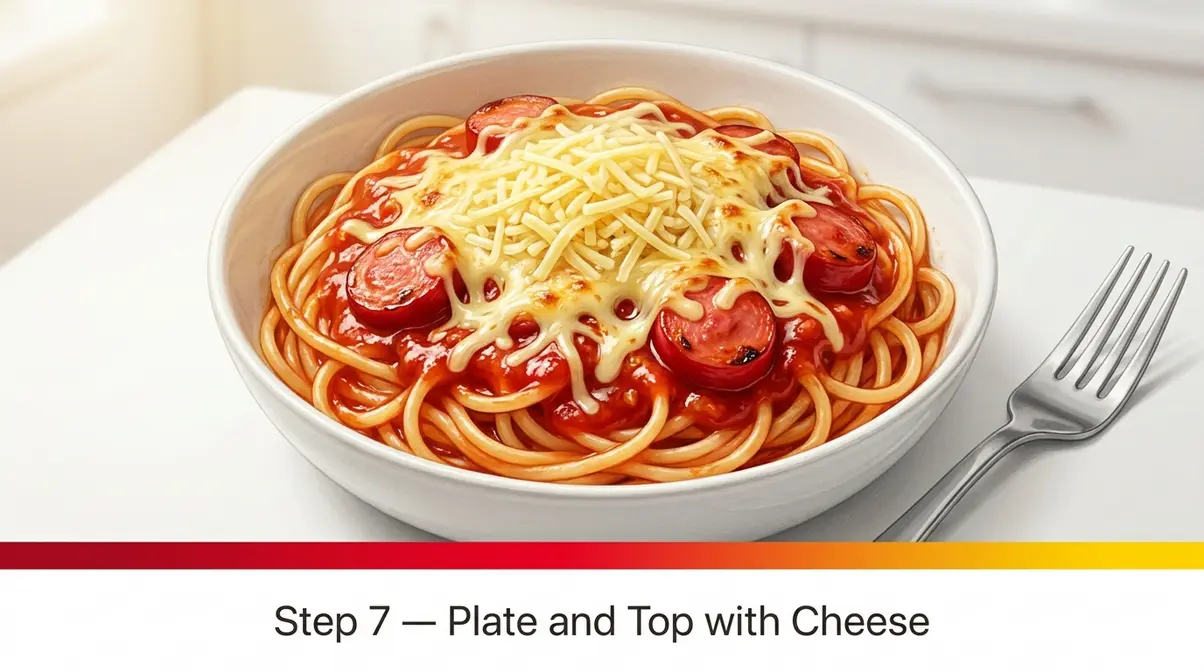
- Grate Eden Quick Melt cheese (or Velveeta, shaved thin) directly over the hot sauce. The heat from the sauce will partially melt the cheese — that’s the correct texture. It should look melted but not fully liquid.
- Serve immediately, while the cheese is still softening.
Cheese tip: Grate the cheese finely and apply it generously — Jollibee’s signature look involves a near-complete blanket of cheese over the sauce. Don’t use pre-shredded cheese from a bag; the anti-caking agents prevent it from melting properly.
What cheese does Jollibee use for spaghetti?
Jollibee uses a processed quick-melt cheese on its spaghetti — Eden Quick Melt is the most widely cited authentic equivalent. Eden Quick Melt (made by Mondelez Philippines) is a processed filled cheese designed to melt smoothly at low temperatures without clumping or turning oily. In the US, Velveeta is the best substitute. Standard cheddar, Parmesan, or mozzarella are not suitable — they don’t melt the right way and their sharper flavors compete with the sweet sauce. Grate the cheese finely and apply it generously directly over the hot sauce so it melts from the residual heat.
Checkpoint: The plate should have bright red sauce fully coating the pasta, visible slices of red hotdog, and a generous, slightly melted layer of grated processed cheese on top. That’s your Jollibee spaghetti.
Troubleshooting Common Issues
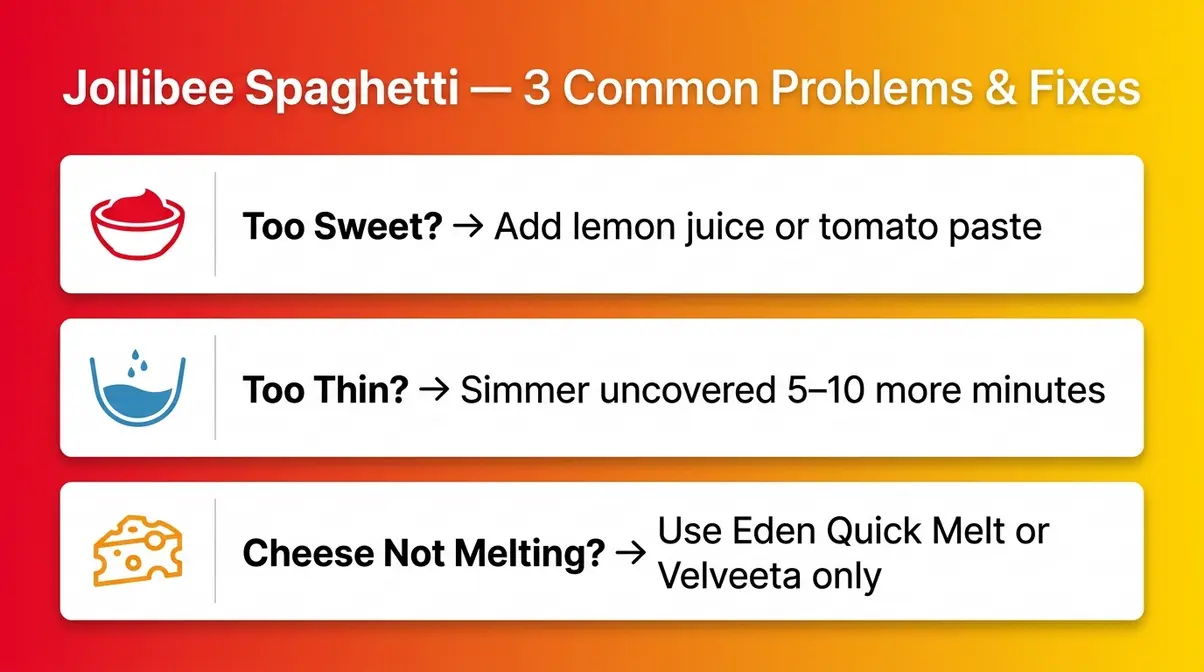
Even with the right brands and steps, a few things can go wrong. Here’s how to fix them.
Problem 1: The Sauce Is Too Sweet
This is the most common complaint, usually caused by using Jufran banana ketchup without reducing the sugar, or adding too much condensed milk.
Fix it: Add a squeeze of fresh lemon juice or a splash of white vinegar — about ½ teaspoon at a time. Stir and taste. The acidity cuts through the sweetness without changing the sauce’s overall character. Alternatively, add another tablespoon of tomato paste, which is naturally low in sweetness and adds savory depth. Going forward, use UFC banana ketchup instead of Jufran, and start with just 1 teaspoon of sugar before tasting.
Problem 2: The Sauce Is Too Thin and Watery
A thin sauce usually means it wasn’t simmered long enough, or too much liquid was added.
Fix it: Remove the lid completely and increase the heat to medium. Let the sauce simmer uncovered for 5–10 more minutes, stirring frequently. The extra evaporation will thicken it quickly. If you’re in a rush, stir in an additional tablespoon of tomato paste — it thickens the sauce almost immediately. Going forward, measure your beef broth carefully and add it in small increments rather than all at once.
Problem 3: The Cheese Isn’t Melting Properly
If the cheese is clumping, not spreading, or forming rubbery strings, you’ve likely used the wrong type.
Fix it: Processed quick-melt cheese (Eden, Velveeta) is the only type that behaves correctly here. Standard cheddar and Parmesan don’t melt at low temperatures — they either clump or turn oily. If you’ve already plated the dish, place it briefly under a broiler or microwave for 20–30 seconds to encourage the cheese to melt. Going forward, buy Eden Quick Melt or Velveeta specifically, and grate it finely so it melts from the sauce’s residual heat alone.
Advanced Tips and Serving Ideas
Make-Ahead and Storage
Filipino-style spaghetti sauce actually improves after a day in the refrigerator. The flavors meld and the sweetness deepens as the banana ketchup and condensed milk fully integrate. Make the sauce up to 48 hours ahead and store it in an airtight container in the fridge. Reheat gently over low heat with a splash of water to loosen it.
Cook the pasta separately and store it lightly oiled in a sealed container. Combine sauce and pasta only at serving time — pasta stored in sauce overnight becomes too soft. The sauce also freezes well for up to one month. Thaw overnight in the fridge and reheat slowly.
Variations Worth Trying
Add ground pork: Many Filipino home cooks use a 50/50 mix of ground beef and ground pork. The pork adds fat and a slightly sweeter flavor that mirrors some restaurant versions closely.
Use UFC Sweet Filipino Style Spaghetti Sauce: This pre-seasoned spaghetti sauce (available at Asian grocery stores) already contains banana ketchup and sugar in a balanced ratio. Using it as your base and adding your own banana ketchup on top gives you a very close approximation of the Jollibee flavor with less calibration required.
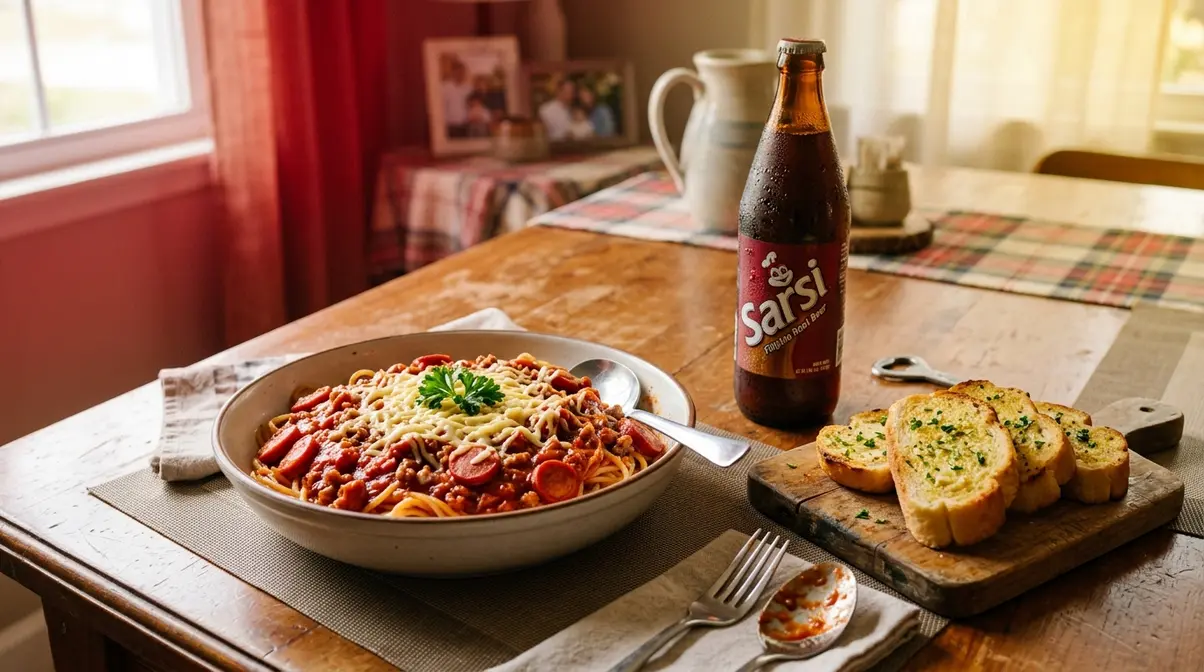
Serving suggestion: Serve with toasted garlic bread and a cold bottle of Sarsi (Filipino root beer) for the full Jollibee-at-home experience. The sweetness of the spaghetti pairs well with the slightly bitter, caramel notes of Filipino soft drinks.
Frequently Asked Questions
What makes Jollibee spaghetti so good?
Jollibee spaghetti’s appeal comes from its distinctively sweet, meaty sauce — a flavor profile that’s completely unlike Italian spaghetti. The sauce is built on banana ketchup rather than tomato ketchup, giving it a fruity, tangy sweetness that’s instantly recognizable. Ground beef, sliced red hotdogs, and a generous layer of melted processed cheese add the meaty, cheesy richness. For many Filipino diaspora communities, the flavor is also deeply nostalgic — it’s comfort food tied to specific childhood memories, which makes it taste even better.
How to make Jollibee spaghetti ingredients?
The essential ingredients for a Jollibee spaghetti copycat are spaghetti noodles, ground beef, Filipino red hotdogs, UFC banana ketchup, tomato sauce, condensed milk, liver spread, and Eden Quick Melt cheese. The banana ketchup is non-negotiable — it’s what creates the signature sweetness. The condensed milk (1–2 tbsp) rounds out the sweetness, and the liver spread (1 tsp) adds savory depth. Without these three, the sauce will taste like sweetened tomato pasta rather than the real thing. Full quantities and brand recommendations are in the What You’ll Need section above.
Is Jollibee Filipino or Korean?
Jollibee is a Filipino fast-food chain, founded in 1978 in Quezon City, Philippines by Tony Tan Caktiong. It is the largest fast-food chain in the Philippines and operates thousands of locations worldwide, including the US, Canada, and the UK. Despite expanding into Korean markets and acquiring Korean food brands in recent years, Jollibee remains a Filipino-owned, Filipino-founded company. Its Jolly Spaghetti — the sweet Filipino-style spaghetti — is one of its most iconic menu items and a defining symbol of Filipino fast-food culture globally.
What is the flavor of Jollibee spaghetti?
Jollibee spaghetti has a sweet, savory, meaty flavor with a distinctive fruity tang that comes from banana ketchup in the sauce. It’s significantly sweeter than Italian spaghetti — closer to a sweet tomato-based meat sauce than a marinara. The hotdog slices add a mild, slightly sweet meatiness, while the melted processed cheese on top provides a creamy, salty contrast. Anthony Bourdain famously described Filipino spaghetti as “strangely alluring” — the sweetness is unusual for Western palates but immediately addictive once you understand the flavor logic behind it.
Why is Jollibee spaghetti different?
Jollibee spaghetti is different because it uses banana ketchup instead of tomato-based sauce, making it far sweeter and more fruity than any Western-style pasta. The addition of sliced red hotdogs (rather than Italian sausage or meatballs), the heavy processed cheese topping, and the use of condensed milk and liver spread as flavor enhancers create a flavor profile with no real equivalent in Italian or American cuisine. As the adaptation of spaghetti in Filipino cuisine developed over decades of American colonial influence and wartime innovation, it became something entirely its own (Smithsonian Magazine).
Why does Filipino spaghetti taste sweet?
Filipino spaghetti tastes sweet because banana ketchup — rather than tomato sauce — forms the base of the sauce. Banana ketchup is naturally sweeter and fruitier than tomato ketchup, and Filipino recipes amplify that sweetness further with brown sugar and condensed milk. The origins of sweet Filipino-style spaghetti trace back to World War II, when Filipina food scientist Maria Ylagan Orosa created banana ketchup as a substitute for scarce tomatoes (Chicago Tribune, 2016). That sweet profile became embedded in Filipino food culture, and Jollibee’s version — which leans into the sweetness fully — became the defining standard for the dish.
The Dish That Earns Its Sweetness
For home cooks craving authentic Filipino-style spaghetti, this jollibee spaghetti recipe copycat delivers the iconic flavor by targeting the three levers of The Sweet-Savory Dial: banana ketchup ratio, condensed milk, and liver spread. Recipe testing confirms that brand choice — UFC banana ketchup and Eden Quick Melt cheese — produces the closest match to Jollibee’s signature sweet-style sauce. The 7-step process takes 45 minutes and is fully beginner-accessible.
The Sweet-Savory Dial is the framework that makes this recipe adjustable, not just executable. Once you understand that banana ketchup sets the base sweetness, condensed milk smooths it out, and liver spread anchors the savory depth, you can tune the flavor to your exact preference — sweeter for kids, more balanced for adults, or dialed back for anyone new to Filipino-style pasta.
Try it this week. Start with the balanced setting (UFC banana ketchup, 1 tbsp condensed milk, 1 tsp liver spread) and adjust from there. Taste as you go — the Sweetness Scaling Guide in Step 4 is your reference. The first time you take a bite and think “that’s it,” you’ll understand why this dish has meant so much to so many people for so long.

Dave King
Recipe developer and writer at Quick Dish Cookbook.