
What’s in this guide
- How One-Dish Meals Work: The One-Dish Formula
- Types of One-Dish Meals: Pot, Pan, and Skillet
- One-Dish Meal Examples: 15+ Easy Dinner Ideas
- Budget One-Dish Meals: History and How-To
- The Real Benefits of One-Dish Meals
- Frequently Asked Questions About One-Dish Meals
- Honest Limitations of One-Dish Cooking
- The Simplest Change for Weeknight Cooking
A one-dish meal is a complete dinner — combining protein, complex carbohydrates, and vegetables — cooked together in a single pot, pan, or baking dish. The goal is nutritional completeness and minimal cleanup. Common examples include one-pot pasta with chicken and spinach, sheet-pan salmon and roasted vegetables, and skillet rice stews. (47 words)
At a Glance: A one-dish meal combines all meal components in one vessel for minimal cleanup. Common types include one-pot meals, sheet-pan dinners, and skillet meals. Benefits include saving time, reducing dishes, and creating deeply flavored results. Budget options like cowboy dinners and Depression-era classics prove this style of cooking is as practical as it is delicious.
You’ve just finished a long day. You open the fridge, stare at the contents, and the thought of washing five pots afterward makes you want to order takeout instead. Sound familiar? A 2026 survey of 2,000 Americans found that 77% say there are days when they’re too tired to cook after work (New York Post, 2026) — and that feeling is completely valid.
Three pots, two pans, a cutting board, and a colander — for one weeknight dinner. That’s the real problem. Not the cooking itself, but the mountain of cleanup waiting on the other side.
In this guide, you’ll learn exactly what a one dish meal is, discover a simple formula for building your own, and find 15+ recipes you can try tonight. You’ll also explore the history, budget breakdown, and psychology behind why one-dish cooking works so well.
How One-Dish Meals Work: The One-Dish Formula
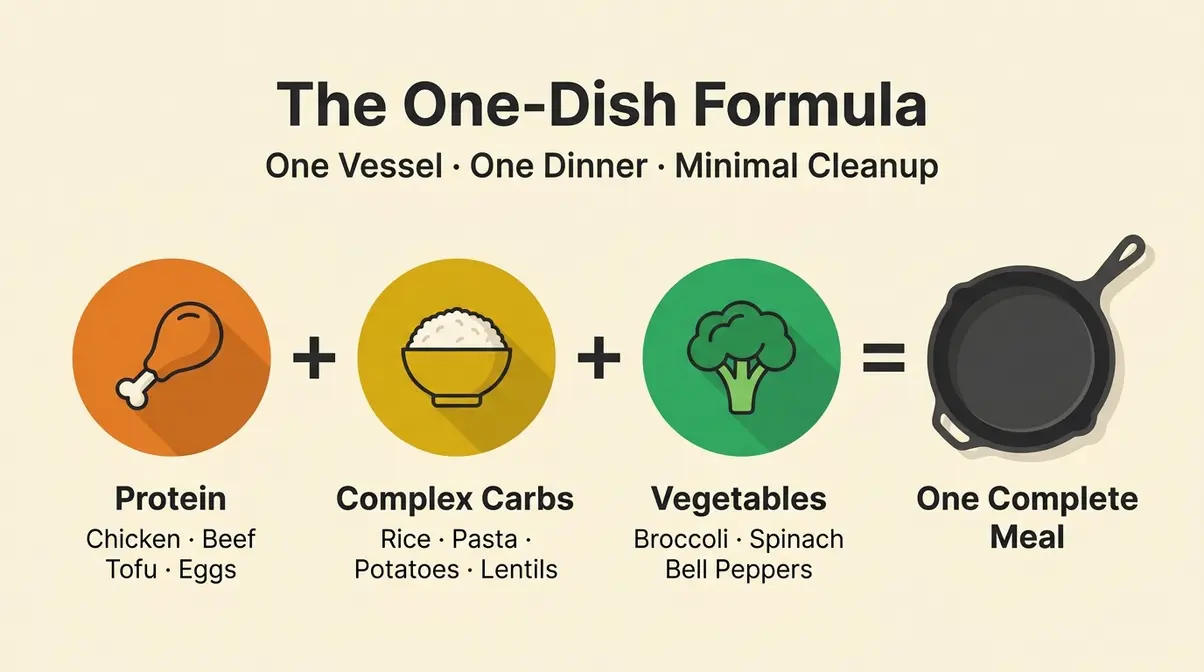
According to SDSU Extension, preparing everything in one dish makes it easier to ensure that several food groups are included — simplifying the method for preparing comfort foods. For a tired weeknight cook, that single insight changes everything: you don’t need to plan three separate components. You just need one vessel and the right formula.
“One-dish meals provide proper nutrition through a calorie-balanced protein-fat-carbohydrate ratio.” — World Bank report on one-dish meals of South Asia
Think of it like a lunchbox that cooks itself. Everything goes in together, and what comes out is balanced, flavorful, and ready to eat.
The One-Dish Formula Explained
The One-Dish Formula is the defining framework of a true one-dish meal: Protein + Complex Carbs + Vegetables, all cooked together in a single vessel to deliver a nutritionally complete dinner.
Here’s what each component means in practice:
- Protein: Chicken thighs, ground beef, canned beans, tofu, shrimp, eggs
- Complex Carbs: Rice, pasta, potatoes, lentils, barley, sweet potato
- Vegetables: Broccoli, bell peppers, zucchini, spinach, cherry tomatoes, onions
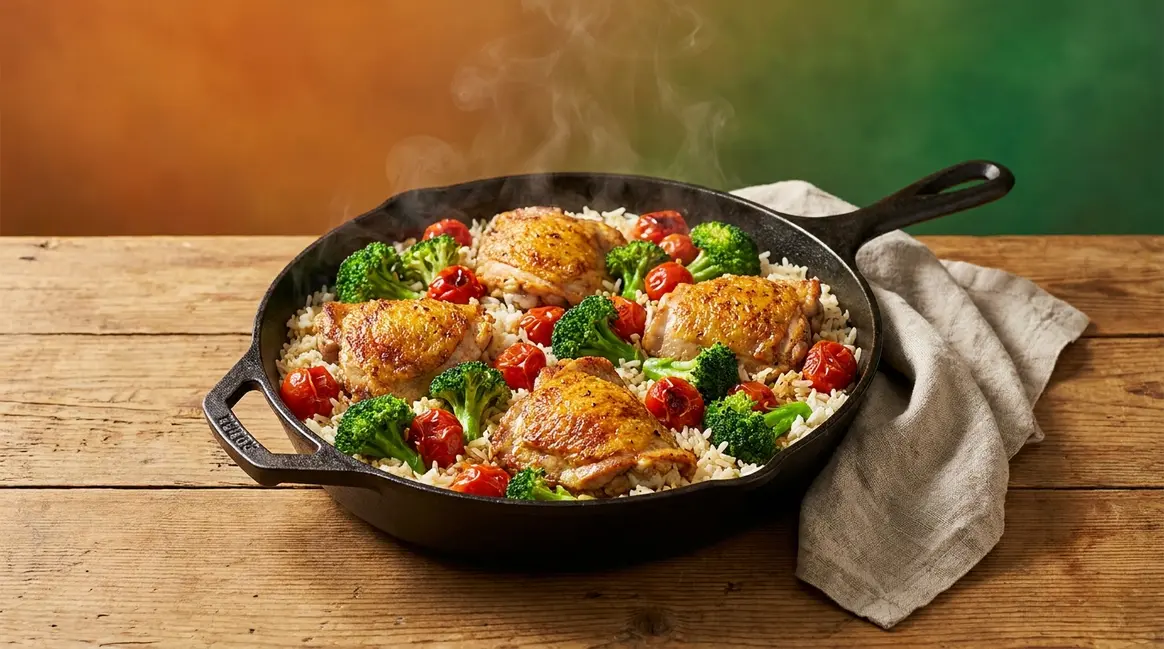
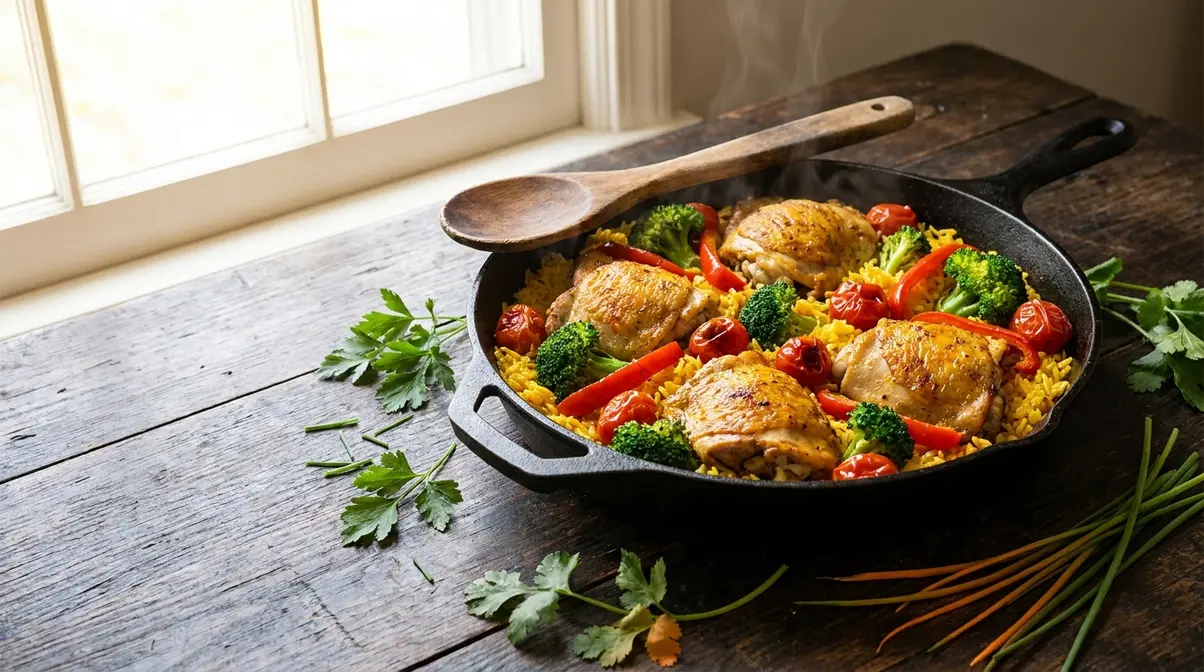
Why does cooking them together work so well? The starch absorbs the juices from the protein, and the vegetables soften in the same broth or sauce. Flavors meld in a way that separate pots never achieve. A chicken and rice skillet with broccoli is the perfect illustration: chicken (protein) + rice (complex carb) + broccoli (vegetable), all cooked in one pan. That’s The One-Dish Formula at work.
Crucially, nutritional completeness is what separates a one-dish meal from a one-pot snack. A bowl of plain pasta cooked in a single pot is not a one-dish meal by this definition — it’s missing protein and vegetables. The formula requires all three components to be present.
According to a World Bank report on one-dish meals across South Asia, these meals provide proper nutrition through a calorie-balanced protein-fat-carbohydrate ratio — a finding that confirms the formula’s nutritional logic applies across cultures and cuisines.
But “one-dish” and “one-pot” aren’t always the same thing — and that difference matters more than most cooks realize.
One-Dish vs. One-Pot: Key Differences
A one-dish meal is also called a one-pan meal, a casserole, or a sheet-pan dinner — but these names are often used interchangeably with “one-pot meal,” which creates real confusion. Here’s the distinction that matters:
A one-pot meal is a cooking method — it simply means everything goes into a single pot (a Dutch oven, a saucepan, or a slow cooker). Nutritional completeness is optional. A one-dish meal is a broader category focused on nutritional completeness: it can use any vessel, and it requires all three food groups to be present.
The clearest way to see the difference:
| One-Dish Meal | One-Pot Meal | |
|---|---|---|
| Definition | Complete meal (Protein + Carbs + Veg) in one vessel | Anything cooked in a single pot |
| Vessel | Any — pot, pan, skillet, baking dish | Pot or saucepan specifically |
| Nutritional completeness | Required (all food groups) | Optional |
| Example | Chicken, rice, and broccoli skillet | Plain pasta cooked in one pot |
| Other names | One-pan meal, casserole, sheet-pan dinner | Stew, braise, boil |
One-pot chicken soup with noodles and carrots? Complete — it qualifies as a one-dish meal. One-pot plain buttered pasta? Incomplete — it’s a one-pot dish, but not a one-dish meal by The One-Dish Formula. As SDSU Extension notes, ensuring that several food groups are included is the whole point.
The Psychology of Low-Mess Cooking
There’s a reason one-dish meals feel so appealing on a Tuesday night — and it goes beyond convenience. Decision fatigue is the mental exhaustion that builds from making repeated choices throughout the day. By evening, when cognitive resources are at their lowest, even deciding which pot to use can feel overwhelming. A 2026 narrative review published in PMC found that under decision fatigue, people consistently default to the path of least resistance — often convenience food or takeout (National Library of Medicine, 2026).
One-dish cooking eliminates most of those micro-decisions. One vessel. One method. One thing to wash. That’s the “No Mess, No Stress” principle — and research confirms it works. When you know dinner means one pan and 30 minutes, you’re far more likely to cook at home than reach for the phone.
Now that you know the formula and why it works, let’s look at the three main types of one-dish meals — and which vessel suits which meal.
Types of One-Dish Meals: Pot, Pan, and Skillet
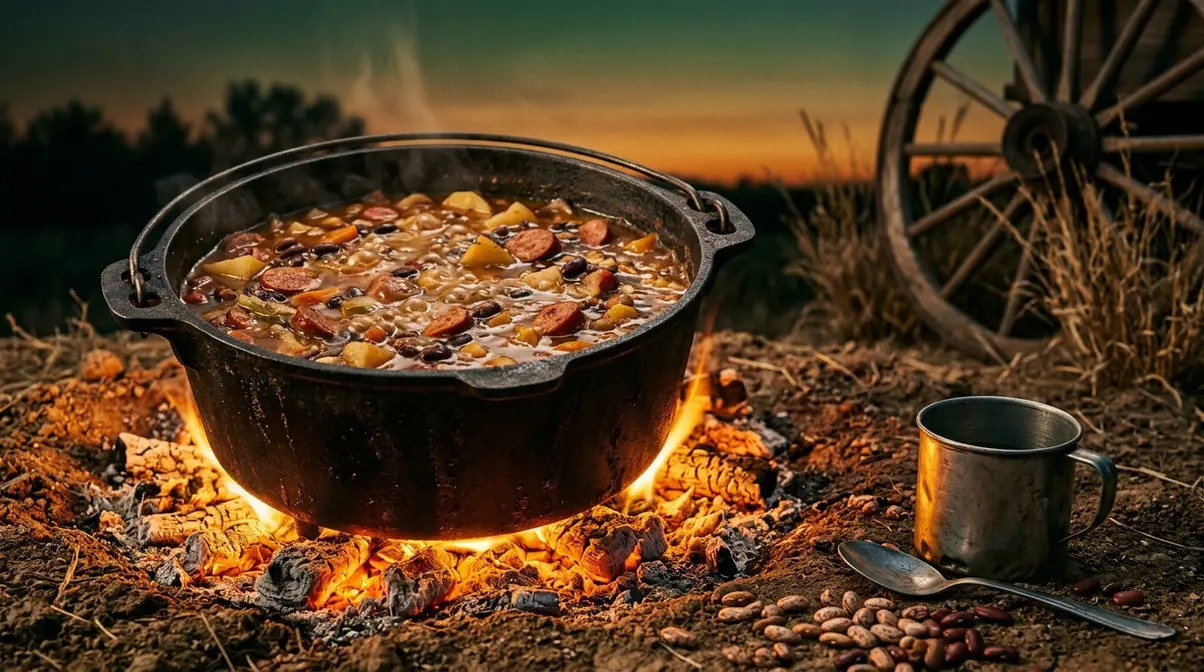
Every one-dish meal starts with a vessel choice. The good news: you almost certainly already own at least one of the three main options. If you want to explore various options, check out our guide to one-pan wonders beyond the basic roast. Each produces different textures, suits different cooking times, and works best with certain ingredients. Understanding the differences means you can pick the right tool — and The One-Dish Formula applies equally across all three.
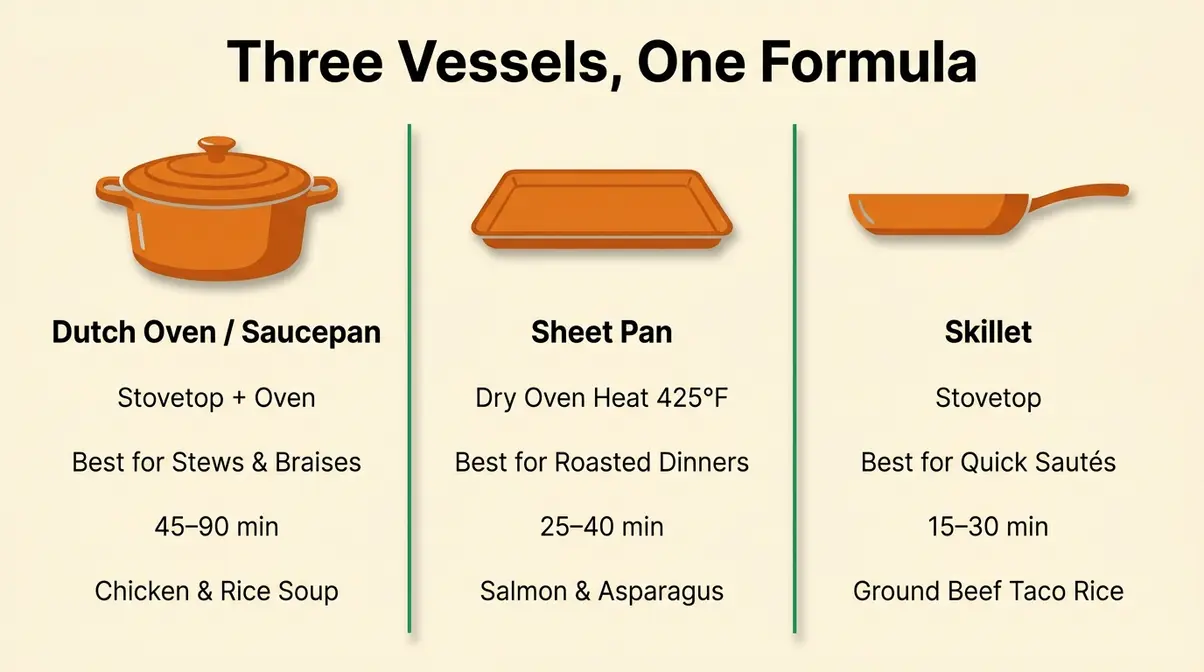
| Vessel | Heat Method | Best For | Time Commitment |
|---|---|---|---|
| Dutch Oven / Saucepan | Stovetop + oven | Stews, soups, braises | 45–90 minutes |
| Sheet Pan | Dry oven heat | Roasted dinners | 25–40 minutes |
| Skillet | Stovetop | Quick sautés, rice dishes | 15–30 minutes |
One-Pot Meals: Dutch Oven and Saucepan
A Dutch oven (a heavy, lidded pot — usually cast iron or enameled cast iron) is the workhorse of slow, layered one-dish cooking. It traps moisture, maintains steady gentle heat, and allows flavors to meld over time. A large saucepan works similarly for smaller batches.
According to beginner guides from Crumble Kitchen, the key to Dutch oven cooking is low-to-medium heat and patience: tougher ingredients like meat and root vegetables go in first, while delicate greens or herbs are added near the end. You preheat the pot, add your protein to brown, layer in your complex carbs and vegetables, pour over liquid (stock, canned tomatoes, or water), and let it simmer with the lid on.
- Classic one-pot one-dish meals include:
- Chicken and rice soup with carrots and celery
- Beef and lentil stew with potatoes
- White bean and sausage casserole with kale
The Dutch oven is particularly forgiving — timing is flexible, and the covered environment prevents drying out. It’s an ideal starting point for beginner cooks.
Sheet-Pan Dinners: The Oven Method
Sheet-pan dinners use dry oven heat to roast everything on a single flat tray. The result is caramelized, slightly crispy edges on both the protein and vegetables — a texture that’s difficult to achieve any other way. According to Tiny Kitchen Chronicles, the key principles are simple: line the pan with parchment paper, arrange ingredients in a single layer with space between pieces, and roast at around 425°F (220°C) for 20–25 minutes.
Crowding the pan causes steaming instead of roasting — so if you’re feeding four people, use two pans rather than piling everything together.
- Classic sheet-pan one-dish meals include:
- Salmon with asparagus and cherry tomatoes
- Chicken thighs with sweet potato and broccoli
- Sausage with peppers, onions, and baby potatoes
Sheet-pan dinners are excellent for weeknights because most of the work happens in the oven without supervision. Prep time is typically under 10 minutes. For more advanced techniques, try mastering the art of the sheet pan meal.
Skillet Meals: Quick Stovetop Cooking
A skillet (a shallow, flat-bottomed pan with slightly sloped sides) is built for speed. High surface contact means fast browning, which builds flavor in minutes rather than hours. Skillets work best when you want a quick one-dish dinner without turning on the oven.
The technique is simple: heat the skillet over medium-high, add your protein and brown it, remove it briefly, cook your aromatics (onion, garlic), add your complex carb and liquid, return the protein, and simmer until everything is cooked through. The liquid — whether stock, canned tomatoes, or coconut milk — ties all three components of The One-Dish Formula together in the same pan.
- Classic skillet one-dish meals include:
- Chicken and rice with peas and lemon
- Ground beef and pasta in tomato sauce
- Shakshuka (eggs poached in spiced tomato sauce with chickpeas)
Skillet meals are the fastest option in the arsenal. Many are table-ready in under 30 minutes.
What is a good one-pan meal?
A good one-pan meal combines protein, a starchy carbohydrate, and vegetables in a single skillet or sheet pan. For beginners, sheet-pan chicken thighs with sweet potatoes and broccoli is an excellent starting point — it requires minimal prep, cooks in 35 minutes at 425°F, and follows The One-Dish Formula exactly. Skillet options like chicken and rice or ground beef pasta are similarly reliable. The key is choosing ingredients with similar cook times, or adding faster-cooking vegetables (like spinach or peas) in the final few minutes.
With your vessel chosen, the next step is filling it — here are 15+ recipes organized by time, size, and serving need.
One-Dish Meal Examples: 15+ Easy Dinner Ideas
The One-Dish Formula — Protein + Complex Carbs + Vegetables — works across dozens of flavor profiles and cooking styles. The 15+ examples below are organized by time commitment and household size so you can find exactly what suits your evening. Each follows the formula: all three components, one vessel, minimal cleanup.
Estimated Time: 15–60 minutes (depending on recipe)
- Tools and Materials Needed:
- One primary cooking vessel (Dutch oven, sheet pan, or large skillet)
- Cutting board and chef’s knife
- Measuring cups and spoons
- Wooden spoon or spatula
- Ingredients per your chosen recipe (protein, complex carbs, vegetables)
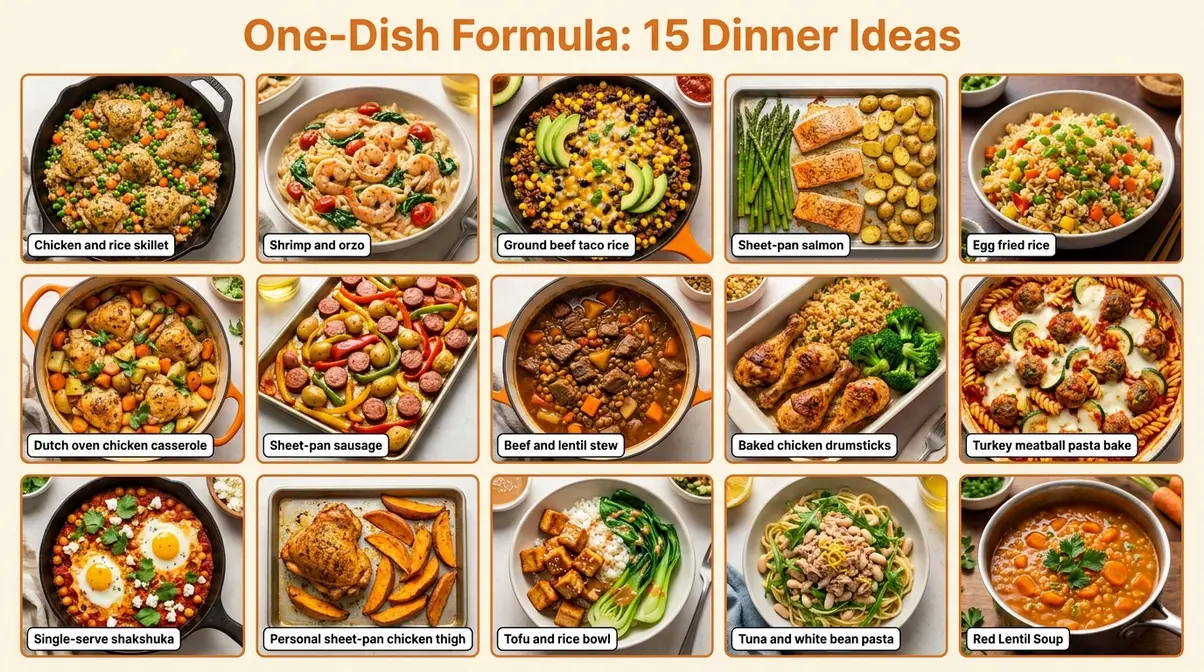
Quick Weeknight Meals Under 30 Minutes
These skillet and sheet-pan options are designed for the nights when you have almost no energy left. Each follows The One-Dish Formula and takes 30 minutes or less from fridge to table.
- Chicken and Rice Skillet — Chicken thighs (protein) + white rice (complex carb) + frozen peas (vegetable). Brown chicken, add rice and stock, cover and simmer 20 minutes.
- Shrimp and Orzo with Spinach — Shrimp (protein) + orzo pasta (complex carb) + baby spinach (vegetable). One skillet, 20 minutes.
- Ground Beef Taco Rice — Ground beef (protein) + rice (complex carb) + corn and black beans (vegetable + extra protein). Season with cumin and chili powder.
- Sheet-Pan Salmon and Asparagus — Salmon fillet (protein) + baby potatoes (complex carb) + asparagus (vegetable). Roast at 425°F for 20 minutes.
- Egg Fried Rice — Eggs (protein) + day-old rice (complex carb) + frozen mixed vegetables (vegetable). Ready in 15 minutes.
Family-Sized One-Dish Dinners
These Dutch oven and sheet-pan recipes are designed to feed four to six people, making them ideal for families or for meal-prepping leftovers.
- Dutch Oven Chicken Casserole — Bone-in chicken (protein) + potatoes (complex carb) + carrots and celery (vegetable). Simmer for 60 minutes.
- Sheet-Pan Sausage and Vegetables — Italian sausage (protein) + baby potatoes (complex carb) + bell peppers and onions (vegetable). Roast at 425°F for 35 minutes.
- One-Pot Beef and Lentil Stew — Ground beef (protein) + lentils (complex carb) + diced tomatoes and spinach (vegetable). Simmers in 45 minutes.
- Baked Chicken and Rice — Chicken drumsticks (protein) + long-grain rice (complex carb) + broccoli (vegetable). Bake covered at 375°F for 55 minutes.
- Turkey Meatball and Pasta Bake — Turkey meatballs (protein) + penne pasta (complex carb) + zucchini and marinara (vegetable). One baking dish, oven at 375°F for 30 minutes.
One-Dish Meals for One Person
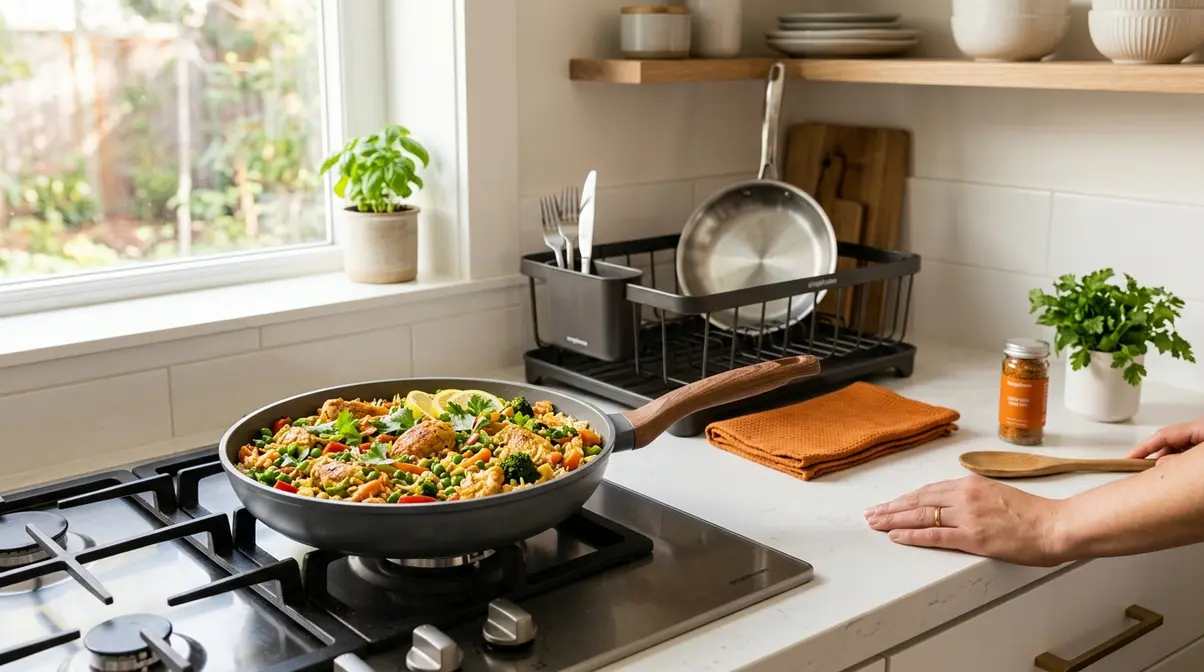
Solo cooking shouldn’t mean half-portions of a family recipe. These single-serve options are sized for one, with minimal waste.
- Single-Serve Shakshuka — Two eggs (protein) + chickpeas (complex carb + protein) + spiced tomato sauce with peppers (vegetable). One small skillet, 20 minutes.
- Personal Sheet-Pan Chicken Thigh — One chicken thigh (protein) + one sweet potato (complex carb) + a handful of green beans (vegetable). Roast at 425°F for 25 minutes.
- Tofu and Rice Bowl (Skillet) — Firm tofu (protein) + jasmine rice (complex carb) + bok choy (vegetable). Ready in 25 minutes.
- Tuna and White Bean Pasta — Canned tuna (protein) + pasta (complex carb) + cherry tomatoes and arugula (vegetable). No-cook vegetables, 15 minutes.
- Quick Lentil Soup — Red lentils (protein + complex carb) + diced carrots and onion (vegetable). One saucepan, 25 minutes.
Every one of these recipes follows The One-Dish Formula. Once you see the pattern, you can build your own with whatever’s in your fridge.
Budget One-Dish Meals: History and How-To
One-dish cooking isn’t a modern trend — it’s one of humanity’s oldest and most practical cooking strategies. Long before “meal prep” became a buzzword, cowboys on cattle drives and families surviving the Great Depression were relying on the same principle: combine cheap staples in one vessel, feed as many people as possible, and waste nothing. Based on the USDA’s 2026 Thrifty Food Plan, a nutritious home-cooked one-dish dinner generally costs $2–$3.50 per serving per adult — confirming that the budget logic still holds today (USDA Food and Nutrition Service, 2026).
What Is a Cowboy Dinner?
A cowboy dinner is a one-pot meal rooted in the chuck wagon tradition of the American West. The chuck wagon itself was invented in 1866 by Texas cattleman Charles Goodnight, who modified a surplus Army wagon into a rolling kitchen to feed trail crews on long cattle drives (National Cowboy Museum, 2026). The cook — known as “Cookie” — had to feed a dozen hungry cowboys three meals a day using only what fit in the wagon’s chuck box.
The result was resourceful one-pot cooking centered on beans, salted meats, potatoes, and Dutch oven biscuits. According to the National Park Service’s chuck wagon documentation, with a Dutch oven and some sourdough, a chuck wagon cook could feed an entire trail crew. These meals were the original “dump dinners” — everything into one cast-iron pot over an open fire.
Today, a cowboy dinner typically means a one-pot meal of ground beef or sausage, beans, corn, and potatoes — seasoned simply and cooked together in a single skillet or Dutch oven. It follows The One-Dish Formula almost perfectly: protein + complex carb + vegetable, all in one vessel.
What Is a Depression Meal?
A Depression meal refers to the resourceful, budget-driven cooking that emerged during the Great Depression of the 1930s. As the Edmond History Museum documents, during that era homemakers stretched food budgets with soups, rice, and pasta — but beans were the commodity no household went without: cheap, high-protein, and shelf-stable until cooked (Edmond History Museum, 2026).
The classic Depression-era “poor man’s meal” was fried potatoes and onions cooked in bacon grease with a chopped frankfurter — the cheapest meat available. Everything cooked in one pan, producing maximum flavor from minimal ingredients. Mulligan stew, a Depression-era staple made by pooling odds and ends of meat and vegetables into a single pot, followed the same philosophy.
These meals worked because one-pot cooking extracts maximum flavor from inexpensive ingredients. The long simmer time transforms tough, cheap cuts into tender, deeply flavored food. Modern budget cooking owes an enormous debt to Depression-era ingenuity.
What Is the Cheapest One-Dish Meal?
The cheapest one-dish meals are built around beans, lentils, rice, potatoes, and eggs — ingredients that cost very little per serving and deliver solid nutrition. Based on the USDA’s 2026 Thrifty Food Plan weekly grocery costs, a nutritious home-cooked dinner can cost as little as $2 per serving per adult when built around plant-based proteins (USDA Food and Nutrition Service, 2026).
The five most budget-friendly one-dish meal foundations:
| Base Ingredient | Avg. Cost Per Serving | Protein Per Serving | Pairs Well With |
|---|---|---|---|
| Dried lentils | ~$0.30 | 18g | Rice, carrots, onion |
| Canned beans | ~$0.40 | 15g | Pasta, tomatoes, leafy greens |
| Eggs | ~$0.50 | 12g | Potatoes, spinach, peppers |
| Rice + frozen veg | ~$0.60 | Varies | Any protein |
| Potatoes | ~$0.40 | 4g | Sausage, eggs, onion |
Lentil soup with carrots and onions — roughly $1.50 per serving for a family of four — is arguably the most affordable complete one-dish meal available. It delivers protein, complex carbs, and vegetables in one pot, following The One-Dish Formula at minimal cost.
The Real Benefits of One-Dish Meals
One-dish meals deliver benefits that go well beyond a shorter washing-up session. Here’s what the research and user consensus consistently show:
“One Pot Dinners are midweek sanity saviours; protein, carbs and vegetables all cooked in one pan — a delicious meal with no fuss and very little washing up!”
That quote captures the appeal exactly. But there are five concrete reasons one-dish cooking works so well for time-crunched home cooks:
1. Dramatically less cleanup. One vessel means one thing to wash. For the 77% of Americans who are too tired to cook after work (New York Post, 2026), eliminating the cleanup barrier makes home cooking genuinely achievable on weeknights.
2. Deeper, more complex flavors. When protein, starches, and vegetables cook together in shared liquid, flavors meld in ways that separate pots can’t replicate. The starch absorbs meat juices; the vegetables release their natural sugars into the sauce.
3. Nutritional completeness in one step. According to SDSU Extension, preparing everything in one dish makes it easier to ensure that several food groups are included. You don’t need to calculate macros — the formula builds balance automatically.
4. Significant time savings. Most one-dish meals involve 10–15 minutes of active prep, followed by largely hands-off cooking time. Sheet-pan dinners often require nothing more than a single stir halfway through.
5. Budget efficiency. At $2–$3.50 per serving based on USDA 2026 Thrifty Food Plan data, one-dish meals built around beans, lentils, and affordable proteins consistently beat the cost of takeout or multi-component dinners that require premium ingredients.
What are the benefits of one-dish meals?
The main benefits of one-dish meals are reduced cleanup, deeper flavors, and built-in nutritional balance. Because everything cooks in shared liquid or heat, protein juices flavor the starch and vegetables, producing richer results than separate pots. According to SDSU Extension, cooking all components together makes it easier to ensure multiple food groups are included. Research also shows that reducing cooking complexity directly combats decision fatigue — a 2026 PMC review found that cognitive overload pushes people toward convenience food and away from home cooking (National Library of Medicine, 2026).
Frequently Asked Questions About One-Dish Meals
What’s considered a poor man’s meal?
A poor man’s meal is traditionally a budget-driven dinner made from the cheapest available ingredients — typically potatoes, onions, eggs, beans, or inexpensive cuts of meat. During the Great Depression, the classic version was fried potatoes and sliced frankfurters cooked together in bacon grease. Today, the term describes any filling, nutritious meal made from low-cost pantry staples. Lentil soup, bean and rice skillets, and egg-and-potato hash all qualify. These meals cost as little as $1.50–$2 per serving (USDA Food and Nutrition Service, 2026).
What is a one dish meal called?
A one dish meal is also called a one-pot meal, one-pan dinner, casserole, or sheet-pan dinner, depending on the vessel used. The terms overlap but have slightly different meanings: “one-pot” refers to the cooking method (everything in a single pot), while “one-dish” emphasizes nutritional completeness (protein + complex carbs + vegetables). Other common names include dump dinner, skillet dinner, and tray bake (the British term for sheet-pan dinners). All refer to the same core concept: a complete meal cooked in a single vessel.
What is the cheapest meal to live by?
The cheapest nutritionally complete meal is likely a lentil-based dish — lentil soup with carrots, onion, and rice costs approximately $1.50–$2 per serving and delivers protein, complex carbohydrates, fiber, and multiple vitamins. Based on the USDA 2026 Thrifty Food Plan, adults on the thrifty plan spend roughly $2–$3.50 per meal when cooking at home (USDA Food and Nutrition Service, 2026). Bean and rice combinations, egg-based skillets, and potato-based stews are all close seconds. These are not just budget options — they’re genuinely nutritious one-dish meals.
What is a good Depression meal?
A Depression meal is a budget-driven one-pot dish made from shelf-stable staples like beans, potatoes, pasta, and inexpensive meat. The most iconic example is Mulligan stew — a community pot made by pooling whatever ingredients were available, simmered together until tender. Other classics include bean and potato soup, fried potato and onion hash with frankfurter, and pasta e fagioli (pasta with beans). As the Edmond History Museum documents, beans were the cornerstone of Depression-era cooking — cheap, high in protein, and shelf-stable (Edmond History Museum, 2026). All of these follow The One-Dish Formula.
Examples of a one dish meal
Examples of a one dish meal span every vessel and cooking style. One-pot options include chicken and rice soup, beef and lentil stew, and white bean pasta. Sheet-pan examples include salmon with roasted vegetables, sausage with peppers and potatoes, and chicken thighs with sweet potato and broccoli. Skillet meals include shakshuka, ground beef taco rice, and shrimp orzo with spinach. Each one follows The One-Dish Formula: protein + complex carbohydrates + vegetables, all cooked in a single vessel. The formula works across cuisines — from Italian to Mexican to South Asian.
What is a cowboy dinner?
A cowboy dinner is a one-pot meal descended from chuck wagon cooking on 19th-century American cattle drives. The chuck wagon was invented by Texas cattleman Charles Goodnight in 1866 as a mobile kitchen for feeding trail crews (National Cowboy Museum, 2026). Traditional cowboy meals relied on beans, salt pork, potatoes, and Dutch oven biscuits — everything cooked in cast iron over an open fire. Today, a cowboy dinner typically means ground beef or sausage with beans, corn, and potatoes in one skillet or Dutch oven. It’s a direct ancestor of the modern one-dish meal.
Can you freeze a one dish meal?
Yes, you can easily freeze a one dish meal for later use. Stews, casseroles, and hearty soups freeze exceptionally well and often taste better after the flavors have had more time to meld. However, meals with a high water content in the vegetables (like zucchini or fresh tomatoes) may become mushy upon thawing. For the best results, freeze in airtight containers and consume within three months.
Are one dish meals healthy?
One dish meals are very healthy when built using the proper formula. By combining lean proteins, complex carbohydrates, and plenty of vegetables, you naturally create a balanced diet. According to nutritional guidelines, cooking everything together helps retain water-soluble vitamins that might otherwise be lost if vegetables were boiled separately and drained. This makes the method both convenient and nutritionally sound.
Honest Limitations of One-Dish Cooking
One-dish meals are genuinely useful — but they’re not the right solution for every situation. Here’s an honest look at where this cooking style falls short.
Common Pitfalls
Ingredients with different cook times. The biggest beginner mistake is adding all ingredients at once regardless of how long each needs to cook. Shrimp takes 3 minutes; potatoes take 20. Adding them together means overcooked shrimp or undercooked potatoes. The fix: add faster-cooking ingredients (leafy greens, shrimp, eggs, frozen peas) in the final 5–10 minutes of cooking.
Soggy vegetables from overcrowding. On a sheet pan, crowding vegetables causes them to steam rather than roast. You lose the caramelized texture that makes sheet-pan dinners so appealing. Use two pans for larger batches, or roast in batches.
Bland results from under-seasoning. One-dish meals cook in a lot of liquid, which can dilute flavors. Season generously at the start, and taste again before serving. A squeeze of lemon juice or a splash of vinegar at the end brightens the entire dish.
When to Choose Alternatives
When you want crispy, individually textured components. If the goal is a perfectly seared steak with crispy roasted potatoes and a separate salad, a one-dish approach will compromise each component. Separate cooking gives you more control over texture.
When cooking for guests with very different dietary needs. One-dish meals combine everything, which makes it difficult to accommodate a vegetarian and a meat-eater at the same table without cooking two separate dishes anyway.
When to Seek Expert Help
If you’re cooking for someone with a serious medical condition — such as kidney disease (which requires strict limits on potassium from vegetables) or a severe food allergy — consult a registered dietitian before relying on one-dish meal formulas. The nutritional balance that works well for most healthy adults may need significant adjustment for specific health conditions.
The Simplest Change for Weeknight Cooking
For overwhelmed home cooks, one-dish meals offer a genuinely practical solution. The formula is straightforward: Protein + Complex Carbs + Vegetables, all in one vessel. Based on USDA 2026 Thrifty Food Plan data, that complete dinner costs $2–$3.50 per serving — far less than takeout, and far less stressful than managing multiple pots. Research confirms that reducing cooking complexity directly addresses decision fatigue, which affects 77% of Americans on weeknights (New York Post, 2026).
The One-Dish Formula is the key takeaway here. Once you understand that every one-dish meal follows the same three-component structure, you stop needing recipes and start improvising. Whatever protein, starch, and vegetable you have in the fridge can become dinner. That shift — from following instructions to understanding a framework — is what transforms a tired weeknight cook into a confident one.
Start with one recipe from the examples above. Pick your vessel (skillet for speed, sheet pan for hands-off, Dutch oven for slow and flavorful), apply The One-Dish Formula, and see what 30 minutes and a single pan can produce. The dishes will be minimal. The dinner will be complete.

Dave King
Recipe developer and writer at Quick Dish Cookbook.
![How Long to Cook Pork Shoulder at 250°F [Chart]](https://quickdishcookbook.com/wp-content/uploads/2026/07/pork-shoulder-cook-time-250f-720x450.webp "How Long To Cook Pork Shoulder At 250°F [Chart] 8")