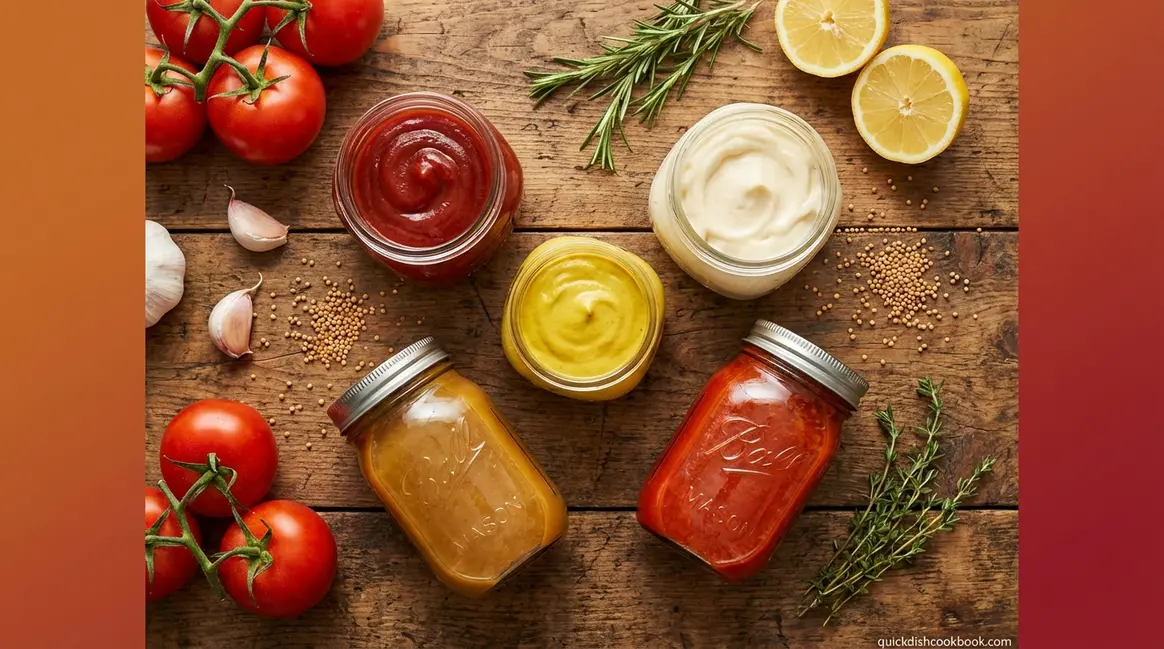
25+ Homemade Condiments: Easy, Healthy & Diabetic-Friendly

Searches for homemade condiment recipes have grown 150% year-over-year (keyword research metrics, 2026) — a quiet revolution is happening in home kitchens across the country, and it’s easy to see why.
What’s in this guide
- 1. Why Make Your Own Homemade Condiments (And What You Can Make)
- 2. Classic Condiment Recipes: Ketchup, Mayo & Mustard
- 3. Specialty, Spicy & Fruit-Based Condiment Recipes
- 4. Healthy Condiments for Gifting, Diabetics & Cholesterol
- Common Mistakes & When to Buy Instead
- Frequently Asked Questions
- Bringing It All Together
“Homemade condiments are surprisingly easy to make, easily customizable and healthier than store bought versions.”
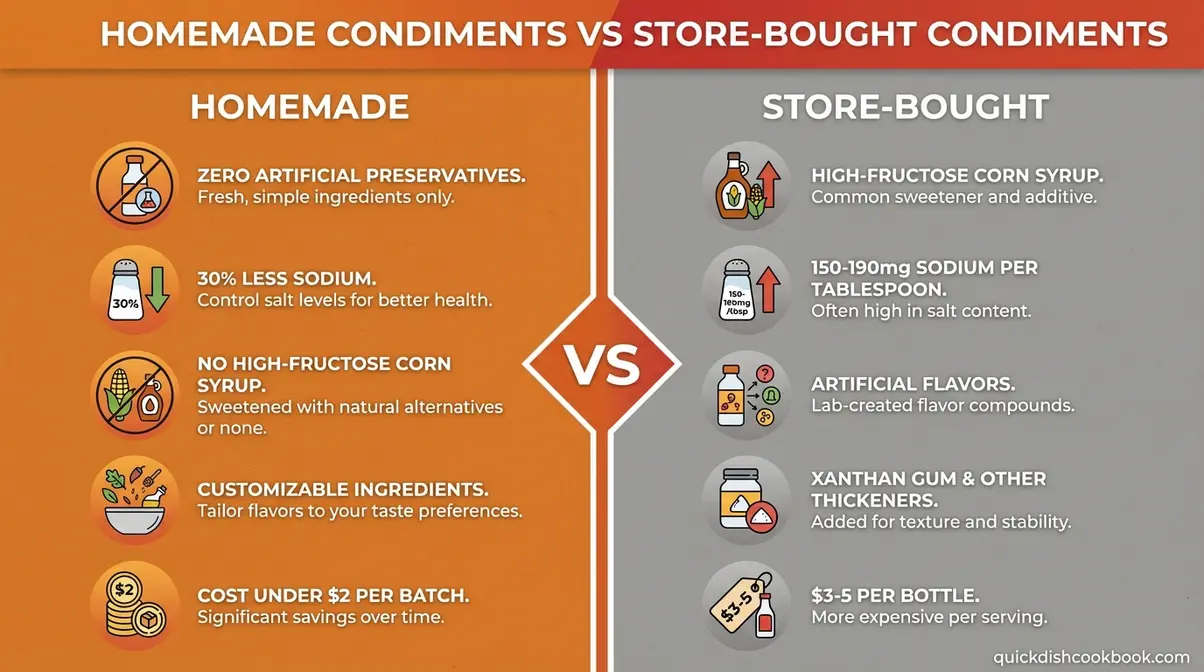
Every bottle of store-bought ketchup or mayo you pick up contains ingredients you can’t pronounce: high-fructose corn syrup, artificial preservatives, xanthan gum (a synthetic thickening agent), and sodium levels that would genuinely surprise you. You’ve read those labels and felt uneasy — and that instinct is worth acting on.
In this guide, you’ll discover 25+ easy homemade condiment recipes — from classic ketchup and mayo to diabetic-friendly sauces and copycat restaurant favorites — so you can STOP buying and START making. You’ll move through four sections: why homemade beats store-bought, classic recipe tutorials, specialty and fruit-based sauces, and health-specific condiments for diabetics and cholesterol management.
1. Why Make Your Own Homemade Condiments (And What You Can Make)
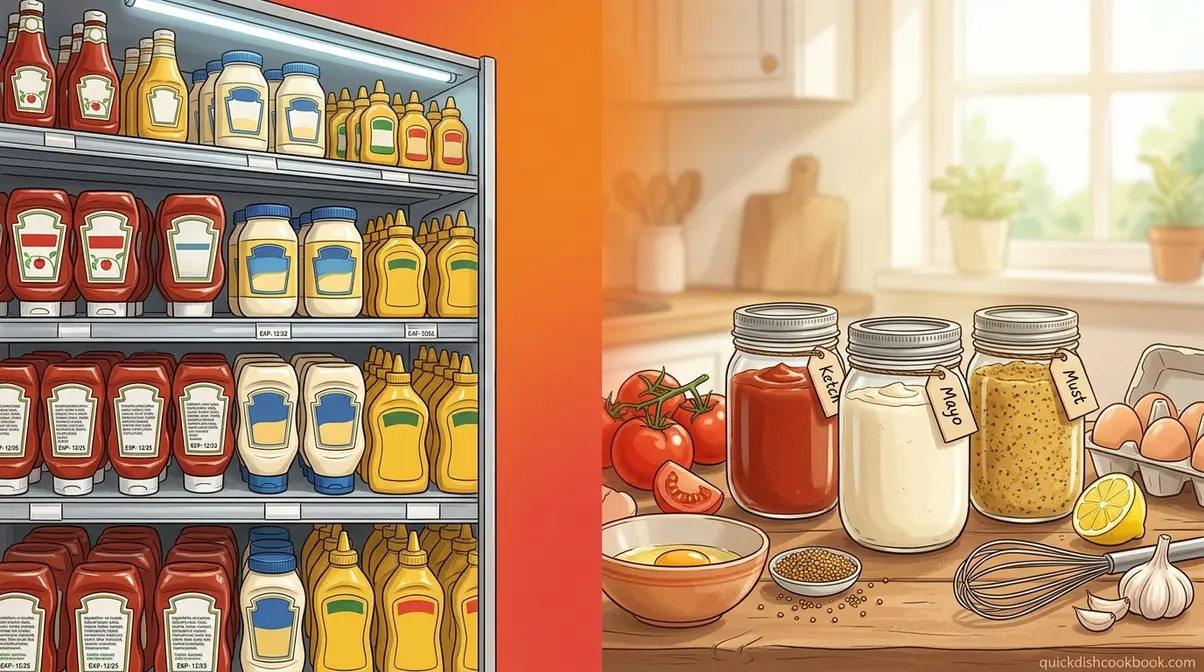
Making your own homemade condiments recipes gives you something store-bought jars simply cannot: complete control over every ingredient. According to Georgia State University Panther’s Pantry, making condiments at home allows for a significant reduction in additives such as sugar, sodium, chemicals, and flavor enhancers compared to store-bought versions (2023). For the average household using ketchup, mayo, and mustard several times a week, that reduction adds up fast.
Making condiments at home allows for a significant reduction in additives such as sugar, sodium, chemicals, and flavor enhancers compared to store-bought versions (Georgia State University Panther’s Pantry, 2023).
This is where The Clean Condiment Switch begins. Defined simply, The Clean Condiment Switch is the practice of systematically replacing store-bought condiments with homemade versions tailored to your specific health goals, one jar at a time. You don’t overhaul your entire pantry overnight. You start with one condiment — say, ketchup — and replace it. Then another. Over a few weekends, you’ve quietly transformed the most sugar-laden shelf in your kitchen.
Think of it like making a smoothie. You throw a few ingredients into a blender, press a button, and end up with something far better than anything you’d buy bottled. Making ketchup works the same way: canned tomatoes, vinegar, a little honey, five minutes of simmering, and you’re done. No culinary degree required.
Condiment labels are the most overlooked source of hidden sugar in the average kitchen. A single tablespoon of commercial ketchup can contain 4 grams of added sugar. BBQ sauce? Up to 15 grams per serving. Those numbers are invisible until you start making your own — and then they’re impossible to unsee.
Quick Win: Start with ketchup — it takes 10 minutes, uses 5 pantry ingredients, and immediately replaces the #1 most-purchased condiment in most households. Make it this weekend.
Research from the University of Connecticut’s Healthy Family program found that fermented foods — including vinegar-based homemade condiments — are associated with a reduced risk of heart disease, diabetes, obesity, inflammation, and high blood pressure (UConn, 2021). That finding applies directly to homemade hot sauces, relishes, and pickled condiments you’ll make later in this guide.
Homemade condiments aren’t right for every situation. If you need a commercial condiment for a large catered event, or you’re genuinely short on fridge space, store-bought makes sense. The Clean Condiment Switch works best as a gradual process — one jar at a time.
For those who want to explore our guide to simple homemade condiments, even more beginner-friendly recipes are just a click away.
The Hidden Cost of Store-Bought Condiments
Store-bought condiments are hiding more than most people realize. Commercial ketchup brands routinely include high-fructose corn syrup as a primary sweetener, alongside xanthan gum (a manufactured thickening agent), artificial flavors, and sodium levels averaging 150–190mg per tablespoon. That sodium figure climbs fast when you’re dipping, spreading, or dressing generously.
The cost argument is equally compelling. A batch of homemade ketchup — roughly two cups — costs under $2 in ingredients. A commercial bottle of similar size runs $3–5 at most grocery stores. Over a year of weekly use, that difference adds up to real savings. The “save money at the checkout” benefit isn’t a minor perk; for a family using several condiments weekly, it’s meaningful.
The foundation of The Clean Condiment Switch is the control argument: when you make your own, you choose every ingredient. No fillers, no mystery additives, no ingredients you need a chemistry degree to identify. The average household uses ketchup, mayo, and mustard at least three times a week — switching these three alone is where most people begin, and where the most immediate health gains happen.
Now that you know why homemade condiments are worth making, let’s look at what you’ll need before you start — the good news is, you probably already have everything.
What You’ll Need Before You Start
Before diving into recipes, take stock of your kitchen. You likely already have 80% of what you need.
- Equipment:
- Medium saucepan
- Blender or immersion blender (a stick blender used directly in the pot)
- Glass jars with tight-fitting lids (mason jars work perfectly)
- Whisk
- Kitchen towel (for squeezing cucumbers in tzatziki)
- Pantry Staples:
- Apple cider vinegar or white wine vinegar
- Canned crushed tomatoes
- Neutral oil (vegetable or avocado oil)
- Mustard seeds or dry mustard powder
- Honey or maple syrup
- Salt and dried spices (garlic powder, onion powder, smoked paprika)
No specialty equipment. No hard-to-find ingredients. Just your everyday kitchen, ready to go.
With your basics ready, here’s a look at the full range of condiments you can make at home — you’ll be surprised by the variety.
What Condiments Can You Make at Home?
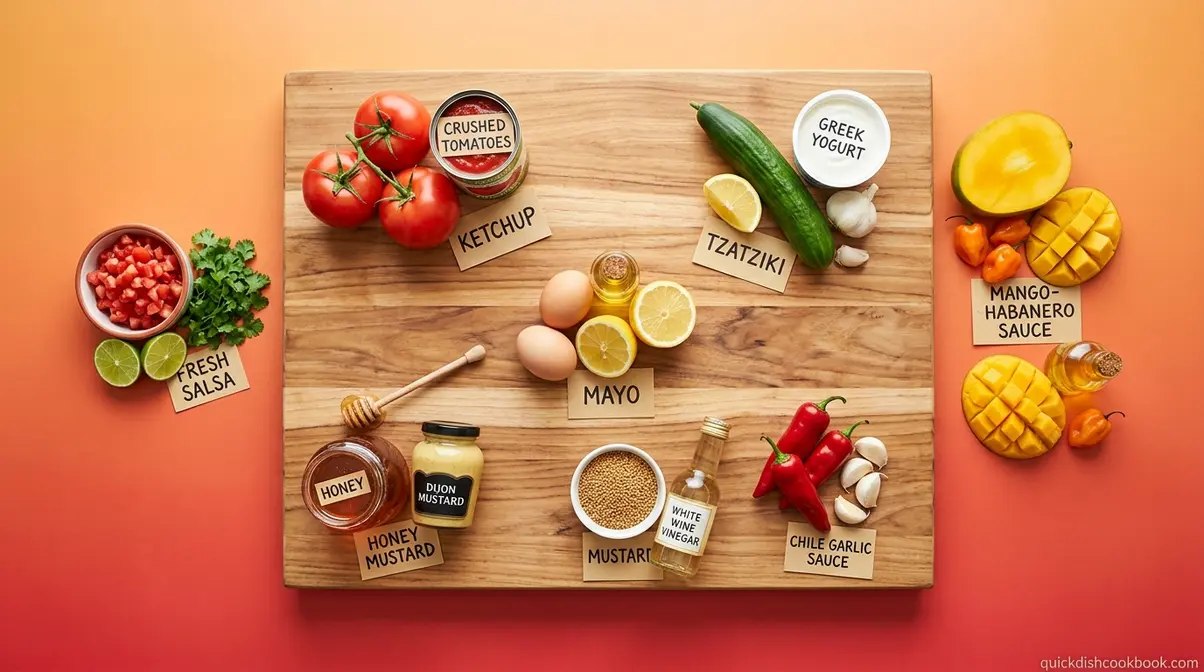
You can make virtually any condiment at home. The variety is wider than most people expect, and the skill level required is lower than you’d imagine. Here are the most popular options, grouped by category:
- Classic Staples:
- Ketchup
- Mayonnaise
- Yellow mustard / Dijon mustard
- Hot sauce
- BBQ sauce
- Dips & Dressings:
- Honey mustard
- Ranch dressing
- Tzatziki (Greek yogurt dipping sauce)
- Salsa
- Pesto
- Specialty & International:
- Chile garlic sauce
- Sriracha-style hot sauce
- Mango-habanero hot sauce
- Copycat Big Mac sauce
- Copycat Raising Cane’s sauce
- Fermented & Preserved:
- Pickled vegetables and relish
- Chutney
- Pineapple vinegar
- Fruit-Based:
- Apple ketchup
- Balsamic berry mustard
- Tomato-basil relish
As Crunch Time Kitchen notes, common staples like ketchup, mayonnaise, and BBQ sauce can be prepared in under 10 minutes using pantry staples. Most of the 21 options above take under 30 minutes, and several require no cooking at all. Your pantry can genuinely replace the condiment aisle.
Before we dive into recipes, here’s a quick orientation to the condiment world — understanding the classics helps you decide where to start.
The Big 3 (and Beyond): Your Condiment Map
The Big 3 condiments are ketchup, mayonnaise, and mustard — the three most widely used condiments globally, appearing on tables across virtually every cuisine. According to the WebstaurantStore condiment guide, ketchup, mustard, and mayonnaise consistently rank as the top three condiments globally.
Expanding to the core seven, add: hot sauce, BBQ sauce, pickles and relish, and soy sauce. These seven appear across American, Asian, and European cooking traditions with remarkable consistency. Round out the top 10 by adding salsa, ranch dressing, and sriracha — the most popular options globally.
| Tier | Condiments |
|---|---|
| Big 3 | Ketchup, Mayonnaise, Mustard |
| Core 7 | + Hot Sauce, BBQ Sauce, Pickles/Relish, Soy Sauce |
| Top 10 | + Salsa, Ranch Dressing, Sriracha |
For beginners, this map is your starting point. Master the Big 3 before moving to specialty sauces — they form the building blocks of dozens of other condiments. Big Mac sauce uses mayo and mustard. BBQ sauce starts with ketchup. Honey mustard is literally mustard plus honey.
Now that you have your condiment map, let’s make the Big 3 from scratch — starting with the world’s most popular condiment: ketchup.
2. Classic Condiment Recipes: Ketchup, Mayo & Mustard
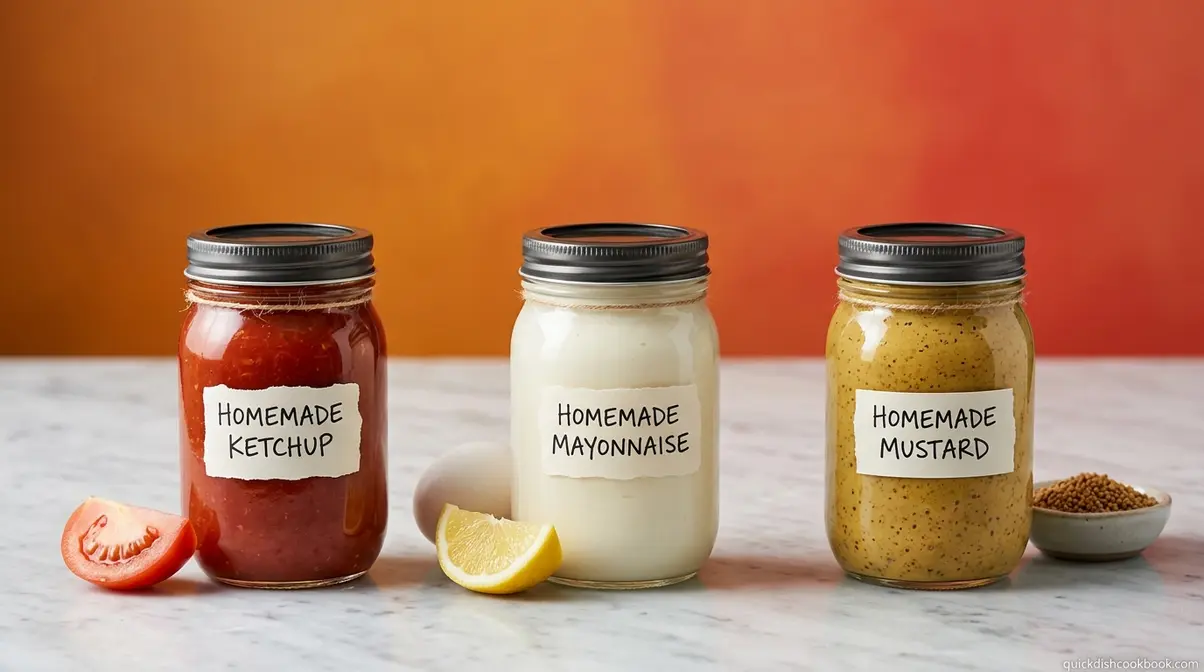
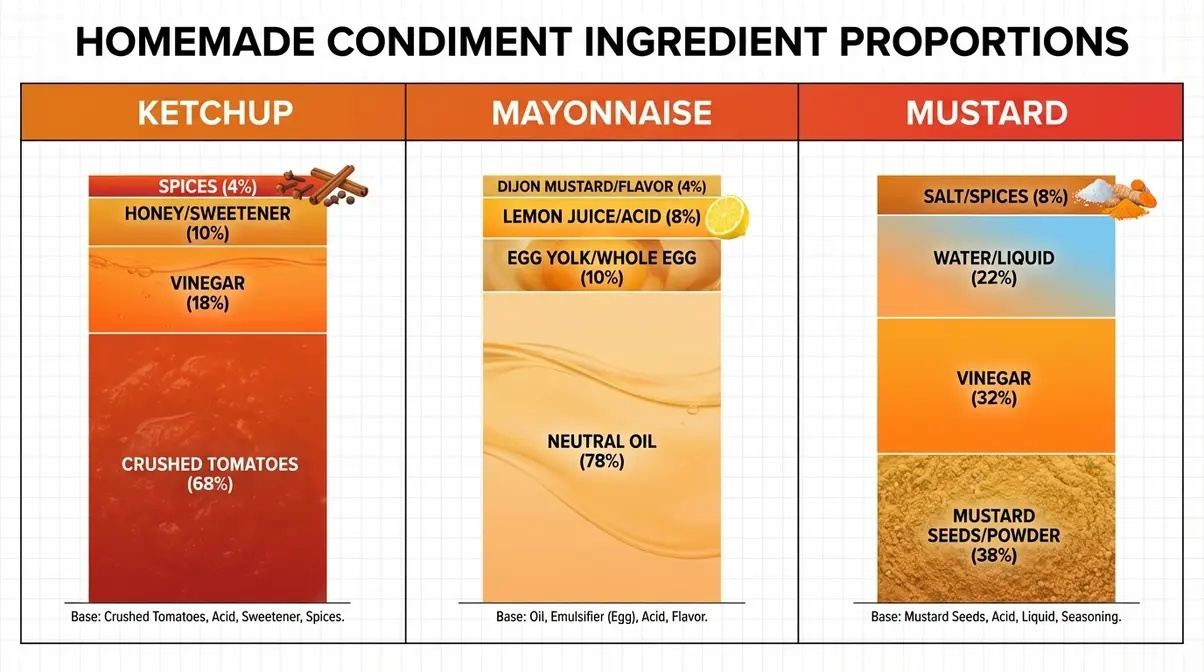
Classic condiments — ketchup, mayonnaise, and mustard — are the easiest starting point for anyone beginning The Clean Condiment Switch. These three recipes are the foundation. Master them and you’ve replaced your three most-used store-bought condiments with versions you made yourself. According to Crunch Time Kitchen, all three can be made in under 15 minutes combined using pantry staples. Once you make these yourself, you’ll never reach for the store-bought versions again.
Quick Win: Make all three — ketchup, mayo, and mustard — in one 30-minute session this weekend. Store in labeled glass jars. You’ll have your fridge stocked with homemade versions of the Big 3 for the next two weeks.
The AHA Heart-Check certified ketchup recipe from the American Heart Association (AHA), a leading cardiovascular health organization, provides a homemade ketchup approach certified by their Heart-Check program — suitable for individuals managing diabetes and cardiovascular health. The American Heart Association’s Heart-Check certified homemade ketchup recipe provides a healthier alternative to commercial ketchup, making it suitable for individuals managing blood pressure and cholesterol (American Heart Association).
If you have a severe egg allergy, traditional mayonnaise is not safe. Use aquafaba mayo — made from chickpea liquid — as an allergen-free alternative that emulsifies (combines into a stable, creamy mixture) beautifully without eggs.
Don’t miss the quick pickled red onions recipe — a perfect companion condiment that requires zero cooking and keeps for weeks.
Easy Homemade Ketchup Recipe
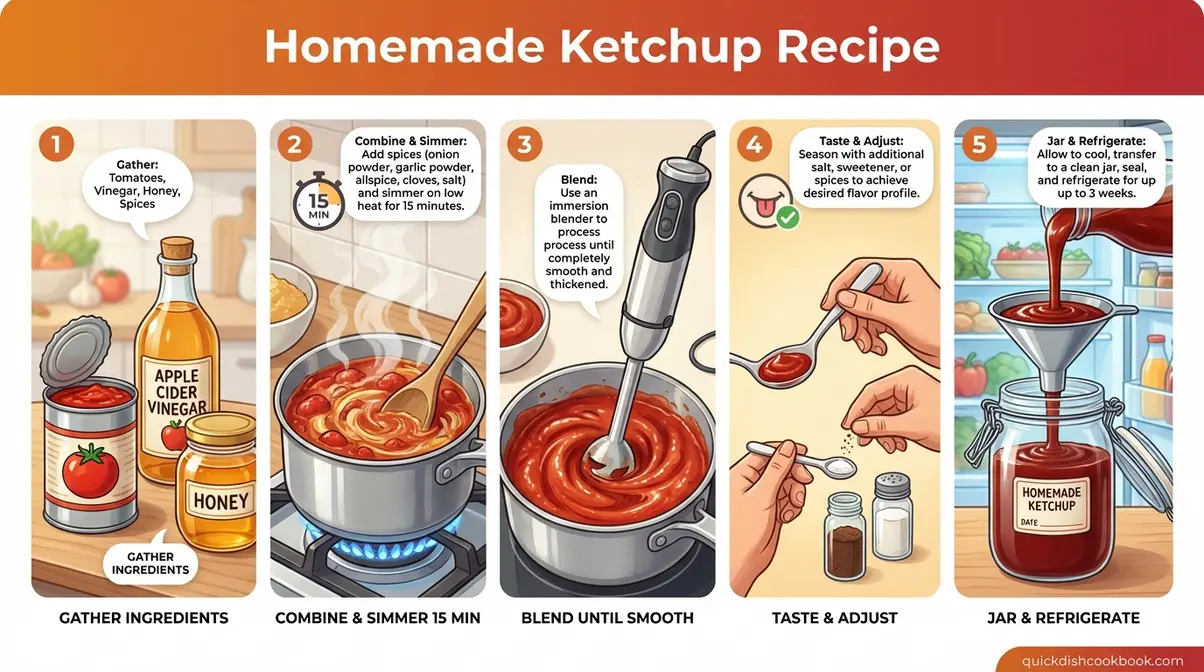
Ketchup is the world’s most popular condiment, and it’s also the most rewarding first swap. This low-sugar, low-sodium version aligns with AHA guidance and takes just 15 minutes from start to finish.
- Ingredients:
- 1 can (14 oz) crushed tomatoes
- 2 tablespoons apple cider vinegar
- 1 tablespoon honey or maple syrup
- 1 teaspoon onion powder
- ½ teaspoon garlic powder
- ¼ teaspoon salt
- Pinch of ground cloves
- Steps:
- Combine all ingredients in a medium saucepan. Why: mixing first ensures even heating.
- Simmer over medium heat for 15 minutes, stirring occasionally. Why: simmering concentrates the tomato flavor and cooks off excess liquid — this is what gives ketchup its thick texture.
- Blend until smooth using an immersion blender (a stick blender you use directly in the pot — no need to transfer to a separate blender). Why: blending creates that uniform, pourable consistency.
- Taste and adjust — add a tiny pinch more salt or a few drops of vinegar if needed.
- Cool completely, then transfer to a glass jar.
- Refrigerate up to 3–4 weeks.
- Variations:
- Smoky ketchup: Add ½ tsp smoked paprika
- Spicy ketchup: Add ¼ tsp cayenne pepper
- Roasted tomato ketchup: Roast tomatoes at 400°F for 20 minutes before combining — adds a deeper, caramelized flavor
Research published in a PubMed study on olive oil in tomato sauce suggests that tomato sauce enriched with olive oil offers enhanced postprandial (after-meal) health benefits — making a small drizzle of olive oil a beneficial addition to your homemade ketchup.
This ketchup pairs perfectly with homemade burger patties, fries, or as a base for BBQ sauce. It also becomes the building block for your copycat sauces later in this guide.
Ketchup is your first win. Next up: mayonnaise — which sounds complicated but is actually ready in under 5 minutes.
Homemade Mayonnaise in 5 Minutes
Mayonnaise is a creamy emulsion sauce (the process of combining oil and water-based ingredients into a stable, creamy mixture) made from oil and egg. The immersion blender method makes it completely foolproof — even for first-timers.
- Ingredients:
- 1 large egg, room temperature (important — cold eggs prevent proper emulsification)
- 1 tablespoon lemon juice or white wine vinegar
- 1 teaspoon Dijon mustard
- ¼ teaspoon salt
- 1 cup neutral oil (vegetable oil or avocado oil — avocado oil creates a heart-healthier version suitable for cholesterol-conscious readers)
- Steps:
- Add egg, lemon juice, mustard, and salt to a tall, narrow jar. Why: a tall jar keeps the blender submerged, which is what makes this method work.
- Pour the oil on top. Do NOT stir yet. Why: keeping the layers separate allows the blender to create the emulsion from the bottom up.
- Place the immersion blender at the very bottom of the jar.
- Blend without moving the blender for 10 seconds, until you see white, creamy mayo forming at the bottom.
- Slowly pull the blender upward while still running — the whole jar turns creamy within 20 seconds.
- Transfer to a glass jar; refrigerate up to 2 weeks.
Why it works: The blender forces tiny oil droplets to bond with the egg yolk, creating that thick, creamy texture. This is emulsification in action — and it’s genuinely remarkable to watch.
The American Heart Association healthier condiment tips recommend choosing low-sodium and no-added-sugar versions of condiments, noting that healthier oil choices like avocado oil are preferable alternatives to commercial soybean oil-based mayonnaise.
Safety note: Raw eggs carry a small risk of salmonella. For immune-compromised individuals, young children, or pregnant people, use pasteurized eggs (available at most grocery stores).
Use homemade mayo as a base for aioli (garlic mayo), coleslaw dressing, or potato salad. It’s also the base for both copycat sauces in Section 3.
With ketchup and mayo done, mustard completes your homemade Big 3 — and it’s the easiest of the three.
Simple Homemade Mustard Recipe
Mustard is considered a must-have pantry condiment with as many uses as there are types — and it happens to be the simplest of the Big 3 to make. With a 3-month fridge life, it’s also the most practical for beginners who want to make a batch and forget about it.
- Ingredients (basic yellow mustard):
- ¼ cup yellow mustard seeds (or dry mustard powder for even faster results)
- ¼ cup apple cider vinegar
- 1 tablespoon water
- ½ teaspoon salt
- ½ teaspoon turmeric (for that classic yellow color)
- Optional: 1 teaspoon honey for a honey mustard variation
- Steps:
- Soak mustard seeds in vinegar overnight — or for at least 24 hours. Why: soaking softens the seeds and mellows the sharp bite. If you use dry mustard powder, skip this step entirely.
- Blend all ingredients until smooth (or leave slightly grainy if you prefer whole-grain texture).
- Taste and adjust — add more vinegar for tang, more salt for depth.
- Transfer to a glass jar; refrigerate up to 3 months.
- Variations:
- Dijon-style: Replace vinegar with white wine, add ½ tsp garlic powder
- Honey mustard: Add 2 tablespoons honey (or use as a base for the honey mustard sauce in Section 3)
- Spicy brown mustard: Use brown mustard seeds and add an extra tablespoon of vinegar
Use homemade mustard as a sandwich spread, salad dressing base, or marinade for chicken. It’s also one of the best homemade condiments as gifts — it keeps for months and looks beautiful in a small labeled jar.
You’ve made the Big 3. Now let’s talk about keeping them fresh — and how long they’ll last in your fridge.
Storage Tips for Your Classic Condiments
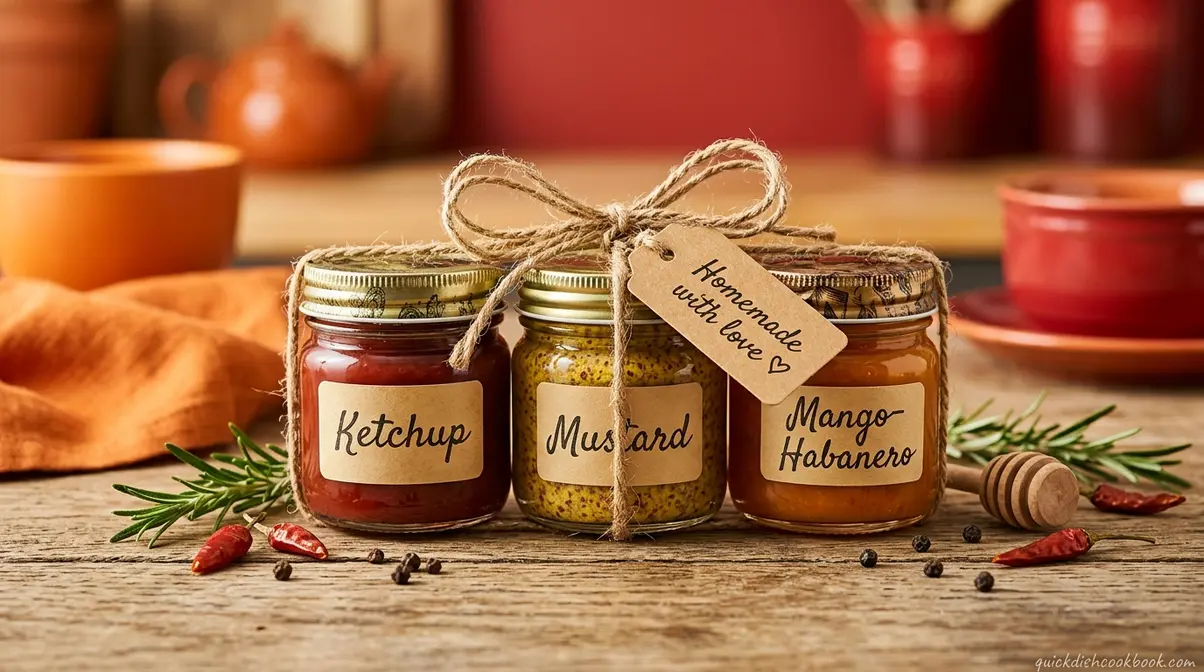
Always store homemade condiments in glass jars with tight-fitting lids. Avoid plastic containers for acidic condiments like ketchup and mustard — plastic absorbs flavors over time and can leach into the sauce. Mason jars are ideal and widely available.
| Condiment | Fridge Life | Signs It’s Gone Off |
|---|---|---|
| Ketchup | 3–4 weeks | Mold, off smell, separation that won’t remix |
| Mayonnaise | 1–2 weeks | Off smell, yellowing, watery layer on top |
| Mustard | 2–3 months | Drying out, strong ammonia smell |
Always use a clean spoon to scoop — never double-dip, which introduces bacteria and shortens shelf life. Label every jar with the date it was made so you always know what’s fresh.
Most homemade sauces last in the fridge for 2–3 weeks — long enough for most households to use up a full batch before the next one is needed (Crunch Time Kitchen). Starting with smaller batches while you learn your household’s consumption rate is always a smart move.
For your next specialty condiment project, discover our homemade chili paste recipe — it uses the same simple saucepan technique and stores beautifully.
Now that you’ve mastered the classics, it’s time to explore the exciting world of specialty sauces — from fiery chile garlic to fruit-infused hot sauces.
3. Specialty, Spicy & Fruit-Based Condiment Recipes
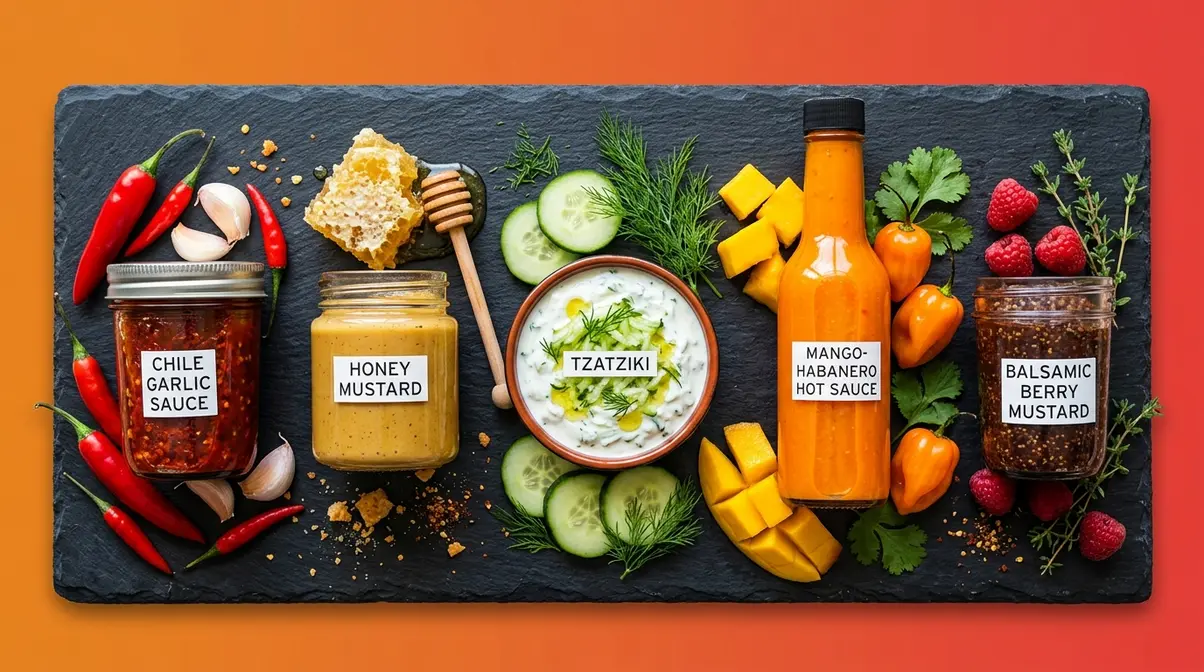
Specialty condiments are where homemade recipes truly outshine anything you can buy at the store. Research from the UConn research on fermented food benefits found that fermented foods, including many homemade condiments, are associated with a reduced risk of heart disease, diabetes, obesity, inflammation, and high blood pressure (University of Connecticut, 2021) — a finding that applies directly to vinegar-based hot sauces and fermented condiments in this section. From tangy chile garlic sauce to copycat Big Mac sauce, these recipes are achievable on a weeknight.
Fermented homemade condiments like hot sauce are associated with a reduced risk of heart disease, diabetes, obesity, inflammation, and high blood pressure (University of Connecticut, 2021).
Specialty sauces are where The Clean Condiment Switch becomes genuinely exciting. These aren’t just healthier versions of store-bought — they’re better. The flavor complexity you get from fresh garlic, ripe mango, or whole-grain mustard simply cannot be replicated in a factory-processed bottle.
Quick Win: Make the homemade Big Mac sauce first — it takes 5 minutes, uses ingredients you already have, and immediately elevates any burger or sandwich. No cooking required.
Research from the University of Arizona’s Culinary Medicine program highlights that herbs and spices, including chili peppers and garlic, contain antioxidants and anti-inflammatory compounds that contribute to overall health. Additionally, Harvard on vinegar’s prebiotic effects notes that apple cider vinegar contains pectin which can act as a prebiotic, feeding beneficial gut bacteria (Harvard T.H. Chan School of Public Health). These findings make vinegar-heavy specialty condiments genuinely functional foods, not just flavor additions.
Specialty sauces with fresh ingredients — garlic, herbs, dairy — have shorter shelf lives, typically 5–10 days. If you can’t use them quickly, simply make smaller batches. Half-batches are always an option.
If you enjoy making specialty condiments, create your own vanilla paste for sweet condiments — a beautiful addition to fruit-based sauces and glazes.
Chile Garlic Sauce
Chile garlic sauce is a versatile Asian-inspired condiment that delivers serious flavor with minimal effort. This is a homemade version of the popular Huy Fong chile garlic sauce found in Asian grocery stores — but fresher and preservative-free.
Difficulty: Easy | Time: 15 minutes
- Ingredients:
- 10–12 red Fresno peppers (Fresno peppers are a milder red chili — a great beginner choice over Thai chilies, which are significantly hotter) or Thai chilies for more heat
- 4 garlic cloves
- 2 tablespoons white wine vinegar
- 1 teaspoon sugar
- ½ teaspoon salt
Heat scale: 3 out of 5 (moderately spicy with Fresno peppers; 4–5 with Thai chilies)
- Steps:
- Roughly chop the peppers (remove seeds for less heat) and garlic cloves.
- Add all ingredients to a blender and blend until smooth.
- Transfer to a small saucepan and simmer for 5 minutes over medium heat. Why: simmering melds the flavors and cooks off any raw garlic sharpness.
- Cool completely.
- Transfer to a glass jar; refrigerate up to 2 weeks.
The University of Arizona Culinary Medicine program confirms that herbs and spices, including chili peppers and garlic, contain antioxidants and anti-inflammatory compounds that contribute to overall health.
Flavor profile: Tangy, garlicky, moderately spicy. Pairs beautifully with dumplings, stir-fries, scrambled eggs, and grilled meats. Also excellent stirred into soups or noodle dishes for a quick flavor boost.
For a sweeter, creamier counterpoint to chile garlic’s heat, honey mustard delivers richness without complexity.
Honey Mustard Sauce
This is the easiest recipe in this entire guide — and one you’ll reach for constantly. Home cooks consistently report that this becomes their go-to dipping sauce within a week of making it the first time.
Difficulty: Very Easy | Time: 2 minutes
- Ingredients:
- 3 tablespoons Dijon mustard (or your homemade mustard from Section 2 — even better)
- 2 tablespoons honey (or maple syrup for a vegan version)
- 1 tablespoon apple cider vinegar
- 1 tablespoon olive oil
- Pinch of salt
- Steps:
- Add all ingredients to a small bowl.
- Whisk together until smooth and creamy.
- Taste and adjust the honey-to-mustard ratio to your preference — more honey for sweeter, more mustard for tang.
- Transfer to a jar; refrigerate up to 2 weeks. No cooking required.
This sauce is surprisingly easy to make and validates everything The Clean Condiment Switch promises. Two minutes, five ingredients, zero additives. Use it as a chicken dipping sauce, salad dressing, pretzel dip, sandwich spread, or glaze for roasted root vegetables. It’s genuinely versatile.
From American classics to Mediterranean favorites — tzatziki is the next specialty sauce that belongs in your fridge.
Tzatziki Sauce
Tzatziki (a Greek yogurt-based dipping sauce pronounced “tsah-ZEE-kee”) is one of the most naturally health-conscious condiments you can make. It’s rich in protein and probiotics (beneficial gut bacteria that support digestive health) — and it takes just 10 minutes.
Difficulty: Easy | Time: 10 minutes active + 30 minutes resting
- Ingredients:
- 1 cup plain Greek yogurt, full-fat (full-fat provides the best texture — low-fat versions can turn watery)
- ½ cucumber, grated
- 2 garlic cloves, minced
- 1 tablespoon fresh dill or fresh mint
- 1 tablespoon olive oil
- 1 tablespoon fresh lemon juice
- ½ teaspoon salt
- Steps:
- Grate the cucumber using a box grater, then squeeze out all excess water using a clean kitchen towel. Why: this step is essential — skipping it results in watery tzatziki that pools and separates within hours.
- Combine yogurt, squeezed cucumber, garlic, dill, olive oil, lemon juice, and salt in a bowl.
- Mix well and taste — adjust lemon and salt as needed.
- Refrigerate for at least 30 minutes before serving. Why: the flavors meld and deepen significantly during resting.
- Use within 5 days.
Serve with pita bread, grilled chicken, lamb, falafel, or as a vegetable dip. Tzatziki also works as a healthier alternative to sour cream on baked potatoes or tacos.
Now for the most adventurous recipe in this section — a fruit-forward hot sauce that balances tropical sweetness with serious heat.
Mango-Habanero Hot Sauce
Mango-habanero hot sauce is a fruit-forward spicy condiment that genuinely cannot be replicated by any store-bought bottle. The combination of tropical sweetness and habanero heat (habaneros are very hot chilies, rated 100,000–350,000 units on the Scoville scale — a measurement of pepper heat) creates a complex, layered flavor that’s become one of the most popular homemade hot sauce styles.
Difficulty: Medium | Time: 20 minutes
⚠️ Safety tip: Wear gloves when handling habanero peppers. The capsaicin oil burns skin and eyes — this is not optional advice.
- Ingredients:
- 1 ripe mango, peeled and cubed
- 2–3 habanero peppers, seeded (seeding removes some heat — use 2 for moderate, 3 for fiery)
- ½ cup apple cider vinegar
- 2 tablespoons honey
- 1 garlic clove
- ½ teaspoon salt
- Juice of 1 lime
- Steps:
- Add mango, habaneros, garlic, lime juice, and honey to a blender. Blend until completely smooth.
- Transfer to a small saucepan and add the apple cider vinegar.
- Simmer over medium heat for 10 minutes, stirring occasionally. Why: simmering concentrates flavor and ensures the sauce is food-safe.
- Optional: strain through a fine-mesh sieve (a fine-holed strainer) for a smoother, more pourable consistency.
- Bottle in a small glass bottle; refrigerate up to 3 weeks.
Preservation note: The vinegar acts as a natural preservative — acetic acid (the active compound in vinegar) prevents bacterial growth. This is why most commercial hot sauces are vinegar-based, and why your homemade version stays safe for weeks. As Harvard T.H. Chan School of Public Health notes, apple cider vinegar also contains pectin which can act as a prebiotic, feeding beneficial gut bacteria.
Perfect on tacos, grilled fish, scrambled eggs, or as a dipping sauce for chicken wings. This sauce also makes an exceptional homemade gift — pour it into a small bottle with a handwritten label and it looks genuinely artisanal.
Mango isn’t the only fruit that transforms a condiment. Here are more fruit-based ideas that work beautifully as homemade specialties.
Apple Ketchup & Fruit-Based Condiment Ideas
Fruit-based condiments are the most impressive additions to any homemade collection — they look artisanal, taste complex, and cost very little to make. These are also some of the best homemade condiments as gifts.
Apple Ketchup
Replace the crushed tomatoes in your basic ketchup recipe with 2 cups of unsweetened applesauce. Add ½ teaspoon cinnamon, a pinch of ground cloves, and 2 tablespoons apple cider vinegar. Simmer for 15 minutes and blend smooth. The result is a sweeter, autumn-spiced ketchup that pairs beautifully with pork chops, sharp cheddar cheese boards, and roasted root vegetables.
Balsamic Berry Mustard
Combine 3 tablespoons whole-grain mustard with 2 tablespoons balsamic vinegar and 2 tablespoons mashed fresh raspberries or blueberries. No cooking required — just mix and refrigerate. This is a sophisticated condiment for cheese boards, charcuterie platters, and grilled salmon. It keeps for up to 2 weeks and looks stunning in a small jar.
Pineapple Vinegar
A Filipino-inspired condiment made by fermenting fresh pineapple chunks in water and a small amount of sugar for 3–4 weeks. The result is tangier and sweeter than apple cider vinegar, with a tropical brightness that’s excellent in marinades, dressings, and dipping sauces. The fermentation process also introduces probiotics, aligning with the UConn fermented foods research on heart and metabolic health benefits.
Tomato-Basil Relish
Blend roasted tomatoes, a handful of fresh basil, 1 tablespoon olive oil, and 1 tablespoon balsamic vinegar. No cooking beyond roasting — and the result is a versatile relish that works on bruschetta, grilled chicken, or pasta.
Finally, the specialty recipes everyone asks about — the copycat sauces that taste exactly like your fast-food favorites.
Copycat Sauces: Homemade Big Mac Sauce & Raising Cane’s
These are the most-searched copycat condiment recipes online — and both use your homemade mayo and ketchup as building blocks. That’s The Clean Condiment Switch creating a genuine ripple effect: the healthier versions of your Big 3 become the foundation for healthier copycat sauces.
Difficulty: Very Easy | Time: 5 minutes each
Homemade Big Mac Sauce
Inspired by the McDonald’s Big Mac flavor profile.
- ¼ cup homemade mayonnaise
- 1 tablespoon French dressing
- 1 tablespoon sweet pickle relish
- 1 teaspoon white wine vinegar
- 1 teaspoon yellow mustard
- ½ teaspoon onion powder
- ½ teaspoon garlic powder
Mix all ingredients thoroughly. Refrigerate for 30 minutes before serving — the flavors need time to meld. Makes approximately ⅓ cup. Use within 7 days.
Homemade Raising Cane’s-Inspired Sauce
A copycat recipe inspired by the Raising Cane’s flavor profile — not the original formula.
- ½ cup homemade mayonnaise
- ¼ cup homemade ketchup
- 1 teaspoon Worcestershire sauce
- 1 teaspoon garlic powder
- ½ teaspoon black pepper
- ½ teaspoon salt
Mix well and refrigerate overnight. The overnight rest is important — the flavors meld and deepen significantly, transforming a simple sauce into something that genuinely rivals the restaurant version.
Both sauces are ready in under 5 minutes and use your homemade Big 3 as building blocks — proof that The Clean Condiment Switch creates a ripple effect in your kitchen. Because you’re using your own mayo and ketchup, these copycat sauces contain significantly fewer additives than their restaurant counterparts.
For another restaurant-style condiment you can make at home, try our homemade chili paste for another restaurant-style condiment.
You’ve now built an impressive specialty sauce collection. The next section is the most important for many readers — making condiments that actively support your health goals.
4. Healthy Condiments for Gifting, Diabetics & Cholesterol
⚠️ Important: The information in this section is for general educational purposes only. Always consult your doctor, registered dietitian, or healthcare provider before making dietary changes, especially if you are managing diabetes, heart disease, or high cholesterol.
For anyone managing diabetes or high cholesterol, homemade condiments are particularly valuable — they eliminate the hidden sugars and excess sodium that make store-bought versions problematic. The CDC directly warns that condiments and sauces — including ketchup, barbecue sauce, and salad dressings — often hide added sugars despite their savory taste, making them a significant concern for people managing blood sugar (CDC, 2026). Switching to homemade condiments gives you complete ingredient control — which is exactly what these health conditions require.
The CDC advises people managing diabetes to watch for hidden sugars in packaged condiments like tomato sauces and fat-free dressings — a problem homemade versions solve entirely (CDC, 2026).
For anyone managing diabetes or high cholesterol, The Clean Condiment Switch isn’t just a cooking preference — it’s a meaningful health strategy. Home cooks managing these conditions consistently report that switching condiments is one of the simplest dietary changes they can make, because condiments are used in small amounts frequently — making their cumulative sugar and sodium contribution easy to overlook.
Quick Win for Health Goals: Swap your store-bought mayo for avocado oil mayonnaise (recipe in Section 2) this week. It eliminates soybean oil, reduces saturated fat, and provides heart-healthy monounsaturated fats — one swap, immediate benefit.
Not all “healthy” homemade condiments are appropriate for every condition. High-fat homemade mayo — even avocado oil versions — should be used in moderation if you’re managing obesity alongside heart disease. Portion size always matters, and individual health needs vary considerably. Always consult your healthcare provider before making significant dietary changes.
What Condiments Can Diabetics Use?
Diabetics can safely enjoy homemade condiments that are low in sugar and sodium — and the options are broader than most people expect. The key is avoiding added sugars and high-sodium commercial versions, which homemade recipes address directly.
- Safe homemade options for diabetics:
- No-sugar-added homemade ketchup (using the AHA-certified approach from Section 2)
- Avocado oil mayonnaise (zero added sugar, healthier fat profile)
- Plain yellow or Dijon mustard (naturally low in carbohydrates and sodium)
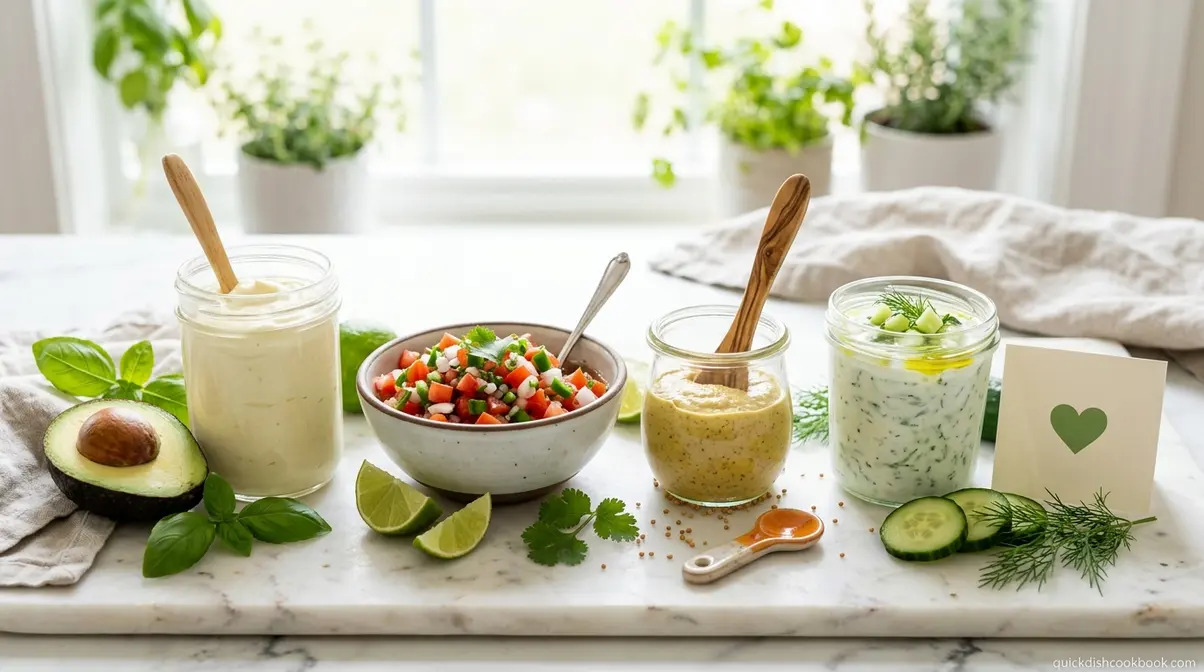
- Fresh homemade salsa (tomatoes, onion, cilantro, lime — no added sugar)
- Tzatziki (Greek yogurt base, low glycemic)
- Most homemade hot sauces (naturally very low in carbohydrates)
- What to avoid in store-bought versions:
- Commercial ketchup (up to 4g added sugar per tablespoon)
- Sweet BBQ sauce (up to 15g sugar per serving)
- Honey mustard (high in added sugars)
- Fat-free salad dressings (often high in added sugar to compensate for fat removal)
| Instead of… | Make This |
|---|---|
| Commercial ketchup | AHA-certified homemade ketchup (no added sugar) |
| Regular mayo | Avocado oil mayonnaise |
| Sweet BBQ sauce | Homemade smoky ketchup with smoked paprika |
| Ranch dressing | Greek yogurt herb dip (tzatziki base) |
The American Heart Association healthier condiment tips recommend choosing low-sodium or no-salt-added, and no-added-sugar versions of condiments for managing cardiovascular and blood sugar health.
This guidance is general. Your doctor or dietitian can provide personalized recommendations based on your specific diabetes management plan. Use qualified language when discussing these options with your healthcare provider — homemade condiments “may help support blood sugar management” and “can be part of a diabetes-friendly diet,” but they do not treat or cure diabetes.
The same principles that benefit diabetics — low sodium, no added sugar — also support heart health and cholesterol management.
What Condiments Are Good for Cholesterol?
For managing cholesterol, the goal is simple: prioritize homemade condiments low in saturated and trans fats, and high in beneficial unsaturated fats. The best choices are those that replace commercial soybean oil-based products with heart-healthier alternatives.
- Best homemade condiments for cholesterol management:
- Avocado oil mayonnaise — high in monounsaturated fats (oleic acid), which research suggests may help reduce LDL (“bad”) cholesterol and support HDL (“good”) cholesterol levels
- Fresh homemade salsa — rich in lycopene (a powerful antioxidant found in tomatoes) and virtually free of unhealthy fats
- Plain mustard — naturally low in fat and sodium, a genuinely heart-neutral condiment
- Olive oil-based dressings — olive oil’s monounsaturated fat profile makes it a strong choice for cholesterol-conscious cooking
The American Heart Association healthier condiment tips recommend low-sodium, no-added-sugar condiments and highlight homemade salsa as a heart-healthy topping option. The AHA also specifically recommends choosing condiments with no added salt and no added sugar.
- Condiments to limit if managing cholesterol:
- Commercial mayonnaise (high in omega-6 soybean oil)
- Butter-based sauces
- Cream-based dressings
- Any product containing partially hydrogenated oils (trans fats)
Switching from commercial mayo to avocado oil mayo is one of the simplest and most impactful steps in The Clean Condiment Switch for heart health. It requires no behavior change — just a swap of what’s in the jar.
If you’re managing high cholesterol under medical supervision, discuss any significant dietary changes with your cardiologist or dietitian before implementing them.
Beyond health goals, homemade condiments make some of the most thoughtful and personal gifts you can give.
Gifting Homemade Condiments: Ideas & Packaging Tips
Homemade condiments as gifts are surprisingly well-received — they feel personal, artisanal, and genuinely useful. Unlike most gifts, they get used every day.
- Best condiments for gifting:
- Mustard — 3-month shelf life makes it ideal; looks beautiful in a small jar
- Mango-habanero hot sauce — impressive, unique, and memorable
- Balsamic berry mustard — sophisticated enough for a gourmet gift basket
- Apple ketchup — unusual and conversation-starting
- All four can be made in batches and bottled simultaneously
- Packaging ideas:
- 4 oz mason jars with decorative lids
- Small swing-top glass bottles for hot sauces and vinegars
- Printable labels with the recipe name, date made, and storage instructions
- Kraft paper gift tags tied with twine for a handmade look
- Gift set ideas:
- The Big 3 Gift Set: Ketchup + mayo + mustard in matching mason jars
- Hot Sauce Trio: Three heat levels — mild chile garlic, medium mango-habanero, and a fiery version
- Heart-Healthy Condiment Set: Avocado oil mayo + fresh salsa + plain mustard — a thoughtful gift for health-conscious friends
Making a batch of homemade condiments to give away is very rewarding — it’s genuinely one of the most practical and personal gifts you can offer, and it costs a fraction of what artisanal condiments sell for in specialty stores.
Before you start making your first batch, here are the most common mistakes beginners make — and how to avoid them.
Common Mistakes & When to Buy Instead
Common Pitfalls When Making Condiments at Home
Home cooks evaluating their first batches of homemade condiments frequently encounter the same five issues. After reviewing common challenges reported across beginner cooking communities, these are the pitfalls that matter most — and each has a straightforward fix.
- Using cold eggs for mayo → sauce breaks (splits into an oily, separated liquid). Fix: bring eggs to room temperature for 30 minutes before starting. Cold eggs prevent proper emulsification because the fat and water components can’t bond effectively at low temperatures.
- Skipping the cucumber squeeze for tzatziki → watery, separated sauce. Fix: always squeeze grated cucumber tightly in a clean kitchen towel before mixing. This single step is what separates a restaurant-quality tzatziki from a disappointing watery dip.
- Not sterilizing jars before filling → premature spoilage. Fix: wash jars in hot soapy water or run them through the dishwasher before use. Bacteria introduced from a dirty jar can cause condiments to spoil days earlier than expected.
- Making too large a batch → condiment goes off before it’s used. Fix: start with half-batches until you understand your household’s consumption rate. A half-batch of ketchup is still a full cup — plenty for a week’s use.
- Over-blending ketchup → thin, watery texture. Fix: simmer longer before blending to reduce moisture content. The sauce should coat a spoon before you blend it — if it’s still runny in the pan, give it another 5 minutes.
When Store-Bought Makes More Sense
The Clean Condiment Switch works best as a gradual process. There are genuine situations where store-bought is the more practical choice:
- Large-scale events: Catering or parties for 20+ people make commercial condiments more cost-effective and food-safe for bulk service. Homemade batches aren’t designed for crowd-scale use.
- Very limited fridge space: Homemade condiments require refrigeration. If storage is genuinely constrained, prioritizing fridge space for other foods makes sense.
- Severe time constraints: If you have 5 minutes per week for cooking tasks, homemade condiments may not fit your current lifestyle — and that’s okay. Start with one condiment when time allows.
The goal is progress, not perfection. Start with one condiment, not all of them at once.
Frequently Asked Questions
What Condiments Can I Make Homemade?
You can make virtually any condiment at home, including ketchup, mayonnaise, mustard, hot sauce, BBQ sauce, honey mustard, tzatziki, salsa, pesto, relish, and chile garlic sauce. Most classic sauces take under 10 minutes using pantry staples — no special equipment required beyond a blender and a saucepan. Common staples like ketchup, mayo, and mustard can be made in under 15 minutes combined. Most homemade condiments stay fresh in the fridge for 1–3 weeks, depending on the recipe.
What Condiments Can Diabetics Use?
Diabetics can safely enjoy homemade condiments that are low in sugar and sodium, including no-sugar-added ketchup, avocado oil mayonnaise, plain mustard, fresh salsa, Greek yogurt-based dressings, and most hot sauces. The key is avoiding added sugars and high-sodium commercial versions — homemade recipes give you full control over both. Commercial ketchup contains up to 4 grams of sugar per tablespoon; a homemade version using the AHA-certified recipe can contain zero. Always consult your doctor or registered dietitian before making significant dietary changes to your diabetes management plan.
What Are the Top 10 Condiments?
The top 10 condiments globally are ketchup, mayonnaise, mustard, hot sauce, BBQ sauce, pickles and relish, soy sauce, salsa, ranch dressing, and sriracha. Ketchup, mayonnaise, and mustard are consistently ranked as the “Big 3” — the most universally used condiments across cuisines worldwide. All 10 of these condiments can be made at home using basic pantry ingredients. Homemade versions typically contain fewer additives and can be easily customized to any dietary need or flavor preference.
What Condiments Are Good for Cholesterol?
For cholesterol management, the best homemade condiments are avocado oil mayonnaise, fresh salsa, plain mustard, olive oil-based dressings, and homemade hot sauce. These options are low in saturated fat and free from trans fats — the two primary dietary contributors to high LDL cholesterol. Avocado oil mayonnaise provides heart-healthy monounsaturated fats, making it a direct upgrade from commercial soybean oil-based mayo. Consult your cardiologist or dietitian before making dietary changes if you’re managing cholesterol under medical supervision.
What Are the Big 3 Condiments?
The Big 3 condiments are ketchup, mayonnaise, and mustard — the three most widely used condiments globally across virtually every cuisine. These three form the foundation of most other condiments: Big Mac sauce uses mayo and mustard, honey mustard uses mustard as its base, and BBQ sauce typically starts with ketchup. All three can be made at home in under 15 minutes combined using pantry staples. Mastering the Big 3 is the recommended starting point for anyone beginning The Clean Condiment Switch.
What Are the Seven Condiments?
The seven core condiments are ketchup, mustard, mayonnaise, hot sauce, BBQ and steak sauces, pickles and relish, and soy sauce. These seven appear consistently across global condiment rankings and are used across American, Asian, and European cuisines. All seven can be made at home — pickles and relish are among the easiest, requiring only vinegar, salt, and your vegetable of choice. Making all seven from scratch is a realistic goal for any home cook willing to spend one afternoon in the kitchen.
What Is the Number One Condiment in the World?
Ketchup is widely considered the number one condiment in the world, topping global sales and usage rankings across dozens of countries. Its sweet-tangy flavor profile makes it versatile across dishes — from fries and burgers to eggs and grilled meats — which drives its universal appeal. Homemade ketchup takes just 15 minutes to prepare and contains significantly less sugar and sodium than commercial versions. Making ketchup from scratch is the single most impactful first step in The Clean Condiment Switch.
What Food Is the Number One Enemy of Diabetes?
Added sugar is widely considered the primary dietary concern for people managing diabetes, as it causes rapid blood glucose spikes that the body struggles to regulate. Foods with hidden added sugars — including commercial condiments like ketchup, BBQ sauce, and fat-free dressings — are particularly problematic because their sugar content is often underestimated. The CDC specifically identifies condiments and sauces as common sources of hidden added sugars for people managing diabetes (CDC, 2026). Homemade condiments allow you to eliminate added sugars entirely, replacing them with natural flavor from herbs, spices, and vinegar. Always work with your doctor or registered dietitian to develop a personalized diabetes management plan that accounts for your specific dietary needs.
Bringing It All Together
For anyone ready to take control of what goes into their food, homemade condiments recipes offer a straightforward path to healthier eating — one that costs less, tastes better, and puts you in charge of every ingredient. Searches for homemade condiment recipes have grown 150% year-over-year (keyword research metrics, 2026), reflecting a genuine shift in how home cooks think about their pantry staples. The best approach combines starting with the Big 3, expanding to specialty sauces, and adapting recipes for specific health goals — whether that’s managing blood sugar, supporting heart health, or simply removing additives from your daily diet.
The Clean Condiment Switch is built on one principle: you don’t have to overhaul everything at once. Replace one jar. Make a batch of ketchup this weekend. Notice that it tastes better, costs less, and contains exactly what you chose to put in it. Then replace the next jar. Over a few weeks, you’ve quietly transformed the most sugar-laden shelf in your kitchen — without a single overwhelming cooking project.
Start with ketchup. Use the recipe in Section 2, make it this weekend, and taste the difference for yourself. Once you’ve made it once, the second batch takes five minutes because you already know every step. That’s the very rewarding reality of homemade condiments — the learning curve is short, and the habit forms fast. Your pantry is ready to replace the condiment aisle.

quickdishcook
Recipe developer and writer at Quick Dish Cookbook.