
Yes, can you freeze pasta salad? Absolutely — but only if you separate the components first. Using The Component Freezing Method, freeze the pasta, vegetables, and dressing individually in airtight bags. This 5-step process takes about 20 minutes of prep and keeps your salad freezer-safe for up to 3 months.
What’s in this guide
- What You'll Need Before Freezing Pasta Salad
- Step 1: Is Your Pasta Salad Freezer-Ready?
- Step 2: Cook Pasta Al Dente and Cool It Completely
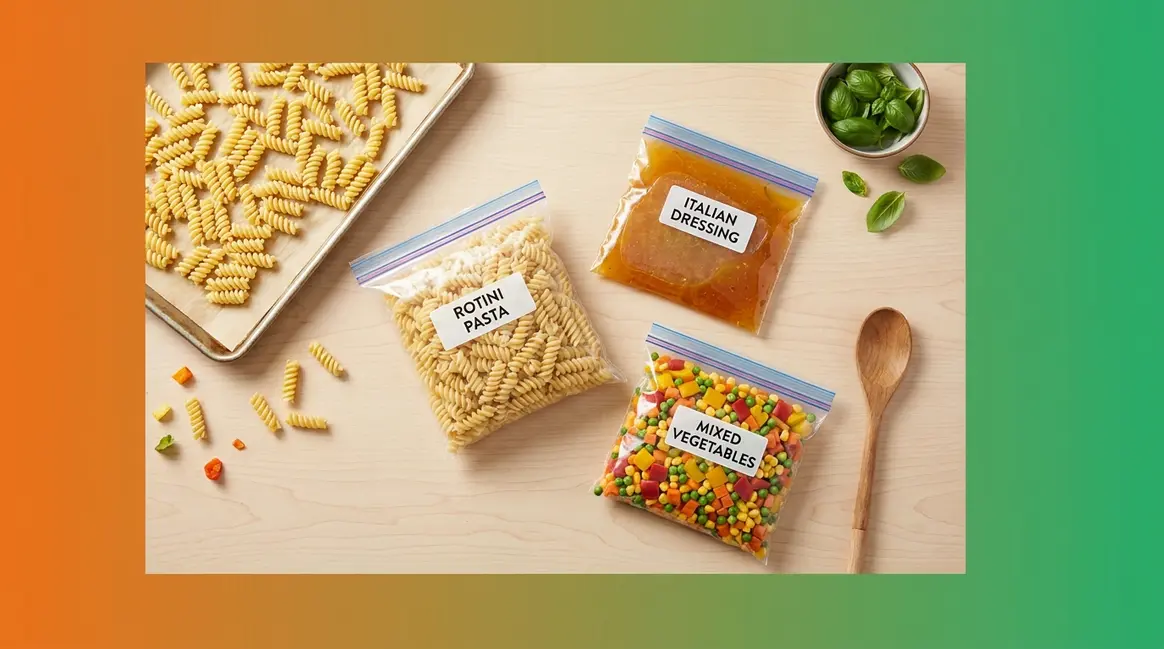
- Step 3: Separate the Components Before Freezing
- Step 4: Package and Label for the Freezer
- Step 5: Thaw and Reassemble Your Pasta Salad
- Verify Your Results
- Troubleshooting Common Freezing Problems
- Can You Freeze Other Types of Pasta Salads?
- Frequently Asked Questions
- Bringing It All Together
You made a giant bowl of pasta salad for the weekend — and now it’s Monday, the fridge is full, and you’re staring at enough leftovers to feed a small crowd. Throwing it away feels wasteful, especially when you could have lunch sorted for the entire week.
The real fear is this: you’ve heard stories. Freezer-burned pasta. Watery, separated dressing. Vegetables that turn to mush the moment they thaw. You’d rather toss the bowl than deal with a soggy disaster.
“I made way too much. The instructions online are all about freezing before you mix it.”
Sound familiar? That advice is partly right — but it misses the point entirely. This guide teaches you The Component Freezing Method: a simple, science-backed technique that lets you freeze an already-assembled pasta salad by separating its ingredients before they go into the freezer. By the end, you’ll know exactly how to save money, reduce food waste, and eat well all week — without sacrificing texture or safety.
What You’ll Need Before Freezing Pasta Salad
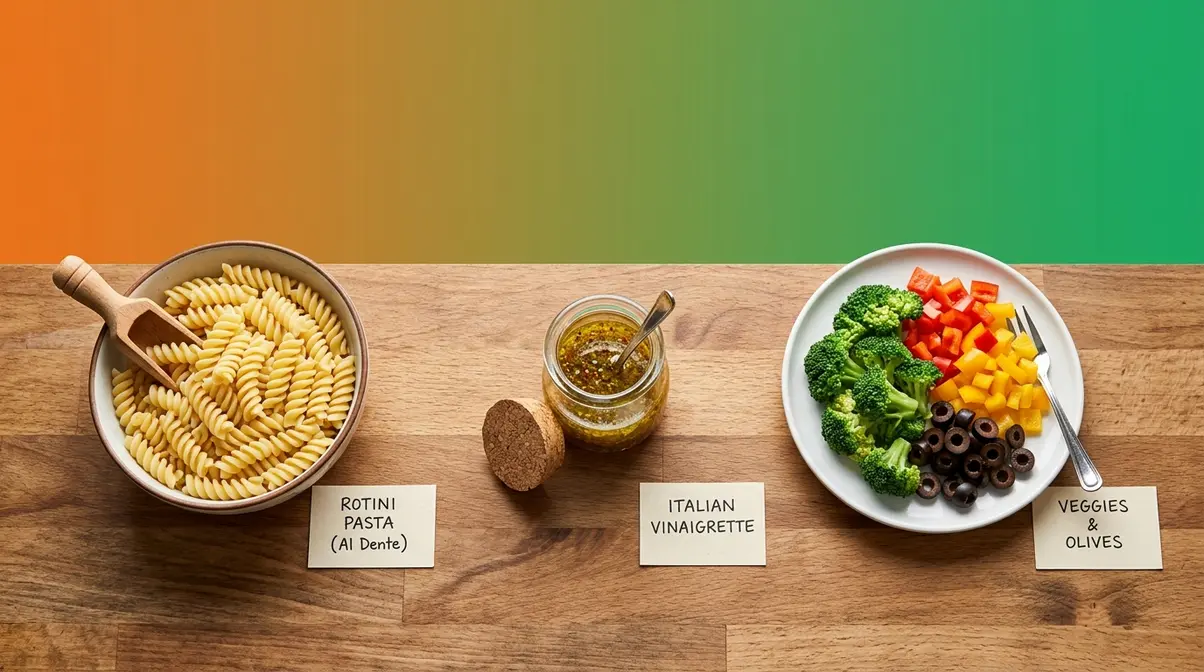
Before you start, our guide to freezing pasta salad can help you decide if freezing is the right call for your batch. If you’re ready to go ahead, gather these items first — this process takes about 20 minutes of active prep, plus overnight thawing when it’s time to eat.
- Equipment checklist:
- Airtight zip-lock freezer bags (at least 3 — one per component)
- Airtight containers (small, for dressings or pesto)
- A baking sheet (for flash-freezing vegetables)
- A permanent marker and freezer labels
- A refrigerator with space for overnight thawing
Three terms to know before you start:
Al dente means pasta cooked until just firm — about 1–2 minutes less than the package directions say. It should have a slight resistance when you bite through it, not be completely soft.
Emulsion is a mixture of oil and water held together by a binding ingredient — like the egg yolk in mayonnaise. It’s why mayo is thick and creamy rather than separated. Freezing breaks that bond, which is why mayo doesn’t survive the freezer intact.
Flash-freeze means spreading food flat on a baking sheet and freezing it quickly before transferring it to a bag. Faster freezing creates smaller ice crystals, which causes less cell damage — and better texture after thawing.
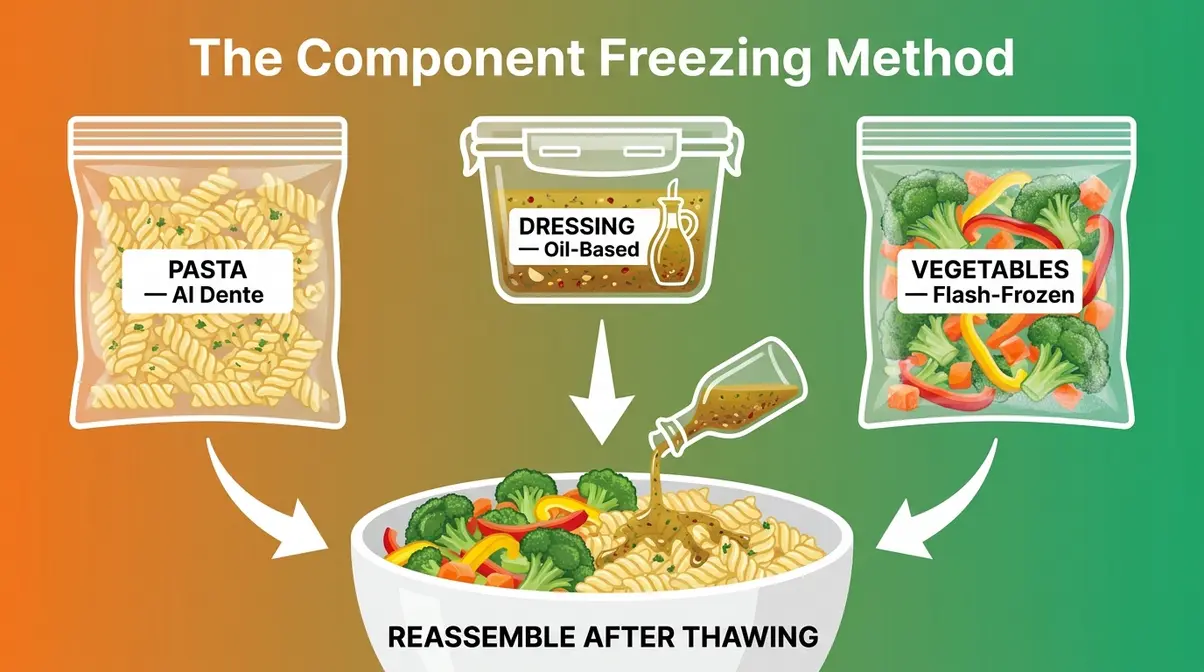
Once you have your bags, containers, and a clear sense of the process, you’re ready for Step 1 — the most important decision in the whole method.
Step 1: Is Your Pasta Salad Freezer-Ready?
The first step when figuring out can you freeze pasta salad successfully is deciding which ingredients can make the trip. Whether your pasta salad freezes well depends almost entirely on what’s in it — and using The Component Freezing Method means you don’t have to freeze everything together. The wrong approach leads to watery, soggy results; the right approach means each ingredient is treated according to how it actually behaves in the freezer.
Research from the University of Illinois Extension confirms that mayonnaise often becomes grainy or watery and high-water vegetables lose structural integrity when frozen — a finding that shapes the entire ingredient strategy below.
“Freeze or Toss” Ingredient Matrix:
| Ingredient | Freeze? | Why | Best Approach |
|---|---|---|---|
| Cooked pasta (al dente) | ✅ Yes | Holds starch structure | Freeze separately |
| Italian/vinaigrette dressing | ✅ Yes | Oil-based, stable when frozen | Freeze in small container separately |
| Pesto | ✅ Yes | Oil-based, freezes well | Freeze in ice cube tray |
| Hard cheese (Parmesan, pecorino) | ✅ Yes | Low moisture content | Can freeze with pasta |
| Cooked chicken | ✅ Yes | Protein holds up well | Freeze separately |
| Cooked tuna | ✅ Yes | Protein holds up well | Freeze separately |
| Mayonnaise/creamy dressing | ⚠️ Caution | Emulsion breaks when frozen | Do not freeze; add fresh after thawing |
| Cucumbers | ❌ No | High water content → mushy | Add fresh after thawing |
| Cherry tomatoes | ❌ No | Cell walls rupture when frozen | Add fresh after thawing |
| Feta cheese | ❌ No | Crumbles and becomes grainy | Add fresh after thawing |
| Fresh herbs (basil, parsley) | ❌ No | Turn black and limp | Add fresh after thawing |
The key insight here is that “Add fresh after thawing” is not a limitation — it’s the solution. Cucumbers and tomatoes lose structural integrity when frozen because their high water content forms ice crystals that rupture cell walls on thawing. Simply setting them aside and adding them fresh means your salad still gets every ingredient; they just skip the freezer entirely.
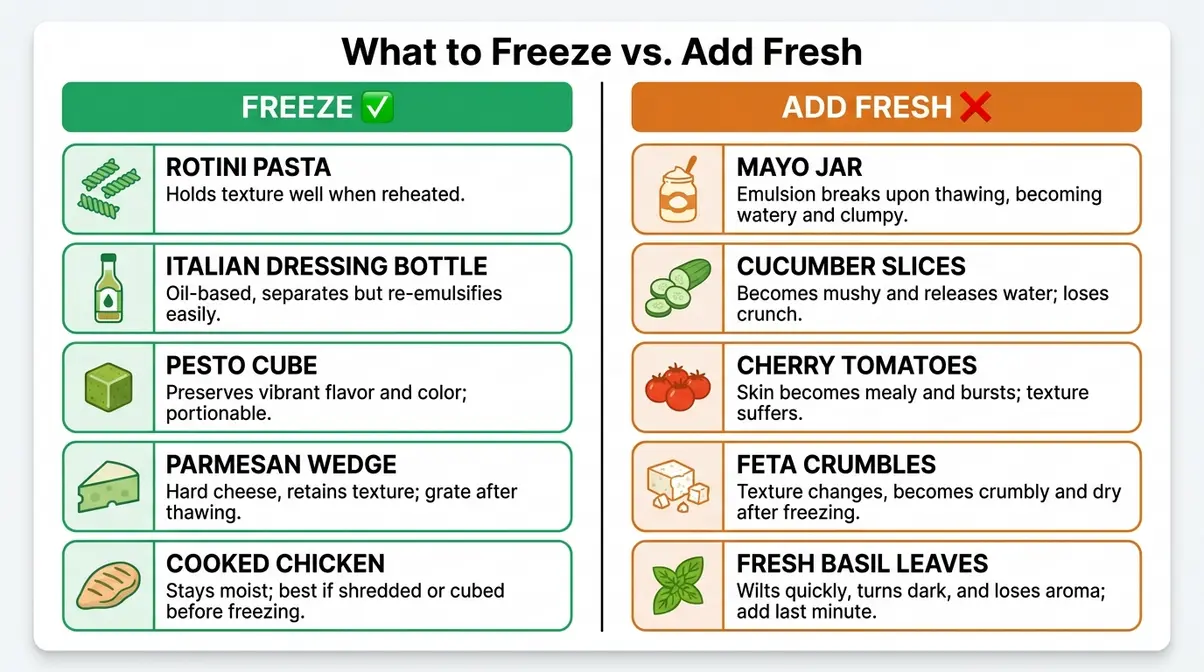
Checkpoint: You should now know which ingredients in your bowl can be frozen and which need to be set aside to add fresh later.
Now that you know which ingredients are coming with you to the freezer, Step 2 covers the single most important thing you can do for pasta texture before you even open a freezer bag.
Step 2: Cook Pasta Al Dente and Cool It Completely
Al dente pasta is the foundation of a successful frozen pasta salad. When pasta is fully cooked, ice crystals that form during freezing break down the starch structure — and the pasta turns soft and mushy on thawing. Cooking it slightly firm gives the starch just enough structural reserve to absorb that expansion without collapsing. Think of it like a sponge with room left to squeeze — al dente pasta has that room; fully cooked pasta doesn’t.
The University of Nebraska-Lincoln Extension recommends cooking pasta al dente, draining, mixing with a small amount of oil, and cooling completely before freezing to preserve texture. The University of Missouri Extension adds that undercooking is especially important for pasta dishes that will be frozen and reheated later.
Follow these sub-steps:
- Boil your pasta for 1–2 minutes less than the package directions — it should have a slight firmness in the center when you bite into it
- Drain immediately and rinse briefly with cold water to stop the cooking process
- Toss with 1 teaspoon of olive oil per 2 cups of pasta to prevent clumping during freezing
- Spread on a baking sheet and cool to room temperature — no more than 2 hours at room temperature, per USDA Danger Zone guidelines (40°F–140°F)
- Refrigerate until fully cold before packing for the freezer — skipping this step causes condensation inside the bag, which leads directly to sogginess
If your pasta salad is already fully cooked and assembled, don’t worry — move straight to Step 3. The Component Freezing Method still applies; you’ll just be separating the components now rather than before cooking.
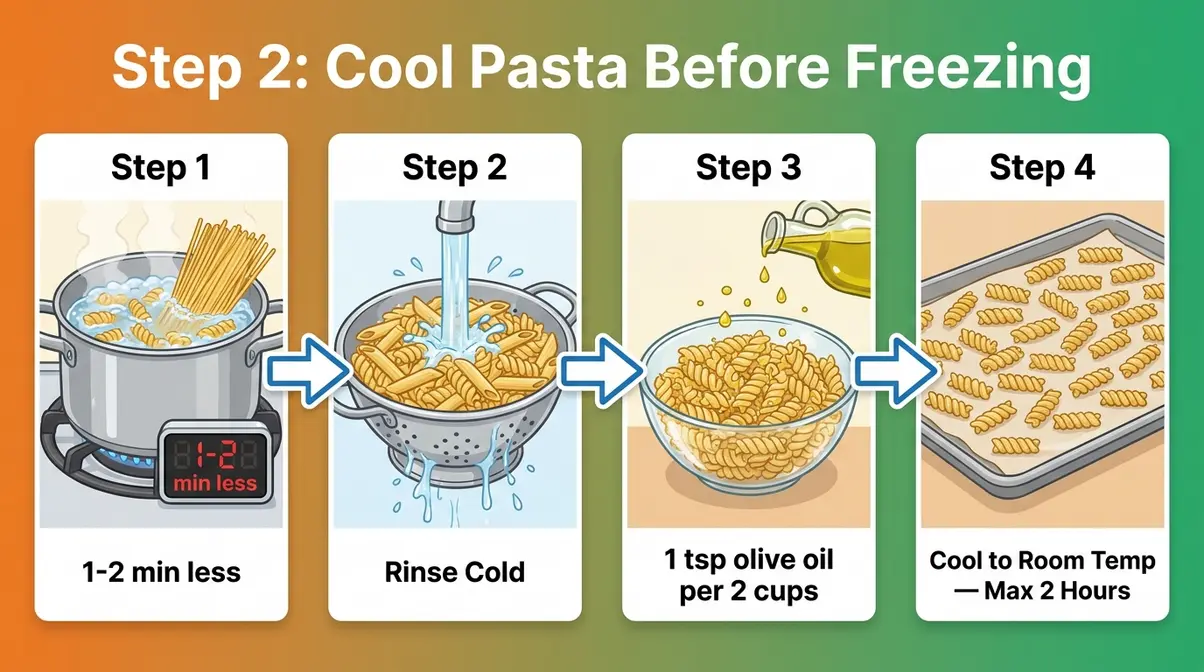
Checkpoint: Your pasta should be cool to the touch and slightly firmer than you’d normally serve it. If it’s soft or warm, give it more time — putting warm pasta in a freezer bag is one of the most common mistakes beginners make.
Why does pasta not freeze well?
Pasta doesn’t freeze well when it’s overcooked before freezing. When pasta is fully soft, the ice crystals that form during freezing expand and break down the starch structure — leaving you with mushy, gummy pasta after thawing. The fix is al dente cooking: 1–2 minutes less than the package says. University of Nebraska-Lincoln Extension research confirms that al dente pasta retains significantly better texture through freeze-thaw cycles than fully cooked pasta. The starch structure simply has more integrity to absorb the expansion.
Your pasta is cool and ready. Step 3 is where The Component Freezing Method really begins — separating everything so each ingredient freezes at its best.
Step 3: Separate the Components Before Freezing
Separate everything before it goes in the freezer. That’s the core principle of The Component Freezing Method — and it’s what sets this guide apart from generic advice. Each ingredient in a pasta salad has a different freezing behavior: pasta handles it well when al dente, oil-based dressings tolerate it with minor separation, and creamy dressings simply cannot survive it. Keeping them apart means each one is treated on its own terms.
Freezing Oil-Based Dressings
Pasta salad with Italian dressing is one of the most freezer-friendly versions you can make, because oil-based dressings are stable emulsions that tolerate freezing well. Italian, balsamic vinaigrette, and lemon-herb dressings may separate slightly after thawing — but a quick stir brings them right back together.
Even with an oil-based dressing, freeze it separately from the pasta. If the two sit together in the freezer, the pasta absorbs all the dressing during thawing and turns greasy. Keep them apart, and you control how much dressing goes on at serving time.
Pesto is a special case worth mentioning. It freezes exceptionally well because of its high olive oil content. Freeze pesto in an ice cube tray — roughly 1 tablespoon per cube — then pop the frozen cubes into a labeled freezer bag. This gives you perfect portion-controlled servings every time. As for how long you can freeze pasta salad with Italian dressing: the pasta component keeps for up to 3 months; the dressing itself is best used within 2 months.
To pack it: pour your Italian dressing into a small zip-lock bag, push all the air out, and seal it. Label it “dressing” with the date. That’s it.
The University of Illinois Extension notes that oil-based dressings handle freezing better than dairy or egg-based emulsions — a useful benchmark for deciding how to treat any dressing you’re not sure about.
If your salad uses mayonnaise instead of a vinaigrette, the approach is a little different — but it’s still manageable.
Handling Creamy and Mayo-Based Dressings
Pasta salad with mayo presents a specific challenge: you cannot freeze the mayonnaise. Mayonnaise is an emulsion — oil and water held together by egg yolk. Think of it like salad dressing that separates in the bottle when it sits too long; freezing does the same thing, but permanently. The Ohio State University Extension confirms that mayonnaise, sour cream, and egg-thickened sauces tend to separate when frozen, resulting in a watery, grainy texture after thawing.
The workaround is simple and reliable: freeze the pasta and any freeze-friendly vegetables separately, with no dressing at all. When you’re ready to serve, thaw overnight in the fridge and stir in a fresh spoonful of mayo. The pasta absorbs a fresh dressing perfectly, and you’d never know it had been frozen.
Ranch dressing and other dairy-based dressings have exactly the same problem — they break down in the freezer just like mayo does. The answer is always the same: freeze the pasta plain and dress it fresh.
The same principle applies to tuna salad — see our guide to freezing mayo-based salads for the full breakdown. For tuna pasta salad specifically, freeze the tuna separately from the pasta and add fresh mayo at serving time.
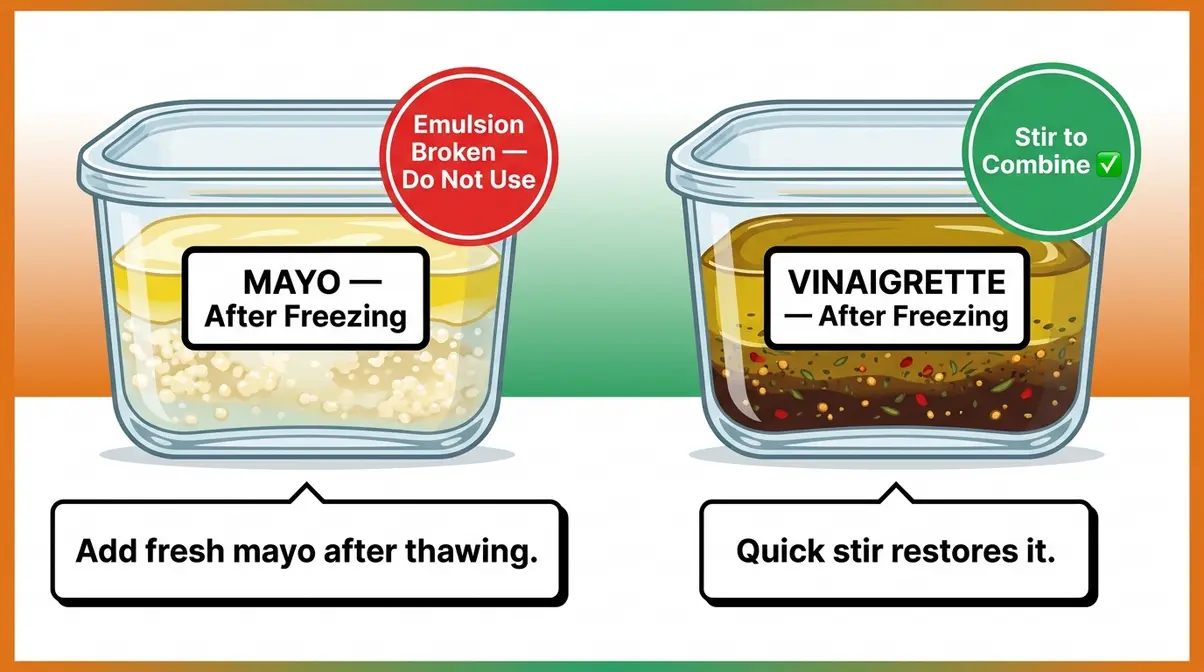
Checkpoint: You should now have your pasta in one bag, your dressing in a separate container, and your freeze-friendly vegetables set aside. Everything is separated and ready to package.
Step 4: Package and Label for the Freezer
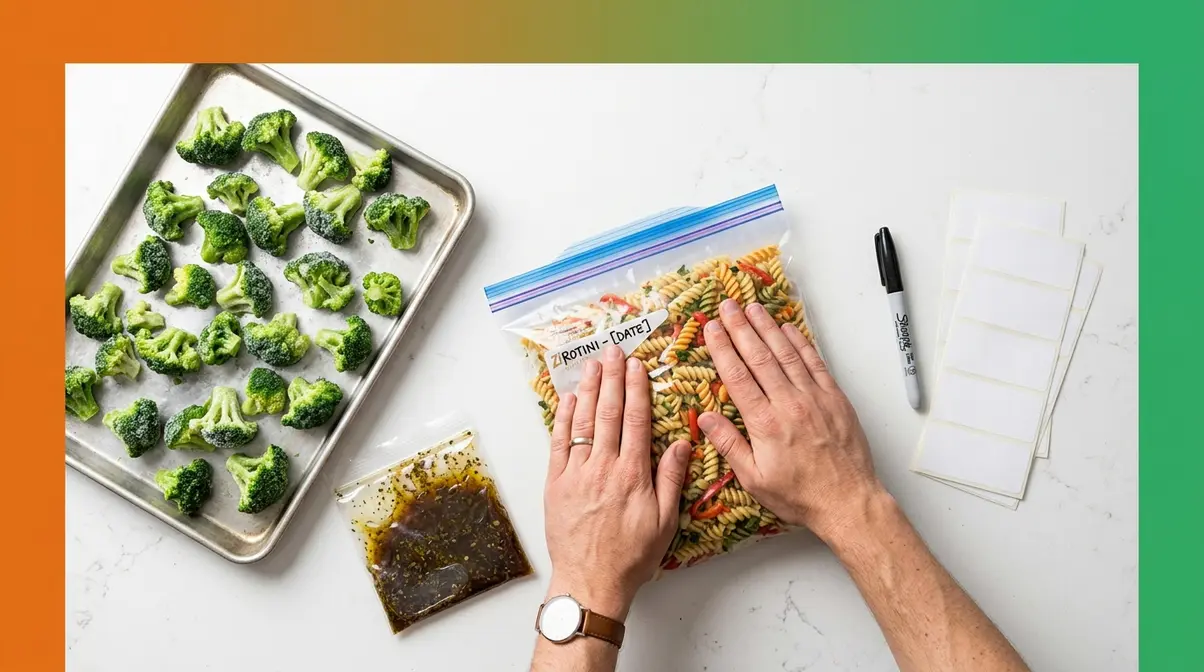
Good packaging is what stands between a great frozen pasta salad and a freezer-burned disappointment. Freezer burn happens when air contacts the food surface — so removing as much air as possible from every bag is the single most important thing you can do at this stage.
Follow these steps:
- Choose freezer bags, not regular storage bags — freezer bags are thicker and hold a proper seal at low temperatures (University of Nebraska-Lincoln Extension recommends freezer-grade packaging specifically).
- Portion your pasta into individual serving sizes before sealing — this means you can thaw exactly what you need without defrosting the whole batch.
- Flash-freeze vegetables (like broccoli or bell peppers that do freeze well) on a flat baking sheet for 20–30 minutes before bagging — this prevents them from clumping into a solid block.
- Press all the air out of each zip-lock bag before sealing — lay the bag flat, press from the bottom up, and seal at the last moment.
- Place bags flat in the freezer until solid, then stack or store upright to save space.
- Label every bag with: the contents (e.g., “pasta — rotini”), the date, and any reassembly notes (e.g., “add Italian dressing + cucumbers fresh”).
A clear labeling system is easy to skip and painful to regret. Three months from now, you’ll thank yourself for writing “pasta salad components — assemble with fresh tomatoes” rather than staring at a mystery bag.
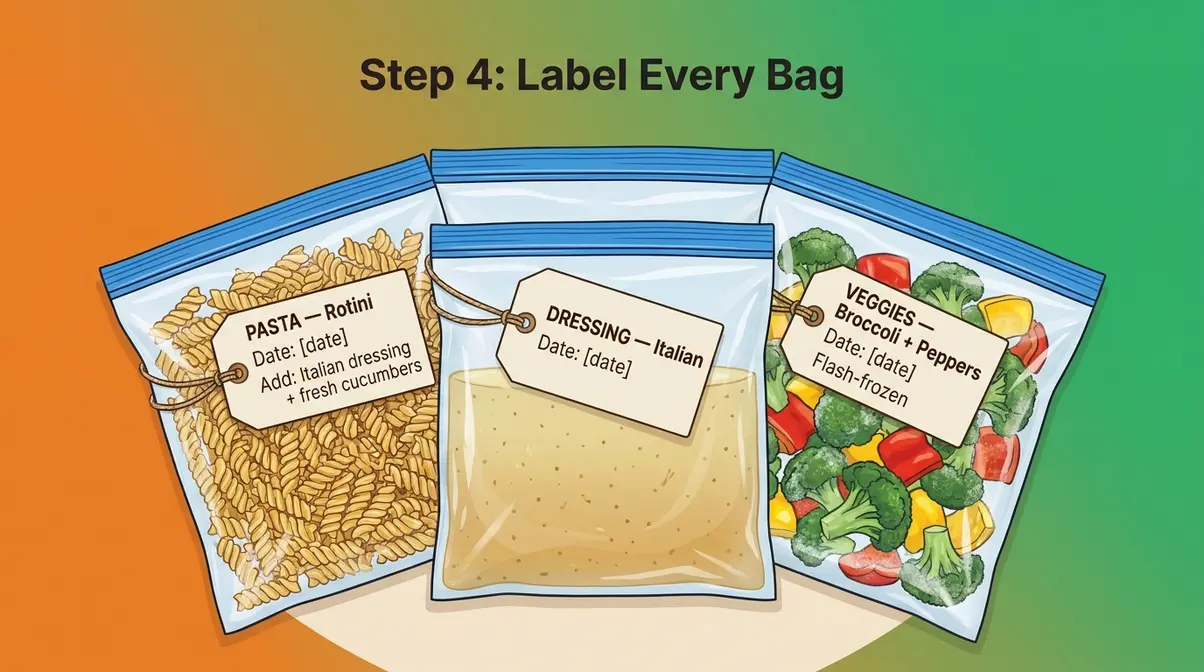
Checkpoint: Every component should be in its own labeled, airtight freezer bag with the air pressed out. Nothing should share a bag unless it freezes at the same rate (e.g., hard cheese can go with pasta).
Step 5: Thaw and Reassemble Your Pasta Salad
Thawing is where food safety becomes the priority. The right method takes a little planning — but it’s genuinely simple once you understand why it matters.
⚠️ Food Safety Disclaimer: According to the USDA Food Safety and Inspection Service, the Danger Zone is 40°F–140°F (4°C–60°C) — the temperature range where bacteria can double in number in as little as 20 minutes. Never thaw pasta salad at room temperature. Always thaw in the refrigerator at 40°F or below. If your pasta salad has been at room temperature for more than 2 hours at any point (or 1 hour above 90°F), discard it. This guidance is not a substitute for professional food safety advice. For more details on safe storage, review our guide on how long you can keep leftovers in the fridge.
Follow these steps:
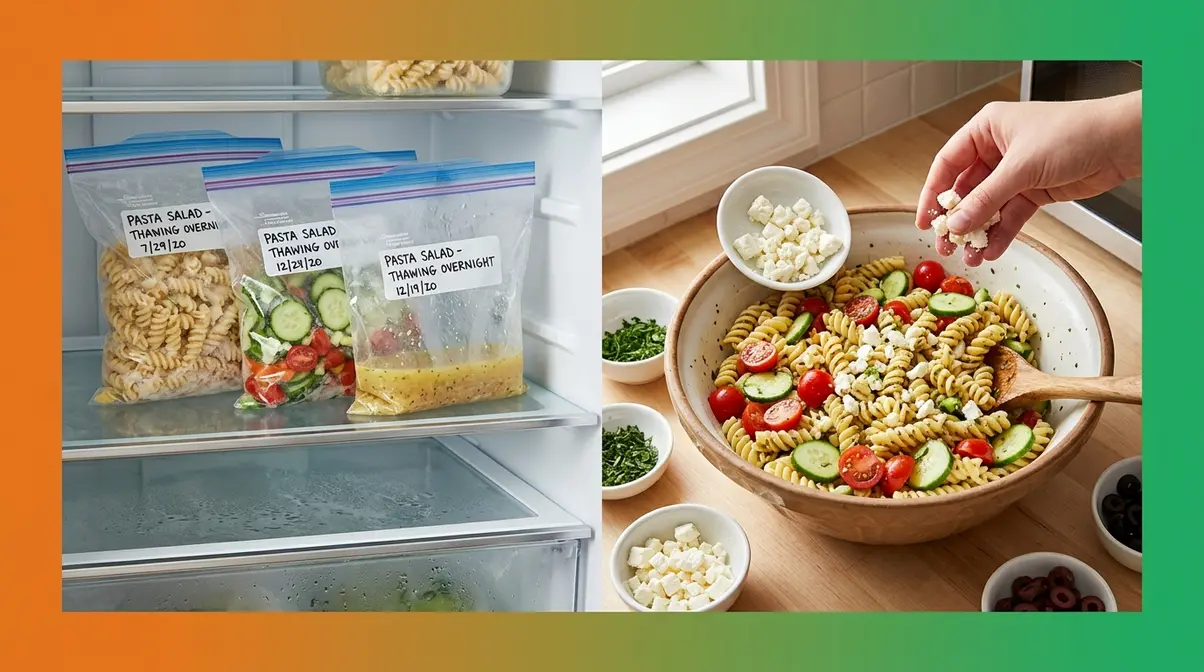
- Move the sealed bags from the freezer to the refrigerator the night before you plan to eat — allow 8–12 hours for full thawing
- Keep bags sealed during thawing to prevent moisture contamination
- Once thawed, open the pasta bag and check the texture — it should feel firm and separate, not mushy or clumped
- If using a vinaigrette, give it a quick stir or shake to re-emulsify any separation, then toss with the pasta
- If using a mayo-based salad, stir in fresh mayonnaise now — do not use the original dressing
- Add all fresh ingredients that skipped the freezer: cucumbers, cherry tomatoes, feta, fresh herbs
- Taste and adjust seasoning — frozen pasta often needs a little extra salt or a squeeze of lemon after thawing
Discard immediately if you notice any off-smells, sliminess, unusual color changes, or if you’re unsure how long the components have been thawing. When in doubt, throw it out — food safety always comes first.
Checkpoint: Your reassembled pasta salad should look and smell fresh. The pasta should hold its shape, the dressing should coat evenly, and the fresh-added vegetables should provide the crunch the frozen components cannot.
Verify Your Results
Once your pasta salad is reassembled, a quick check confirms the Component Freezing Method worked as intended. Run through these three points before serving:
- Pasta texture: Firm and separate, not mushy or gummy. If it’s soft, the pasta was overcooked before freezing — al dente is non-negotiable next time.
- Dressing consistency: Vinaigrette should coat evenly after stirring. Mayo-based dressing should look creamy and smooth (because you added it fresh). If a vinaigrette looks broken or oily, whisk it briefly with a fork before tossing.
- Overall flavor: Frozen pasta absorbs less dressing than fresh, so the salad may taste a little bland. A small splash of vinegar, lemon juice, or an extra drizzle of olive oil fixes this in seconds.
A well-executed Component Freezing Method produces a pasta salad that’s genuinely hard to distinguish from freshly made. Cooking community consensus from home preservation forums consistently shows that the biggest difference between success and failure comes down to one variable: whether the pasta was cooked al dente before freezing.
Troubleshooting Common Freezing Problems
Even with the right method, things sometimes go sideways. Here are the three most common issues — and exactly how to fix them.
Watery or Separated Dressing
This happens when an oil-based dressing separates during freezing, or when condensation from improperly cooled pasta dilutes the dressing. The fix is straightforward: pour the dressing into a small jar or bowl and whisk it vigorously for 30–60 seconds. Oil and water emulsions can be re-combined with mechanical action — the same way a shaken bottle of Italian dressing comes back together.
If the dressing still looks thin and watery after whisking, add a small amount of fresh dressing to strengthen it before tossing. For vinaigrette, a teaspoon of Dijon mustard acts as an emulsifier and brings a broken dressing back together quickly.
For mayo-based dressings that separated because they were accidentally frozen: unfortunately, these cannot be rescued. The emulsion is permanently broken. Discard the dressing and stir in fresh mayo instead — it takes 30 seconds and produces a far better result.
Mushy Pasta
Mushy pasta after thawing has one root cause: the pasta was cooked too far before freezing. Fully cooked pasta has no structural reserve left — when ice crystals form and expand, the starch breaks down entirely. Food science testing on frozen pasta consistently shows that al dente pasta retains significantly better texture after freeze-thaw cycles than fully cooked pasta.
If you’re already dealing with mushy pasta, there’s no way to restore the texture — but you can redirect it. Mushy pasta works well in pasta bakes, soups, or frittatas where texture matters less. Going forward, the fix is simple: undercook by 1–2 minutes every time.
Soggy Vegetables
Vegetables that were supposed to be added fresh somehow ended up in the freezer bag — or freeze-friendly vegetables like broccoli weren’t flash-frozen before bagging and released excess moisture during thawing. Either way, the result is a wet, limp salad.
To salvage it: drain any pooled water from the container, pat the vegetables with a paper towel, and add a handful of fresh vegetables to restore crunch. Going forward, flash-freeze any vegetables on a baking sheet before bagging, and keep high-water vegetables (cucumbers, tomatoes, feta) completely out of the freezer.
Will freezing pasta salad make it soggy?
Freezing pasta salad will make it soggy if you freeze it assembled — but not if you use the Component Freezing Method. The sogginess comes from two sources: moisture released by high-water vegetables (cucumbers, tomatoes) and dressing absorbed by the pasta during freezing. By freezing pasta, dressing, and vegetables separately, each component stays dry and intact. The pasta doesn’t absorb excess liquid, the vegetables don’t release water into the bag, and the dressing is added fresh at serving time — giving you a crisp, well-dressed salad every time.
Can You Freeze Other Types of Pasta Salads?
The Component Freezing Method applies beyond a standard rotini-and-Italian-dressing salad. Two common variations deserve their own guidance.
Potato Salad
Potato salad is more difficult to freeze than pasta salad, and the results are less predictable. Cooked potatoes contain a high amount of water, and freezing ruptures their cell walls — leading to a grainy, watery texture after thawing. Mayo-based potato salad (the most common kind) carries a double problem: both the potatoes and the dressing degrade in the freezer.
If you want to try freezing potato salad, the best approach is to freeze the cooked potatoes separately, without any dressing, and reassemble with fresh mayo after thawing. Expect the texture to be softer than fresh — it’s edible, but noticeably different. Food science researchers note that the starch structure in potatoes is more susceptible to freeze-thaw damage than pasta’s firmer starch matrix, which is why pasta salad is the better candidate for freezing overall.
Macaroni Salad
Macaroni salad follows the same rules as any other pasta salad — because macaroni is pasta. The Component Freezing Method works exactly the same way: freeze the macaroni al dente and plain, keep the dressing out of the freezer entirely, and add fresh mayo or dressing after thawing.
The most common question here is whether you can freeze macaroni salad made with mayonnaise. The short answer is: freeze the macaroni, not the mayo. Ohio State University Extension confirms that mayo-based mixtures separate permanently when frozen — so the assembled macaroni salad should not go into the freezer as-is. Separate the components first, and the result after thawing will be nearly indistinguishable from fresh.
Frequently Asked Questions
How long does pasta salad last in the refrigerator?
Pasta salad lasts 3–4 days in the refrigerator when stored in an airtight container at 40°F (4°C) or below. According to FoodSafety.gov’s Cold Food Storage Chart, egg, chicken, ham, tuna, and macaroni salads all fall in the 3–4 day refrigerator window. After that, bacterial growth increases and the salad should be discarded. If your pasta salad was left at room temperature for more than 2 hours at any point, discard it immediately — regardless of how recently it was made.
What are the five mistakes to avoid with pasta salad?
- The five most common pasta salad freezing mistakes are:
- Cooking pasta too soft before freezing (always cook al dente)
- Freezing mayo or dairy-based dressings (they separate permanently)
- Including high-water vegetables like cucumbers and tomatoes in the freezer bag (they turn to mush)
- Putting warm pasta directly into freezer bags (condensation causes sogginess)
- Thawing at room temperature instead of in the refrigerator (creates a food safety risk in the USDA Danger Zone)
Each of these is avoidable with the Component Freezing Method’s separation approach.
Can you freeze macaroni salad made with mayonnaise?
You can freeze the macaroni, but not the mayonnaise. Freezing assembled macaroni salad with mayo results in a watery, separated, grainy mess after thawing — because the mayo emulsion breaks permanently in the freezer, as confirmed by Ohio State University Extension. The reliable method is to freeze the plain cooked macaroni (al dente, no dressing) in a sealed bag, then stir in fresh mayonnaise after thawing. The result tastes freshly made and avoids the texture problem entirely.
Can you freeze pasta salad with meat?
Yes, you can freeze pasta salad with meat like chicken or tuna. Cooked proteins generally hold up very well in the freezer. Just be sure to freeze the meat in its own separate airtight bag or container, away from the pasta and dressing. This prevents cross-contamination and preserves the texture of the meat during the thawing process.
Does freezing change the flavor of pasta salad?
Freezing can slightly dull the flavors of your pasta salad. Because frozen pasta absorbs less dressing than fresh pasta, the overall taste might seem a bit bland after thawing. To fix this, simply add a splash of vinegar, a squeeze of fresh lemon juice, or an extra drizzle of olive oil when you reassemble the salad.
Bringing It All Together
For home cooks dealing with leftover pasta salad, The Component Freezing Method delivers a reliable, science-backed solution that generic freezing advice simply doesn’t provide. Frozen pasta (without dressing) keeps up to 3 months at 0°F or below; refrigerated pasta salad lasts just 3–4 days (FoodSafety.gov). The best approach combines al dente cooking, thorough cooling, and ingredient-level separation — with fresh vegetables and dressing added only after thawing.
So, can you freeze pasta salad? Yes, and The Component Freezing Method works because it respects how each ingredient actually behaves in the freezer, rather than treating the assembled salad as a single unit. Mayo breaks. Tomatoes rupture. Pasta softens. Separate them, and each problem disappears. That’s the core insight that most online advice misses entirely.
Your next step is straightforward: the next time you make a large batch, cook the pasta al dente from the start and portion it into freezer bags before it ever hits the bowl. Give The Component Freezing Method a single trial run — one batch, 20 minutes of prep — and you’ll have a reliable system for turning leftover pasta salad into easy weeknight lunches for the entire month.

quickdishcook
Recipe developer and writer at Quick Dish Cookbook.