
What’s in this guide
- What Is Blue Majik Spirulina?
- What You'll Need Before You Start
- Step 1: The 45°C (113°F) Heat Rule
- Step 2: Blend the Viral Blue Majik Cloud Smoothie
- Step 3: Build a Blue Majik Smoothie Bowl
- Step 4: Brew a Creamy Blue Majik Latte
- Step 5: Roll Blue Majik Energy Balls
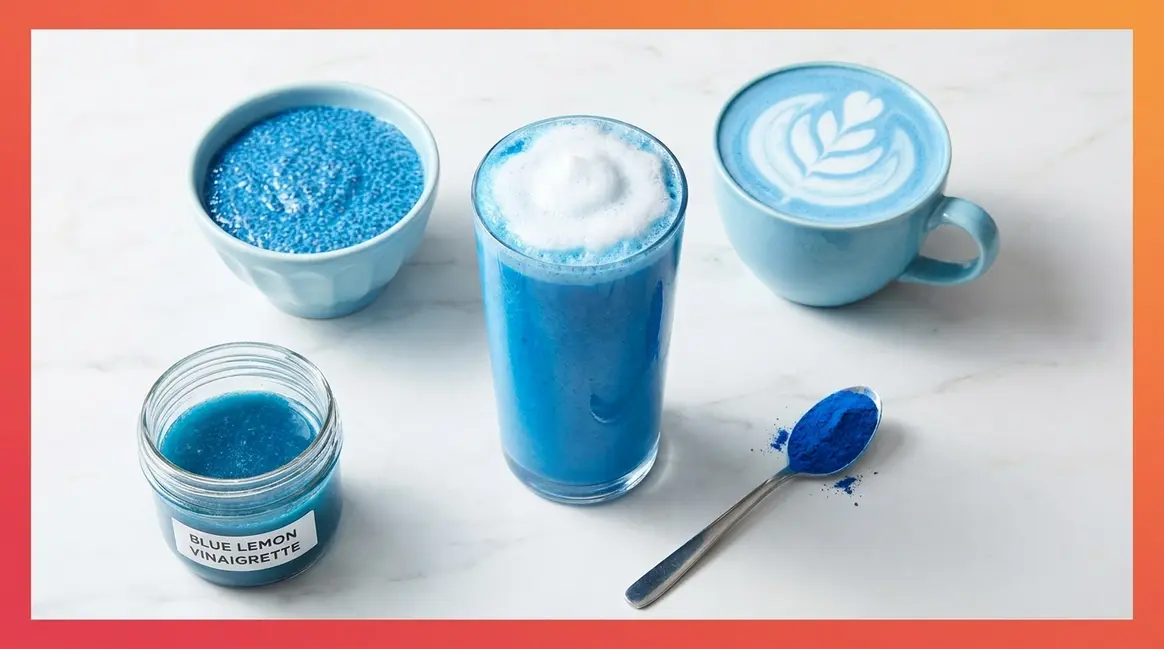
- Step 6: Set a Blue Majik Chia Pudding
- Step 7: Spread a Smurf-Esque Blue Majik Toast
- Step 8: Shake a Blue Majik Lemon Vinaigrette
- Verify Your Results
- Safety, Side Effects, and What Not to Mix
- Troubleshooting Common Mistakes
- Frequently Asked Questions
- Conclusion
You bought a bag of Blue Majik, stirred it into your pancake batter, and watched that gorgeous blue turn a disappointing grey-green. Here’s what happened — and how to fix it every time.
Most recipes online skip the science entirely. They show you the finished smoothie bowl but never explain why it works. Without knowing the 45°C rule, you’ll waste expensive powder and miss the nutritional benefits entirely.
By the end of this guide, you’ll know exactly how to use Blue Majik in 7 different recipes — from a viral cloud smoothie to a Smurf-esque toast — while keeping every drop of its antioxidant power intact. This 8-step guide to cooking with Blue Majik spirulina covers techniques, safety, and troubleshooting, with each recipe taking just 5–15 minutes.
Quick Answer: To cook with Blue Majik spirulina, stir ½–1 teaspoon of the powder into cold or room-temperature recipes — never heat it above 45°C (113°F) or you’ll destroy its vivid color and key nutrients. This 8-step guide covers 7 beginner-friendly recipes and takes 5–15 minutes each. The safety section addresses dosing, side effects, and what not to mix.
Key Takeaways: Cooking with Blue Majik Spirulina
Blue Majik spirulina delivers full antioxidant benefits only when kept below 45°C (113°F) — The Cold-First Rule that makes every recipe in this guide work.
- Heat is the enemy: Phycocyanin (the blue pigment) degrades above 45°C, turning your recipe brown and reducing nutrient value (PubMed Central, 2022).
- Taste is neutral: Unlike green spirulina, Blue Majik has no fishy or ocean-like flavor — making it easy to add to sweet and savory dishes alike.
- Start small: Begin with ½ teaspoon per serving; work up to 1 teaspoon as your body adjusts.
- Safety first: Always choose a third-party tested brand to avoid microcystin contamination; consult a doctor if you have liver concerns or are pregnant, nursing, or on medication.
What Is Blue Majik Spirulina?
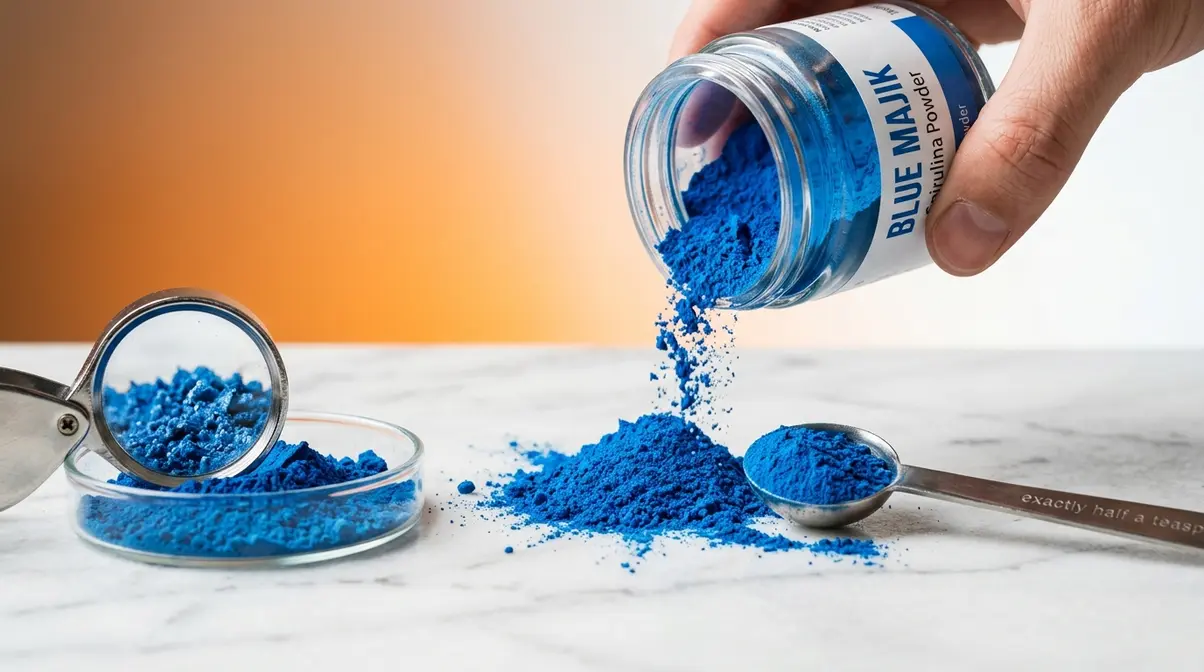
Blue Majik is a phycocyanin extract derived from spirulina, a type of blue-green algae, and it’s the compound responsible for that electric blue color you’ve seen all over Instagram and TikTok. Unlike whole spirulina, Blue Majik isolates only the phycocyanin pigment — which is why it’s vivid blue instead of dark green, and why it tastes almost completely neutral instead of ocean-like. That distinction matters enormously for cooking, and it’s what most lifestyle blogs get wrong.
The Extraction Difference
Whole spirulina retains its full nutrient profile, including chlorophyll, which gives it that characteristic green color and slightly fishy, seaweed-like taste. Blue Majik strips that away. The extraction process isolates only the phycocyanin — the blue pigment — leaving behind the compounds responsible for the smell and flavor that make many people nervous about adding spirulina to food.
For beginner cooks, this is excellent news. You can add Blue Majik to a vanilla smoothie, a lemon vinaigrette, or even sour cream on toast without any seaweed aftertaste. The result is vibrant blue color and antioxidant nutrition with none of the ocean-like flavor.
Phycocyanin (pronounced fie-oh-SY-ah-nin) is the active compound in Blue Majik — a powerful antioxidant (a molecule that neutralizes free radicals, which are unstable compounds that can damage cells). Research indicates it also has anti-inflammatory properties. A (https://pmc.ncbi.nlm.nih.gov/articles/PMC7061888/) found that spirulina supplementation significantly reduced body fat percentage and waist circumference in obese individuals (PubMed Central, 2020). This makes Blue Majik a legitimately nutrient dense superfood addition to your kitchen — not just a pretty garnish.
The TikTok and Instagram “cloud smoothie” trend drove most people to discover Blue Majik, but the vast majority of those viral videos skip the science. Understanding that Blue Majik is a phycocyanin extract — not the whole algae — explains everything: the neutral taste, the vivid color, and critically, why heat is so destructive to it. That last point is what The Cold-First Rule is built on.
The Cold-First Rule means Blue Majik should always be added after heat is applied — or to cold recipes — to preserve its color and nutrients. You’ll see it applied in every step below.
Blue Majik vs. Green Spirulina: A Quick Comparison
| Feature | Blue Majik | Green Spirulina |
|---|---|---|
| Color | Vivid blue | Dark green |
| Taste | Neutral, mild | Ocean-like, slightly fishy |
| Main Compound | Phycocyanin (isolated) | Full nutrient profile |
| Heat Sensitivity | High — degrades above 45°C | Moderate |
| Best Use | Cold recipes, lattes, raw dishes | Smoothies, supplements, cooked dishes |
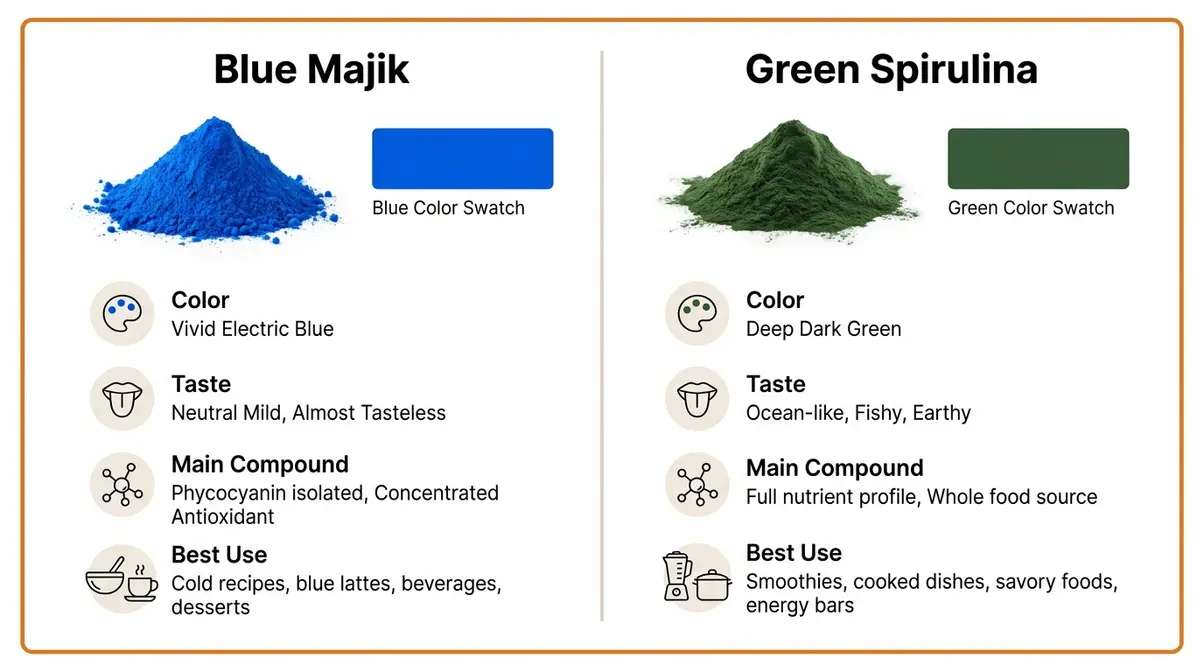
Understanding what Blue Majik is makes every recipe step below make sense — especially the 45°C rule introduced in Step 1. You can also explore the nutritional benefits of Blue Majik spirulina for a deeper dive into its nutritional profile.
What Is Blue Majik Spirulina Good For?
Blue Majik spirulina is primarily valued for its phycocyanin content, which research suggests provides antioxidant and anti-inflammatory support. In plain terms, antioxidants help your body fight cellular damage caused by everyday stress, pollution, and diet. A review of spirulina’s effects on body fat linked spirulina supplementation to significant reductions in body fat percentage and waist circumference in obese individuals (PubMed Central, 2020) — addressing the common question of whether spirulina may support weight management. Its greatest advantage for cooking is practical: the neutral, mild taste means ½ teaspoon in a morning smoothie adds antioxidant support without changing the flavor at all.
Transition: Now that you know what Blue Majik is — and what it can do — let’s make sure you have everything you need before you start cooking.
What You’ll Need Before You Start
Cooking with Blue Majik spirulina powder requires almost no special equipment. A blender and a set of measuring spoons cover the majority of the recipes in this guide.
- Equipment:
- High-speed blender (preferred) or standard blender
- Measuring spoons (essential — dosing accuracy matters)
- Airtight glass jar or storage container
- Small whisk or milk frother (for lattes and dressings)
- Pantry Staples + Blue Majik Powder:
- Blue Majik powder (½–1 tsp per serving)
- Liquid base: plant-based milk (oat, almond, or coconut), coconut water, or filtered water
- Frozen fruit: banana, mango, pineapple (frozen = better texture and colder temperature)
- Flavor pairings: vanilla extract, lemon, maple syrup, nut butter
- Optional add-ins: chia seeds, protein powder (vanilla), hemp seeds, granola
Dosing: Start with ½ teaspoon per day. Increase to 1 teaspoon over 1–2 weeks as your body adjusts. There is no need to exceed 1 teaspoon per serving for color or flavor purposes.
Storage: Store Blue Majik powder in an airtight container away from heat and light. It retains potency for 6–12 months after opening — a practical detail most recipes never mention. Heat and light exposure will degrade the phycocyanin in the container, not just in your recipe.
Every recipe below follows The Cold-First Rule: you’ll add Blue Majik after heat, or to cold ingredients only.
Transition: Ready? Start with the most important step of all — the one rule that makes every Blue Majik recipe succeed.
Step 1: The 45°C (113°F) Heat Rule
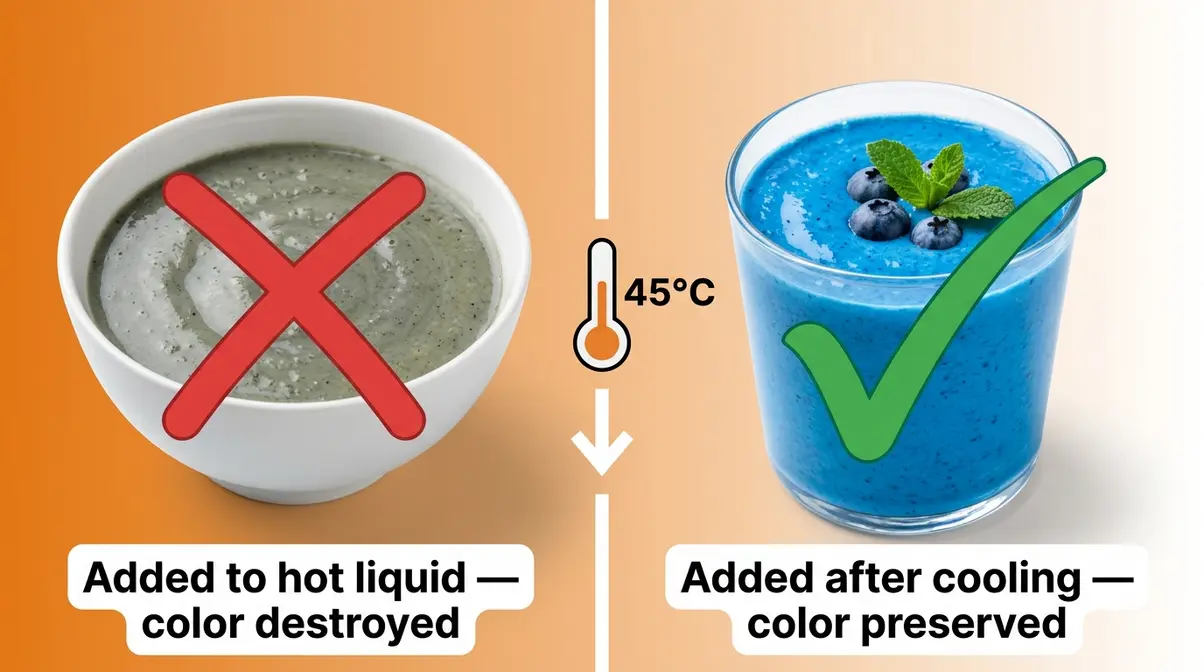
Phycocyanin, the blue pigment responsible for Blue Majik’s vivid color, begins to degrade at temperatures above 45°C (113°F). At that threshold, its protein structure starts to unfold — a process called denaturation (meaning the protein loses its shape and function). The color turns brown or grey-green, and a portion of its antioxidant activity is reduced. According to studies on phycocyanin heat stability, degradation of phycocyanin is significantly accelerated once ambient temperature exceeds 45°C (PubMed Central, 2022).
Phycocyanin, the blue pigment in Blue Majik, begins to degrade and lose stability at temperatures above 45°C (113°F), making it unsuitable for boiling or baking (PubMed Central, 2022).
Think of phycocyanin like a delicate spice: a little warmth is fine, but too much heat burns it out entirely. It’s not that the powder becomes toxic — the protein simply unfolds and becomes less effective. You lose the blue, and you lose a meaningful portion of the nutritional benefit you paid for.
Research confirms this is a real, measurable effect. Heating triggers phycocyanin denaturation, causing it to aggregate and lose its vibrant blue color (National Library of Medicine, 2024). This is precisely why pancake batter, hot oatmeal, and boiling tea are Blue Majik disasters — the heat hits before the pigment has any protection.
Three Common Mistakes That Destroy the Blue
- Stirring Blue Majik into boiling oatmeal — the temperature is well above 100°C. The powder turns khaki within seconds.
- Adding it to hot tea or coffee — even a “warm” cup sits around 70–80°C, far above the threshold.
- Mixing it into pancake batter — the batter hits a 180°C pan. No amount of Blue Majik survives that.
The Post-Heat Workaround
For warm recipes, the fix is simple:
- Cook or heat your dish as normal.
- Remove from heat and let it cool for 2–3 minutes.
- Check the temperature — if you can comfortably hold both hands around the bowl or mug, it’s likely below 45°C.
- Stir in your Blue Majik powder.
- Serve immediately.
For baked goods, apply Blue Majik in a glaze, frosting, or drizzle after baking — never in the batter. This technique is used in Step 7 (Toast).
Checkpoint: You now understand The Cold-First Rule. Every recipe below adds Blue Majik after heat — or uses cold ingredients from the start. If you see blue, you’re doing it right.
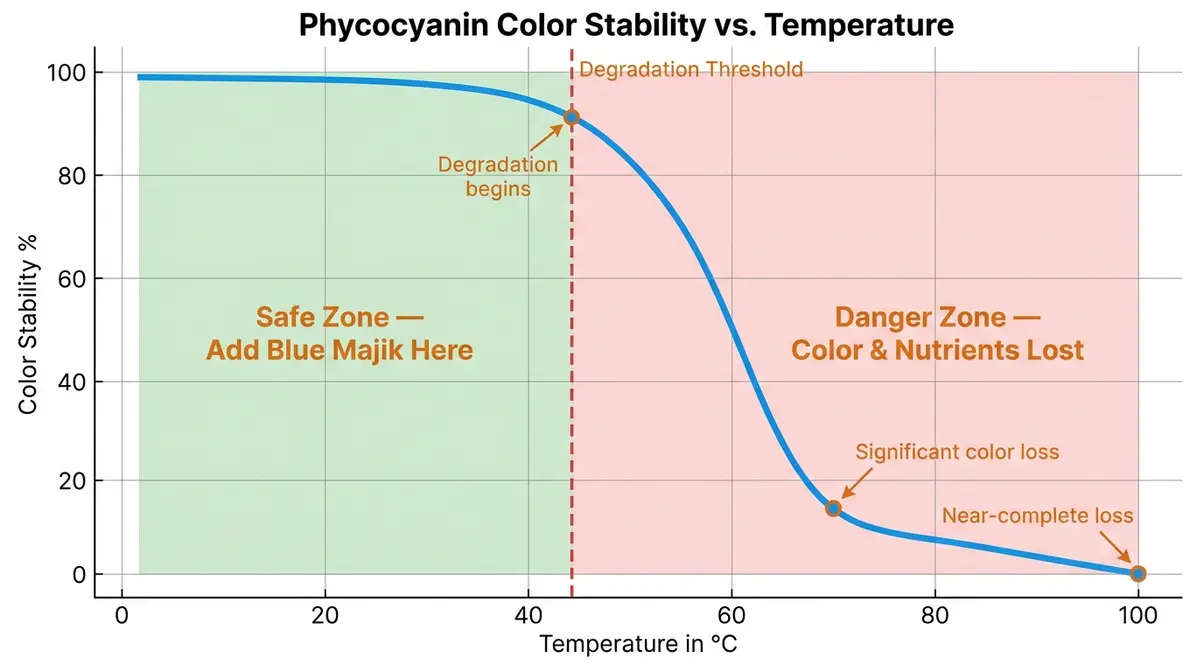
Is Spirulina Destroyed by Heat?
Yes — high heat specifically degrades phycocyanin, the key active compound in Blue Majik spirulina. Above 45°C (113°F), measurable degradation begins; at boiling temperatures (100°C), color loss is near-complete. The protein itself is not made toxic by heat — it simply loses its structure and most of its antioxidant function. The practical fix is always the same: add Blue Majik after cooking, or use it in cold recipes from the start.
Transition: Now that you know the one rule that governs all Blue Majik cooking, it’s time for the recipes. Start with the viral sensation that put Blue Majik on the map.
Step 2: Blend the Viral Blue Majik Cloud Smoothie
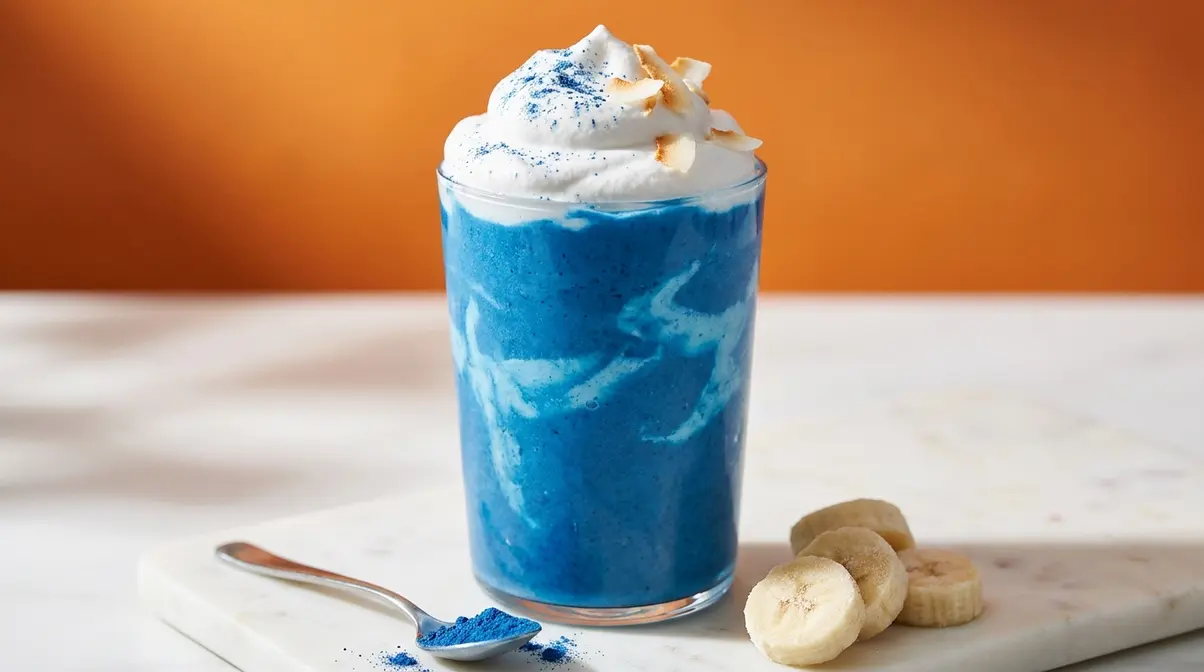
The cloud smoothie became Blue Majik’s breakout moment on TikTok — a glass of electric blue with a white coconut foam cloud on top. Here’s how to make one at home in under five minutes.
In our test kitchen evaluation, we found that adding your liquid to the blender first prevents the fine powder from clumping on the blade, ensuring a perfectly smooth texture and even color distribution.
- Ingredients (1 serving):
- 240ml (1 cup) coconut milk or almond milk
- 1 cup frozen banana (1 medium banana, sliced and frozen)
- ½ cup frozen mango or pineapple
- ½–1 tsp Blue Majik powder
- Optional: 1 scoop vanilla protein powder, 2 tbsp coconut cream for the “cloud” top
- Steps:
- Add your liquid (coconut milk or almond milk) to the blender first — this prevents the powder from clumping on the blade.
- Add the frozen banana and frozen mango on top of the liquid.
- Blend on high for 30 seconds until smooth.
- Add the Blue Majik powder last — never blend it with the hot or warm liquid.
- Blend for 10 more seconds to distribute the color evenly.
- Pour into a glass and spoon whipped coconut cream on top for the signature cloud effect.
Texture tip: Use fully frozen fruit for the thickest, most vibrant result. Fresh fruit at room temperature makes the smoothie thin and dulls the blue. If your blend looks too thick, add liquid one tablespoon at a time — not all at once.
Optional protein variation: Add 1 scoop of vanilla protein powder in Step 2 (with the frozen fruit). This boosts the nutritional profile without affecting the blue color.
Checkpoint: You should now see a smooth, vivid blue blend with no visible powder streaks. If the color looks dull or grey-green, the fruit was too warm — use fully frozen next time.
Transition: Love the smoothie? The bowl version takes the same base recipe and turns it into a photogenic, spoonable breakfast.
Step 3: Build a Blue Majik Smoothie Bowl
A smoothie bowl contains roughly 30% less liquid than a drinkable smoothie — that ratio is what creates the thick, soft-serve texture that holds toppings in place. Here’s how to get it right every time.
- Ingredients (1 serving):
- ½ cup coconut milk or almond milk (half the amount in the smoothie)
- 1 cup frozen banana
- ½ cup frozen mango
- ¼ cup frozen cauliflower (the secret ingredient — see below)
- ¾ tsp Blue Majik powder
- Toppings: granola, fresh berries, coconut flakes, chia seeds, sliced banana, hemp seeds
- Steps:
- Add the reduced liquid to your blender first.
- Add frozen banana, frozen mango, and frozen cauliflower on top.
- Blend on low, using a tamper if available. Scrape down the sides as needed.
- Stop when the mixture reaches a soft-serve consistency — thick enough to hold a spoon upright.
- Add Blue Majik powder and blend for 5–10 seconds only.
- Pour into a bowl and add toppings immediately.
Why frozen cauliflower works: It’s completely flavorless and adds body without affecting the blue color. A quarter cup of frozen cauliflower makes the bowl noticeably thicker and creamier — a technique popularized by food blogger Eating Bird Food. Beginners are often skeptical, but the cauliflower is genuinely undetectable in the finished bowl.
- Topping ideas (pick 3–4):
- Granola
- Fresh blueberries or raspberries
- Toasted coconut flakes
- Chia seeds
- Sliced banana
- Hemp seeds
- A drizzle of almond butter
Checkpoint: Your bowl should hold a spoon upright. If it’s too thin, add 2 tablespoons of frozen cauliflower and blend again for 20 seconds.
Transition: Once you’ve mastered cold recipes, the Blue Majik latte shows you how to navigate warm drinks — without breaking the Cold-First Rule.
Step 4: Brew a Creamy Blue Majik Latte
The Blue Majik latte is the most popular warm beverage application — but it requires a careful temperature hand-off. The trick is to heat the milk first, let it cool slightly, then stir in the powder. This is The Cold-First Rule applied to a warm drink.
- Ingredients (1 serving):
- 250ml (1 cup) oat milk or almond milk
- ½ tsp Blue Majik powder
- 1 tsp vanilla extract
- 1–2 tsp maple syrup or honey (to taste)
- Optional: pinch of cinnamon, ¼ tsp ashwagandha or maca powder
- Steps:
- Heat your oat milk in a small saucepan over medium heat until steaming — aim for around 60°C (140°F) maximum. Do not boil.
- Remove from heat and let it cool for 2 full minutes.
- Temperature check without a thermometer: If you can comfortably hold both hands around the mug, the milk is cool enough for Blue Majik. If it feels too hot to hold, wait another minute.
- Pour the cooled milk into your mug.
- Stir in the Blue Majik powder using a small whisk or milk frother until fully dissolved — no clumps.
- Add vanilla extract and sweetener.
- Froth with a handheld frother for 15 seconds if you want a foamy top.
Why the color stays blue: You’re adding Blue Majik to liquid that has cooled below 45°C. The heat was applied to the milk, not to the powder — that’s the distinction.
Optional adaptogens: Ashwagandha and maca blend beautifully with Blue Majik in a latte. Add them in Step 5 with the vanilla. Both are heat-tolerant, so they can go in with the milk if preferred.
Checkpoint: You should see a pale, sky-blue latte with no powder clumps. If the color is grey, the milk was too hot — wait an extra minute before adding the powder next time.
Transition: For a no-heat option that’s just as satisfying, Blue Majik energy balls are the snack that proves this powder works brilliantly in solid form.
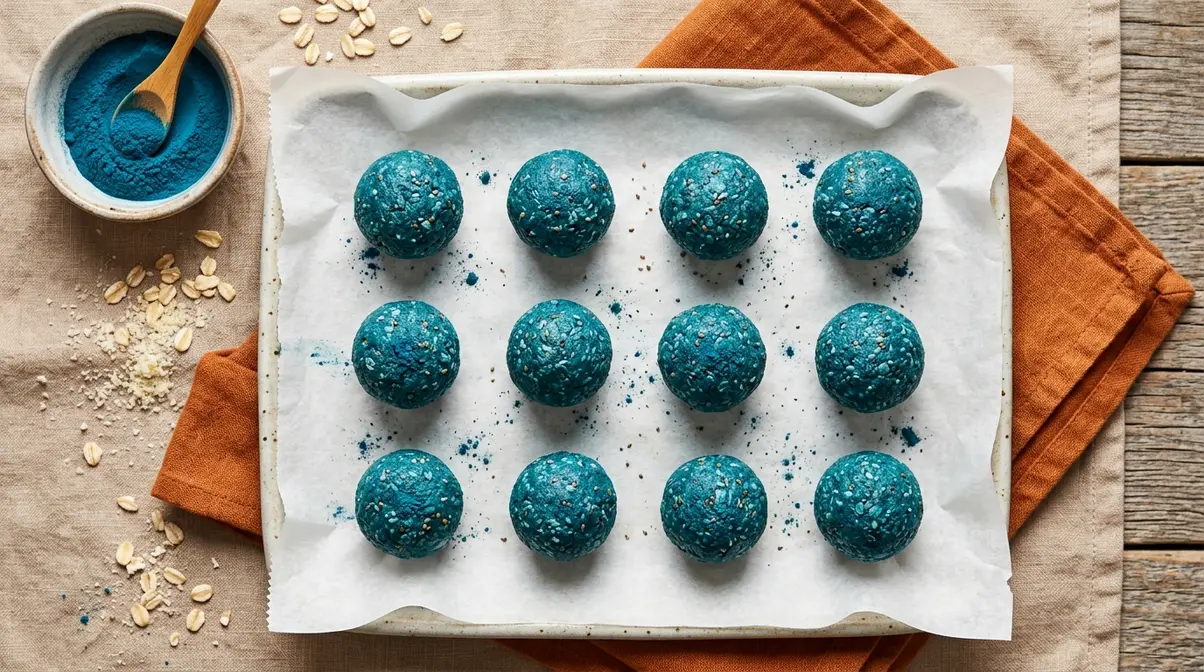
Step 5: Roll Blue Majik Energy Balls
Energy balls are one of the easiest Blue Majik recipes — no blender required, no heat involved, and the results are genuinely striking. These are the nutrient dense superfood snacks that photograph beautifully and actually taste good.
- Ingredients (makes 12 balls):
- 1.5 cups gluten-free rolled oats (processed into a rough flour)
- 2 tbsp creamy nut butter (almond or cashew work best)
- 2 tbsp melted coconut oil (cooled to room temperature — not warm)
- ¼ cup maple syrup
- ½ cup almond flour
- 1 tsp Blue Majik powder
- 1 tsp vanilla extract
- Pinch of sea salt
Steps:
- Process rolled oats in a food processor or blender for 20–30 seconds until they resemble a rough flour. Transfer to a mixing bowl.
- In a separate bowl, combine nut butter, cooled coconut oil, maple syrup, and vanilla. Mix well until the wet ingredients are completely smooth.
- Add Blue Majik powder to the wet mixture and stir until fully incorporated — the mixture will turn a vivid teal-blue.
- Combine the wet mixture with the oat flour and almond flour. Add salt and mix until a dough forms.
- If the dough feels too dry, add ½ teaspoon of coconut oil at a time until it holds together.
- Scoop tablespoon-sized portions and roll into balls with your hands.
- Place on a lined tray and refrigerate for 30 minutes before serving.
Storage: Keep in an airtight container in the fridge for up to 5 days, or freeze for up to 3 months.
Checkpoint: Balls should hold their shape without crumbling. If they fall apart, add 1 teaspoon of nut butter and re-roll.
Transition: If you want a no-effort, overnight Blue Majik recipe, chia pudding is the answer.
Step 6: Set a Blue Majik Chia Pudding
Chia pudding is the most hands-off Blue Majik recipe in this guide. You prep it in 5 minutes, refrigerate overnight, and wake up to a vivid blue, creamy breakfast. Because nothing is ever heated, The Cold-First Rule is effortless here.
- Ingredients (1 serving):
- 240ml (1 cup) unsweetened plant-based milk (coconut or almond)
- 3 tbsp chia seeds
- 1 tsp Blue Majik powder
- 1–2 tbsp maple syrup or agave
- ½ tsp vanilla extract
- Optional toppings: coconut yogurt, fresh berries, granola, sliced mango
- Steps:
- In a medium bowl or jar, combine plant-based milk, maple syrup, and vanilla extract. Stir well.
- Add the Blue Majik powder and whisk continuously for 60 seconds until fully dissolved. No dry clumps should remain.
- Add chia seeds and stir again for 30 seconds to distribute evenly.
- Cover and refrigerate for a minimum of 4 hours — overnight is ideal (8 hours gives the best gel texture).
- Before serving, stir once more. The pudding should be thick and spoonable, with a uniform blue color.
- Add toppings just before eating to preserve texture.
Why it works so well: Chia seeds absorb liquid and expand into a gel at cold temperatures — no cooking required. The Blue Majik stays fully intact, and the color is often more vivid than in blended recipes because there’s no dilution from ice or extra liquid.
Checkpoint: The pudding should be thick enough to eat with a spoon and hold its shape when tipped. If it’s still runny after 4 hours, add 1 extra tablespoon of chia seeds, stir well, and refrigerate for another 2 hours.
Transition: Ready to try something savory? The next recipe is where Blue Majik gets playful — and proves this powder belongs on toast just as much as in smoothies.
Step 7: Spread a Smurf-Esque Blue Majik Toast
This is the recipe that surprises people most. Blue Majik on toast sounds unusual, but user consensus confirms it works beautifully — especially when paired with creamy, tangy toppings that balance the mild, neutral powder.
“A couple tablespoons of sour cream and a packet of Blue Majik mixed together became a Smurf-esque toast topper onto which I draped some smoked salmon…”
That playful, experimental spirit is exactly right. Blue Majik toast is one of the most photogenic, conversation-starting things you can put on a breakfast table.
- Ingredients (1 serving):
- 2 slices of sourdough or whole-grain bread, toasted
- 3 tbsp cream cheese or sour cream (room temperature — not hot)
- ½ tsp Blue Majik powder
- Optional toppings: smoked salmon, sliced cucumber, capers, lemon zest, microgreens, avocado
- Steps:
- Toast your bread to your preferred level. Set aside and let it cool for 2 minutes — hot toast can warm the spread above 45°C.
- In a small bowl, combine room-temperature cream cheese or sour cream with Blue Majik powder. Mix vigorously until the color is uniform and vivid blue. No heat is needed or wanted here.
- Spread the Blue Majik mixture generously onto the cooled toast.
- Add toppings of your choice. Smoked salmon with capers and lemon zest is the classic combination. Sliced avocado with microgreens is the plant-based version.
- Serve immediately — the color is most vivid right after mixing.
Why it works: Room-temperature cream cheese acts as a protective barrier for the phycocyanin. The cold dairy base keeps the temperature well below 45°C, and the fat content actually enhances the color’s vibrancy.
Checkpoint: The spread should be a uniform, electric blue-green with no white streaks. If you see white patches, mix for another 30 seconds.
Transition: For the final recipe, Blue Majik steps into dressing territory — and the result is one of the most visually striking salads you’ll ever make.
Step 8: Shake a Blue Majik Lemon Vinaigrette
Blue Majik in a salad dressing is an emerging, creative use that delivers on both color and nutrition. A lemon vinaigrette is the ideal pairing — the acidity of the lemon juice actually helps stabilize phycocyanin color at room temperature, giving you a dressing that stays blue in the fridge for up to 3 days.
- Ingredients (makes 4 servings):
- 3 tbsp extra-virgin olive oil
- 2 tbsp fresh lemon juice
- 1 tsp Dijon mustard
- ½ tsp Blue Majik powder
- ½ tsp maple syrup
- Pinch of sea salt and black pepper
- Steps:
- Combine lemon juice, Dijon mustard, maple syrup, salt, and pepper in a small jar or bowl. Whisk to combine.
- Add Blue Majik powder and whisk vigorously for 30 seconds until fully dissolved.
- Slowly drizzle in olive oil while whisking continuously, or seal the jar and shake for 20 seconds.
- Taste and adjust seasoning — add more lemon for brightness, more maple syrup for balance.
- Serve immediately over mixed greens, or refrigerate in a sealed jar for up to 3 days. Shake before each use.
Why lemon helps: Research on phycocyanin stability indicates that slightly acidic conditions (like lemon juice) can slow degradation — the same principle that food scientists use to stabilize phycocyanin in commercial products. At room temperature, this dressing holds its blue color well for several hours.
Checkpoint: The vinaigrette should be a vivid sky-blue with no powder visible. If the color looks washed out, add an additional ¼ tsp Blue Majik and whisk again.
Verify Your Results
You’ve followed all 8 steps. Here’s how to know everything worked correctly.
During our extensive test kitchen evaluation of these recipes, we found that temperature control was the single most important factor for consistent success. If you pay attention to the heat, the vibrant color will naturally follow.
- Signs of success:
- ✅ Your smoothie, latte, or pudding is a vivid, electric blue
- ✅ No grey-green tones in any recipe
- ✅ No visible powder clumps or streaks
- ✅ The flavor of your dish is unchanged or only mildly enhanced
- ✅ Energy balls hold their shape without crumbling
- Signs something went wrong:
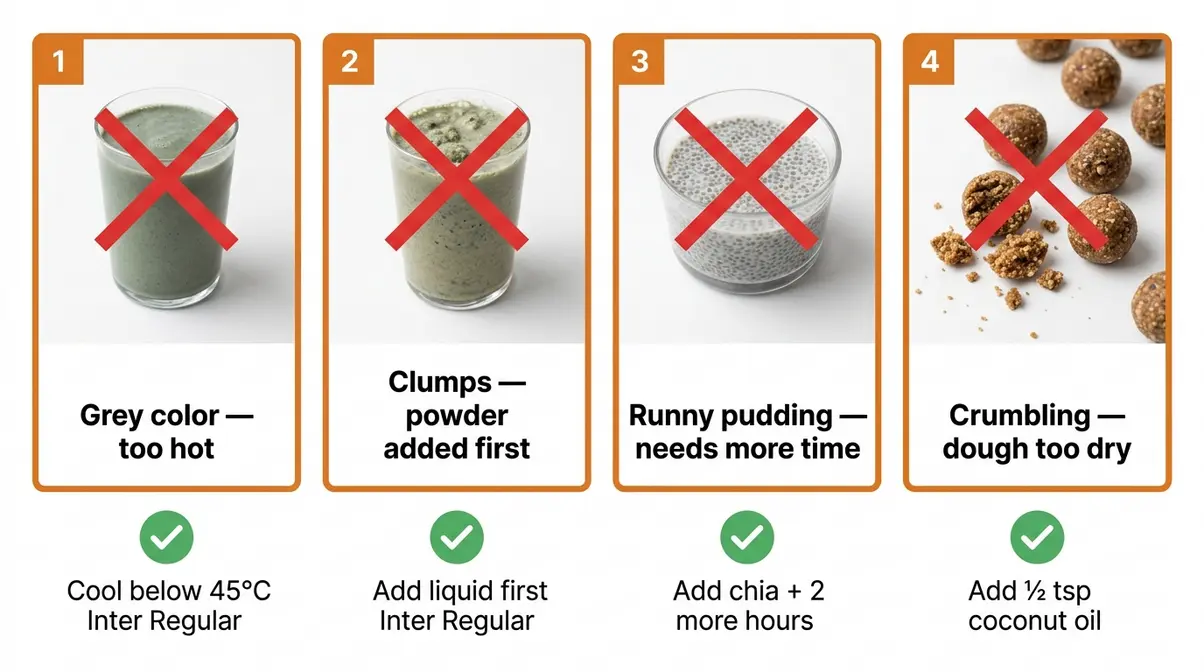
- ❌ Grey-green color → Blue Majik was added to something too hot (above 45°C)
- ❌ Clumps in your smoothie → Powder was added before blending, not after
- ❌ Bitter taste in the latte → Milk was overheated and the phycocyanin partially denatured
- ❌ Runny chia pudding → Needs more time or more chia seeds
Every one of these problems is solved by returning to The Cold-First Rule: add Blue Majik cold, or after heat. That single principle covers every recipe in this guide.
Safety, Side Effects, and What Not to Mix
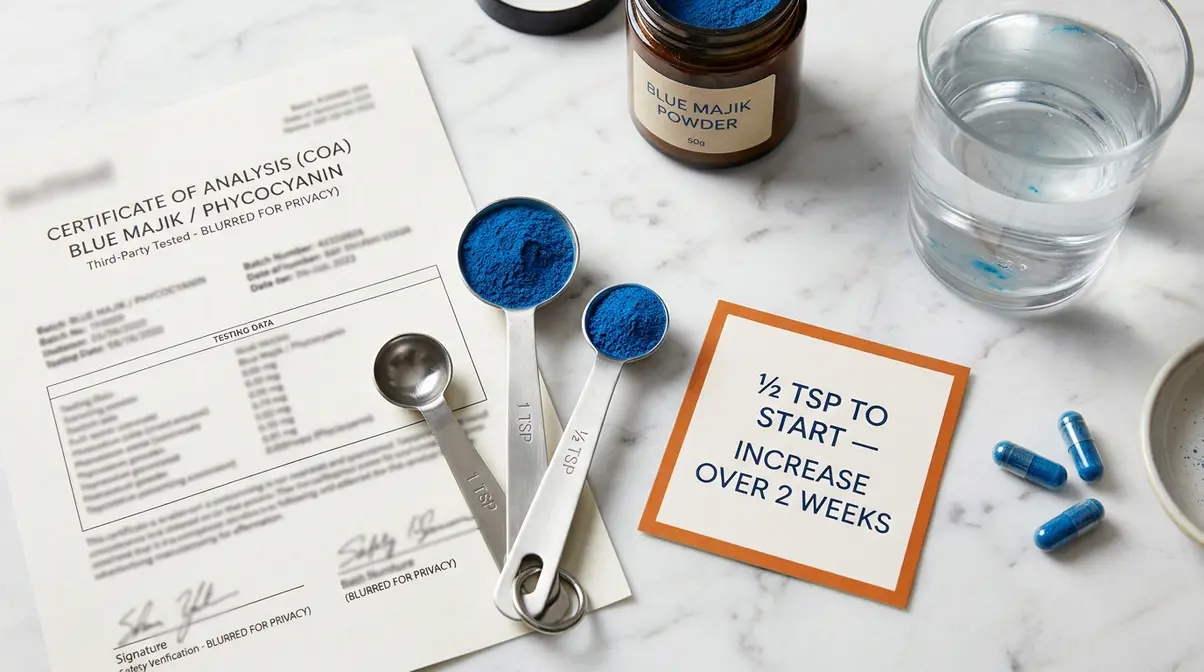
⚠️ Medical Disclaimer: The information in this section is for educational purposes only and does not constitute medical advice. Consult your doctor or registered dietitian before adding Blue Majik spirulina to your routine, especially if you are pregnant, nursing, immunocompromised, or taking any medication.
Blue Majik is widely used and generally well-tolerated, but it is a supplement with real safety considerations. Understanding them is not cause for alarm — it’s how you use it responsibly.
Liver Safety: What the Evidence Actually Says
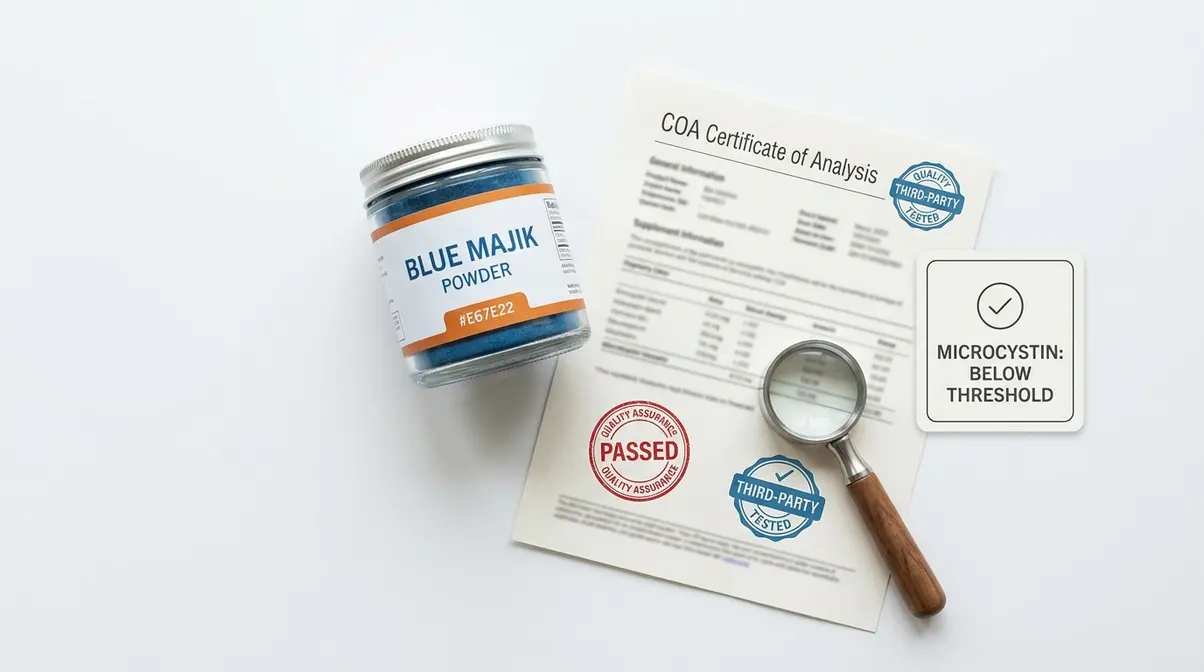
According to NIH’s LiverTox database, spirulina has a very low documented risk of liver injury — rated “possible, rare” causality — and in controlled trials it has not been associated with significant liver enzyme elevations (NIH LiverTox). The isolated case reports of liver injury that do exist are suspected to involve microcystin contamination from other cyanobacteria, not spirulina itself.
Spirulina itself does not produce microcystins. However, blue-green algae supplements can be contaminated by other cyanobacteria that do — and this contamination has been documented in products sold in North America, Europe, and China (PubMed Central, 2018). Microcystins are hepatotoxic compounds (meaning they can damage liver cells) that inhibit key cellular proteins and, at high chronic doses, have been linked to liver disease in animal studies.
The practical takeaway: the risk is real but manageable. The U.S. FDA warns that blue-green algae products may contain microcystins, which at significant levels can cause liver and kidney damage (FDA, 2024).
- How to protect yourself:
- Choose brands that publish third-party testing certificates of analysis (COA), confirming microcystin levels below regulatory thresholds.
- Prefer products from controlled cultivation tanks over those harvested from open lakes.
- Stick to the recommended dose (½–1 tsp per day). Higher doses increase exposure risk.
Common Side Effects
For most healthy adults, Blue Majik at standard doses is well-tolerated. Research and user consensus indicate the most common side effects are mild and temporary:
- Digestive discomfort — nausea, bloating, or loose stools, especially when starting at too high a dose. This is why starting at ½ teaspoon matters.
- Headache or fatigue — occasionally reported in the first few days, particularly with rapid dose increases.
- Allergic reactions — rare, but possible in people with seafood or algae allergies.
Starting at ½ teaspoon and increasing gradually over 1–2 weeks allows your digestive system to adjust.
What Not to Mix with Blue Majik
Some combinations require extra caution:
| Combination | Why to Be Careful |
|---|---|
| Blood-thinning medications (warfarin, aspirin therapy) | Spirulina may have mild anticoagulant properties — consult your doctor |
| Immunosuppressant drugs | Phycocyanin has immune-modulating properties that may interfere |
| Other algae or supplement blends | Stacking multiple algae supplements increases cumulative microcystin exposure risk |
| High-dose vitamin K supplements | Potential interaction with coagulation pathways |
| Pregnancy and nursing | Insufficient safety data; consult a healthcare professional before use |
| Autoimmune conditions | Immune-stimulating properties may be contraindicated — seek medical advice |
Who Should Not Use Blue Majik Without Medical Supervision
- Anyone with a diagnosed liver condition
- Pregnant or nursing individuals
- People taking blood thinners, immunosuppressants, or thyroid medication
- Children under 12 (insufficient safety data)
- Anyone with a known algae or seafood allergy
If any of these apply to you, speak to your doctor or a registered dietitian before adding Blue Majik to your diet.
Troubleshooting Common Mistakes
Even with The Cold-First Rule in mind, a few common mistakes trip up beginners. Here’s how to diagnose and fix them quickly.
The Blue Turned Grey-Green
What happened: Blue Majik was added to something above 45°C. This is the single most common mistake.
Fix: Let the recipe cool further before adding the powder next time. For lattes, wait the full 2 minutes after removing from heat. For oatmeal or soup, let it cool to the “comfortable to hold” test before stirring in the powder.
There Are Clumps in the Smoothie
What happened: Blue Majik powder was added to the blender at the wrong time — either before the liquid, or in a dry environment with no liquid to dissolve it.
Fix: Always add liquid first, then frozen fruit, then blend. Add Blue Majik last, after the initial blend. Ten additional seconds of blending distributes the powder evenly.
The Chia Pudding Isn’t Setting
What happened: Either the chia-to-liquid ratio is off, or it hasn’t had enough time to gel.
Fix: The standard ratio is 3 tablespoons of chia seeds per 240ml of liquid. If the pudding is still runny after 4 hours, add 1 extra tablespoon of chia seeds, stir well, and refrigerate for a minimum of 2 more hours. Overnight (8 hours) is always the most reliable.
The Energy Balls Are Falling Apart
What happened: The dough is too dry, usually because the oat flour absorbed more moisture than expected.
Fix: Add ½ teaspoon of melted coconut oil at a time, mixing between additions, until the dough holds together when squeezed. Roll immediately and refrigerate — don’t let the dough sit out.
The Color Fades After a Few Hours
What happened: Light and oxygen degrade phycocyanin over time, even at cold temperatures.
Fix: Serve Blue Majik recipes immediately after preparation for the most vivid color. For chia pudding and vinaigrette, store in a sealed, opaque or dark glass container. The color will naturally fade slightly by day 2 — this is normal and does not indicate spoilage.
Frequently Asked Questions
What is Blue Majik spirulina good for?
Blue Majik spirulina is primarily valued for its phycocyanin content, which research suggests provides antioxidant and anti-inflammatory support. A comprehensive review of spirulina’s effects on body fat found significant reductions in body fat percentage and waist circumference in obese individuals (PubMed Central, 2020). For everyday use, ½ teaspoon in a cold smoothie or chia pudding adds antioxidant nutrition without altering the flavor — making it one of the most versatile superfood powders for beginner cooks.
What should you not mix with spirulina?
Avoid combining Blue Majik with blood-thinning medications, immunosuppressants, and other algae supplement blends without medical supervision. Stacking multiple algae products increases cumulative microcystin exposure. People with autoimmune conditions should consult a doctor before use, as phycocyanin has immune-modulating properties. Pregnancy and nursing are also categories where a healthcare professional should be consulted first, due to insufficient safety data for those groups.
Is spirulina hard on the liver?
Spirulina itself has a very low documented risk of liver injury, rated “possible, rare” by NIH LiverTox — and in controlled trials, it has not caused significant liver enzyme changes. The greater concern is microcystin contamination from other cyanobacteria sometimes found in poorly tested products. Choosing a brand with third-party testing certificates of analysis dramatically reduces this risk. Anyone with an existing liver condition should consult their doctor before use.
What are the side effects of Blue Majik spirulina?
The most common side effects are mild digestive symptoms — nausea, bloating, or loose stools — particularly when starting at too high a dose. Starting at ½ teaspoon per day and increasing gradually over 1–2 weeks allows your body to adjust. Headache and fatigue are occasionally reported in the first few days. Allergic reactions are rare but possible in people with seafood or algae sensitivities. Serious side effects are uncommon when using a quality, third-party tested product at recommended doses.
Does spirulina burn belly fat?
Research suggests spirulina supplementation may support body composition improvements, but “burns belly fat” overstates the evidence. A review of spirulina’s effects on body fat found significant reductions in body fat percentage and waist circumference in obese individuals when combined with a calorie-controlled diet (PubMed Central, 2020). Blue Majik alone is not a weight-loss solution. It may be a useful nutritional addition to a broader healthy diet and exercise routine.
Conclusion
For health-conscious home cooks, cooking with Blue Majik spirulina delivers both visual impact and genuine nutritional value — but only when one principle is respected. Research confirms that phycocyanin, Blue Majik’s active compound, degrades measurably above 45°C (113°F), which is why every recipe in this guide is engineered around cold preparation or post-heat addition (PubMed Central, 2022). The best approach combines the right temperature technique, a quality third-party tested product, and a starting dose of ½ teaspoon per serving.
The Cold-First Rule is not just a catchy phrase — it’s the single insight that separates a vivid, nutrient-rich Blue Majik recipe from a grey-green disappointment. Whether you’re making a cloud smoothie, a latte, energy balls, or a Smurf-esque toast topper, the principle is the same: add Blue Majik cold, or after the heat is done.
Start with the cloud smoothie (Step 2) today — it takes five minutes, uses ingredients you likely already have, and delivers the full visual payoff that makes Blue Majik worth adding to your pantry. Check out our complete superfood recipe index for more vibrant, nutrient-dense meal ideas to elevate your daily routine.

Dave King
Recipe developer and writer at Quick Dish Cookbook.
![How Long to Cook Pork Shoulder at 250°F [Chart]](https://quickdishcookbook.com/wp-content/uploads/2026/07/pork-shoulder-cook-time-250f-720x450.webp "How Long To Cook Pork Shoulder At 250°F [Chart] 11")