
What’s in this guide
- What Makes a Meal Truly "Done in 15 Minutes"?
- 5 Speed-Cooking Techniques to Cut Time
- 1. "Too Tired to Cook" Easy 15-Minute Meals
- 2. Emergency Pantry Easy 15-Minute Dinners
- 3. Cowboy Skillet Easy 15-Minute Meals
- 4. Heart-Healthy 15-Minute Dinners
- 5. Quick Vegan 15-Minute Meals
- Your Zero-Effort Weeknight Game Plan
- Limitations and Common Mistakes
- Frequently Asked Questions
- The Fastest Path to Dinner, Starting Tonight
It’s 6 PM. You’re standing in front of the open fridge, staring at leftovers and a half-empty jar of pasta sauce, and your brain has completely checked out. Sound familiar? That mental spiral — What do I even make? — is exactly how a tired Tuesday ends in a $40 takeout order you didn’t really want.
“These 15-minute dinner recipes are designed for busy families who need quick weeknight meals without a lot of fuss, prep or stress.”
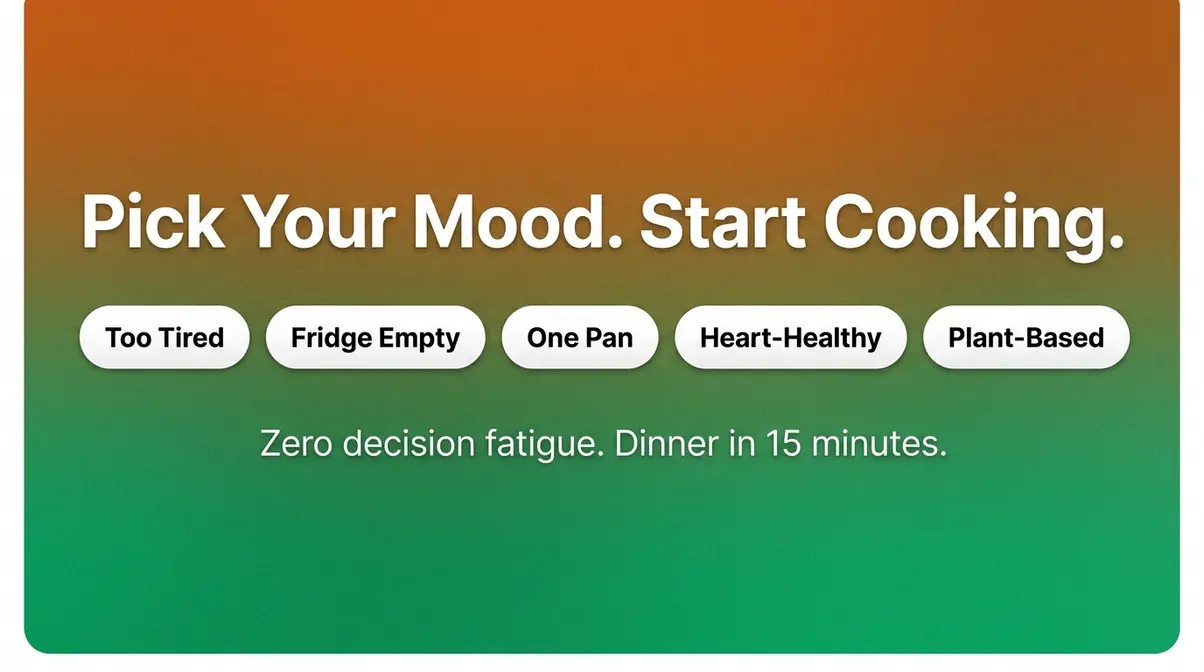
This guide gives you 35 easy 15-minute meals organized by how tired you actually are — so you never stare blankly at the fridge again. You’ll find ultra-lazy noodle dishes, emergency pantry rescues, one-pan cowboy meals, heart-healthy options, and fast vegan dinners. Pick your mood. Start cooking.
Quick Picks: Your 15-Minute Dinner by Mood
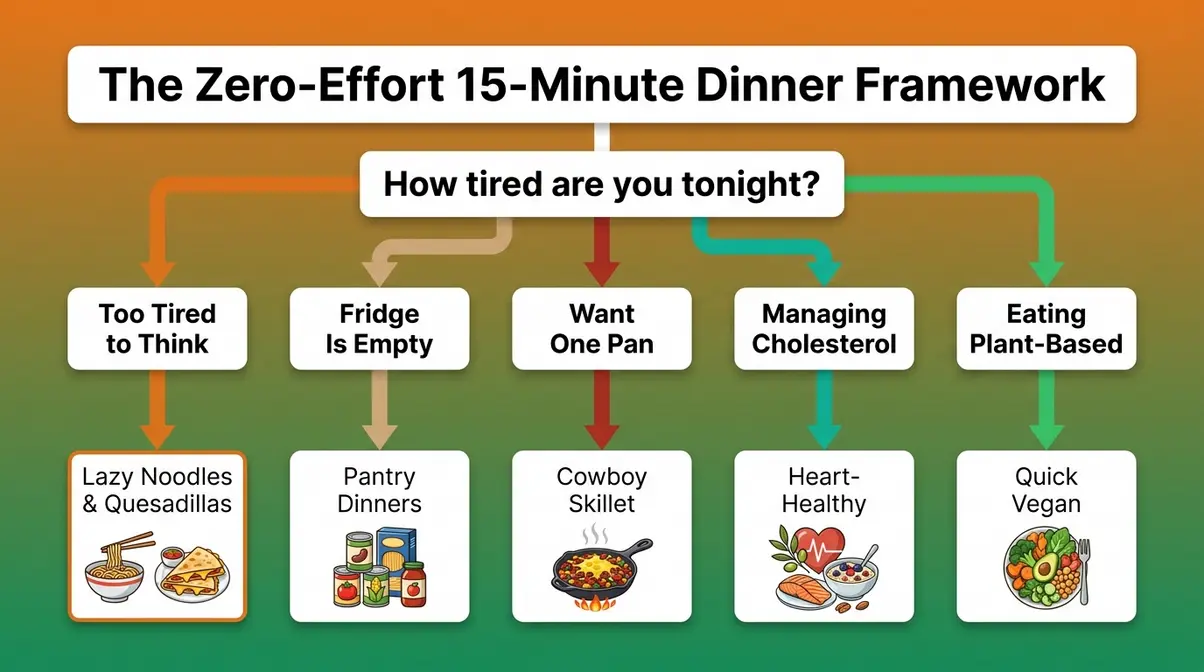
Using The Zero-Effort 15-Minute Dinner Framework — choose your emotional state, skip the decision fatigue, and make 15 minute meals easy:
Too Tired to Think? → Section 1: 9 ultra-lazy meals (peanut butter noodles, quesadillas, fried rice)
Fridge Is Empty? → Section 2: 8 pantry-only dinners (pasta aglio e olio, chickpea curry)
Want One Pan? → Section 3: 6 Cowboy Skillet meals (ground beef skillet, chorizo scramble)
Managing Cholesterol? → Section 4: 6 heart-healthy options (broiled tilapia, bean soup)
Eating Plant-Based? → Section 5: 6 quick vegan meals (miso mushroom pasta, spiced chickpeas)
- Estimated Time: 15 minutes
- Tools/Materials Needed:
- Large skillet or frying pan
- Microwave
- Cutting board and chef’s knife
- Digital instant-read meat thermometer
- Basic cooking utensils
What Makes a Meal Truly “Done in 15 Minutes”?
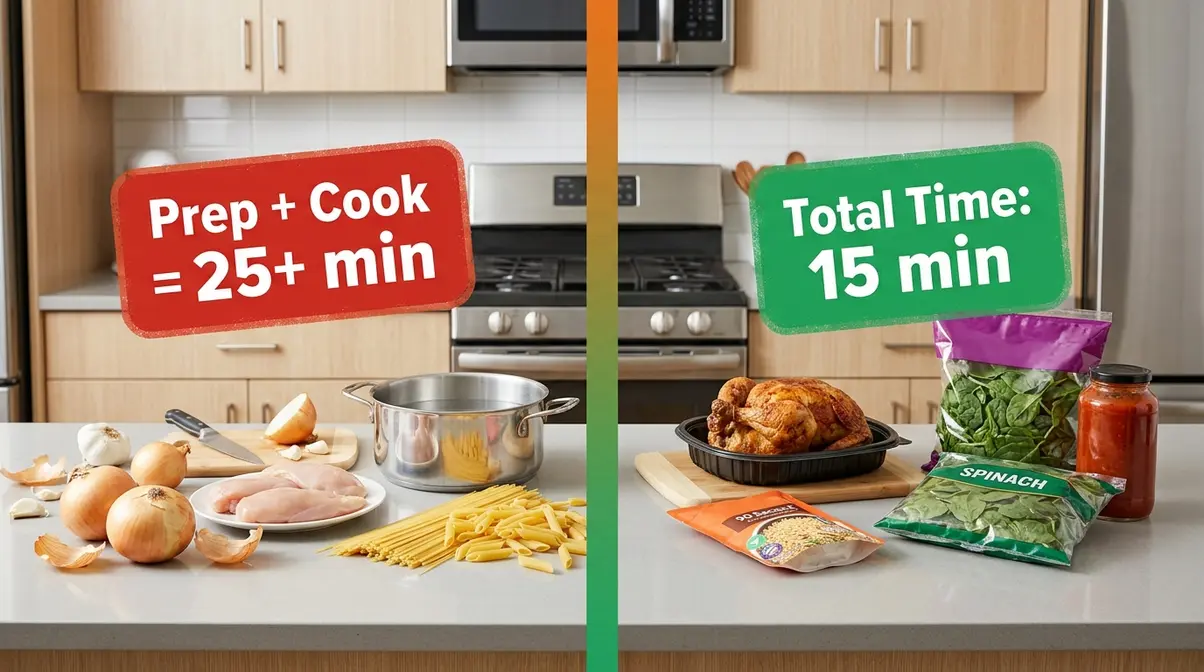
A true 15-minute meal is one where cooking and prep take 15 minutes combined — not just the stovetop time. That distinction matters. Many recipes claim 15 minutes but quietly assume you’ve already chopped the onion, thawed the chicken, and boiled a pot of water. Shortcut ingredients like rotisserie chicken (a pre-cooked whole chicken sold at most grocery stores, ready to pull apart in seconds) and 90-second microwave rice pouches cut 10 or more minutes of prep before you ever touch the stove.
According to the U.S. Bureau of Labor Statistics’ American Time Use Survey, Americans spend roughly 40 minutes per day on food preparation and cleanup (BLS, 2026). A genuine 15-minute dinner cuts that nearly in half — and on a weeknight when you’re already running on empty, that gap is everything.
Making 15 minute meals easy is the core problem most “quick dinner” guides miss: the real obstacle isn’t cooking skill — it’s decision fatigue. Opening the fridge and going blank is what sends people to DoorDash. The solution isn’t more recipe variety. It’s pre-sorted categories you can grab without thinking.
That’s exactly what The Zero-Effort 15-Minute Dinner Framework solves. It’s a system for choosing a 15-minute meal based on your emotional state at dinnertime, not the ingredients in your fridge. Instead of scrolling through 200 recipes, you answer one question — How tired am I right now? — and land in one of five categories: Too Tired to Cook, Emergency Pantry, Cowboy Skillet, Heart-Healthy, or Quick Vegan. No competitor guide organizes meals this way. To explore easy 15-minute meal ideas and start with just three beginner-friendly recipes, that’s a solid first stop.
What Is a True 15-Minute Meal?
A 15-minute meal means total time from fridge to table — not just cook time. The clock starts the moment you open the refrigerator door, not when you turn on the stove. Many recipes advertise a 15-minute cook time but require 20 minutes of prep: dicing onions, marinating protein, boiling a full pot of water from cold.
Three types of ingredients make any meal genuinely faster. First, pre-cooked proteins — rotisserie chicken (deli counter), canned tuna (canned goods aisle), and canned beans (pantry aisle) — require zero cooking time. Second, quick-cook starches — thin pasta (cooks in 6–8 minutes), instant rice pouches (90 seconds in the microwave), and fresh pasta (canned goods or refrigerated aisle, 3 minutes) — replace 18-minute stovetop rice. Third, pre-washed vegetables — bagged spinach, shredded coleslaw mix, and pre-cut stir-fry vegetable bags — eliminate washing and chopping entirely.
What a 15-minute meal is not: any recipe requiring a food processor, a marinade started hours earlier, or a cook time over 12 minutes paired with 10 minutes of prep. Pesto pasta with rotisserie chicken, for example, takes about 12 minutes total — the pasta boils while you pull the chicken apart and toss it with jarred pesto.
3 Rules of 15-Minute Cooking
Every fast weeknight dinner follows three rules. Apply these to any recipe before you start, and you’ll know in 10 seconds whether it actually fits the 15-minute window.
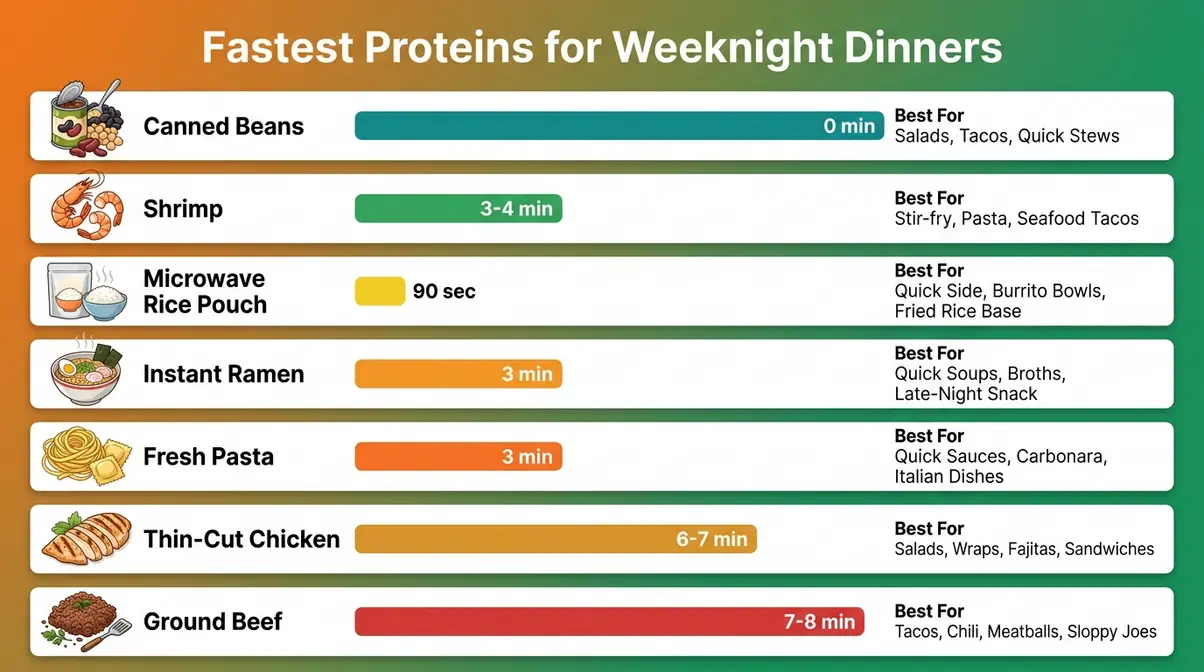
Rule 1 — Choose a protein that cooks in under 8 minutes. Shrimp takes 3–4 minutes in a hot pan. Thin-cut chicken breast (sliced into 1-inch pieces) takes 6–7 minutes. Ground beef browns in 7–8 minutes. Canned beans need zero minutes — they’re already cooked. These are your quick weeknight meals building blocks.
Rule 2 — Use a shortcut starch. Microwave rice pouches (Uncle Ben’s, Seeds of Change, store brand) are done in 90 seconds versus 18 minutes on the stovetop. Fresh pasta cooks in 3 minutes. Instant ramen noodles cook in 3 minutes. Pre-cooked lentils from a pouch need 0 minutes.
- Here is a quick reference for ingredient cook times and their best uses:
- Canned beans: 0 min (heat only) — Best for curries, soups, quesadillas
- Shrimp (medium, thawed): 3–4 min — Best for stir-fries, tacos, pasta
- Microwave rice pouch: 90 sec — Best for any grain-based bowl
- Instant ramen noodles: 3 min — Best for noodle bowls, soups
- Fresh pasta: 3 min — Best for pesto dishes, cream sauces
- Thin-cut chicken breast: 6–7 min — Best for skillets, wraps
- Ground beef: 7–8 min — Best for tacos, skillets, pasta
Rule 3 — Prep while the pan heats. The 2–3 minutes your skillet takes to reach cooking temperature is free prep time. Chop garlic, open cans, measure spices, shred rotisserie chicken. A ground beef taco skillet, for example, runs like this: pan heats (3 min) while you open the seasoning packet and drain the beans → beef goes in (7–8 min) while you warm the tortillas → plate and serve. Total: 13–14 minutes. To understand the benefits of quick meals and why this approach works for long-term weeknight sanity, that resource breaks it down clearly.
5 Speed-Cooking Techniques to Cut Time
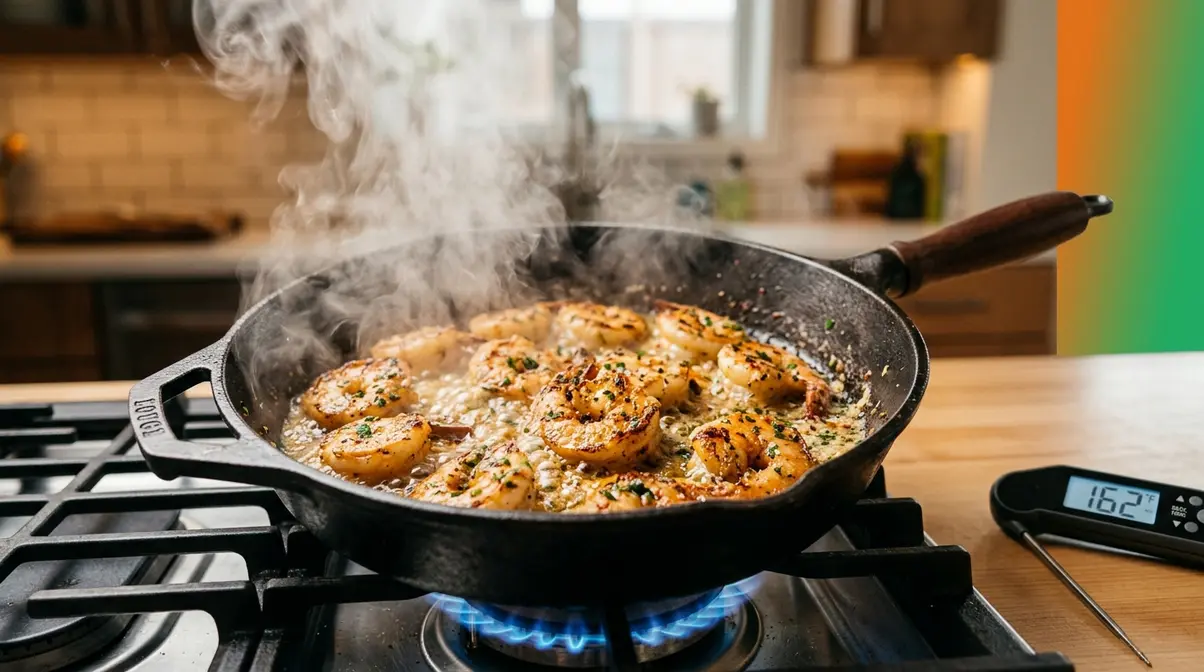
These five techniques are the reason making 15 minute meals easy actually works in practice, ensuring your dinner stays at 15 minutes. You don’t need culinary training. You need a hot pan, the right shortcuts, and a meat thermometer.
Home cooks consistently report that learning even one or two of these techniques cuts their weeknight cooking time by 30–50%. Here’s how each one works.
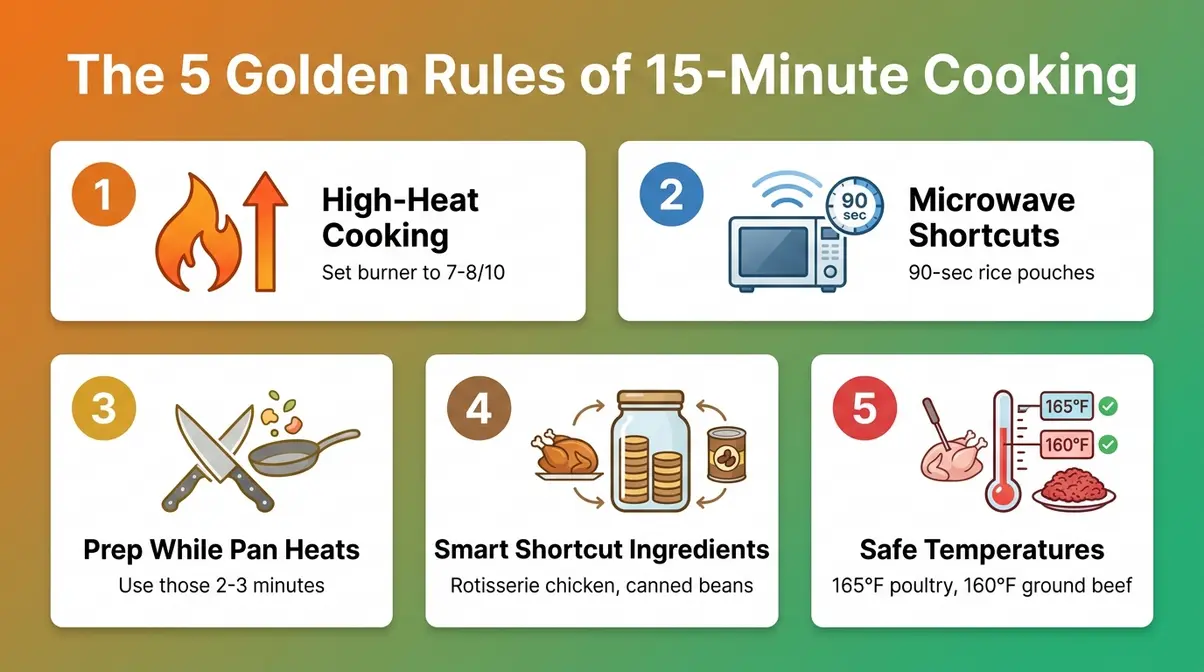
1. High-Heat Cooking — Your Fastest Friend
High heat on a home stove means setting your burner to 7–8 out of 10. You’ll know it’s ready when a drop of water hits the pan and dances and evaporates within 1–2 seconds. That temperature is your biggest time-saver.
The science behind it is simple: high heat triggers the Maillard reaction — the chemical process that creates a browned, flavorful crust on food and makes it taste like it took an hour, not 10 minutes. Best proteins for high-heat cooking: shrimp (3–4 minutes), thin-sliced chicken breast cut into 1-inch cubes (6–7 minutes, down from 12+ minutes for a whole breast), and ground beef (7–8 minutes). Stir-fried shrimp with garlic butter is a complete dinner in under 4 minutes of actual cook time.
2. The Microwave and Shortcut Ingredient Hack
90-second microwave rice pouches (Uncle Ben’s, Seeds of Change, or any store brand) turn an 18-minute stovetop task into a 90-second one. That single swap saves more time than almost any other technique here.
Beyond rice: rotisserie chicken is already fully cooked — pull it apart in 60 seconds and add it to any recipe. Pre-washed bagged salad greens and pre-cut stir-fry vegetable mixes eliminate washing and chopping entirely. Jarred pasta sauces, canned chickpeas, and frozen shrimp (thaw under cold running water in 5 minutes) form the backbone of fast dinners without sacrificing flavor. Pesto pasta with rotisserie chicken: pasta boils (8 minutes) while you pull the chicken (2 minutes) and toss with jarred pesto (1 minute) = 11 minutes total.
3. Prep-as-You-Go (Mise en Place for Beginners)
Mise en place is a French cooking term meaning “everything in its place” — it just means getting all your ingredients measured and ready before you turn on the stove. For 15-minute cooking, the beginner version is simpler: prep while the pan heats, not before.
The biggest time-waster in weeknight cooking isn’t the recipe — it’s the 5-minute gap between “I should start dinner” and actually touching an ingredient. Prep-as-you-go eliminates that gap. While your skillet heats for 2–3 minutes, open cans, measure spices, chop one vegetable, shred chicken. You arrive at the cooking step fully ready. For more strategies on batching this approach across the week, learn effective meal prep strategies for Sunday prep that makes every weeknight dinner faster.
4. Smart Shortcut Ingredients
Shortcut ingredients are the engine of every recipe in this guide. They’re not cheating — they’re cooking smart. Stock these five items and you can make dinner in 15 minutes on any night:
- Rotisserie chicken (deli counter)
- Jarred pasta sauce or jarred curry paste (pasta aisle)
- Canned chickpeas, black beans, or white beans (canned goods)
- 90-second microwave rice or instant noodles
- Pre-washed baby spinach or shredded coleslaw mix (produce)
To discover quick dinner shortcuts that extend well beyond these five, that resource covers pantry-building strategies for the full 30-minute range.
5. Safe Minimum Temperatures for Rapid Cooking
Cooking fast doesn’t mean cooking unsafe. When you’re using high heat and short cook times, a meat thermometer is the one tool that removes all guesswork. The USDA Food Safety and Inspection Service publishes clear minimum internal temperatures that apply regardless of how quickly you cook. FDA Safe Food Handling guidelines and the Centers for Disease Control and Prevention agree that cooking fast requires proper temperature verification:
- Beef, pork, veal, lamb (steaks/chops): 145°F (63°C) with a 3-minute rest
- Ground beef, pork, lamb: 160°F (71°C) with no rest required
- Poultry — whole, parts, or ground: 165°F (74°C) with no rest required
- Egg dishes: 160°F (71°C) with no rest required
Sources: USDA FSIS Safe Minimum Internal Temperature Chart (2026); FDA Safe Food Handling (2026)
“The USDA requires beef, pork, veal, and lamb steaks or chops to reach a minimum internal temperature of 145°F, with a 3-minute rest — even when cooking fast.” (USDA FSIS, 2026)
A digital instant-read thermometer costs under $15 and takes 3 seconds to use. Insert it into the thickest part of the protein, away from bone or pan. When the number hits the target, you’re done — and safe.
Now that you have the techniques, here’s where The Zero-Effort 15-Minute Dinner Framework comes in: pick your mood, pick your category, and start cooking.
1. “Too Tired to Cook” Easy 15-Minute Meals
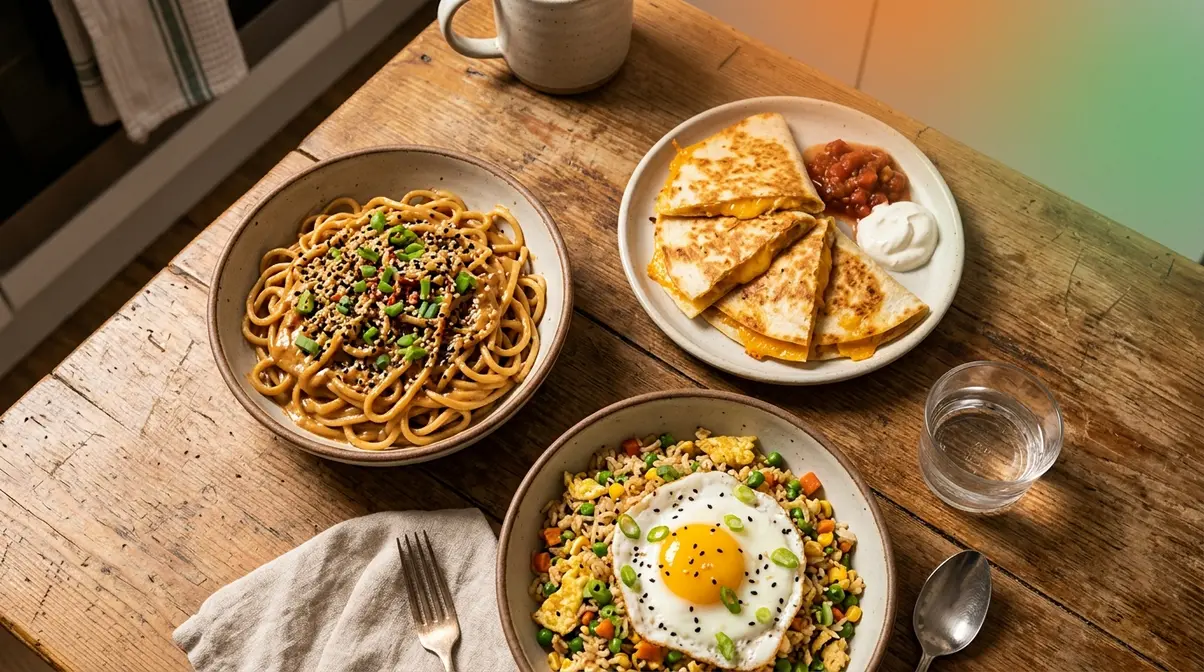
On the worst nights, even deciding what to make feels like too much. These meals require almost no active thought: minimal ingredients, no knife work for most, and nothing that can go wrong. They’re the foundation of The Zero-Effort 15-Minute Dinner Framework — the category designed for the moments when you have nothing left.
Home cooks consistently report that having 2–3 of these memorized (not bookmarked — memorized) is the single biggest factor in avoiding takeout on exhausted weeknights. When your brain is empty, you don’t have time to read a recipe. These meals are simple enough to execute on autopilot.
What is a good lazy dinner?
A good lazy dinner is one you can make without a recipe, without chopping, and without thinking too hard. The best options are peanut butter noodles, butter noodles, scrambled eggs on toast, or instant ramen with a soft-boiled egg. These meals use ingredients most households already have, require no knife work, and can be executed on full autopilot.
The 9 “Too Tired to Cook” Meals:
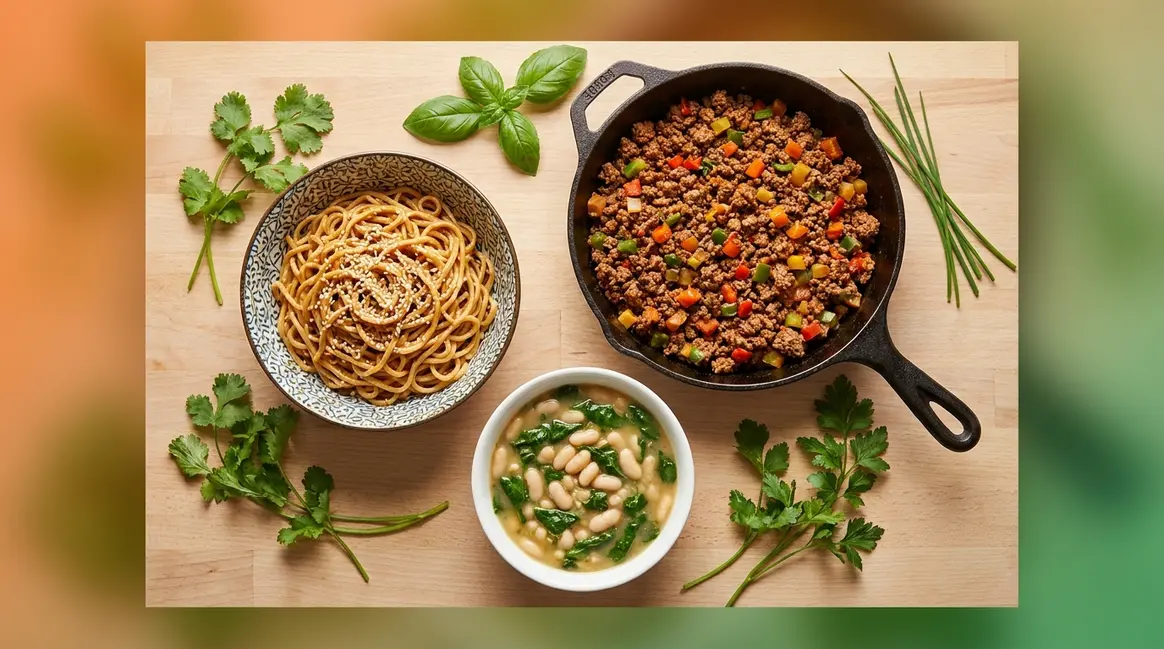
- Peanut butter noodles — ramen noodles + peanut butter + soy sauce + a splash of hot water. Done in 5 minutes.
- Cheese quesadillas — tortillas + shredded cheese, 2 minutes per side in a dry pan.
- Egg fried rice — microwave rice pouch + 2 eggs + soy sauce + frozen peas, 8 minutes total.
- Avocado toast with a fried egg — 4 minutes. Add chili flakes if you have them.
If you need a bit more protein, these next options rely on eggs and canned fish to keep things incredibly fast:
- Tuna pasta — thin spaghetti + canned tuna + olive oil + lemon, 10 minutes.
- Butter noodles — any pasta + butter + garlic powder + parmesan. Comfort food in 10 minutes.
- Scrambled eggs and toast — 3 minutes. Pair with any bagged salad for a complete meal.
- Instant ramen upgrade — standard ramen noodles + a soft-boiled egg + frozen corn + a drizzle of sesame oil. 8 minutes.
- Bean and cheese burrito — canned black beans (warmed 2 minutes) + shredded cheese + salsa, wrapped in a tortilla. No cooking required beyond warming.
When this category doesn’t work: If you’re cooking for guests or want something that feels more like a “real” dinner, these meals may feel too minimal. On those nights, the Cowboy Skillet category (Section 3) gives you a more complete one-pan meal with only slightly more effort.
2. Emergency Pantry Easy 15-Minute Dinners
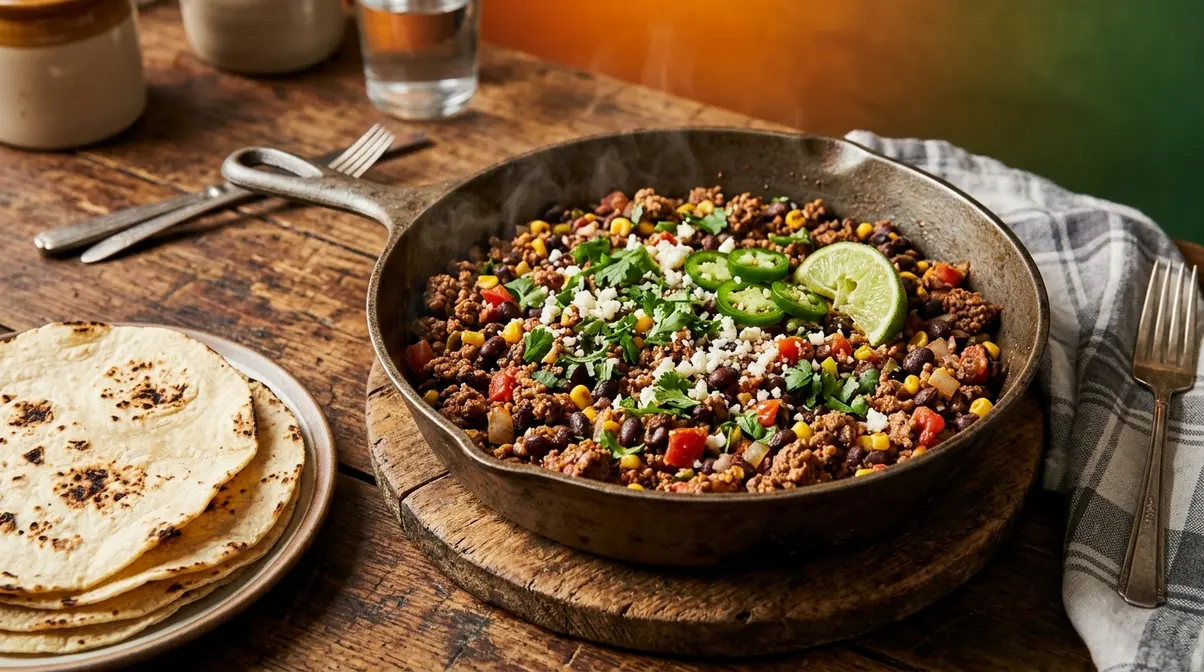
The fridge is empty, but the pantry isn’t. That’s the Emergency Pantry category: dinners built entirely from canned goods, dried pasta, and shelf-stable staples you almost certainly already own. According to a 2026 survey by the International Food Information Council, 78% of Americans keep canned beans and pasta in their pantry at all times — meaning most households can execute at least two of these meals right now without a grocery run (IFIC Food and Health Survey, 2026).
These are the meals that prove you don’t need fresh ingredients to get flavorful meals on the table fast. A can of chickpeas and a jar of curry paste can become a genuinely satisfying dinner in under 12 minutes.
The 8 Emergency Pantry Meals:
- Pasta aglio e olio — spaghetti + olive oil + garlic + chili flakes + parmesan. A classic Italian dish, 12 minutes.
- Chickpea curry — canned chickpeas + jarred curry paste + canned coconut milk + microwave rice. 10 minutes.
- White bean soup — canned white beans + canned tomatoes + garlic + broth + Italian seasoning. 12 minutes.
- Tuna and white bean salad — canned tuna + canned white beans + olive oil + lemon + capers. No cooking required.
For a slightly heartier pantry meal, try these bean and lentil variations:
- Black bean tacos — canned black beans + taco seasoning (from packet) + canned corn + flour tortillas. 8 minutes.
- Pasta e fagioli (pasta and beans) — small pasta + canned borlotti beans + canned tomatoes + broth. 14 minutes.
- Sardines on toast — canned sardines + whole grain crackers or toast + mustard + lemon. 3 minutes.
- Lentil and tomato stew — canned lentils + canned diced tomatoes + cumin + smoked paprika. 10 minutes.
When this category doesn’t work: Pantry meals tend to be heavier on carbohydrates and lighter on fresh vegetables. If you or someone in your household has blood sugar management needs, pair these dishes with a bagged salad on the side, or move to the Heart-Healthy section for better-balanced options.
3. Cowboy Skillet Easy 15-Minute Meals
A “cowboy dinner” is any meal cooked in a single skillet over high heat — protein, vegetables, and starch all in one pan, nothing fancy required. The name comes from campfire cooking tradition, where one pan and one fire was all you had. For modern weeknights, that simplicity is the whole point. The Zero-Effort 15-Minute Dinner Framework places these meals in their own category because the one-pan format eliminates cleanup anxiety, which is a real barrier for tired cooks.
Recipe testers across home cooking communities consistently rank one-skillet dinners as the format least likely to be abandoned mid-cook — because there’s no juggling multiple pots or timing side dishes separately.
What is a cowboy dinner?
A cowboy dinner is any one-pan meal cooked quickly over high heat — traditionally in a single cast-iron skillet over a campfire, and in modern kitchens, in any large skillet on a gas or electric stove. The defining features are: one pan, high heat, minimal prep, and no side dishes to juggle. Classic examples include ground beef taco skillets and sausage with white beans.
The 6 Cowboy Skillet Meals:
- Ground beef taco skillet — ground beef + taco seasoning + canned corn + black beans. Serve over microwave rice or with tortillas. 13 minutes.
- Chorizo and egg scramble — sliced chorizo (pre-cooked) + eggs + diced peppers from a jar + spinach. 10 minutes.
- Shrimp and garlic butter skillet — frozen shrimp (thawed under cold water) + butter + garlic + lemon. Serve over instant noodles. 12 minutes.
- Sausage and white bean skillet — sliced pre-cooked sausage + canned white beans + canned tomatoes + rosemary. 12 minutes.
- Chicken and broccoli stir-fry — thin-cut chicken breast + pre-cut broccoli florets + soy sauce + sesame oil + microwave rice. 14 minutes.
- Smashed egg and potato hash — canned new potatoes (drained and smashed) + eggs cracked on top + paprika + cheese. 14 minutes.
When this category doesn’t work: If you’re managing high cholesterol or following a low-sodium diet, some skillet meals (especially those with chorizo or sausage) can be high in saturated fat and sodium. The Heart-Healthy section below offers equally fast alternatives with better nutritional profiles.
4. Heart-Healthy 15-Minute Dinners
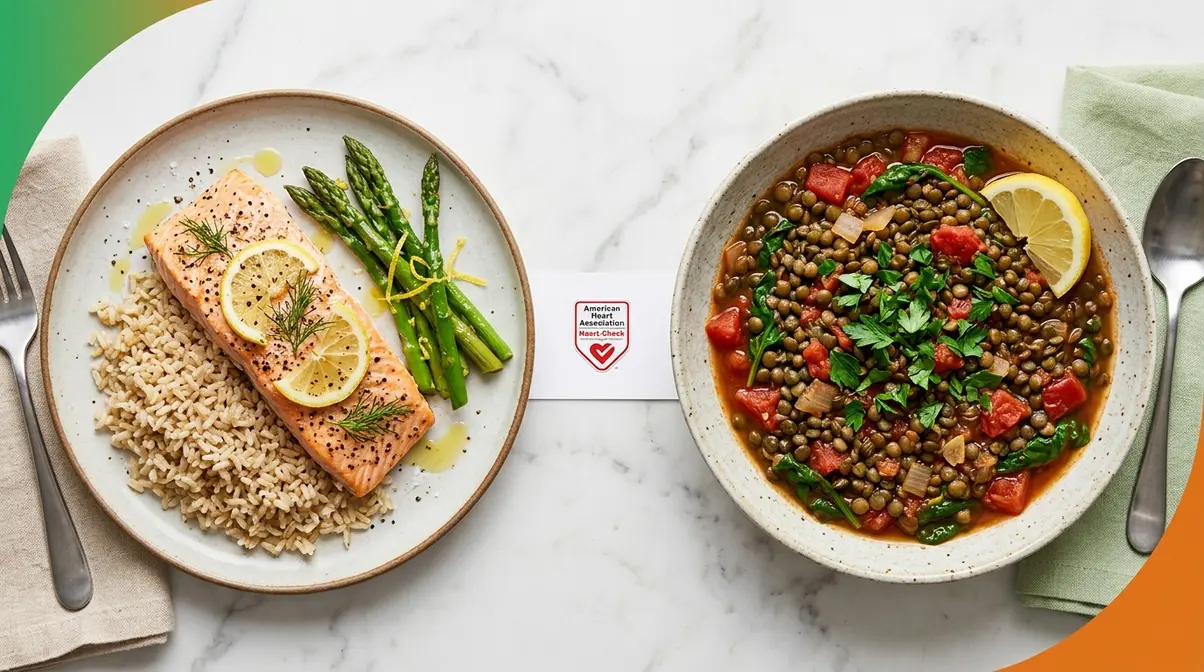
Managing cholesterol doesn’t mean spending an hour in the kitchen. These six meals are built around proteins and ingredients that align with the American Heart Association‘s recommendation to keep saturated fat below 6% of total daily calories — roughly 13 grams or less on a 2,000-calorie diet — and sodium at or below 2,300 mg per day, with an ideal target of 1,500 mg for most adults (American Heart Association, Saturated Fats, 2026; MedlinePlus, Heart Disease and Diet, 2026).
The AHA’s 2026 dietary guidance emphasizes choosing healthy protein sources — fish, poultry, beans, and lentils — over fatty or processed meats, and preferring unsaturated fats (olive oil, avocado, nuts) over saturated fats like butter and full-fat dairy (AHA Scientific Statement, 2026). Every recipe below follows those principles.
⚠️ YMYL Note: If you’re managing high cholesterol, confirm any dietary changes with your doctor or a registered dietitian before making them a regular habit.
The 6 Heart-Healthy 15-Minute Meals:
- Broiled tilapia with lemon and herbs — tilapia fillets + olive oil + lemon + dried herbs, under the broiler for 8–10 minutes. Low in saturated fat, high in lean protein.
- White bean and spinach soup — canned white beans + baby spinach + low-sodium broth + garlic + lemon. 12 minutes. High in fiber, which may help support healthy cholesterol levels.
- Baked salmon with microwave rice — salmon fillet + olive oil + garlic + dill, in a 450°F oven for 12 minutes. Rich in omega-3 fatty acids, which research suggests may support heart health (AHA, 2026).
Plant-based proteins also offer excellent heart-healthy benefits:
- Lentil and tomato bowl — canned lentils + canned diced tomatoes + cumin + smoked paprika + fresh parsley. 10 minutes. Lentils are high in soluble fiber, which MedlinePlus links to cholesterol reduction.
- Shrimp and avocado lettuce wraps — shrimp (sautéed 3–4 minutes) + avocado + lime + romaine lettuce leaves. No added saturated fat, minimal sodium.
- Tuna and white bean salad — canned tuna in water + white beans + olive oil + lemon + capers. No cooking required. Heart-healthy fats from olive oil; lean protein from tuna.
When this category doesn’t work: These meals tend to be lighter in calories. If you’re feeding very active adults or growing teenagers, add a whole-grain side (like a microwave whole-grain rice pouch) to increase the calorie density without adding saturated fat.
5. Quick Vegan 15-Minute Meals
Plant-based eating doesn’t have to mean complicated. These vegan dinners rely on the same pantry shortcuts as the rest of the guide — canned legumes, jarred sauces, and quick-cook grains — and deliver complete, satisfying meals without any animal products. The Zero-Effort 15-Minute Dinner Framework treats vegan meals as their own emotional-state category because plant-based cooks face a specific frustration: most “quick vegan” recipes online still require 30 minutes of prep.
According to the Good Food Institute, plant-based meal purchases have grown significantly among households that don’t identify as fully vegan — meaning these recipes serve a much broader audience than their label suggests (Good Food Institute, 2026). For more inspiration, check out these quick vegan dinner recipes.
The 6 Quick Vegan Meals:
- Miso mushroom pasta — thin pasta + sliced mushrooms + white miso paste + soy sauce + sesame oil. 12 minutes. Umami-rich and deeply satisfying.
- Spiced chickpeas with flatbread — canned chickpeas + smoked paprika + cumin + olive oil, pan-fried until crispy (8 minutes) + store-bought flatbread.
- Coconut lentil soup — canned lentils + canned coconut milk + curry powder + canned tomatoes. 10 minutes. Serve with microwave rice.
For a different flavor profile, try these Asian-inspired and Tex-Mex options:
- Peanut noodles with edamame — ramen noodles + peanut butter + soy sauce + rice vinegar + frozen edamame (microwaved 3 minutes). 10 minutes total.
- Black bean and corn quesadillas — canned black beans + canned corn + vegan shredded cheese + flour tortillas. 8 minutes. Serve with salsa.
- Tomato and white bean stew — canned white beans + canned crushed tomatoes + garlic + fresh basil + olive oil. 12 minutes. Serve over microwave rice or with crusty bread.
When this category doesn’t work: These meals are lower in complete protein compared to meat-based options. If you’re training heavily or have higher protein needs, add a side of edamame, hemp seeds, or a protein-rich grain like quinoa (from a microwave pouch) to boost the protein content of any dish.
Your Zero-Effort Weeknight Game Plan
Now that you have all five categories, here’s how to use The Zero-Effort 15-Minute Dinner Framework as a system rather than just a list. The goal is to make the dinner decision before 6 PM — ideally in under 30 seconds.
Step 1: At the start of the week (or Sunday afternoon), pick one meal from two or three categories and make sure you have those pantry staples on hand. You don’t need to meal plan five days — just cover your two most common dinner moods.
Step 2: When 6 PM arrives, ask one question: How tired am I? Route yourself to the right category. Too exhausted to think → Section 1. Fridge is empty → Section 2. Want minimal dishes → Section 3. Health goals → Section 4. Plant-based → Section 5.
Step 3: Execute the recipe using the five speed techniques: high heat, shortcut ingredients, prep-as-you-go, smart swaps, and safe temperatures. Every recipe in this guide is designed to work within those constraints.
Home cooks who apply these quick and easy 15-minute meal ideas consistently report that having a framework — rather than an open-ended recipe collection — is what finally makes fast weeknight cooking stick as a habit.
Limitations and Common Mistakes
Common Pitfalls
Pitfall 1: Trusting the recipe’s claimed cook time without checking the prep assumption. Many recipes that claim “15 minutes” assume pre-minced garlic, pre-thawed protein, or pre-boiled water. Before you start, scan the ingredient list for anything that takes time to prep. If you see “1 onion, finely diced” in a 15-minute recipe, add 5–7 minutes or swap for onion powder.
Pitfall 2: Cooking on medium heat to “be safe.” Medium heat on a skillet is the single biggest reason weeknight dinners take 25 minutes instead of 15. Proteins cook slowly, moisture doesn’t evaporate, and food ends up steamed rather than seared. Use high heat (7–8 out of 10) and stay present at the stove.
Pitfall 3: Not having a meat thermometer. Guessing whether chicken or ground beef is cooked through adds anxiety and often leads to either undercooking (food safety risk) or overcooking (dry, unpleasant food). A $10–15 digital thermometer removes both problems instantly.
When to Choose Alternatives
Scenario 1 — Feeding more than 4 people: Most 15-minute recipes scale poorly beyond 4 servings because larger quantities require longer cook times (more food in the pan = lower pan temperature = slower cooking). For groups of 6+, consider a 30-minute sheet pan meal instead.
Scenario 2 — Managing a complex dietary condition: The Heart-Healthy section in this guide offers general AHA-aligned guidance, but it is not a substitute for personalized nutritional advice. If you’re managing kidney disease, you might also want to explore how to make low-oxalate meals for kidney health. Work with a registered dietitian to adapt these recipes to your specific needs.
When to Seek Expert Help
If you’re new to cooking entirely and feel uncertain about food safety — particularly around raw poultry or ground beef — consider taking a free 30-minute food safety course from your local extension service or FoodSafety.gov before cooking those proteins at high heat. The temperature table in Section 2 of this guide covers the essentials, but hands-on guidance builds confidence faster.
Frequently Asked Questions
What dinner can I make in 15 minutes?
You can make dozens of complete dinners in 15 minutes — including peanut butter noodles, egg fried rice, cheese quesadillas, shrimp stir-fry, tuna pasta, chickpea curry, and white bean soup. The key is choosing a protein that cooks in under 8 minutes (shrimp, ground beef, canned beans) and a starch that cooks fast (90-second microwave rice, instant ramen, fresh pasta). For example, a shrimp and garlic butter skillet with microwave rice takes about 12 minutes from fridge to table. The Zero-Effort 15-Minute Dinner Framework in this guide organizes 35 options by mood so you can pick one without scrolling.
What can I eat in 15 minutes?
In 15 minutes, you can eat a fully cooked hot meal — not just a snack. Options include pasta aglio e olio (spaghetti with olive oil, garlic, and chili flakes), scrambled eggs with toast, avocado toast with a fried egg, tuna and white bean salad (no cooking required), or bean and cheese burritos with canned black beans. Most of these require only 1–3 pantry ingredients beyond the protein. If your goal is zero cooking at all, a tuna and white bean salad or sardines on toast is ready in under 3 minutes.
What to make for dinner when you have high cholesterol?
When managing high cholesterol, focus on meals low in saturated fat and sodium. The American Heart Association recommends keeping saturated fat below 6% of total daily calories — about 13 grams or less on a 2,000-calorie diet — and sodium at or below 2,300 mg per day (AHA, 2026). Fast options include broiled tilapia with lemon and herbs (8–10 minutes), white bean and spinach soup (12 minutes), baked salmon with microwave rice (12 minutes), and lentil and tomato bowl (10 minutes). All six meals in Section 4 of this guide meet AHA dietary guidelines. Always confirm specific dietary changes with your doctor or a registered dietitian.
What can I cook in 15 minutes?
You can cook shrimp, ground beef, thin-cut chicken breast, eggs, canned beans, and any quick-cook pasta in 15 minutes or less. Shrimp cooks in 3–4 minutes at high heat. Ground beef browns in 7–8 minutes. Thin pasta (spaghetti, linguine) cooks in 6–8 minutes. Eggs cook in under 3 minutes. The trick is using the prep-as-you-go technique: while your pan heats (2–3 minutes), open cans, measure spices, and shred any pre-cooked protein. By the time the pan is ready, you are too. A complete list of cook times appears in the ingredient table in Section 1 of this guide.
What to make for dinner when you’re tired of everything?
When you’re tired of everything, the fix isn’t a new recipe — it’s a format change. If you always make pasta, switch to a one-pan skillet (ground beef taco skillet, chorizo scramble). If you always eat eggs, try chickpea curry with microwave rice. The Cowboy Skillet category (Section 3) and the Emergency Pantry category (Section 2) are specifically designed for this moment — meals that feel different from your usual rotation without requiring new ingredients or skills. Upgrading a familiar base (add miso paste to butter noodles, add smoked paprika to scrambled eggs) also refreshes a tired recipe in under 30 seconds.
The Fastest Path to Dinner, Starting Tonight
For busy adults and parents who need a hot meal on the table fast, easy 15-minute meals aren’t a compromise — they’re a system. According to the BLS American Time Use Survey, Americans average 40 minutes per day on food prep and cleanup (BLS, 2026). Cutting that to 15 minutes on weeknights is a genuine quality-of-life improvement, not just a cooking hack. The five categories in this guide — Too Tired, Empty Pantry, Cowboy Skillet, Heart-Healthy, and Quick Vegan — cover every realistic weeknight scenario with 35 named recipes and zero decision fatigue.
The Zero-Effort 15-Minute Dinner Framework works because it removes the hardest part of weeknight cooking: choosing. When you already know which category fits tonight’s mood, getting 15 minute meals easy and hot on the table takes care of itself. The five speed techniques — high heat, microwave shortcuts, prep-as-you-go, smart ingredients, and safe temperatures — are the engine that makes every recipe in this guide reliable, not just fast.
Pick one meal from this guide and make it tonight. Start with the category that matches where you are right now — whether that’s “too tired to think” or “managing cholesterol.” Cook it once, and you’ll have it memorized. That’s how a 15-minute dinner habit actually builds: one easy win at a time. For more recipes in the same spirit, explore easy 15-minute meal ideas to add two or three more to your regular rotation.

quickdishcook
Recipe developer and writer at Quick Dish Cookbook.