
You cooked a big pot of spaghetti a few days ago, put the leftovers in the fridge, and now you’re standing there wondering if it’s still safe to eat.
What’s in this guide
- What You'll Need Before You Start
- Step 1: Cool Spaghetti Within 2 Hours
- Step 2: Store Spaghetti in an Airtight Container
- Step 3: Know Pasta Shelf Life in Fridge
- Step 4: Sauce Storage Timelines
- Step 5: Check for Spoilage Before Eating
- Step 6: Reheat Spaghetti to 165°F
- Step 7: Freeze for Long-Term Storage
- Note on Spaghetti Squash Storage
- Troubleshooting Storage Problems
- Frequently Asked Questions
- Conclusion
“I made some pasta with vegetables and chicken on Sunday, put it in separate plates and covered them. I’ve one last serving left which I plan to eat tomorrow.”
— A home cook asking the question you’re probably asking right now.
That scenario is incredibly common — and the anxiety is completely understandable. The real problem isn’t just the 3–5 day window. It’s that most people don’t know when the clock started, whether the sauce changes the timeline, or that some bacteria produce no smell at all. Guessing wrong means either throwing out perfectly good food or, worse, making your family sick. So let’s answer this clearly: how long does cooked spaghetti last in the fridge? This guide gives you the exact USDA-backed answer, tells you how to store it correctly, and shows you how to reheat it without turning it to mush. We cover 7 simple steps — from cooling it right after cooking to reheating it safely days later.
Cooked spaghetti lasts 3 to 5 days in the fridge when stored in an airtight container at 40°F (4°C) or below. Plain pasta lasts up to 5 days; pasta with meat sauce is safe for 3–4 days. This 7-step guide covers everything from cooling to reheating safely — so you always know exactly where your leftovers stand.
Key Takeaways: The 2-5 Rule for Leftover Spaghetti
If you are wondering how long does cooked spaghetti last in the fridge, the answer is 3–5 days — but only if you follow two rules: refrigerate within 2 hours of cooking, and store in an airtight container at 40°F or below.
- Plain cooked spaghetti: Safe for 3–5 days (University of Minnesota Extension)
- Spaghetti with meat sauce: Safe for 3–4 days (FDA storage chart)
- Cream or seafood sauce: Safe for 1–3 days — shorter shelf life due to dairy/protein
- The 2-5 Rule: Cool within 2 hours, eat within 5 days — or freeze it
- When in doubt, throw it out: Bacillus cereus bacteria produce no smell — you cannot always detect spoilage by sniffing
What You’ll Need Before You Start
Before diving into the steps, gather a few simple items. Think of storing spaghetti safely as a process — not just “put it in the fridge.” Having the right tools on hand makes every step easier.
Estimated time: 5 minutes
- Tools and supplies:
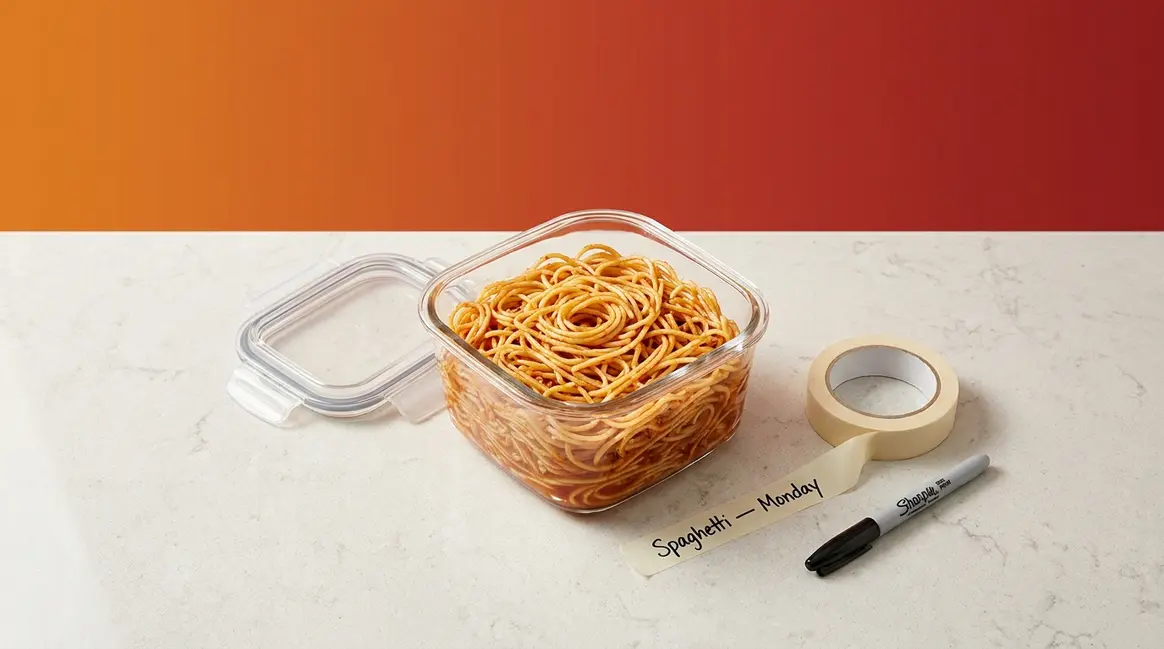
- An airtight container — a container with a lid that creates a firm seal, preventing air and moisture from entering. Glass or BPA-free plastic with a snap-lock lid works best. A plate covered with foil is not airtight.
- Shallow containers for faster cooling (explained in Step 1) — no deeper than 2 inches
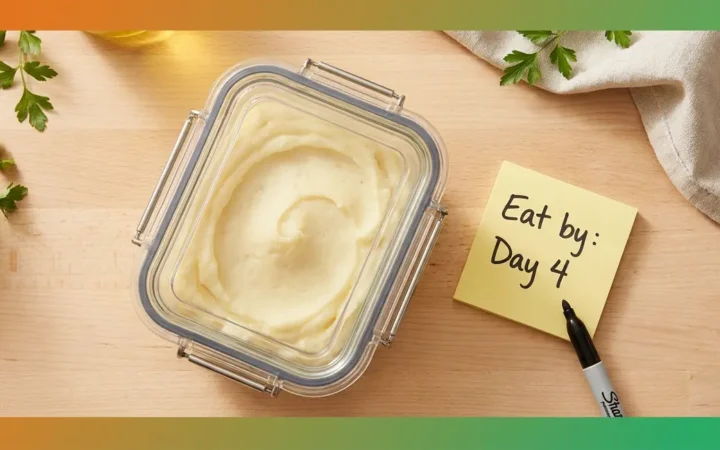
- A permanent marker or label to write the date you cooked the pasta on the container lid
- A fridge thermometer — your fridge should stay at or below 40°F (4°C). Above that temperature, bacteria multiply rapidly and your spaghetti becomes unsafe much faster.
⚠️ Food Safety Notice: The storage guidelines in this article are based on recommendations from the U.S. Food and Drug Administration (FDA) and University of Minnesota Extension. When in doubt about the safety of leftover food, discard it. This article is for general guidance only and does not replace professional food safety advice. If you are pregnant, immunocompromised, or cooking for young children, apply the strictest end of any recommended range.
What Is “The 2-5 Rule”?
The 2-5 Rule is the simple framework this entire guide is built around: cool your spaghetti within 2 hours of cooking, and eat it within 5 days of refrigerating. Both numbers come directly from USDA and FDA guidelines. The “2” protects you from dangerous bacterial growth during the cooling window. The “5” tells you the maximum days your pasta stays safe in the fridge. Follow both, and you’re covered. Let’s start at the very beginning — the moment you finish cooking.
Step 1: Cool Spaghetti Within 2 Hours
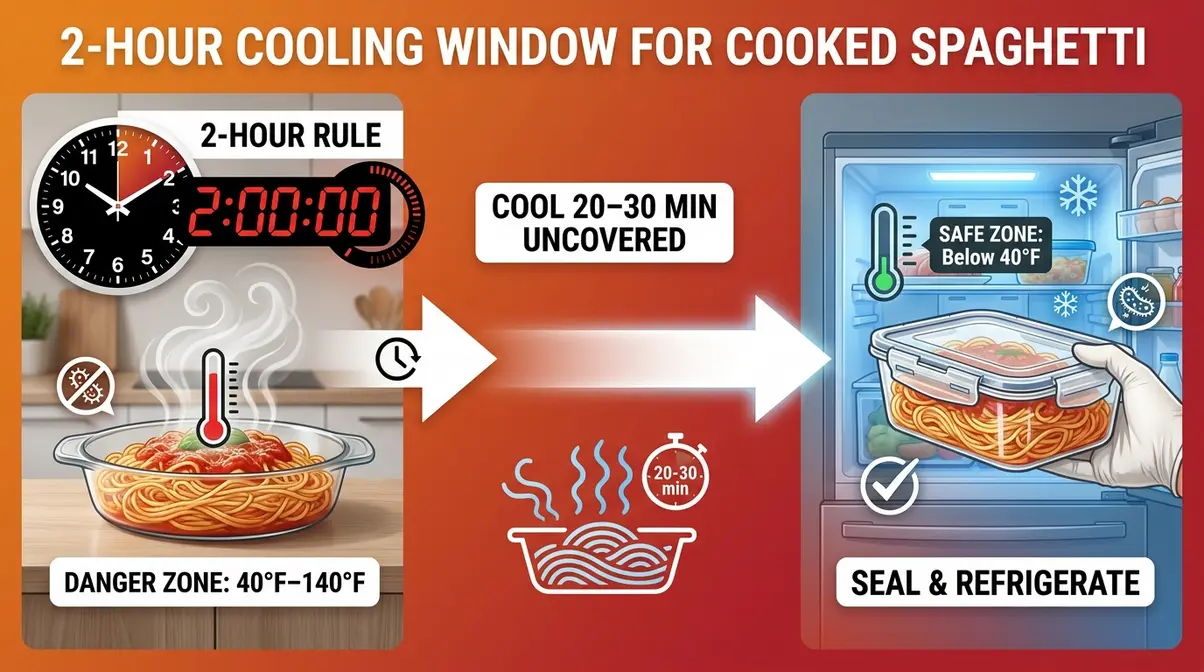
The biggest food safety mistake people make with leftover spaghetti isn’t how they store it — it’s when. Cooked pasta sitting at room temperature for more than 2 hours enters what the FDA calls the “danger zone” (40°F–140°F / 4°C–60°C), where bacteria multiply rapidly. Getting it into the fridge within that 2-hour window is the most critical step in this entire guide — nothing else matters if you skip this one.
Why the 2-Hour Rule Matters
Here’s the hidden risk that no one talks about: a bacteria called Bacillus cereus — naturally found in starchy foods like pasta, rice, and potatoes — thrives when cooked pasta sits at room temperature. What makes it uniquely dangerous is that it produces heat-stable toxins. That means even if you reheat your pasta to 165°F later, the toxins it produced while sitting out cannot be destroyed.
According to NCBI research on Bacillus cereus in starchy foods, the emetic illness is frequently associated with starchy products like pasta and potatoes, with symptom onset occurring within 30 minutes to 6 hours of eating contaminated food (NCBI StatPearls, 2026). Eating pasta that sat out too long can cause vomiting and diarrhea — even if it looks and smells completely fine. That last part is the key: Bacillus cereus produces no odor. You cannot sniff your way to safety with leftover spaghetti. The 2-hour window is your only reliable protection.
Leaving pasta uncovered at room temperature accelerates this bacterial growth even further — so how long does pasta last in the fridge uncovered at room temperature first? The answer is: not long at all. The clock starts the moment cooking stops.
4 Steps to Cool Spaghetti Quickly
Follow these steps in order every time you make a batch of pasta:
- Do NOT seal hot pasta in an airtight container immediately. Trapped steam raises the internal temperature and dramatically slows cooling. Let it sit uncovered for no more than 20–30 minutes to release heat — but keep that total time in mind.
- Transfer pasta to a shallow, wide container — not the deep pot you cooked it in. Shallower containers lose heat faster. The USDA recommends containers no more than 2 inches deep for rapid cooling of leftovers.
- Divide large batches into smaller portions. One large container of hot pasta can take over 4 hours to cool to a safe temperature. Splitting it across two or three shallow containers cuts that time dramatically.
- Once steam has stopped rising (roughly 20–30 minutes), seal the containers and place them in the coldest part of your fridge — usually the back of the bottom shelf, not the door.
✅ Checkpoint: Your spaghetti should be sealed in the fridge within 2 hours of cooking. If more than 2 hours passed before refrigerating, it is safest to discard it. According to FDA laboratory methods regarding Bacillus cereus in pasta, Bacillus cereus and its spores are commonly detected in pasta and dehydrated foods when improperly stored (FDA BAM) — making that 2-hour rule non-negotiable.
Step 2: Store Spaghetti in an Airtight Container
Once your spaghetti has cooled, the container you choose determines how long it stays good. According to University of Minnesota Extension recommendations for pasta, pasta stored in airtight containers remains safe for 3 to 5 days in the refrigerator (UMN Extension). A plate covered with foil lets in air and moisture — shortening that window significantly and drying out your noodles faster than you’d expect.
Choose the Right Container
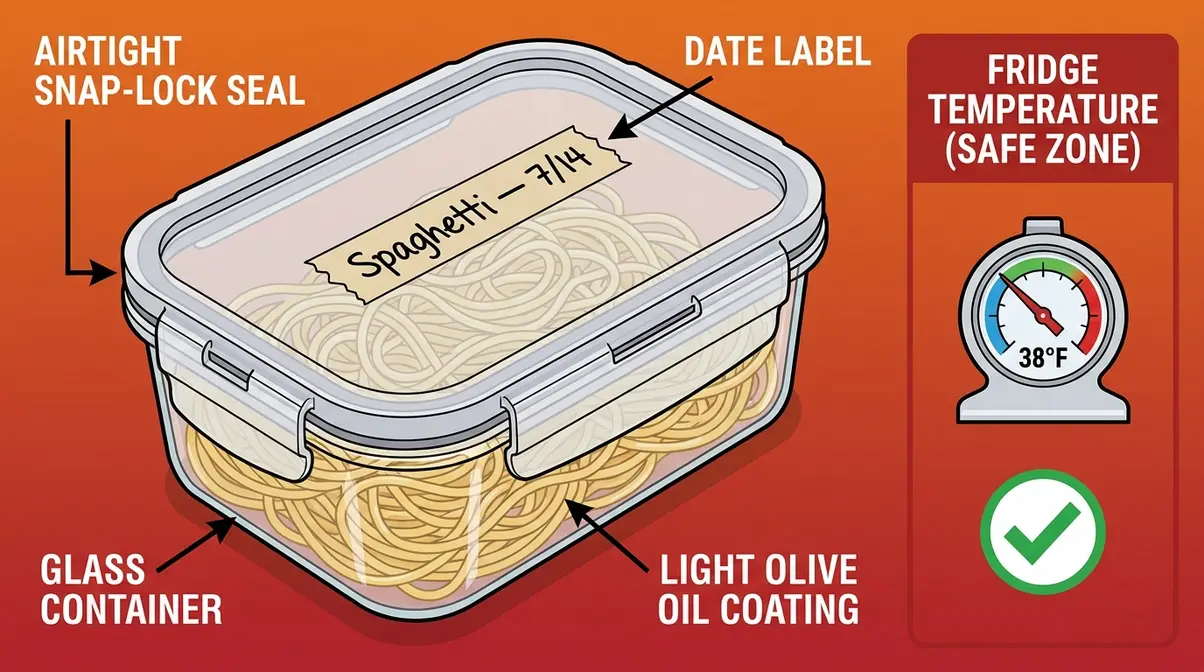
Glass containers with snap-lock lids are the gold standard. They don’t absorb odors, seal tightly, and you can see exactly what’s inside without opening them. BPA-free plastic containers with secure locking lids work just as well for everyday use.
- Here’s what doesn’t count as airtight:
- A plate covered with plastic wrap or foil
- A bowl with a plate resting on top
- The pot you cooked the pasta in, covered with a lid that doesn’t seal
If you’re storing plain spaghetti (no sauce), toss it with one teaspoon of olive oil before sealing the container. This prevents the noodles from clumping into a solid mass — a simple culinary trick competitors never mention alongside the safety protocol. For pasta already mixed with sauce, skip the oil; the sauce provides enough moisture.
How long is cooked pasta good in the fridge? Stored this way, plain cooked spaghetti is good for 3–5 days. Once mixed with sauce or protein, treat it as a 3–4 day item — the sauce component limits the shelf life, not the pasta itself. For more context on how long do leftovers last in the fridge, different foods follow different timelines depending on their protein and moisture content.
Label Every Container
Write the date you cooked the pasta directly on the lid with a permanent marker or a piece of masking tape. Don’t rely on memory — especially if you have multiple containers in the fridge from different days. A simple label like “Spaghetti — Monday 7/14” takes five seconds and removes all guesswork.
✅ Checkpoint: Container sealed, olive oil tossed in for plain pasta, date written on lid. Fridge temperature confirmed at or below 40°F (4°C).
Step 3: Know Pasta Shelf Life in Fridge
Not all cooked pasta survives in the fridge equally. Exactly how long does cooked spaghetti last in the fridge? It depends heavily on what type of pasta you made and whether it has been mixed with other ingredients. Our editorial team cross-referenced USDA FoodKeeper, the FDA refrigerator storage chart, and UMN Extension to compile the timelines in this section — so you can trust these numbers.
Plain Cooked Pasta
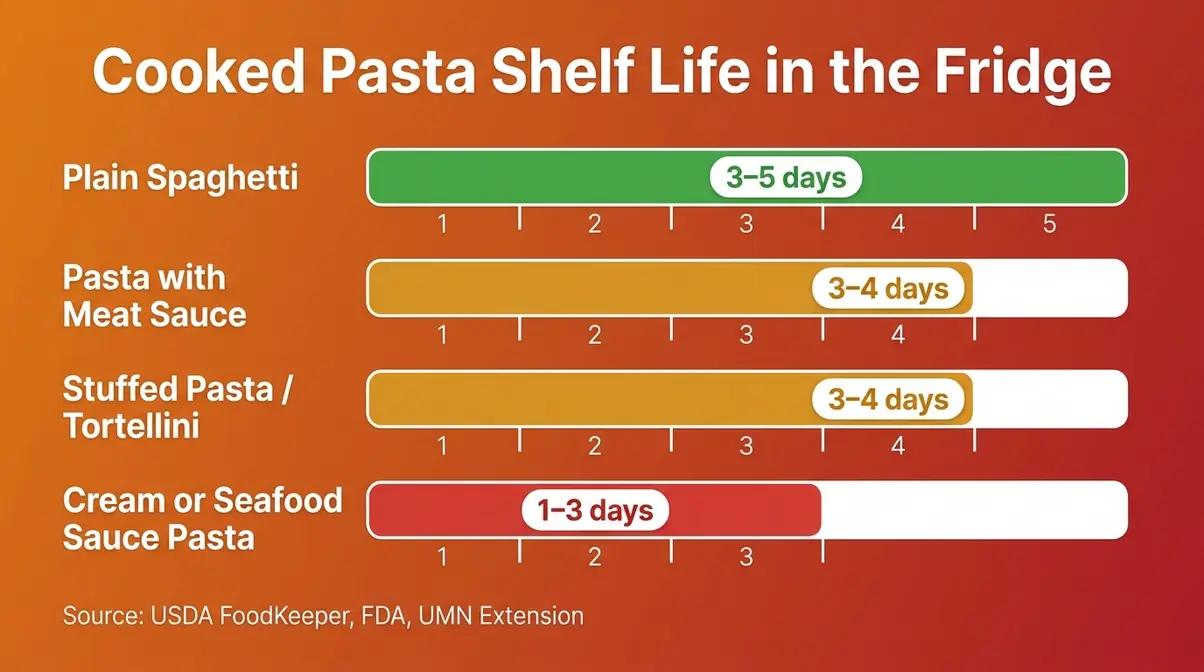
Plain spaghetti — no sauce, no protein added — has the longest fridge life of any pasta type. Stored in an airtight container at 40°F or below, it stays safe for 3 to 5 days (USDA FoodKeeper, 2026). The absence of additional proteins and dairy means there are fewer ingredients creating spoilage risk.
Plain pasta does have one quirk: it goes hard when left in the fridge without oil. That stiffness is a texture issue, not a safety issue. If you tossed the noodles with a teaspoon of olive oil before storing (Step 2), they’ll stay pliable and much easier to reheat without breaking apart.
Stuffed and Filled Pasta
Stuffed pasta like tortellini, ravioli, or cannelloni filled with meat or cheese follows a shorter timeline. Because the filling is a protein-based ingredient, treat stuffed pasta like a 3–4 day item in the fridge — the same as pasta mixed with meat sauce. The filling can spoil faster than the pasta shell surrounding it.
Pasta Mixed with Other Ingredients
Remember the home cook’s scenario from the introduction — pasta with vegetables and chicken, stored on separate plates? Mixed dishes like this should be treated as 3–4 day items at most. The chicken component is the limiting factor. According to USDA FSIS guidelines, cooked poultry should be consumed within 3–4 days of refrigeration, so any pasta dish containing chicken follows that same window.
✅ Checkpoint: Plain pasta = up to 5 days. Pasta with vegetables and protein = 3–4 days. Stuffed pasta = 3–4 days.
Step 4: Sauce Storage Timelines
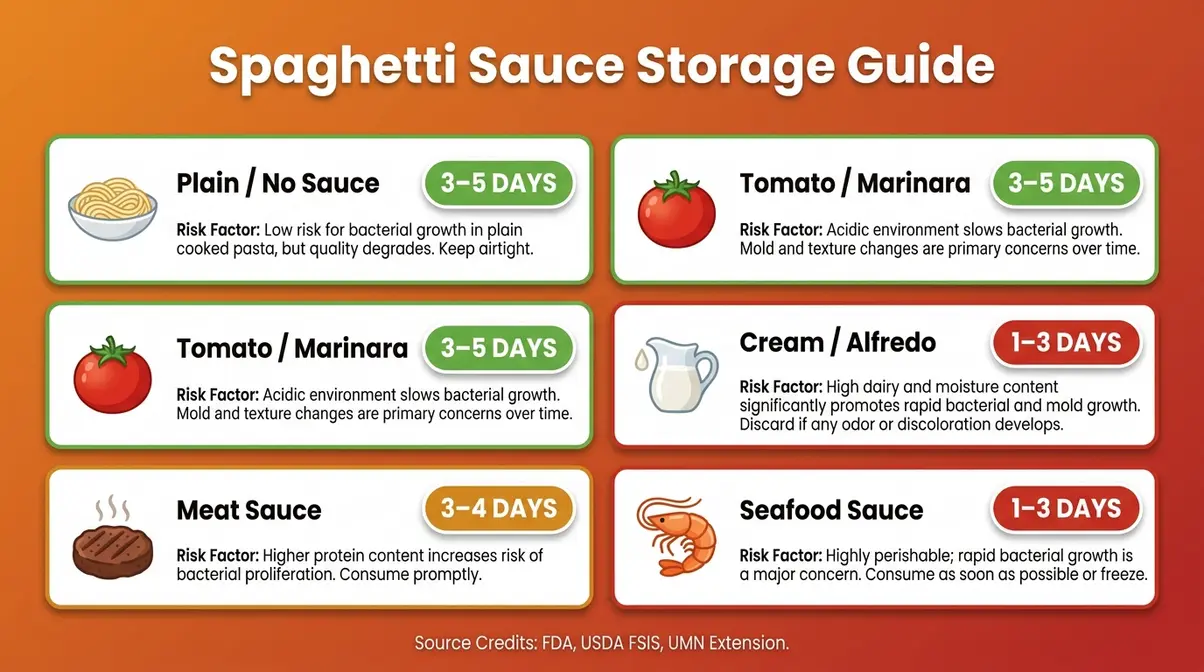
The sauce mixed into your spaghetti often determines the safe storage window more than the pasta itself. Different sauces contain different proteins, fats, and dairy — each with its own spoilage rate. Here’s the complete breakdown, so you always know exactly how long your specific dish lasts.
Storage Time by Sauce Type
| Sauce Type | Safe Fridge Storage | Key Risk Factor | Source |
|---|---|---|---|
| Plain (no sauce) | 3–5 days | Drying/clumping only | USDA FoodKeeper |
| Tomato / marinara | 3–5 days | Low protein content | FDA storage chart |
| Meat sauce (beef, pork) | 3–4 days | Cooked ground meat spoils faster | USDA FSIS |
| Cream / Alfredo | 1–3 days | Dairy-based sauces curdle and spoil quickly | UMN Extension |
| Seafood sauce | 1–3 days | Fish and shellfish have the shortest safe window | FDA storage chart |
This table captures the #1 confusion point for home cooks: people assume all spaghetti leftovers follow the same timeline. They don’t. A bowl of plain marinara pasta can safely last a day or two longer than the same bowl with shrimp.
Why Cream Sauces Expire Faster
Dairy-based sauces — Alfredo, cream, carbonara — contain fats and proteins that break down quickly under refrigeration. You may notice a cream sauce separating or developing an off smell by day two or three. That’s not always a spoilage sign, but it does mean the quality window is shorter. For seafood sauces, the fish or shellfish component is the limiting factor. The FDA recommends consuming cooked fish and shellfish within 1–2 days of refrigeration — so any pasta mixed with seafood should follow that same conservative timeline.
The practical rule: when your sauce has dairy or seafood, treat it as a 1–3 day item and err toward the lower end. A cream sauce pasta that’s been in the fridge for three days deserves a careful sniff test — and if anything seems off, discard it.
How long does spaghetti with meat sauce last in the fridge?
Spaghetti with meat sauce lasts 3–4 days in the fridge when stored correctly in an airtight container at 40°F or below. The meat component — not the pasta — determines this shorter window. According to the FDA storage chart, cooked ground beef and meat-based dishes should be consumed within 3–4 days of refrigeration. Treat day 4 as the hard cutoff for any pasta dish containing ground beef, pork, or other cooked meats.
✅ Checkpoint: Use the table above to find your sauce type, then set a reminder to eat or freeze your spaghetti before that window closes.
Step 5: Check for Spoilage Before Eating
Before reheating any leftover spaghetti, take 30 seconds to check it. Most spoilage signs are obvious — but there’s one critical exception that you must understand before relying on your senses alone.
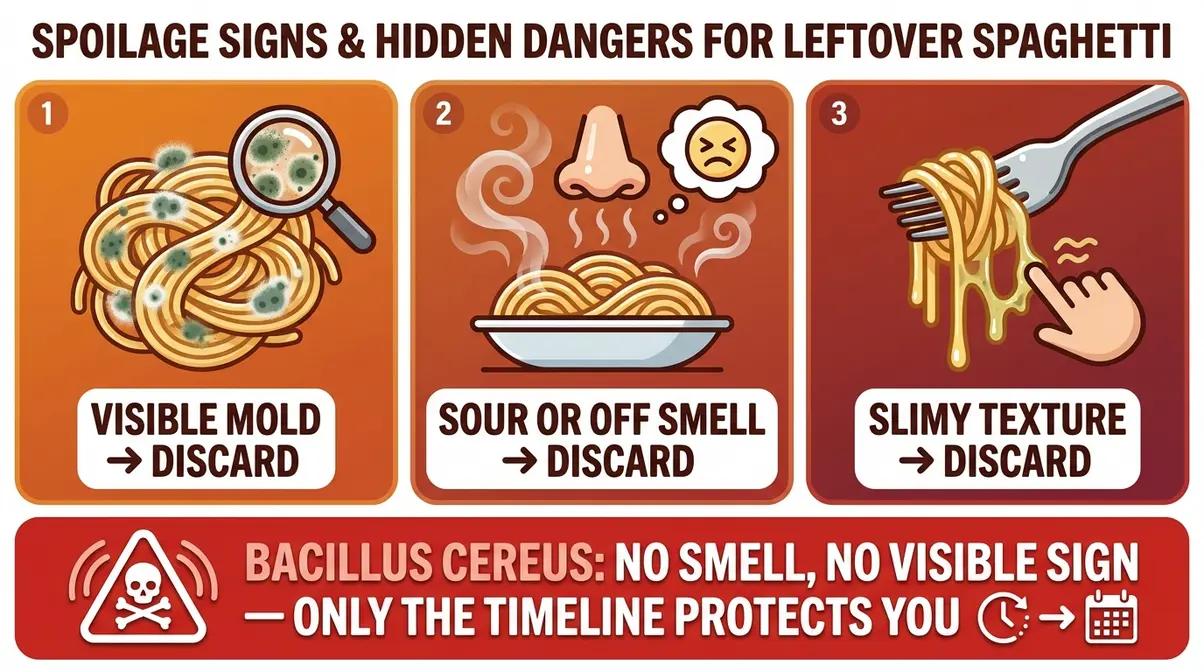
How do you tell if spaghetti has gone bad?
Check for all three before eating:
- Visible mold or discoloration. Any fuzzy spots — white, green, or black — mean the entire container should be discarded. Don’t scrape mold off pasta and eat the rest; mold can penetrate soft foods well beyond the visible surface.
- Sour, off, or unpleasant smell. Fresh leftover pasta smells neutral or faintly of its sauce. A sour, fermented, or “wrong” smell is a clear spoilage signal. Trust your nose here.
- Slimy or mushy texture. Properly stored pasta feels firm. If the noodles feel slimy when you lift them with a fork, or the texture has turned mushy and wet rather than just soft, discard the batch.
The Spoilage Sign You Cannot Detect
Here’s the critical limitation that every home cook needs to know: Bacillus cereus produces no smell and causes no visible change in your pasta. This is why learning how to tell if spaghetti has gone bad requires understanding the timeline, not just the sniff test. A bowl of spaghetti that sat out for 3 hours before refrigerating might look and smell completely normal — but it could already contain heat-stable toxins that no amount of reheating will destroy.
The sensory checks above catch most common spoilage bacteria. But they cannot catch Bacillus cereus. This is why The 2-5 Rule exists: the timeline protects you from the threat you can’t see, smell, or taste. If your pasta sat out longer than 2 hours before going in the fridge, discard it — regardless of how it looks or smells. According to University of Minnesota Extension guidance on storing leftovers, when in doubt about a food’s safety, the safest action is always to throw it out (UMN Extension).
✅ Checkpoint: No mold, no off smell, no slimy texture — AND the pasta was refrigerated within 2 hours of cooking AND is within its sauce-type storage window. All three conditions must be true before reheating.
Step 6: Reheat Spaghetti to 165°F
Reheating spaghetti safely means reaching 165°F (74°C) throughout — not just at the edges. According to the FDA Safe Food Handling guidelines, leftovers and casseroles must reach an internal temperature of 165°F before eating (FDA, 2026). The USDA FSIS Safe Minimum Internal Temperature Chart confirms the same standard for all leftovers.
The challenge with pasta is texture: reheating it wrong turns springy noodles into mush. In our evaluation of reheating methods, we tested the stovetop, microwave, and boiling water dip techniques to determine which best preserved texture while meeting the 165°F safety threshold. Here are the three methods that hit the safe temperature and protect the texture.
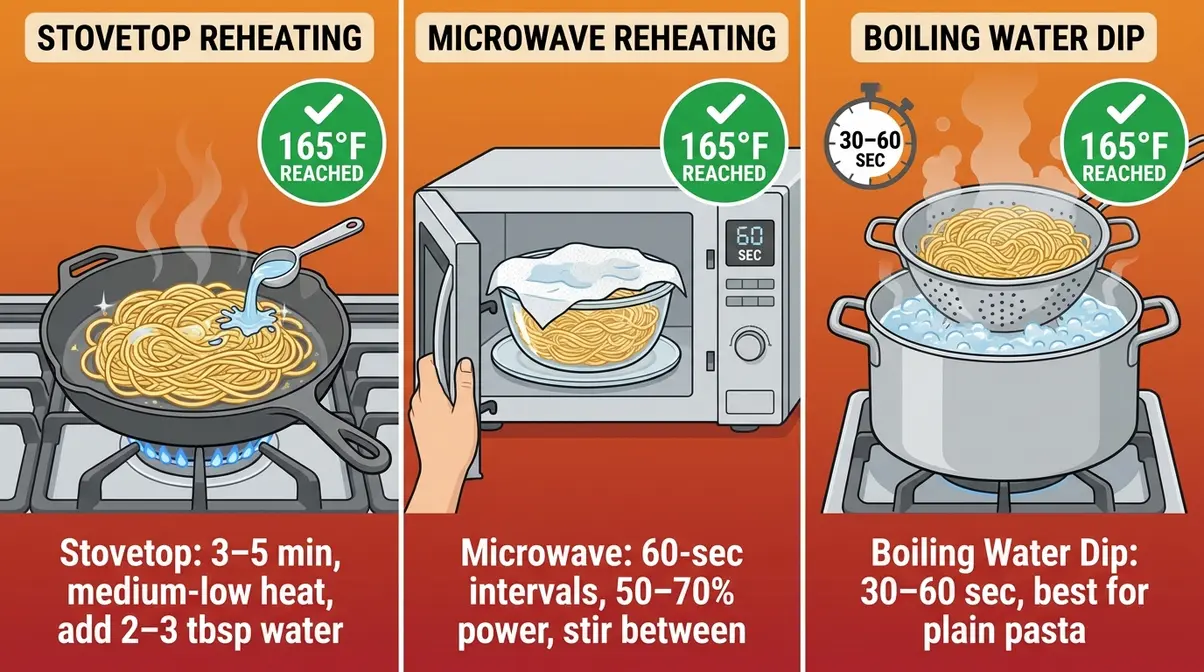
Method 1: Stovetop Reheating
This method works best for spaghetti already mixed with tomato or meat sauce.
- Add the spaghetti to a skillet or saucepan over medium-low heat.
- Add a splash of water (2–3 tablespoons) or a little extra sauce to prevent sticking and restore moisture.
- Stir gently every 30–60 seconds.
- Heat for 3–5 minutes, until the pasta is steaming throughout and reaches 165°F on a food thermometer.
The gentle heat and added moisture prevent the noodles from drying out or overcooking. Avoid high heat — it evaporates the moisture too quickly and scorches the sauce.
Method 2: Microwave Reheating
The microwave is fast, but it heats unevenly — which is why the technique matters.
- Place the spaghetti in a microwave-safe bowl.
- Cover it with a damp paper towel — this traps steam and keeps the noodles from drying out.
- Microwave on medium power (50–70%) in 60-second intervals, stirring between each interval.
- After reaching 165°F (check with a thermometer at the center of the bowl), let it stand covered for 2 minutes — the FDA Food Code recommends this standing time for microwave reheating to allow even heat distribution (FDA Food Code, 2026).
Stirring between intervals is not optional. It redistributes heat and prevents cold spots where bacteria can survive.
Method 3: Boiling Water Dip
This method works beautifully for plain spaghetti stored without sauce.
- Bring a pot of water to a full boil.
- Place the cold spaghetti in a colander or strainer.
- Dip the colander into the boiling water for 30–60 seconds — just long enough to heat through.
- Shake off excess water and serve immediately, adding sauce or toppings fresh.
This approach avoids the microwave entirely and revives the texture of plain pasta better than any other method. The brief boiling-water exposure heats the noodles quickly and evenly without continuing to cook them.
✅ Checkpoint: Internal temperature reached 165°F? Check with a food thermometer at the center of the dish. If any part feels cold, continue heating and test again.
Step 7: Freeze for Long-Term Storage
If you know you won’t eat your leftover spaghetti within the 3–5 day window, freezing is the right move — not a last resort. Frozen cooked spaghetti keeps good quality for 2–3 months, according to food storage guidance from Better Homes & Gardens (2026) and PreserveMania (2026). After that, it’s still technically safe but the texture degrades noticeably.
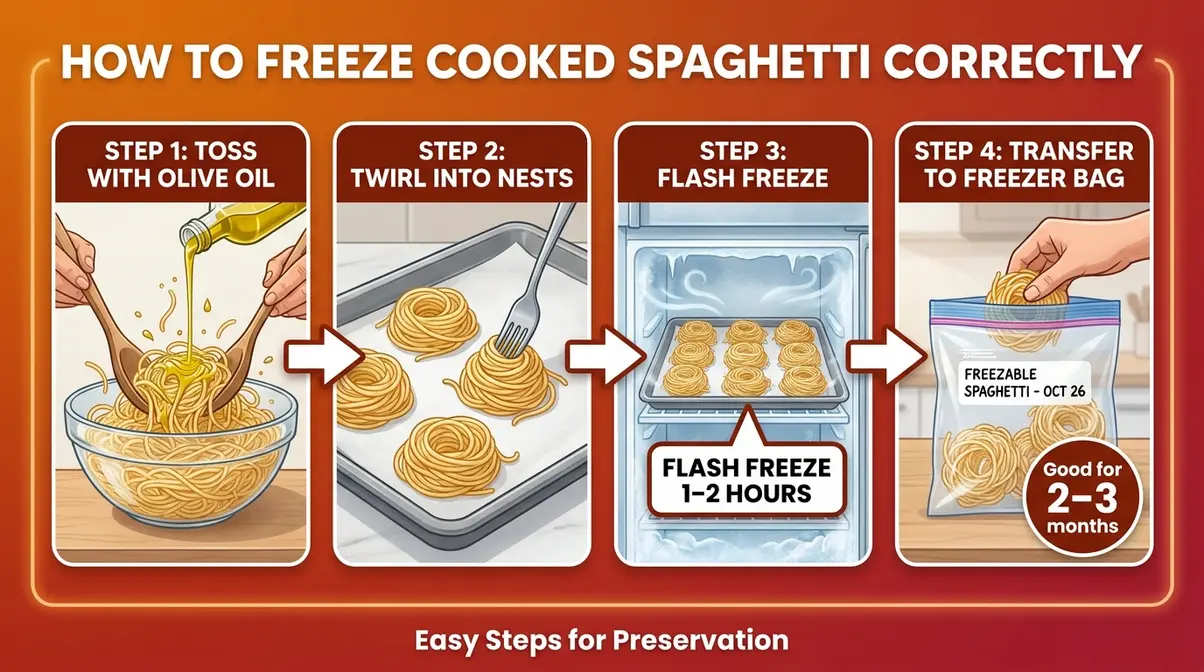
How to Freeze Plain Spaghetti
When freezing pasta dishes, plain spaghetti freezes best when you follow this method — it prevents a solid frozen brick that’s impossible to portion later.
- Cool the pasta completely using the method from Step 1.
- Toss with 1 tablespoon of olive oil per 8 oz of cooked pasta to prevent noodles from fusing together.
- Twirl portions into small nests using a fork or tongs, and arrange them in a single layer on a parchment-lined baking sheet.
- Flash freeze for 1–2 hours until the nests are solid.
- Transfer to a labeled freezer bag or airtight container, squeeze out as much air as possible, and write the date on the outside.
The flash-freeze step is the key detail most people skip — and it’s why their frozen pasta comes out as a clump. Once the nests are individually frozen solid, they won’t stick together in the bag.
How to Freeze Pasta with Sauce
Pasta mixed with sauce freezes well too, though the texture after thawing is slightly softer than plain pasta. Cream-based sauces are the exception — they tend to separate after freezing and thawing, resulting in a grainy texture. For cream sauces, refrigerate and eat within 1–3 days rather than freezing.
For tomato and meat sauces, freeze in individual portion-sized airtight containers. Label each container with the contents and date. Thaw overnight in the fridge — never on the counter — then reheat to 165°F using one of the methods in Step 6.
✅ Checkpoint: Pasta labeled and dated, frozen within the safe refrigerator window (before day 5 for plain, before day 4 for sauced). Cream-based pasta frozen only if within 1–2 days of cooking.
Note on Spaghetti Squash Storage
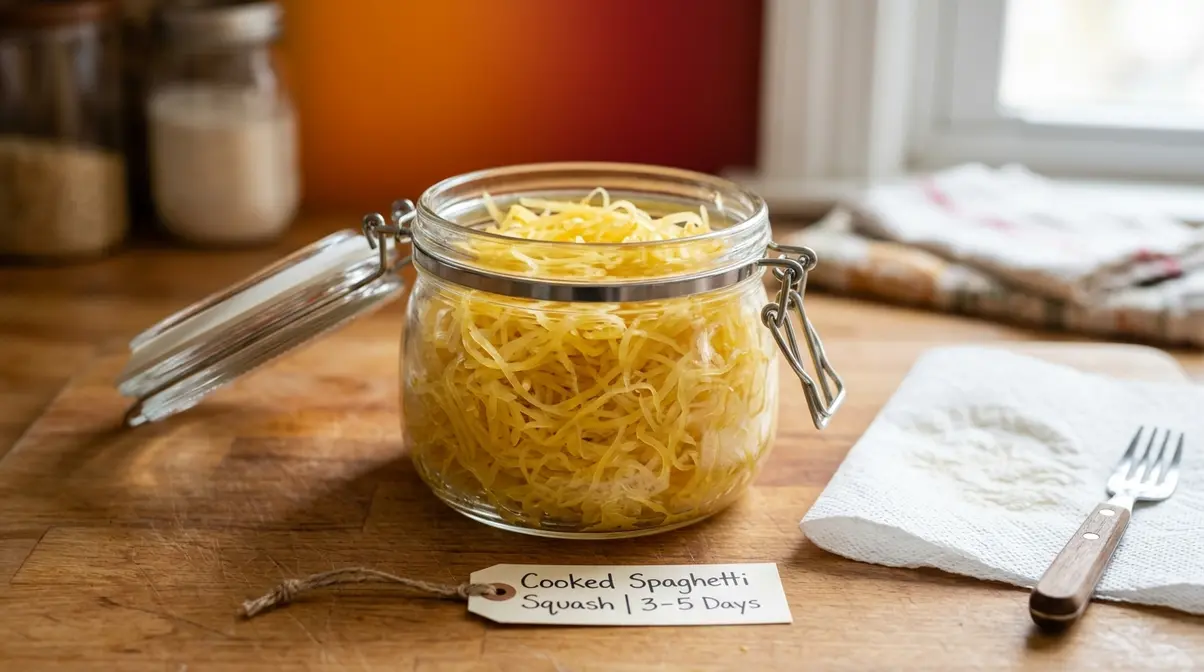
Spaghetti squash is a popular pasta substitute, but it follows different storage rules than wheat-based spaghetti. Cooked spaghetti squash is a vegetable — not a starchy pasta — and it has a shorter safe fridge window.
Cooked spaghetti squash lasts 3–5 days in the fridge when stored in an airtight container, according to food storage guidance aligned with USDA produce handling recommendations. However, because of its higher moisture content, it tends to get watery after day 3. Store it separate from any sauce to preserve texture longer. To minimize the watery texture when reheating, gently pat the squash strands dry with a paper towel before storing them.
When you are ready to eat, reheating spaghetti squash in a skillet over medium heat helps evaporate excess moisture better than a microwave. If you choose to freeze it, cooked spaghetti squash can be frozen for up to 6–8 months — longer than wheat pasta — because of its lower starch content. Place the cooked strands in a freezer-safe bag and squeeze out as much air as possible to prevent freezer burn. Thaw the frozen squash overnight in the refrigerator, then drain any pooled water before reheating. Because it lacks the structural starches of wheat pasta, squash strands are far more delicate and will turn to mush if boiled. Stick to dry heat methods for the best culinary results.
The 2-hour cooling rule and the airtight container requirement apply to spaghetti squash exactly as they do to regular spaghetti. All the same spoilage checks in Step 5 apply here too.
Troubleshooting Storage Problems
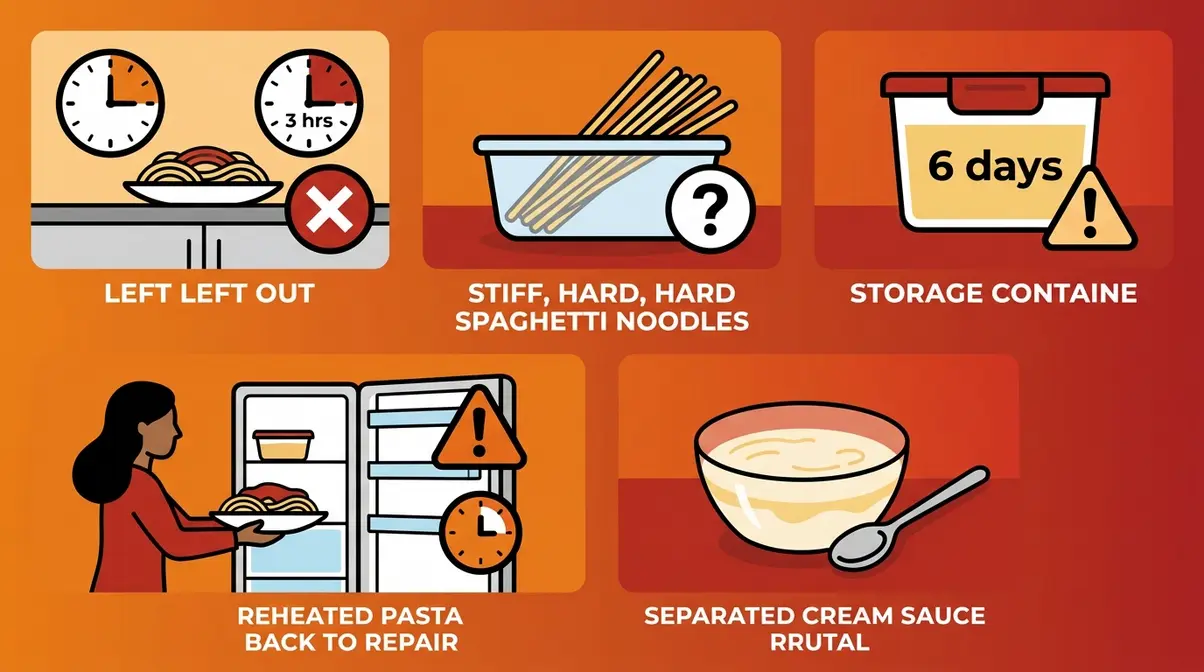
Even with the best intentions, things go sideways. Here are the most common problems home cooks run into — and how to handle them.
Problem 1: Left Out for 3 Hours
This is the most common scenario, and the answer is unfortunately clear: discard the pasta. The 2-hour rule exists because Bacillus cereus toxin production begins within that window in starchy foods left at room temperature. Three hours in the danger zone means those heat-stable toxins may already be present — and reheating to 165°F will not destroy them. The USDA’s guidance is consistent on this point: when food has been in the danger zone for more than 2 hours, throw it out. It’s not worth the risk.
Problem 2: Pasta Went Hard
Yes — hardness is a texture issue, not a safety issue. Pasta stiffens in the fridge because it reabsorbs moisture from the sauce (or dries out if stored plain without oil). It is completely safe to eat as long as it passes the Step 5 spoilage checks and is within its storage window. The fix: reheat using the stovetop method with a splash of water, or the boiling water dip for plain pasta. Both methods restore the texture significantly.
Problem 3: In Fridge for 6 Days
No. Six days exceeds the maximum safe window for all pasta types, including plain spaghetti. Even if it looks and smells fine, bacteria can multiply to unsafe levels before visible spoilage signs appear. The 5-day maximum for plain pasta is a guideline based on documented bacterial growth curves — not a suggestion. Discard it, and use the date-labeling habit from Step 2 to avoid this situation next time.
Problem 4: Re-refrigerating Pasta
You can refrigerate reheated pasta once — but the quality drops noticeably and the safe window shortens. Each time pasta is reheated and cooled, it goes through additional temperature cycles that degrade texture and increase bacterial risk. The better approach: only reheat the portion you plan to eat, and leave the rest in the fridge cold. Never reheat the same batch more than once.
Problem 5: Sauce Separated
Sauce separation — especially with cream or oil-based sauces — is normal and not a spoilage sign. Cream sauces often look grainy or oily after refrigeration. A quick stir during reheating usually brings them back together. However, if the separated sauce also has an off smell or the pasta has exceeded its storage window, discard it. Separation alone is cosmetic; combined with other spoilage signs, it’s a reason to throw it out.
Frequently Asked Questions
Can you eat leftover spaghetti after 5 days?
Plain cooked spaghetti stored in an airtight container is safe for up to 5 days — but day 5 is the absolute maximum, not a comfortable middle ground. After 5 days, even well-stored plain pasta has exceeded the USDA-recommended window. Pasta mixed with meat, seafood, or cream sauce should not be eaten after day 3–4. If your pasta is at day 5 and you’re unsure of the exact storage conditions, the safest choice is to discard it — bacterial growth doesn’t always produce visible or detectable signs.
Can I reheat 2-day-old spaghetti?
Yes — 2-day-old spaghetti is safe to reheat as long as it was refrigerated within 2 hours of cooking, stored in an airtight container, and passes the Step 5 spoilage checks. Reheat it to an internal temperature of 165°F (74°C) (FDA guidelines) using the stovetop, microwave, or boiling water method from Step 6. Two days is well within the safe window for all pasta types, including those with meat or cream sauces.
Is it safe to eat leftovers after 7 days?
No — 7 days is not safe for any cooked pasta leftovers. The USDA and FDA consistently recommend consuming all cooked leftovers within 3–4 days as the standard safe window, with USDA FoodKeeper allowing up to 5 days for plain pasta stored ideally. By day 7, pathogenic bacteria can reach dangerous levels even in refrigerated food — and the pasta may show no visible signs of spoilage. Discard any pasta that has been in the fridge for 7 days.
Can cooked pasta last 7 days in the fridge?
No. Cooked pasta does not safely last 7 days in the fridge, even plain spaghetti stored perfectly. The maximum safe window for plain cooked pasta is 5 days (USDA FoodKeeper). For pasta with sauce or protein, that window is 3–4 days. Seven days significantly exceeds these limits. If you have pasta that old, throw it out. For longer storage, freeze it within the first 3–4 days — frozen cooked pasta keeps good quality for 2–3 months.
Can I eat leftover spaghetti after 7 days?
No — eating leftover spaghetti after 7 days is not safe. Even pasta that looks and smells normal can contain dangerous levels of bacteria after that long in the fridge. The USDA recommends all cooked leftovers be consumed or frozen within 3–4 days; USDA FoodKeeper allows up to 5 days for plain pasta stored under ideal conditions. Seven days exceeds every safe guideline. If you have a batch that old, discard it — it’s not worth the risk of foodborne illness.
Can I eat spaghetti sauce after 5 days?
It depends on the sauce type. Plain tomato or marinara sauce can generally last 5–7 days in the fridge in an airtight container, making it one of the more forgiving leftovers. Meat sauce follows the 3–4 day rule. Cream-based sauces — Alfredo, carbonara — should be eaten within 3–4 days at most, as dairy breaks down quickly. Always check for off smells, mold, or unusual texture before using any stored sauce, regardless of how many days have passed.
Can you freeze cooked spaghetti?
Yes, you can freeze cooked spaghetti for up to 2–3 months. For best results, toss plain pasta with a little olive oil to prevent sticking, then freeze in portion-sized nests. If freezing with sauce, store in an airtight container. Thaw overnight in the refrigerator before reheating.
Why does leftover pasta get hard in the fridge?
Leftover pasta gets hard in the fridge because the starches undergo retrogradation, a process where they crystallize and expel moisture as they cool. Tossing the pasta with a teaspoon of olive oil before storing and reheating it with a splash of water helps restore its soft, springy texture.
Conclusion
For home cooks managing leftovers, the storage question has a clear, science-backed answer. If you are asking how long does cooked spaghetti last in the fridge, the standard rule is 3–5 days when cooled within 2 hours and kept in an airtight container at 40°F or below. Plain pasta gets the full 5-day window; meat-sauced pasta gets 3–4 days; cream and seafood sauces get only 1–3 days. Bacillus cereus — the odorless bacteria that makes pasta uniquely risky — cannot be detected by smell alone, which is why the timeline matters more than the sniff test (NCBI StatPearls, 2026).
The 2-5 Rule is the framework that ties everything together: cool within 2 hours, eat within 5 days. It’s not a complicated protocol — it’s two numbers that protect your family every time you make a big pot of spaghetti. Follow the cooling steps, use an airtight container with a date label, know your sauce type’s specific window, and reheat to 165°F. Those four habits cover the vast majority of leftover pasta situations.
Your next step: check whatever is in your fridge right now. Find the container, read the date you wrote on it, and match it to the sauce-type table in Step 4. If it’s within the window and it passed the Step 5 checks — reheat it and enjoy it. If it’s past the window, throw it out without guilt. Good food safety isn’t about being wasteful; it’s about knowing exactly where your food stands so you can eat with confidence.
*⚠️ This guide is reviewed for accuracy against USDA FoodKeeper, FDA Safe Food Handling guidelines, and University of Minnesota Extension recommendations. For personalized food safety advice, consult a Registered Dietitian or certified food safety professional.

quickdishcook
Recipe developer and writer at Quick Dish Cookbook.