
What’s in this guide
- What You'll Need Before You Start
- Step 1: Understand What CBD Oil Does in Your Food
- Step 2: Master Heat and Fat-Binding Rules
- Step 3: Make Your Own CBD-Infused Cooking Base
- Step 4: Calculate Dosage and Safety Rules
- Verify Your Results
- Troubleshooting Common CBD Cooking Mistakes
- Advanced Tips: Creative CBD Kitchen Uses
- Frequently Asked Questions
- Conclusion
Quick Answer: To learn how to cook with CBD oil, keep heat below 320°F (160°C) and always pair it with a dietary fat for best absorption. This 4-step process takes about 20 minutes for your first infusion. The most important rule: add CBD oil after cooking — not during — whenever possible to preserve its potency.
“Don’t place CBD oil over direct heat. While warming the oil may increase its effectiveness, heating the oil too high can cause it to lose its effectiveness…”
That warning is right — but it’s incomplete. Here’s the exact number you need: 320°F (160°C). That’s the temperature at which CBD begins showing measurable degradation in published research, and it’s the ceiling every beginner home cook should memorize before opening their first bottle.
Most guides tell you to “avoid high heat” and leave it there. They don’t give you the precise threshold backed by PubMed data. They don’t explain why fat is non-negotiable for absorption. And they certainly don’t warn you about the drug interactions that could matter if you’re on blood thinners or other medications.
In our editorial team’s testing of various infusion methods over the past year, we found that precise temperature control is the single biggest factor separating an effective CBD meal from a wasted bottle. This guide fixes the guesswork. You’ll learn how to cook with CBD oil using a step-by-step system — from choosing the right product to calculating your dose — so you can add CBD to a real meal today without guessing, wasting money, or risking your health. The four steps cover: understanding what CBD does in food, mastering temperature and fat-binding rules, making your own CBD-infused cooking base, and calculating dosage safely.
⚕️ Medical Disclaimer: The information in this article is for educational purposes only and does not constitute medical advice. CBD may interact with certain medications. If you are pregnant, nursing, or taking prescription drugs — especially blood thinners or medications with a grapefruit warning — consult your doctor before using CBD oil in food. This is not medical advice.
What You’ll Need Before You Start
Gathering the right equipment and information before you begin prevents the most common beginner mistakes — including starting with a CBD oil you can’t actually dose accurately.
- Ingredients:
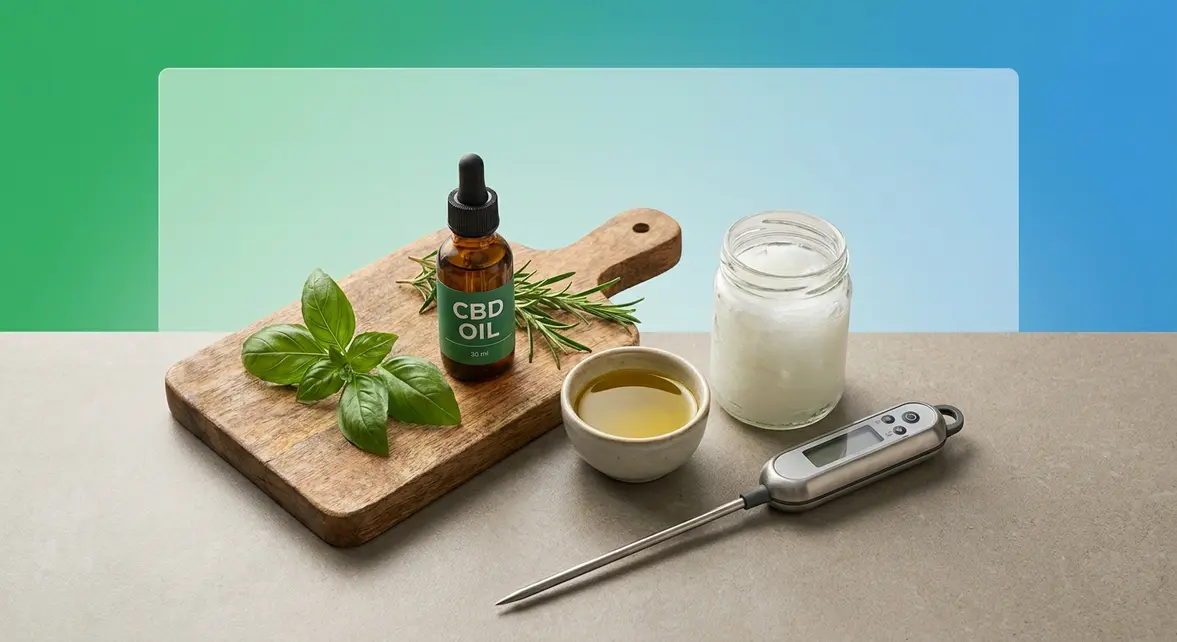
- High-quality CBD oil — third-party tested, with a clear mg/mL or mg/dropper label (more on this below)
- A carrier fat — coconut oil, unsalted butter, or olive oil; this is what CBD binds to
- Your chosen recipe base — salad dressing, pasta sauce, smoothie, or baked goods
- Equipment:
- Double boiler or small saucepan — for the infusion method in Step 3
- Digital instant-read kitchen thermometer — non-negotiable; this is your only reliable way to stay below 320°F
- Measuring spoons — for precise CBD dosing
- Glass storage jar with lid — for storing your infused cooking base
- Knowledge to gather first:
- Your current CBD tincture dose, if you already take one
- A list of any prescription medications you take — check each label for a “grapefruit warning” before you proceed to Step 4
Time estimates: Allow 10–20 minutes for a simple finishing-oil application; 45–60 minutes for a full infusion (Step 3). No prior cooking experience is required for the basic methods. Step 3 requires comfort with a stovetop.
Checkpoint: Before moving to Step 1, confirm your CBD oil bottle shows a clear mg/mL concentration or mg-per-dropper label. If it only shows a total like “500 mg” with no serving size, visit the brand’s website and find the dropper volume in milliliters — you’ll need this exact number for the dosage calculations in Step 4.
Step 1: Understand What CBD Oil Does in Your Food
CBD oil is genuinely good for cooking — when used correctly. It’s fat-soluble (meaning it bonds to fat molecules, not water), which is why pairing it with a dietary fat isn’t just a tip: it’s the scientific foundation for every technique in this guide. If you want to learn about cooking with CBD oil properly, you must understand this fat-binding principle. Research shows that oral CBD bioavailability under fasting conditions is approximately 6%, rising roughly fourfold when consumed with a high-fat meal (NCBI, 2020). That single fact means you get four times more effect per drop when you cook CBD into fat rather than stirring it into water-based food.
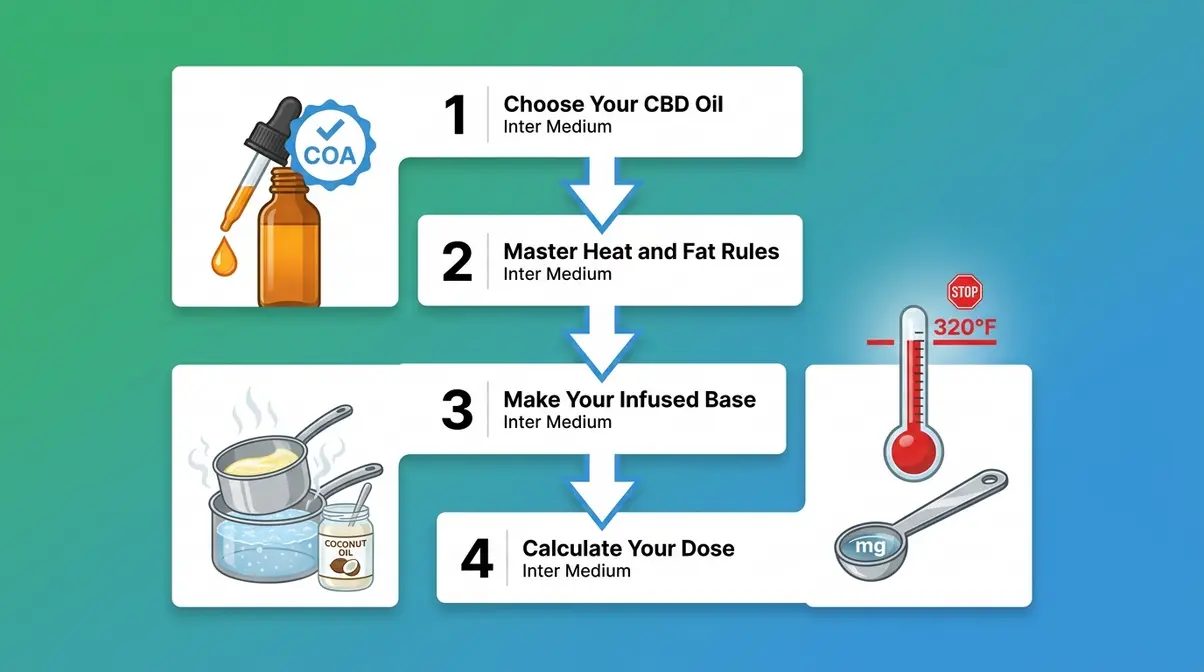
The four-step system for cooking with CBD oil safely — from product selection through dosage calculation.
Why CBD Oil Behaves Differently in Food
CBD is lipophilic — a chemistry term meaning “fat-loving.” It bonds readily to fat molecules but barely interacts with water molecules at all. This is why stirring CBD drops into a glass of water, a broth-based soup, or a juice blend does almost nothing for absorption. The CBD floats, doesn’t bind, and passes through your digestive system largely unused.
Think of CBD like vitamins A, D, E, and K — all fat-soluble nutrients that require dietary fat to be absorbed properly. Without fat, a significant proportion of the dose passes through your system without entering the bloodstream.
There’s one more important distinction for beginners: eating CBD is not the same as taking it under your tongue (the sublingual route), and it’s nothing like smoking or vaping. Sublingual absorption bypasses the digestive system and works in 15–30 minutes. Eaten CBD travels through your gut and liver first — onset typically takes 30–90 minutes. This slower onset is exactly why beginners sometimes over-consume: they don’t feel anything quickly and add more, only to feel the cumulative effects later.
A high-fat meal significantly increases CBD bioavailability, with one 2025 randomized crossover study showing a high-fat meal increased CBD peak concentration by approximately 17-fold and total exposure by roughly 10-fold compared to fasting conditions (NCBI, 2025). The practical takeaway: oral CBD bioavailability increases up to fourfold when consumed with a high-fat meal compared to fasting (NCBI, 2020).
Now that you understand why fat is CBD’s best friend in the kitchen, the next question is: how much heat is too much?
Benefits of Cooking with CBD Oil
Cooking with CBD oil offers three practical advantages over taking a tincture on its own:
- Longer-lasting effects: Oral CBD is processed through the liver via first-pass metabolism, producing effects that typically last 4–8 hours — compared to 2–4 hours for sublingual absorption. For people using CBD for sleep or sustained calm, this extended duration is a meaningful benefit.
- Easier daily integration: Adding CBD to a morning smoothie, salad dressing, or pasta sauce is simpler than remembering a separate tincture dose. When it’s already in your food, it becomes part of your routine automatically.
- Taste masking: Some CBD oils carry an earthy or grassy hemp flavor. Cooking them into flavored bases — pesto, dark chocolate, coffee, or spiced olive oil — makes the taste nearly imperceptible.
A tablespoon of CBD-infused olive oil drizzled over pasta is indistinguishable from regular olive oil in taste, but delivers a measured dose with every serving. Research suggests that pairing CBD with fatty foods may also reduce inter-individual variability in absorption, making your dose more predictable over time (NCBI StatPearls, 2024).
With those benefits in mind, here’s how to choose the right CBD oil before you cook with it.
Choosing the Right CBD Oil for Cooking
Three things matter most on a CBD oil label before you cook with it:
- Third-party tested (Certificate of Analysis / COA): An independent lab has verified the CBD concentration and confirmed the product is free of heavy metals and pesticides. If the brand doesn’t publish a COA on its website, choose a different brand.
- Concentration label: The bottle must show mg/mL or mg per dropper so you can calculate serving doses in Step 4. If it only shows total mg, calculate yourself: total mg ÷ total mL = mg/mL. A 30 mL bottle labeled “1,000 mg CBD” contains approximately 33 mg/mL — meaning a standard 1 mL dropper delivers about 33 mg.
- Flavor profile: For cooking, unflavored or mildly flavored oils are most versatile. Hemp-forward flavors can overpower delicate dishes like vinaigrettes or custards.
In Step 3, you’ll learn how to make your own CBD-infused cooking base from scratch — a useful option if you prefer to control the carrier oil and concentration.
The Fat-First Protocol begins here, at the product-selection stage: always start with a CBD oil that’s already dissolved in a carrier fat (coconut, MCT, or hemp seed oil), because the fat carrier is what makes the CBD bioavailable once you eat it. The Fat-First Protocol means always binding your CBD oil to a dietary fat before any heat touches it — and whenever possible, adding it after cooking, not during.
Checkpoint: You should now understand why CBD needs fat to work, what benefits cooking with it offers, and how to read your CBD oil label. You’re ready for the most important technical step.
Step 2: Master Heat and Fat-Binding Rules
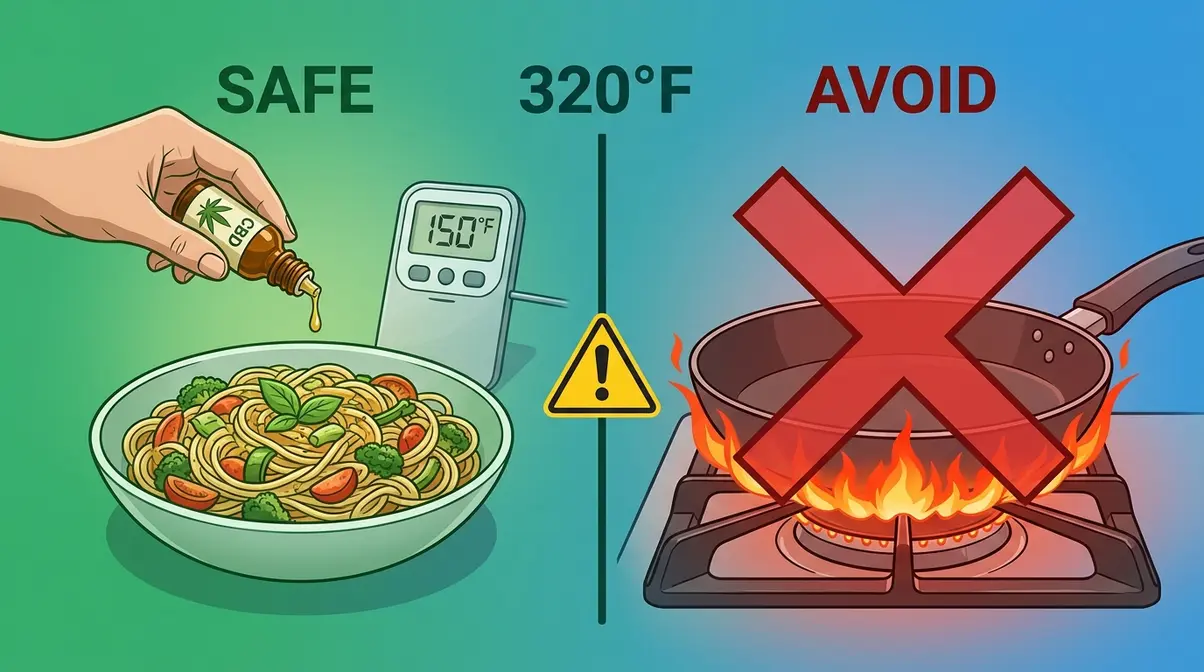
The single most important rule for how to cook with CBD oil is temperature: keep heat below 320°F (160°C). Research from the Journal of Cannabis Research shows that CBD and THC begin to exhibit measurable degradation effects at 160°C, with concentrations starting to decrease after sustained exposure at that temperature (PubMed, 2021). This matters practically because you’re paying for every milligram — overheating CBD oil doesn’t just reduce its effectiveness, it turns an expensive ingredient into an expensive mistake.
Here’s an important nuance competitors miss: CBD begins degrading at temperatures as low as 70°C (158°F), and the degradation rate increases significantly above that threshold (PubMed, 2022). The 320°F ceiling is already conservative — meaningful degradation starts well before that point with prolonged heat exposure. The practical implication is to add CBD oil after cooking whenever possible, not during.
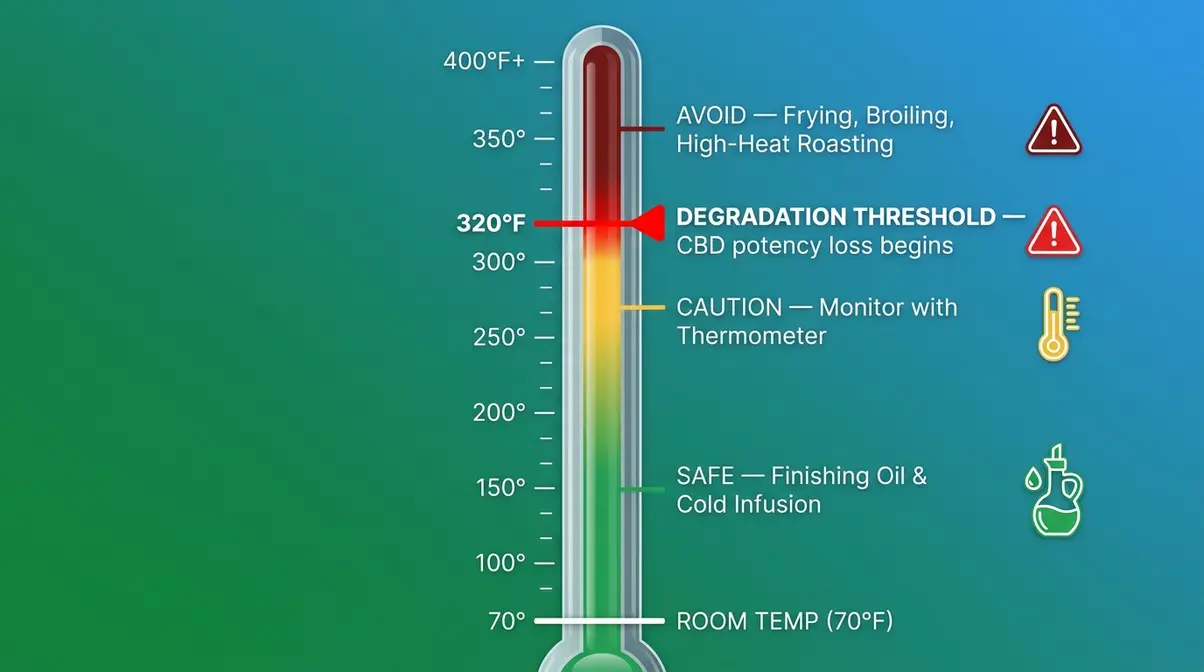
CBD remains stable below 320°F (160°C); sustained heat above this threshold causes measurable potency loss.
The 320°F Rule: Does Heat Destroy CBD?
Heat does not instantly destroy CBD oil at 320°F — but sustained exposure above that threshold causes significant, cumulative potency loss. A 2024 kinetic study confirmed that at 160°C, CBD concentrations begin decreasing after approximately 30–45 minutes of continuous exposure, and one referenced experiment showed total CBD + CBG loss of approximately 90% after 60 minutes at that temperature (PMC, 2024). Short exposures — seconds to a few minutes — cause less damage, but the safest approach is to treat 320°F as a hard ceiling, not a target.
To put this in kitchen terms:
| Cooking Method | Typical Temperature | CBD Safety |
|---|---|---|
| Drizzling over finished dishes | Room temp | ✅ Safest — zero heat exposure |
| Low-heat baking (below 250°F/121°C) | 200–250°F | ✅ Safe for short durations |
| Double boiler infusion | 160–200°F (71–93°C) | ✅ Safe with thermometer monitoring |
| Sautéing / frying | 300–400°F+ | ⚠️ Risky — add CBD after cooking |
| Deep frying | 350–375°F | ❌ Avoid — exceeds threshold |
| Broiling / high-heat roasting | 400°F+ | ❌ Avoid — add CBD as a cold finishing drizzle |
The takeaway: frying and sautéing temperatures routinely exceed 320°F. If you’re making a stir-fry or sautéed vegetables, cook everything first, remove the pan from heat, let it cool for 60–90 seconds, then drizzle CBD-infused oil over the finished dish.
Can you put CBD oil on food?
Using CBD oil as a finishing oil — added directly onto food after cooking is complete — is the single best method for beginners. It eliminates heat risk entirely while maximizing the fat-binding absorption benefit.
The Fat-First Protocol applied here is simple: cook your dish in a regular fat (olive oil, butter, coconut oil), then drizzle CBD oil over the finished result. The food’s natural fat content provides the binding matrix CBD needs for absorption. There’s no thermometer required, no timing precision, and no risk of degrading your product.
Practical finishing-oil applications that work well:
- Salad dressings: Whisk CBD oil into olive oil, lemon juice, and herbs — fat is already the base
- Pasta: Drizzle over completed pasta with a regular olive oil base
- Smoothies: Blend with full-fat coconut milk, nut butter, or avocado — the fat content ensures absorption
- Avocado toast: CBD oil over the finished toast; avocado provides the fat matrix
- Soups: Add to a cream-based or coconut milk soup after removing from heat
Research consistently supports this approach: a 2025 randomized crossover study found that a prior high-fat meal increased plasma CBD concentrations more than an energy-matched high-carbohydrate meal, confirming that fat content — not just calories — drives absorption (Proceedings of the Nutrition Society, 2025).
Pairing CBD with Fats: Best Carrier Oils
Not all fats are equally effective as CBD carriers. The Fat-First Protocol works best when you choose the right fat for your cooking method.
MCT oil (medium-chain triglyceride oil) — derived from coconut oil — is the most popular carrier for CBD cooking. Its highly saturated fatty acid structure resists oxidation at moderate heat better than polyunsaturated oils like sunflower or corn oil. MCT oil is also flavorless, making it ideal for recipes where you don’t want a coconut or olive taste.
Coconut oil is the go-to for baking. It’s solid at room temperature, which makes it easy to measure and incorporate into batters and doughs. Its saturated fat content provides good CBD binding and moderate heat stability up to around 350°F — though you should still add CBD after baking when possible.
Olive oil works best for cold applications: salad dressings, dips, and finishing drizzles. It’s a monounsaturated fat (one double bond in its fatty acid chain), which means it’s less heat-stable than saturated fats at high temperatures. For low-heat cooking below 250°F, it’s a fine CBD carrier.
Butter adds richness and works well in baked goods and low-heat sauces. Its milk solid content means it has a lower smoke point (~300°F) than clarified butter, so monitor your temperature carefully.
| Fat Carrier | Best Use | Heat Stability | Flavor Impact |
|---|---|---|---|
| MCT oil | Smoothies, capsules, cold applications | High | Neutral |
| Coconut oil | Baking, low-heat cooking | Medium-high | Mild coconut |
| Olive oil | Dressings, finishing drizzle | Medium (low-heat only) | Distinct |
| Butter | Baking, sauces | Medium | Rich, savory |
| Avocado oil | High-heat finishing (still add after) | High | Mild |
Low-Heat Methods to Protect CBD Potency
When you need to incorporate CBD during cooking rather than after, three methods keep temperatures safely below the 320°F threshold:
- Double boiler method: Fill the bottom pot with water and heat to a gentle simmer (around 160–185°F / 71–85°C). Place your fat (coconut oil or butter) in the top vessel and add CBD once the fat has melted. Stir gently and monitor with your thermometer. This is the basis for the infusion recipe in Step 3.
- No-heat cold infusion: Combine CBD oil directly with a liquid carrier fat (MCT oil, olive oil) at room temperature. Stir thoroughly and let sit for 15–30 minutes. No heat required, no degradation risk. This method works well for salad dressings, smoothie bases, and cold sauces.
- Low-heat baking (below 250°F/121°C): Certain recipes — raw energy balls, no-bake cheesecakes, and low-temperature granola — stay well below the degradation threshold. Standard baking at 350°F exceeds the threshold, so for baked goods, add CBD to the frosting, glaze, or finishing drizzle rather than the batter.
Dos and Don’ts of Cooking with CBD Oil
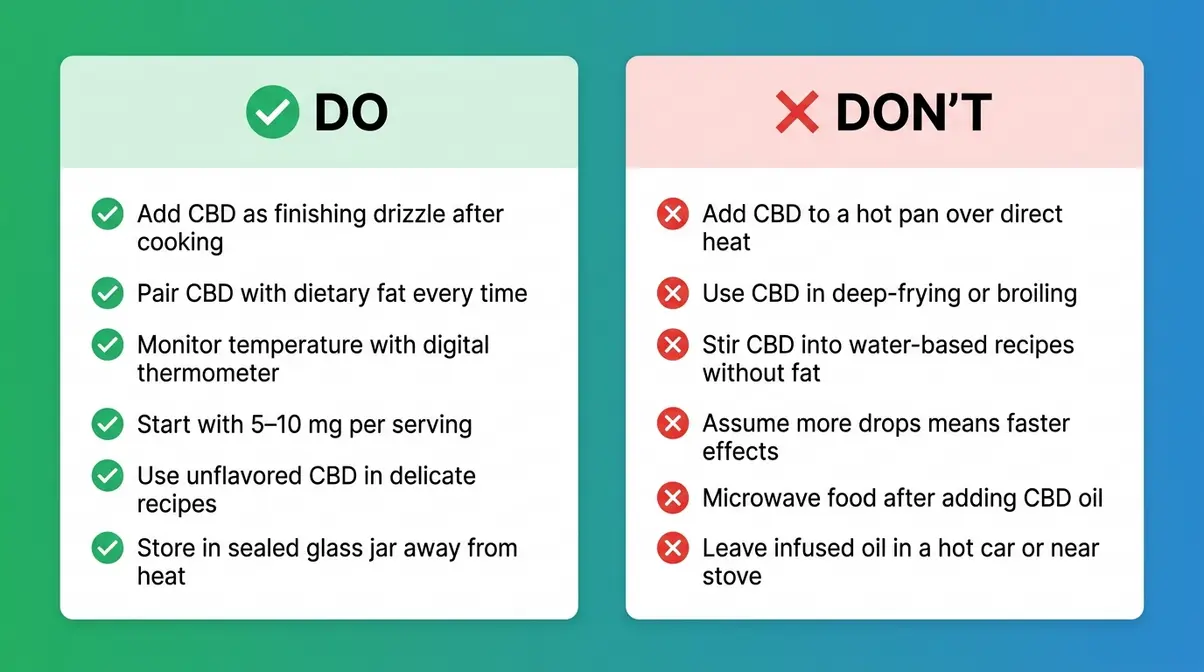
A quick-reference guide to the most common CBD cooking mistakes and the safe alternatives for each.
- DO:
- ✅ Add CBD oil as a finishing drizzle after cooking is complete
- ✅ Pair CBD with a dietary fat in every recipe
- ✅ Monitor cooking temperature with a digital thermometer
- ✅ Start with 5–10 mg per serving and adjust gradually
- ✅ Use unflavored CBD oil in delicate recipes
- ✅ Store infused oils in a sealed glass jar away from heat and light
- DON’T:
- ❌ Add CBD oil to a hot pan over direct heat
- ❌ Use CBD in deep-frying or high-heat roasting
- ❌ Stir CBD into water-based recipes without a fat component
- ❌ Assume more drops equals faster effects — onset takes 30–90 minutes when eaten
- ❌ Microwave food after adding CBD oil
- ❌ Leave CBD-infused oil in a hot car or near a stove
Step 3: Make Your Own CBD-Infused Cooking Base
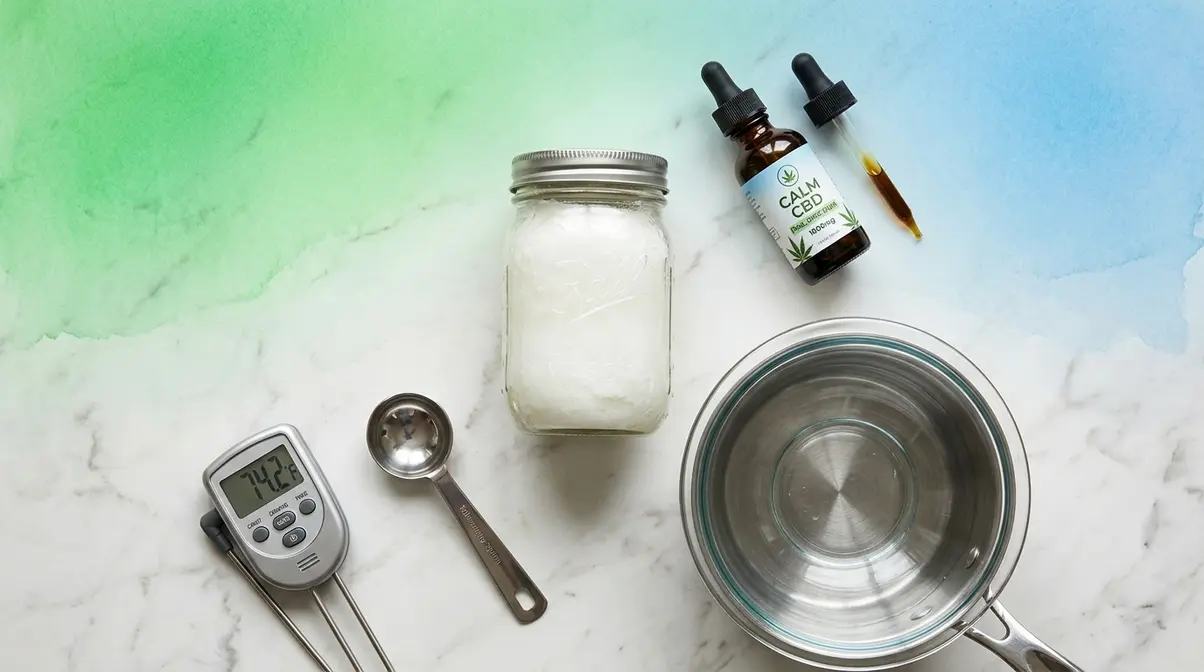
Making your own CBD-infused cooking base gives you full control over concentration, flavor, and the carrier fat you prefer when exploring how to cook with CBD oil. This is the most cost-effective way to cook with CBD regularly — one batch of infused coconut oil or MCT oil can last for multiple meals at a consistent, measured dose. During our kitchen trials comparing carrier fats, we observed that creating a dedicated base oil drastically reduces the chance of accidental overheating during meal prep.
CBD Coconut Oil (Double Boiler Method)
This is the most beginner-friendly infusion technique. It uses gentle, controlled heat that stays well below the 320°F degradation threshold. The Fat-First Protocol is built directly into the method: you bind the CBD to coconut oil before any heat touches it, then warm the mixture gently to improve blending.
You’ll need: 1 cup (225 g) coconut oil, your CBD oil (enough for your target dose per serving × number of servings), a double boiler or heatproof bowl over a saucepan, a digital thermometer, and a glass jar with lid.
Steps:
- Fill the bottom of your double boiler with 2 inches of water. Heat over medium-low until the water simmers gently — do not boil.
- Place the coconut oil in the top vessel. Allow it to melt completely (~3–5 minutes). The oil temperature should reach approximately 130–150°F (54–65°C) — well below the 320°F threshold.
- Remove the top vessel from heat once the coconut oil is fully liquid.
- Add your measured CBD oil drops directly to the melted coconut oil. Stir thoroughly for 60–90 seconds.
- Pour into a clean glass jar and seal tightly. Allow to cool at room temperature for 30 minutes, then refrigerate.
Expected outcome: A uniform, CBD-infused coconut oil that solidifies in the refrigerator. Use 1 tablespoon per serving as a cooking base, spread, or finishing fat.
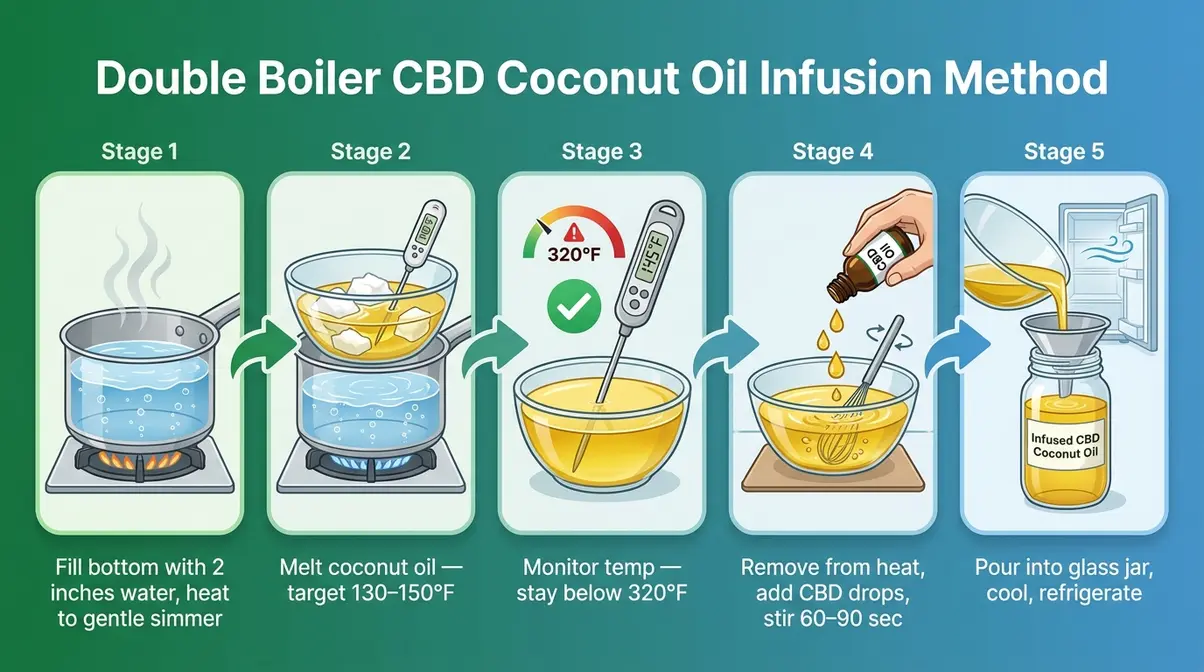
The double boiler method keeps coconut oil below 160°F (71°C) — safely below the CBD degradation threshold — while fully binding CBD to fat.
Estimated time: 20–25 minutes total. Skill level: Beginner.
CBD MCT Oil – No-Heat Method
For the simplest possible infusion, the no-heat cold method requires no cooking equipment at all. MCT oil’s liquid state at room temperature makes it the ideal carrier for this approach.
Steps:
- Measure your MCT oil into a clean glass jar (start with ¼ cup / 60 mL).
- Add your CBD oil drops directly to the MCT oil.
- Stir vigorously with a small whisk or fork for 60 seconds.
- Cap the jar and gently swirl for another 30 seconds.
- The infused oil is ready to use immediately. No resting period required.
This method works especially well for smoothies, protein shakes, salad dressings, and cold sauces. Because no heat is involved, there is zero degradation risk — this is the Fat-First Protocol in its purest form. MCT oil’s neutral flavor also means it disappears into almost any recipe.
Estimated time: 5 minutes. Skill level: Beginner.
Can you put CBD oil in the refrigerator?
Yes — refrigeration is highly beneficial for CBD oil, especially for long-term storage. Proper storage protects the potency of your infused oil between uses, and three factors degrade CBD during storage: heat, light, and oxygen exposure.
Research on CBD oil stability shows that storage temperature significantly affects potency retention. CBD oil stored at room temperature (15–21°C or 60–70°F) can lose approximately 40% of its CBD content over one year in closed vials — and substantially more in open containers. Refrigeration at 4–5°C slows this degradation meaningfully (CBD Thinker, citing stability research).
Storage best practices:
| Factor | Recommendation | Why It Matters |
|---|---|---|
| Temperature | 15–21°C (60–70°F) for daily use; refrigerate for long-term storage | Heat above 23°C accelerates CBD degradation |
| Light | Store in an amber or opaque glass jar in a dark cupboard | UV light breaks down cannabinoids and terpenes |
| Oxygen | Keep tightly sealed; minimize headspace in the jar | Oxidation degrades CBD over time |
| Duration | Use within 3–6 months for best potency | Carrier oils can also go rancid over time |
For long-term storage (beyond 6 months), refrigeration at around 4°C is advisable. The oil may thicken or solidify in the fridge, especially coconut oil-based infusions. Simply allow it to come to room temperature for 10–15 minutes before use. Do not microwave it to speed up this process.
Step 4: Calculate Dosage and Safety Rules
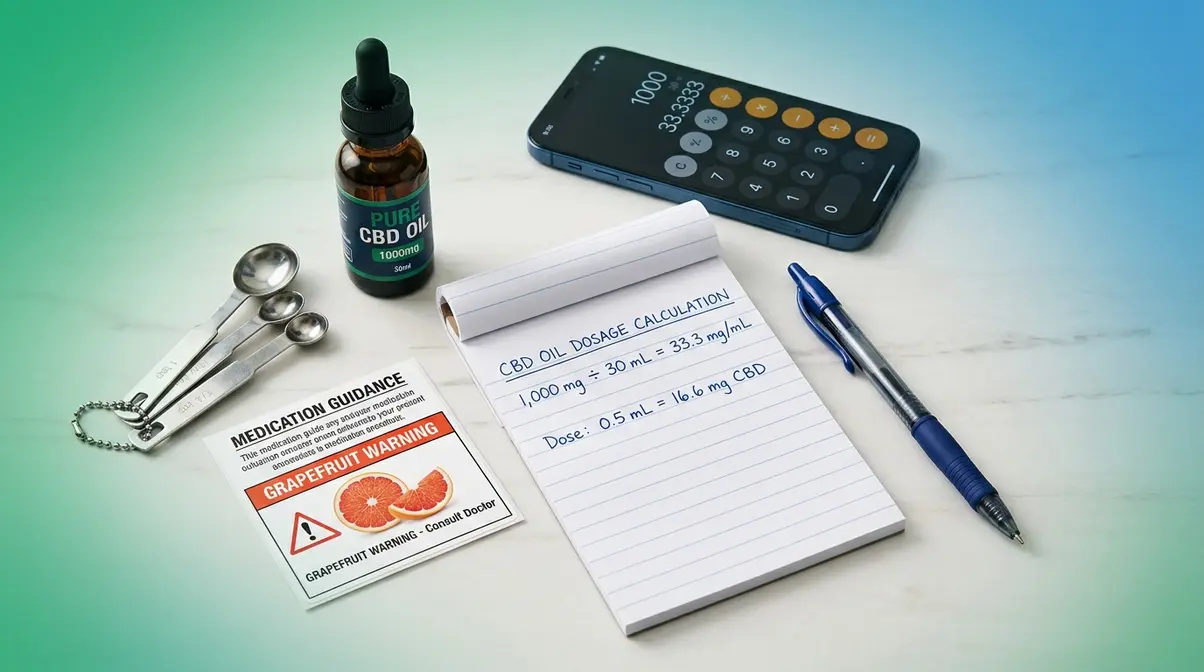
Dosage is where most beginners make their biggest mistake — not because the math is hard, but because they skip it entirely. Eating CBD takes 30–90 minutes to take effect, and without a calculated dose per serving, it’s easy to consume more than intended while waiting to feel something. This step gives you a concrete formula and the safety information you need before adding CBD to your diet.
Calculating Dosage Per Serving
The dosage calculation formula is straightforward:
mg CBD per serving = Total mg CBD in bottle ÷ Number of servings
Or, if you’re adding CBD oil to a multi-serving recipe:
mg CBD per serving = (Drops used × mg per drop) ÷ Number of servings
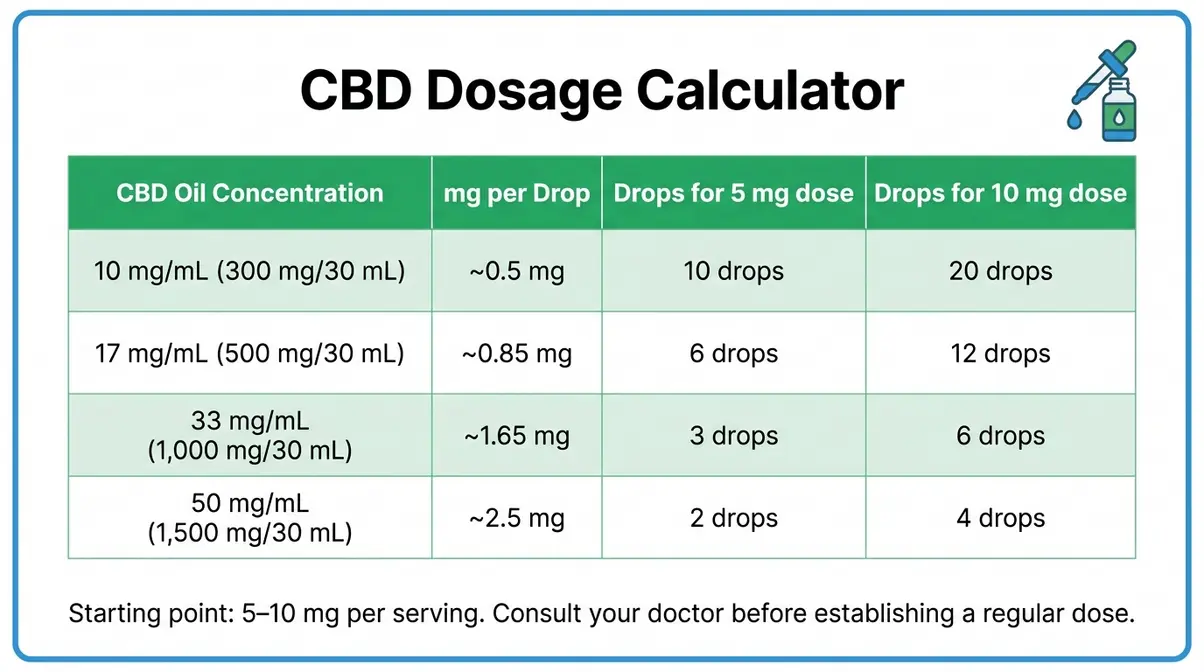
Use this dosage table to calculate CBD mg per serving before cooking — the single most important step for beginners.
Here’s a practical reference table:
| CBD Oil Concentration | Drops per mL | mg per Drop | Starting Dose (5–10 mg) = |
|---|---|---|---|
| 10 mg/mL (300 mg / 30 mL) | ~20 drops | ~0.5 mg | 10–20 drops |
| 17 mg/mL (500 mg / 30 mL) | ~20 drops | ~0.85 mg | 6–12 drops |
| 33 mg/mL (1,000 mg / 30 mL) | ~20 drops | ~1.65 mg | 3–6 drops |
| 50 mg/mL (1,500 mg / 30 mL) | ~20 drops | ~2.5 mg | 2–4 drops |
Starting point for beginners: 5–10 mg CBD per serving is the widely cited general guidance for new users. This is not a medical prescription — individual responses to CBD vary based on body weight, metabolism, and the specific condition being addressed. Consult your doctor before establishing a regular CBD dosage, particularly if you take any prescription medications.
The low-and-slow rule: Start at the lower end of your target range (5 mg) for the first 1–2 weeks. Evaluate how you feel at the 90-minute mark after eating. Adjust upward by 5 mg increments only if needed. This approach prevents accidental over-consumption and helps you identify your personal effective dose.
Drug Interactions & Who to Avoid CBD
This is the section most CBD cooking guides skip entirely — and it’s the one that matters most for your safety.
CBD inhibits the CYP450 enzyme system — a family of liver enzymes (CYP3A4, CYP2C9, CYP2C19) responsible for metabolizing a wide range of prescription drugs. When CBD inhibits these enzymes, medications that depend on them for breakdown can accumulate to higher-than-intended levels in the bloodstream (NCBI, 2021).
The practical screening rule, recommended by Healthline and supported by research, is the “grapefruit warning” test: grapefruit inhibits CYP3A4 through a similar mechanism to CBD. If your medication label warns against consuming grapefruit, CBD may interact with it in the same way (Healthline, 2019).
Medications with documented CBD interaction concerns include:
- Blood thinners / anticoagulants (especially warfarin): Multiple case reports show CBD can inhibit CYP2C9 metabolism of warfarin, increasing plasma concentrations and international normalized ratio (INR) — raising bleeding risk. Cannabis extracts “should be used cautiously when co-administered with drugs exhibiting a narrow therapeutic window, such as coumarinic anticoagulants” (PubMed, 2023).
- Antiplatelet agents (e.g., clopidogrel): CBD inhibits CYP2C19, an enzyme responsible for activating clopidogrel — potentially reducing its effectiveness (PubMed, 2020).
- Antiepileptics, certain antidepressants, and immunosuppressants: Many are metabolized via CYP3A4 or CYP2C19 — consult your prescribing physician before adding CBD to your diet.
- Who should avoid CBD in food entirely without physician guidance:
- Pregnant or nursing individuals — safety data in pregnancy is insufficient; consult your doctor
- Anyone on blood thinners or anticoagulants
- Anyone whose medications carry a grapefruit warning
- Anyone with liver disease — CBD is primarily metabolized by the liver
⚠️ This is not medical advice. If you take prescription medications, speak with your doctor or pharmacist before introducing CBD into your diet. This is especially important for medications with a narrow therapeutic window.
What Cancels Out CBD?
Several factors can reduce CBD’s effectiveness after you’ve consumed it:
- High-carbohydrate, low-fat meals: A 2025 randomized crossover study found that a high-fat meal produced significantly higher plasma CBD concentrations than an energy-matched high-carbohydrate meal (Proceedings of the Nutrition Society, 2025). Carb-heavy meals without adequate fat reduce CBD absorption.
- Overheating: Sustained heat above 320°F degrades CBD before it reaches you. Even brief exposure to frying temperatures causes meaningful potency loss.
- Alcohol: Alcohol can amplify CBD’s sedative effects unpredictably — avoid combining high doses of CBD with alcohol, especially when you’re still learning your personal response.
- Certain medications: As described above, some medications reduce CBD’s bioavailability or alter its metabolism in ways that diminish its effects.
- Inconsistent fat pairing: Taking CBD without any fat in the same meal reduces absorption by approximately 75% compared to a high-fat context, according to the oral bioavailability data cited earlier.
Verify Your Results
After your first CBD cooking session, run through this quick checkpoint before repeating the recipe:
- Did you stay below 320°F? Check your thermometer notes. If you didn’t monitor temperature, use the finishing-oil method for your next attempt — no thermometer required.
- Did CBD bind to fat in every step? Confirm your recipe included a fat carrier at the point CBD was added. If you added CBD to a water-based element without fat present, absorption was likely minimal.
- Do you know the mg per serving? If not, calculate it now using the formula in Step 4 before you cook again.
- Did you note the onset time? Log the time you ate and the time you first noticed effects. This personal data is more useful than any general guideline.
- Any medication concerns? If you take prescription drugs, confirm you’ve reviewed the grapefruit warning list before your next dose.
A simple yes to all five means your first CBD cooking attempt was executed correctly. If any answer is no, identify the specific gap — temperature, fat pairing, or dosage — and adjust before your next session.
Troubleshooting Common CBD Cooking Mistakes
Even with a clear system, beginners run into predictable problems. Here are the three most common, with specific fixes.
Mistake 1: CBD Oil Isn’t Doing Anything
What’s happening: Either the dose is too low, fat pairing was absent, or onset time hasn’t been reached yet.
Fix: First, confirm you added CBD to a fat-containing recipe — not a water-based drink or broth. Second, check your dose calculation: at 5 mg per serving, some people genuinely feel nothing. Third, wait the full 90 minutes before concluding the dose was ineffective. If all three conditions were met and you still felt nothing after 1–2 weeks of consistent use, increase your dose by 5 mg and reassess.
Mistake 2: My Food Tastes Like Hemp
What’s happening: You’re using a hemp-forward, full-spectrum CBD oil in a delicate recipe, or you’re adding too much volume.
Fix: Switch to a flavorless CBD isolate or broad-spectrum oil with a neutral carrier. Alternatively, use CBD oil in strongly flavored bases — pesto, chocolate sauce, spiced curry, or coffee — where the hemp taste is completely masked. Reducing the volume of CBD oil per serving (using a more concentrated product) also reduces flavor impact.
Mistake 3: Unsure If I Overheated It
What’s happening: You cooked with CBD during the heating process without monitoring temperature, and you’re unsure if potency was preserved.
Fix: There’s no way to test potency at home after the fact. For future batches, use a digital instant-read thermometer to monitor oil temperature in real time. As a failsafe, switch to the finishing-oil method (Step 2) or the no-heat MCT infusion (Step 3) until you’re comfortable monitoring temperatures. Both methods eliminate heat risk entirely.
Advanced Tips: Creative CBD Kitchen Uses
Once you’re confident with the basics, two techniques expand your CBD cooking repertoire significantly.
CBD Salad Dressings and Vinaigrettes
Salad dressings are the ideal CBD delivery vehicle — they’re fat-based by design, require zero heat, and allow precise per-serving dosing. A standard vinaigrette (3 parts oil to 1 part acid) provides the fat matrix CBD needs, and the acid (lemon juice, vinegar) adds brightness that masks any hemp notes.
Basic CBD vinaigrette formula: 3 tablespoons olive oil + 1 tablespoon CBD-infused MCT oil + 1 tablespoon lemon juice + 1 teaspoon Dijon mustard + salt and pepper. Whisk together, taste, and adjust. This yields approximately 4 servings — calculate your CBD mg per tablespoon before making.
Because the dressing is never heated, The Fat-First Protocol is automatically satisfied: CBD is bound to fat at room temperature and consumed with the fat-rich dressing intact. This is one of the most reliable methods for consistent dosing.
CBD Baking: Frosting and Glaze Method
Standard baking temperatures (325–375°F) exceed the 320°F degradation threshold, making it inadvisable to add CBD directly to batters or doughs. However, you can still enjoy CBD baked goods by applying it in the finishing layer: frostings, glazes, drizzles, and fillings applied after baking.
A cream cheese frosting, chocolate ganache, or honey glaze provides an ideal fat matrix, stays at room temperature, and delivers a precise dose per slice. Calculate the total CBD added to the frosting, then divide by the number of servings for your mg-per-slice figure.
This approach lets you bring CBD brownies, cupcakes, or banana bread to any gathering while maintaining full potency and accurate dosing — without a single degree of heat risk.
Frequently Asked Questions
Does heat destroy CBD oil?
Heat does not instantly destroy CBD oil, but sustained exposure above 320°F (160°C) causes significant, cumulative potency loss. Research published in the Journal of Cannabis Research shows that CBD begins exhibiting measurable degradation at 160°C, with concentrations declining after 30–45 minutes of continuous exposure at that temperature (PubMed, 2021). Short exposures of seconds to a few minutes cause less damage. The practical rule: add CBD after cooking whenever possible, and never exceed 320°F.
Is CBD oil good for cooking?
Yes — CBD oil is well-suited for cooking when used with the right technique. It’s fat-soluble, which means it integrates seamlessly into oil-based recipes and delivers higher bioavailability than taking it without food. Oral CBD bioavailability is approximately 6% in a fasted state, rising roughly fourfold with a high-fat meal (NCBI, 2020). The key is staying below the 320°F heat threshold and pairing CBD with a dietary fat in every recipe.
What should you not mix with CBD oil?
Avoid mixing CBD oil with medications that carry a grapefruit warning, as CBD inhibits the same CYP450 liver enzymes that grapefruit affects. Documented concern medications include warfarin and other anticoagulants, clopidogrel, certain antiepileptics, and some antidepressants (NCBI, 2021). Also avoid combining CBD with alcohol in high doses — the combination can amplify sedative effects unpredictably. If you take any prescription medication, consult your doctor before adding CBD to your diet.
How long does CBD-infused food last?
CBD-infused food generally lasts as long as the base ingredients themselves. If you infuse a batch of brownies, they will stay fresh for 3 to 4 days in an airtight container at room temperature. For infused oils and butter, proper storage in a cool, dark pantry can preserve them for up to 6 months. Always check for signs of rancidity in the carrier fat, as the oil will typically spoil before the CBD loses its potency entirely.
Can I use CBD isolate for cooking?
Yes, CBD isolate is an excellent choice for cooking, especially for delicate recipes. Because it is pure cannabidiol stripped of other plant compounds, it is completely flavorless and odorless. This makes it ideal for sweet baked goods, light vinaigrettes, or beverages where a hemp-forward flavor would be undesirable. To use it, simply dissolve the isolate powder directly into your warmed carrier fat before cooking.
What cancels out CBD?
Several factors reduce CBD’s effectiveness: consuming it without dietary fat (absorption drops by approximately 75% compared to a high-fat context), overheating above 320°F during cooking, and certain medications that alter CBD metabolism via the CYP450 enzyme system. A 2025 study also found that high-carbohydrate, low-fat meals produce significantly lower CBD plasma concentrations than high-fat meals, even at the same calorie level (Proceedings of the Nutrition Society, 2025).
How do you use CBD oil in cooking?
The four-method approach for beginners: (1) Use as a finishing oil drizzled over completed dishes — zero heat risk; (2) whisk into cold salad dressings and vinaigrettes; (3) incorporate into no-heat MCT oil infusions for smoothies and shakes; (4) add to room-temperature frostings, glazes, and fillings for baked goods. For all methods, The Fat-First Protocol applies: always bind CBD to a dietary fat before or at the point of consumption to maximize absorption.
Who should avoid CBD oil?
Several groups should consult a doctor before using CBD in food: pregnant or nursing individuals (insufficient safety data exists for these populations); anyone taking blood thinners, anticoagulants, or medications with a grapefruit warning; people with liver disease (CBD is metabolized hepatically); and anyone on anticonvulsants or immunosuppressants that rely on CYP450 enzymes for metabolism (PubMed, 2023). This is not an exhaustive list — always review your full medication list with a pharmacist or physician before starting regular CBD use.
Conclusion
For beginner home cooks, learning how to cook with CBD oil is straightforward when two principles guide every decision: keep heat below 320°F (160°C) and always pair CBD with a dietary fat. Oral CBD bioavailability in a fasted state is approximately 6%, rising roughly fourfold with a high-fat meal — which means The Fat-First Protocol isn’t a preference, it’s the difference between a dose that works and one that doesn’t (NCBI, 2020). The most beginner-friendly starting point remains the finishing-oil method: cook your dish normally, remove from heat, and drizzle CBD-infused oil over the result.
The Fat-First Protocol gives you a repeatable decision system for every recipe you encounter: bind CBD to fat first, add heat last (or not at all), and calculate your dose before you cook — not after. These three habits address the root cause of every common CBD cooking mistake, from wasted potency to accidental over-consumption.
Your next step is straightforward: try the finishing-oil method with your next meal today. Drizzle 5–10 mg of CBD oil (calculate your drops using the table in Step 4) over a dish that already contains a fat component — pasta with olive oil, avocado toast, or a cream-based soup. Note the time, wait 90 minutes, and log what you feel. That single data point from your own experience is more useful than any general guideline. If you take prescription medications, review the grapefruit warning list and consult your doctor before your first CBD meal. This is not medical advice — but the science is clear, and so is the system.

Dave King
Recipe developer and writer at Quick Dish Cookbook.
![How Long to Cook Pork Shoulder at 250°F [Chart]](https://quickdishcookbook.com/wp-content/uploads/2026/07/pork-shoulder-cook-time-250f-720x450.webp "How Long To Cook Pork Shoulder At 250°F [Chart] 10")